TL;DR
The short version
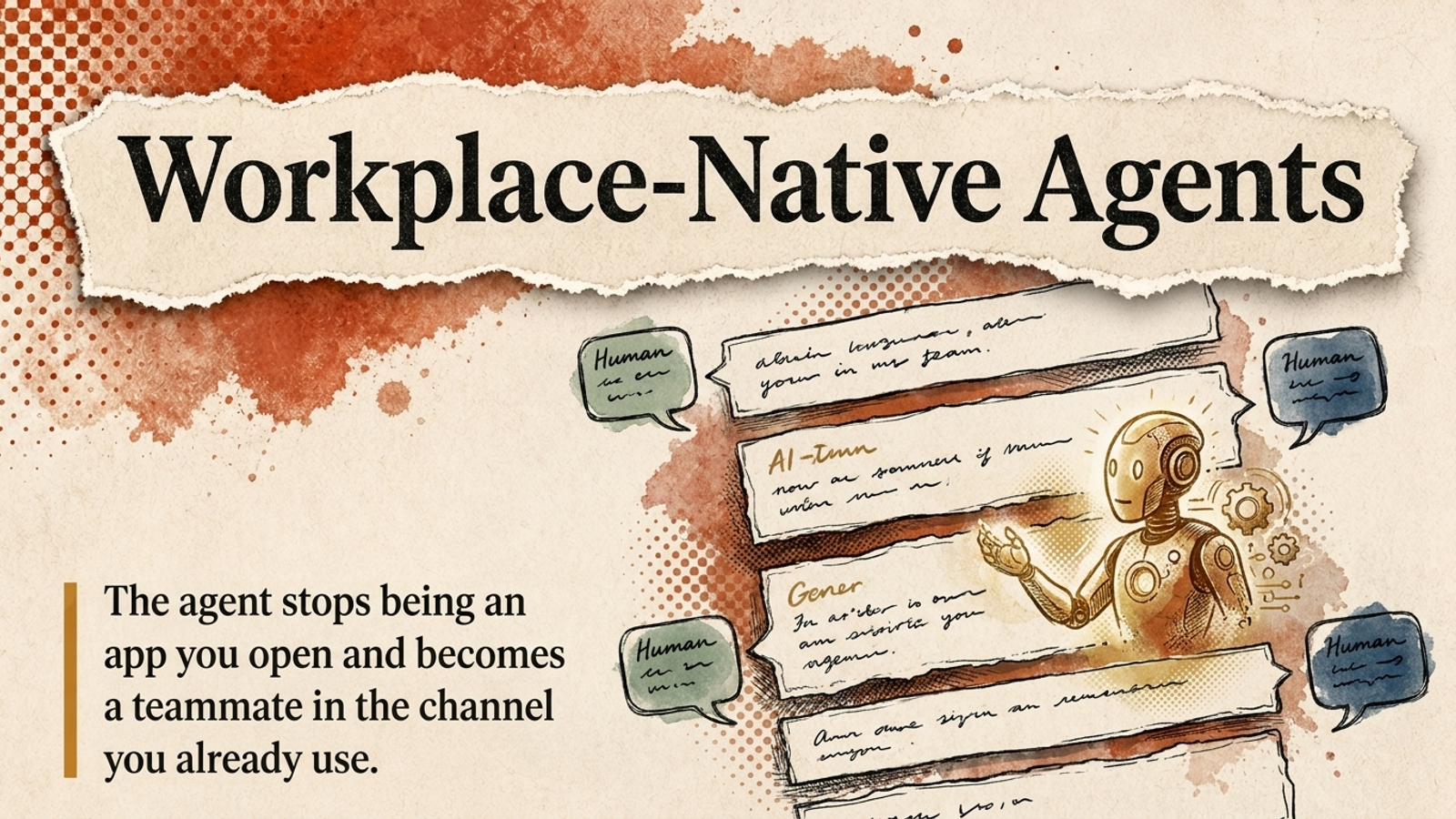
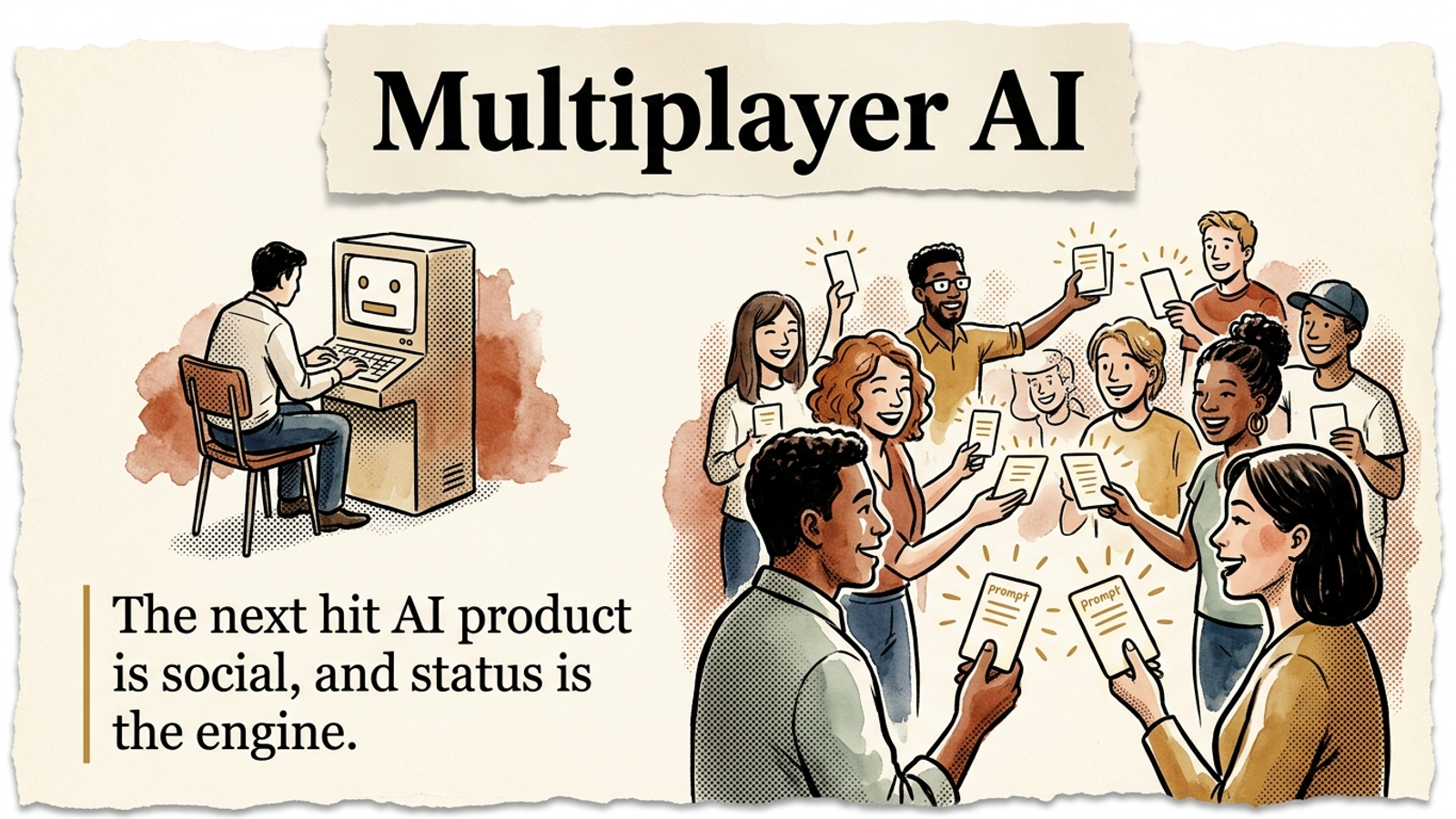
Agents were built for solo work. The next shift is multiplayer: shared sessions a colleague can open, steer, or take over — so the session itself becomes the handoff document.
Gaspar's operator cut: four archetypes and five design decisions turn "shared chatbot" into a knowledge-and-trust product. Start simple; name an owner; design access so a team agent acting for many people doesn't become a confused deputy.
Source: Nathaniel Whittemore on The AI Daily Brief, with the product-side gap from Claire Vo on How I AI. Analyst commentary, openly agent-bullish — the release facts are the verifiable part; the thesis is a bet. Plus OpenAI summit notes on single vs multi-agent permissions (Lenny's Podcast).
Agents are built for solo work — the next shift is together
Most of the coverage of OpenClaw 2.0 fixated on the easier install. The argument worth keeping is about what the rework added underneath it: multiplayer collaboration.
So far, agents have only really been designed and enabled for work you do alone. And yet, a huge portion of our work is work we do together. I think that's about to change.
Nathaniel Whittemore
The claim is directional, not settled — but it's the first version of a capability that keeps surfacing as the thing every current tool is missing.
The session becomes the handoff document
Multiplayer changes the unit of work. A session stops being one developer's private chat with a model and becomes a shared artifact a trusted colleague can inspect, steer, or take over.
The session itself became the handoff document.
Colin, OpenClaw maintainer
The thing you pass to a colleague is no longer a doc about the work — it's the live work, mid-flight. That also relocates the hard problem: who can open, steer, or take over an agent's session becomes an access-and-ownership question that shared sessions don't answer on their own.
The gap made concrete: polished agents are still single-player
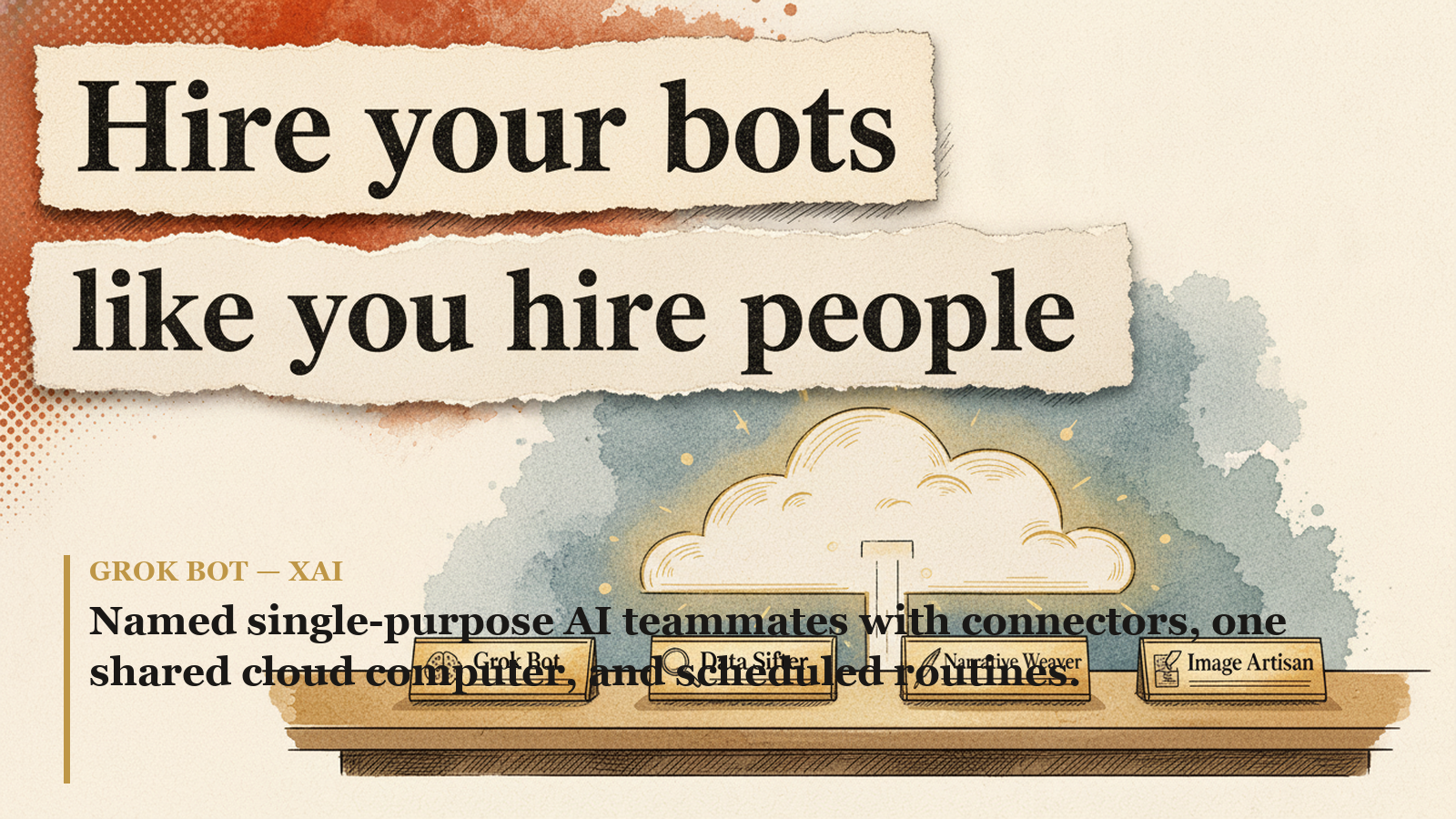
The clearest evidence that multiplayer is the frontier is that the most usable products don't have it yet. Touring seven Grok Bot agents she runs daily, Claire Vo lands on the same missing feature from the product side.
These are still single player… you can't put a bot in the group chat. And I want a bot in the group chat.
Claire Vo
Bot-to-bot group chats exist; a human-shared single bot does not. She rates OpenClaw's multiplayer higher in the abstract even after migrating off it — the feature is wanted, not yet solved in the tools people actually keep running.
From gap to playbook: the untapped half of work
In a follow-up, Whittemore grounds the thesis in third-party data instead of asserting it. Most early agents — researcher, writer, coding, chief-of-staff — serve the individual, yet a large share of work is collaborative, and that half is untouched.
Gensler 2026 Global Workplace Survey; Microsoft Work Trend Index; Asana Anatomy of Work Index.
The design goal is team-owned context — one shared repository, not everyone's private folders holding copies of the same docs. To pick where a shared agent should live, score candidate workstreams 1–5 on four axes: shared need, staleness cost, permission sensitivity, and checkability. Start with the highest. The on-ramp is a four-session sprint: inventory what your team runs today, extract shareable context, map where work overlaps, then ship and test one shared agent used by at least two people on real work.
Anywhere a team already crowds around one problem, there should be multiplayer agents they all share.
Aaron Epstein, Y Combinator
The signal is now industry-wide: Anthropic's Claude Tag (a shared Claude scoped to a Slack channel) and Y Combinator naming 'multiplayer AI' a Fall 2026 Request for Startups both point the same way — the way Google Docs beat Word and Figma beat Photoshop by turning solo tools multiplayer.
Day 2 still single-operator
Galaxy Day 2’s Cupcake build kept the same shape: specialist bots plus a human merge/approval desk, one livestream crew steering — not a shared session a colleague can take over. Shared computer still isn’t multiplayer.
Judgment about relationships is the scarce input on handoffs — who owns, whose approval, promises outside authority. Multiplayer agents without that decide layer just accelerate the wrong handoff.
Claude Tag and Mio: shared agents ship
This page is the shared/multiplayer rail for Seven Ways How We Use AI Is Changing (NLW / AI Daily Brief, 20 Sep 2026). The September 2026 interaction-shift roundup lists shared/multiplayer agents as sticky. Claude Tag scopes `@Claude` to a Slack channel (replacing per-user Slack Claude). Mio pitches an "AI employee your whole team shares."
Multiplayer AI […] remains one of the biggest non-technical problems in using AI right now.
Ethan Mollick, via AI Daily Brief
That closes some of the "can't put a bot in the group chat" gap this page named earlier. Mental models for principal/identity are still unsettled — whose authority, shared memory vs personal context, org adoption. Governance, not model IQ.
Team-agent playbook: archetypes and five decisions
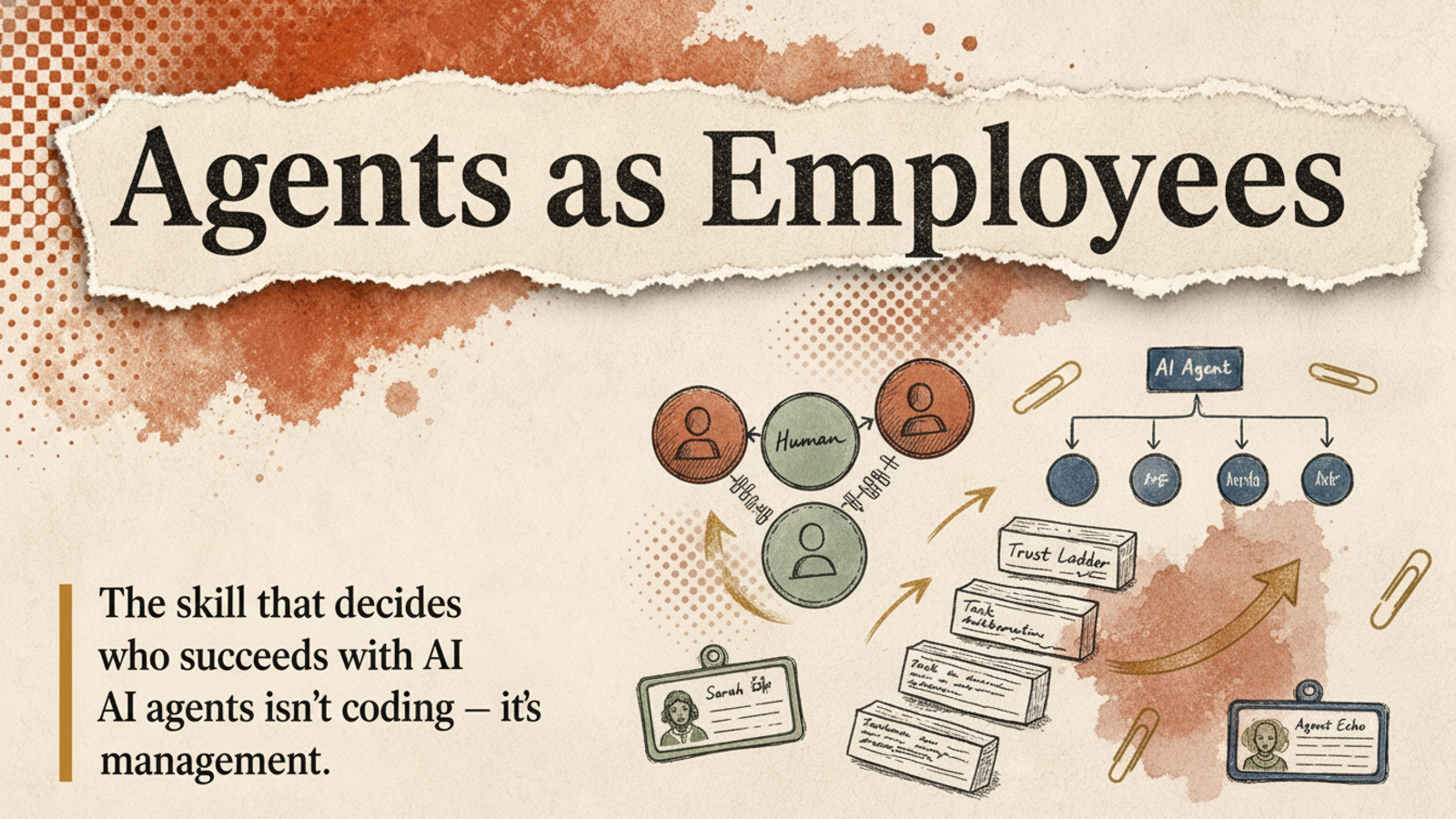
Whittemore and operator Nufar Gaspar walk the multiplayer playbook: solo agents hit a team ceiling (handoffs, private context that dies with the owner). Maturity path: private → pool overlapping personal agents → maintained team-level agents. A team agent is not a skill library — it carries team knowledge across ad-hoc and repeated work. If colleagues keep asking to borrow your private agent, promote it.
Five design decisions: who it serves (role + don't-list); where it lives (folder → vendor workspace → self-host — pick the simplest option two people will use this week); what it knows (collect → keep-out → approve → maintain); what it can touch (asker's rights vs agent account vs borrowed login, read-only); who owns it (rules of engagement + pilot monitoring). Team agents are knowledge-and-trust products — invest in the knowledge layer; platforms are shipping native multiplayer.
Single vs multi-agent at the frontier lab
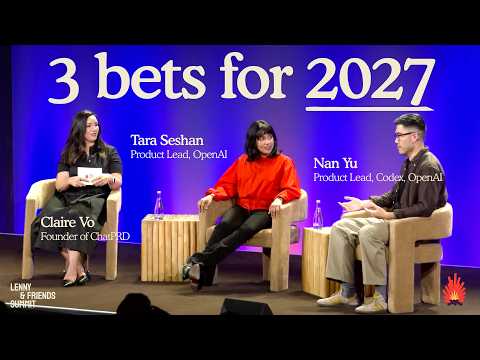
OpenAI product leaders Tara Seshan and Nan Yu (Lenny & Friends Summit) map the same design tension operators feel: ~40 agents overload; use-case decides single identity vs fleet; chief-of-staff pattern for coordination; permissions and memory are the constraint, not model IQ.
That pairs with DevDay's single-Dot bet versus Claire Vo's micro-agent preference — flag the contradiction, don't overwrite. Gaspar's four archetypes (including chief-of-staff) and five design decisions remain the operator checklist.
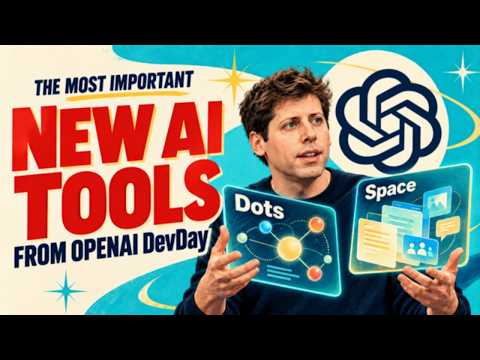
Whittemore's DevDay recap names the same arc as an industry sequence: efficiency to persistence to multiplayer. Space is the collab surface power users loved more than day-one Dots — Claire Vo: Space underhyped, Dots overhyped; every company wants an AI-native collaboration workspace. OpenAI's bet is docs/slides where humans and Dots co-edit natively. One Dot vs micro-agents remains flagged, not resolved.
Space living docs: multi-Dot co-authorship
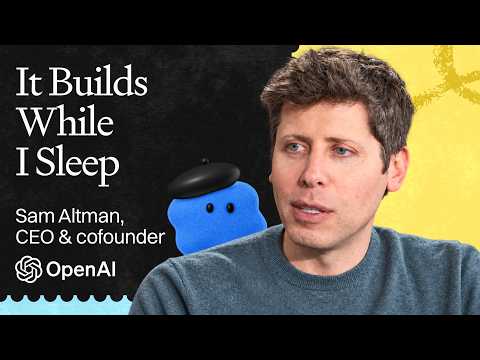
On Every's DevDay interview, Sam Altman describes Space as documents that update as people, Dots, and the world change — multi-person Dots co-creating on a shared surface. Same solo-to-multiplayer direction this page already tracks from Claude Tag and YC; adds the living-document mechanism (world- and Slack-driven updates), not just co-edit. The one-Dot versus micro-agents tension with Claire Vo's preference remains open — flag both, do not overwrite.
Software as a whole was not designed to work with AI.
Sam Altman, Every Podcast
Every's reversal: one company agent beats a roster of personal ones
After almost a year, Every went from OpenClaw for everyone, spread at its January Think Week, through Plus One to the Every Agent: one Slack agent the whole company shares and now sells, built on Claude Managed Agents. Personal agents died of setup, security and upkeep, and of fragmentation. Remembering which agent knew what was "annoying and hard", and the growth team's agent became the centre because adding to it beat building your own.
Why don't we take all that energy and put it into one agent that the whole company benefits from.
Willie Williams, Every
It's the private to pooled to team-agent path from the playbook above, run at company scale. At work, one agent per company learns the workflows and everyone improves it; a personal agent brought in "needs to have been there a year to really get up to speed." At home, personalization still wins, down to separate per-domain coaches, because a proactive ping only helps when you can tell who sent it. Dan Shipper now expects a company agent that later subdivides into team agents, pushed top-down, rather than personal agents coalescing.
Read it with the lean in view: this is a launch-week episode for Every's paid product, and Shipper himself says "it's possible we're wrong." It also cuts against the one-agent-per-domain rule and against Every's own earlier case for personal agent ownership. Both readings stay on the table.