TL;DR
The short version
Every gave every employee a personal agent. Most of them died from neglect. What survived was one shared agent the whole company improves. At work, the agent that learns the company beats a crowd of personal ones. At home, personal still wins.
On The Every Podcast, Dan Shipper and Willie Williams, Every's head of platform, trace the path from OpenClaw for everyone to the Every Agent. It lands as OpenAI's Dots make personal agents the hot thing again. Shipper admits up front that "it's possible we're wrong".
Built on Dan Shipper's conversation with Willie Williams and Every's launch post for the Every Agent.
Everyone got an agent, and everyone learned from watching
The spread started with OpenClaw, an open-source personal agent. It took off at Every's January Think Week, when people could finally show each other what their agents did: ordering groceries, sitting in family group chats. Soon Slack was full of bots.
The unexpected win was visibility. Before, people saw only the output of a colleague's local setup. With agents working in Slack, they could see how others prompted. "Oh, I didn't know I could use it that way," Williams recalls thinking.
Then the agents died of neglect
The trouble was upkeep. For builders, tuning a personal agent was fun. For everyone else it meant security worries, setup and constant care. "If you don't invest in it, it like kind of kind of fades."
Every tried to fix that with Plus One, a one-click way to make your own agent. Building a platform on fast-moving open-source code proved hard, and the agents quietly died anyway. Williams's own, R2-C2, disappeared when someone knocked the power off its Mac Mini. He never restarted it, because Codex was doing the job.
Fragmentation hurt too. Remembering which agent knew what was "annoying and hard". One growth agent, Montaigne, became the centre of gravity because adding to it beat building your own.
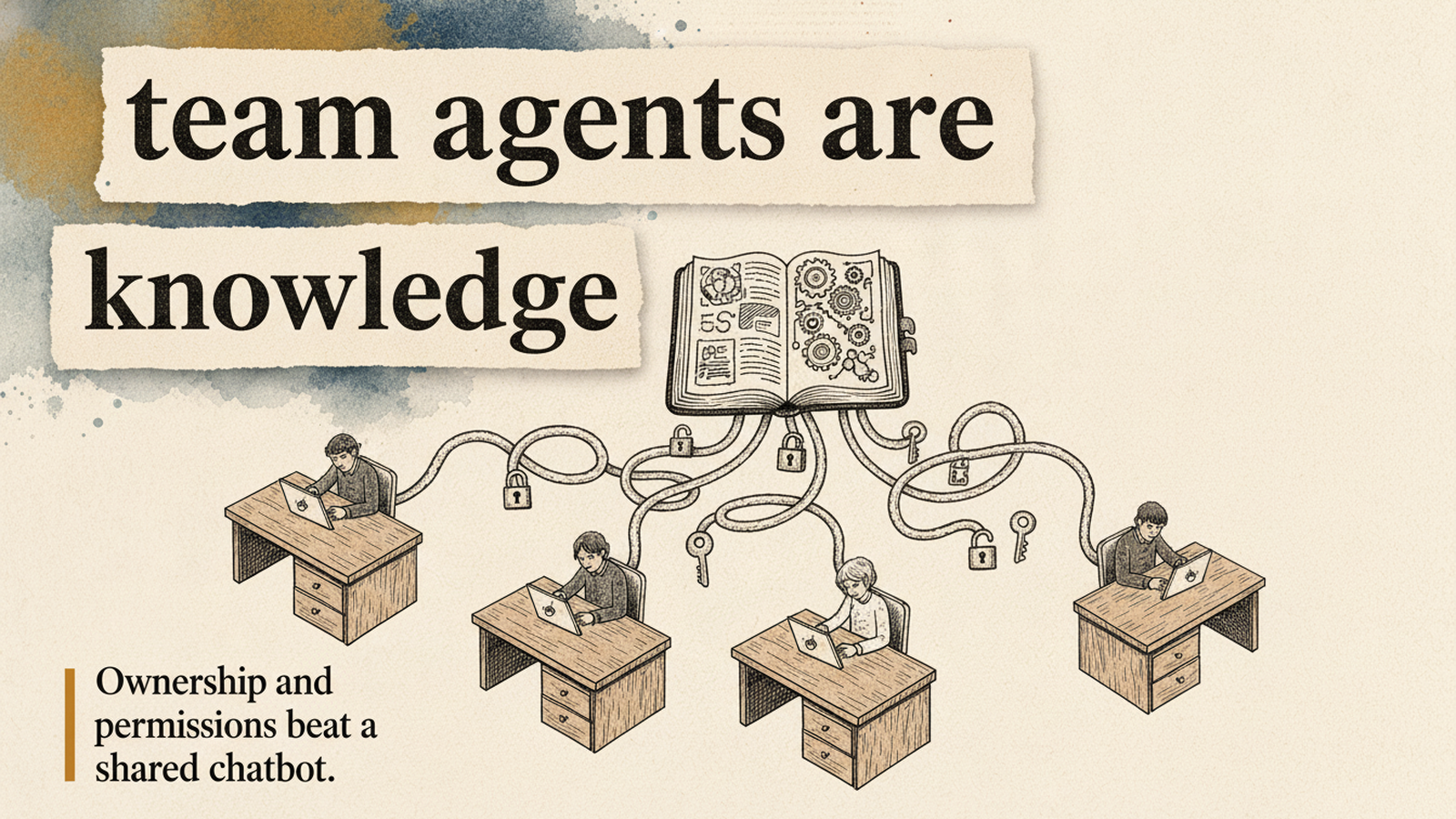
Why don't we take all that energy and put it into one agent that the whole company benefits from.
Willie Williams, The Every Podcast
That agent became the Every Agent: one Slack agent the whole team tags, which saves corrections as reusable skills. Every used it internally for almost six months before releasing it this week.
Builders want knobs. Operators want it to work.
Williams draws the line between builders and operators. Builders "want to be exposed to the complexity", because tinkering is the point. People running a business want something solid. They want something shared, so they know it's the right tool for the company.
That leads to his split between work and home. At work, one agent per company learns the workflows, and everyone makes it better just by using it. A personal agent brought in from outside lacks that context. "It needs to have been there a year to really get up to speed." He doesn't expect the industry to repeat the chaos of every worker getting an AI co-worker.
At home it flips. The thing people love is an agent that is just theirs. With bigger players and more money arriving, he thinks a much better consumer personal agent is close.
The character is disposable. The org chart comes from the top.
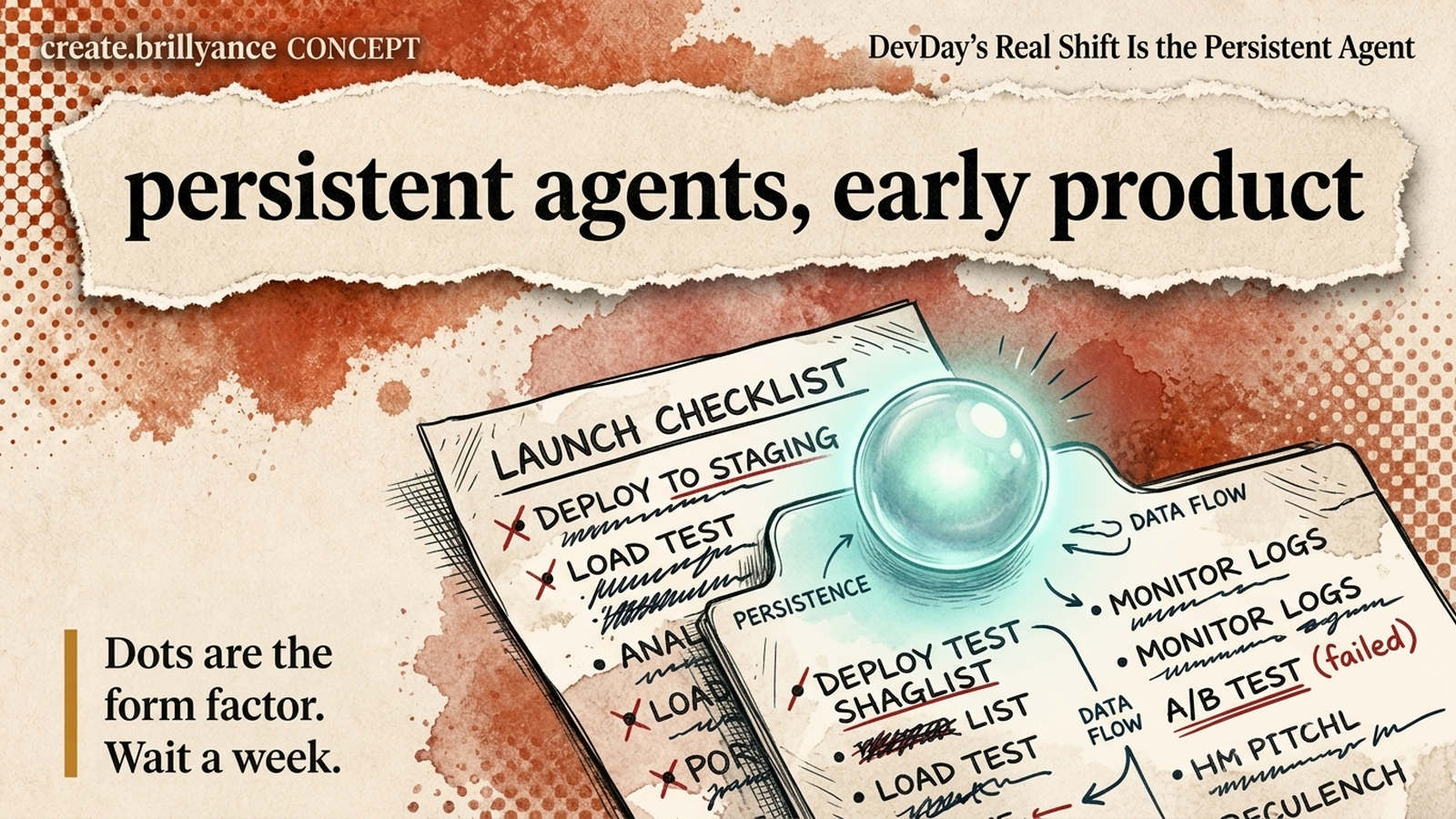
Shipper uses his Dot all the time and expects a persistent agent to be the default way he works with AI in a year. He doesn't expect it to still be Boo, his named Dot. "As soon as something better comes along, you throw away the cute little character you develop." He also calls Dots' permission system "completely a mystery".
He has changed his mind on how agents spread. He used to think personal agents would come first and merge into shared ones. Now he expects one strong company agent at the top that splits into team agents when a team needs a specialist. That fits, Williams adds, how AI transformation usually happens: pushed by a CEO, not grown from the bottom up.
What changes for the manager
Williams has gone back to managing engineers, and says the job feels the most familiar of any he has done. A manager's leverage is how much of the field they can see. He runs a feed in Dan's open-source Tend, which pulls Slack, meetings and notes into one stream of decisions and FYIs.
His token use "fell off a cliff" when he moved back into management. The hard work is still people: finding bottlenecks and having conversations. What has gone is the manual routing, like summarising and passing information along. Agents now check dashboards for anomalies every five minutes. "You have an agent on call as the first person all the time."
Proactive agents need one more thing: a sender you recognise. A message from his swimming coach agent, Williams says, he can place instantly. A message from some generic thread, he can't.