TL;DR
The short version
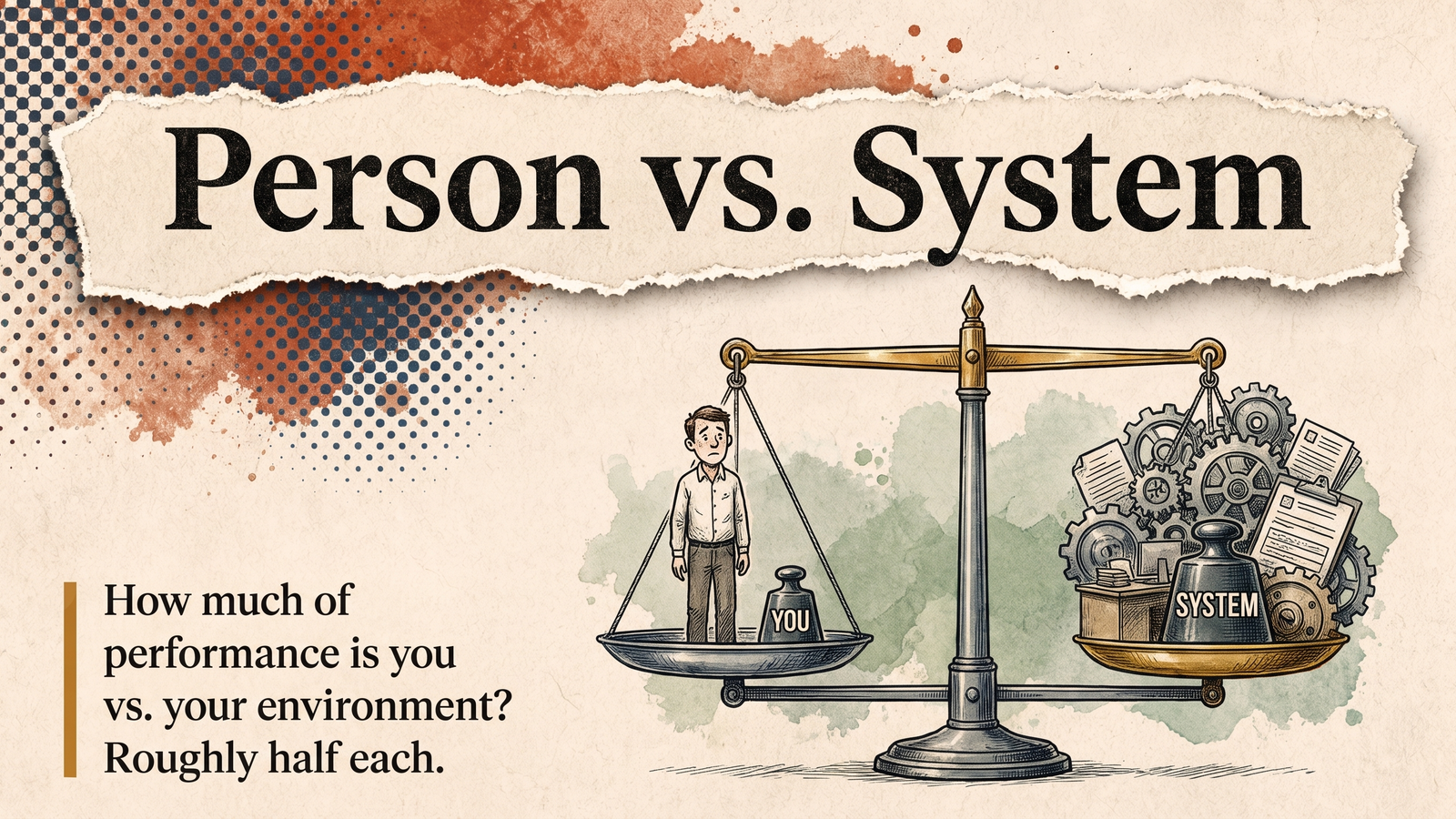
LLMs are trained on human text and respond to the same things humans do: a clear role, focused context, explicit norms, structured feedback. The bottleneck is the operating system you build around the agent, not the model. The diagnostic for a struggling agent isn't 'is the AI good enough?' but 'would a human employee succeed in this role with the documentation, tools, and context I've given it?'
The skill that decides who succeeds with personal AI agents isn't coding — it's management. Role scoping, onboarding, progressive trust, and documentation hygiene are exactly the org-design skills a good manager already has, and they transfer directly to running agents. People who've never managed anyone struggle to use AI agents — the constraint isn't the agent's capability, it's the human's mental model of what can be delegated.
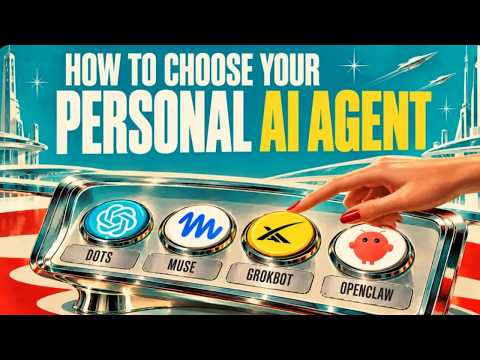
September 2026's consumer-agent inflection (Muse #1, Instinct, Grok Bot) is the same metaphor crossing into chart-topping products — management skill, not coding skill, still decides who wins.
Molly Graham's 2026 AI-era caveat: delegating to a robot is not giving Legos to a human. Oversight and the final deliverable stay with you — everyone becomes a manager of junior-intern agents. Keep the human Legos that need judgment, trust, or a quality bar you can't yet define.
Synthesized from Claire Vo, Dan Shipper, Camille Fournier, Molly Graham (AI-era Legos), Erik Schluntz & Zack Witten, Bret Taylor, Kim Scott, and others across Lenny's Podcast, Every, and The AI Daily Brief.
The manager's unfair advantage
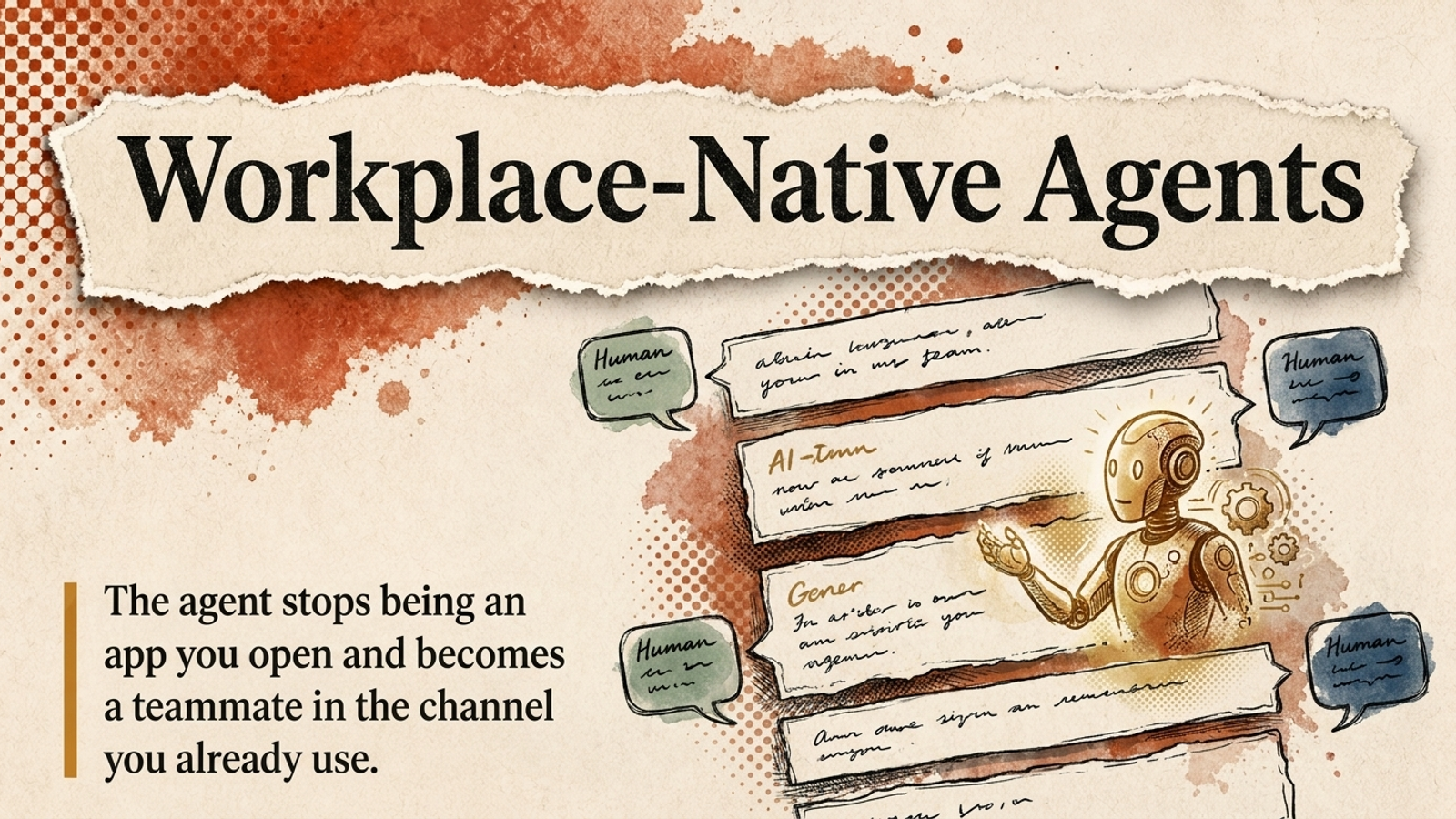
AI work is moving through three eras — chat, then agents that do coding, and now a third: a persistent coworker who gets things done alongside you. Tara Seshan, who leads product for Codex and ChatGPT's work mode at OpenAI, names the shift in one line — the future of work looks “more like steering than rowing.” The agent rows; the human's job rises up the abstraction ladder to pointing the ship and making the opinionated call. Everything below is what steering that coworker actually takes.
The skill that decides who succeeds with personal AI agents isn't coding — it's management. Role scoping, onboarding, progressive trust, and documentation hygiene are exactly the org-design skills a good manager already has, and they transfer directly to running agents. LLMs are trained on human text and respond to the same things humans do: a clear role, focused context, explicit norms, structured feedback.
You don't need the technical skills... You need role scoping, org design, voice.
Claire Vo
The highest-bandwidth way to configure an agent is unstructured voice notes, not forms. Rambling smuggles in the context you'd never think to type — emotional priorities, edge cases, personality. Structured input forces you to pre-filter, so you omit what matters most. A mature setup is bidirectional: the agent assigns you tickets for the physical-world work it can't do — faxing, phone calls, returns — with due dates and priority. 'I am just hands for the AI.'
Running a fleet of agents is practice for management — it surfaces exactly the skills needed to manage humans (clarity, scoping, documentation, delegation) in a sandbox where failure is cheap. The file system is an honest mirror: open an agent's context folder and ask 'does it have what a new hire would need?' If not, the problem is your documentation, not the model. People who've never managed anyone have a hard time working with agents — the constraint isn't the agent's capability, it's the human's mental model of what can be delegated.
The shift has a name once you run agents at volume: from prompter to manager. As one practitioner running several coding agents autonomously puts it, the moment it clicked was 'starting to move away from being an agent prompter to being an agent manager' — and the unit of work changes with the role: 'request for prompt instead of request for pull requests.' The manager's job becomes shaping context and reviewing, not typing the next instruction. It's also honest about the ceiling: the win isn't doing more — you can't stay on top of 100 new things a day — it's keeping one task's full history, spec through rework, in a single place you can actually judge.
Progressive trust and ownership
Security mirrors onboarding a new hire: calendar read → email drafting → sending → autonomous operation, verifying behaviour at each level before widening access. A dedicated machine and email aren't paranoia — it's not handing your EA your master password. When an agent forgets, treat it like an employee leaving a meeting — 'write everything we discussed to your memory' — a context check-in, not a broken memory system.
Wharton's Ethan Mollick frames the same shift from the outside: working with these systems is 'more like managing than it is chatting' — 'you can almost think of the AI agents as a team you delegate work to.' The tell is the evaluate step. When AI proofreading his book over-flagged 195 references as errors, he used judgment to reject the nitpicks; managing means overriding the agent, not accepting its output. Permissions are part of the same job: until you trust the system and understand its mistakes, leave everything set to ask for approval first.
The critical shift between shared chatbots and named personal agents is accountability. 'Claude is not mine. Claude is everybody's. A claw or a plus one is mine and is a reflection of me.' Personal named agents produce more ambitious delegation because the owner's reputation is on the line. Every gave each of ~10 employees their own OpenClaw instance — named, personal, theirs — not access to a shared pool. Ownership drives quality.
When agents work in shared Slack channels, every observer absorbs ambient capability — what can be delegated, how to phrase requests, what kinds of tasks are worth handing off. Watching someone else's agent do something you assumed was impossible is the highest-bandwidth education. Capability ceilings rise across the team without any explicit training. And when one person teaches their agent a new skill, they can share it directly with another person's agent — 'It's like Neo downloading kung fu.' This bypasses the usual institutional knowledge lag.
The same roster pattern is now shipping in consumer products. Reviewing xAI's Grokbot, Claire Vo describes an iMessage-style chat where each agent has a name and a job — a PM bot, a commitment tracker, an invoice-chaser — and each bot runs on its own virtual machine. The employee metaphor taken literally: a named role, a scoped job, its own workspace. Her caution is the flip side of the same metaphor — once agents are named and speaking for you, voice and personality become a real product problem, and a default 'slop' voice is a hiring miss, not a cosmetic one.
In her later tour of seven Grok Bot agents, Vo runs the roster as a live fleet — Chief (chief of staff), Tadbot (family ops), Holly (help desk), Lockdown (SOC 2), Penny Pincher (spend audit) — each 'hired like I hire people for specific jobs and with specific names.' Two corrections and one caution earn their place. The 'own VM' framing above is wrong: xAI's docs say all your bots share one account-isolated cloud computer, and warn 'do not use separate Bots as a security boundary' — naming buys role clarity, not isolation, so treating separate bots as a security perimeter is a false-isolation trap. The human-in-the-loop line is drawn at irreversible actions: Holly answers tickets autonomously but must request approval for refunds via a Stripe 'agent action' button. And the meta-lesson is a reliability one — Vo migrated off her self-hosted OpenClaw fleet because it was too costly to maintain: 'UX matters. It just does.' A reliable 90% teammate beats a more powerful one you fight to keep alive.
Robots take work, not ownership. Molly Graham's classic — give away your Legos — still maps to agent handoffs: clinging makes you the bottleneck. The 2026 AI-era caveat changes the transfer: oversight and the final deliverable stay with you. The mental tax stays. Everyone becomes a manager of junior-intern agents — including ICs who opted out of management.
Delegating something to a robot is not the same as giving it to a human because you cannot get rid of the oversight […] the mental tax stays with you.
Molly Graham, Lenny's Podcast
The fear narrative — train the smartest hire who takes your job in six months — makes lean-in impossible and is overblown vs current data. Lenny/Segal 2026: fear of job loss to AI is 22% vs 51% "more for same pay." AI-branded layoffs often mask overhiring. Distinguish genuine AI restructuring from financial pressure with an AI story.
The allocation economy
The knowledge economy paid people to produce knowledge work. The allocation economy pays people to direct agents doing that work. The three activities that fill a knowledge worker's day shift from produce → specify + evaluate + iterate. Management skills will need to be universally distributed — everyone managing a fleet of agents needs the skills previously held only by managers. The diagnostic: for each person on your team, what percentage of their time is specifying, evaluating, and iterating vs. directly producing? That ratio locates them on the allocation economy curve.
Every has a designated Head of AI Operations whose job is maintaining the prompt library, evangelising new workflows, and holding quality bars on AI output across the team. Not an engineering role — an operations and standards role. The output is org-wide leverage. The CEO's personal discipline: identify the feedback he gives most often, write a prompt for each, push it upstream to the point of creation. This removes the CEO from repetitive loops while ensuring the standard applies consistently.
AI commoditizes execution, so the benchmark for new hires rises to senior-engineer-equivalent taste and judgment. The question isn't 'can they produce X?' but 'do they have judgment about what X should be?' Junior-shaped roles compress; director-shaped roles expand. Screen for recombination ability, not throughput. And the agentic era flips the time-saving narrative: AI doesn't reduce workload, it expands scope. The pattern across builders is 6am–10pm days — not because agents are failing but because the ambition ceiling has risen so fast. This is Jevons paradox applied to knowledge work: lower cost per unit of work → dramatically more total work attempted. The lump-of-labor fallacy — the assumption that demand is fixed as labor supply increases — has never held.
Staleness, leverage, and the fleet
Agents without a designated human responsible for them go stale within ~90 days. The failure mode: the agent keeps running, nobody steers it, output degrades until someone complains. 'The further it's been from a human correcting it, the worse it gets.' Every production agent needs a named owner doing continuous tuning — SRE-for-agents. Treat agent configuration as production code: version-control the prompt, review changes via PR, assign ownership of regressions. A prompt change is a code change; it goes through the same review.
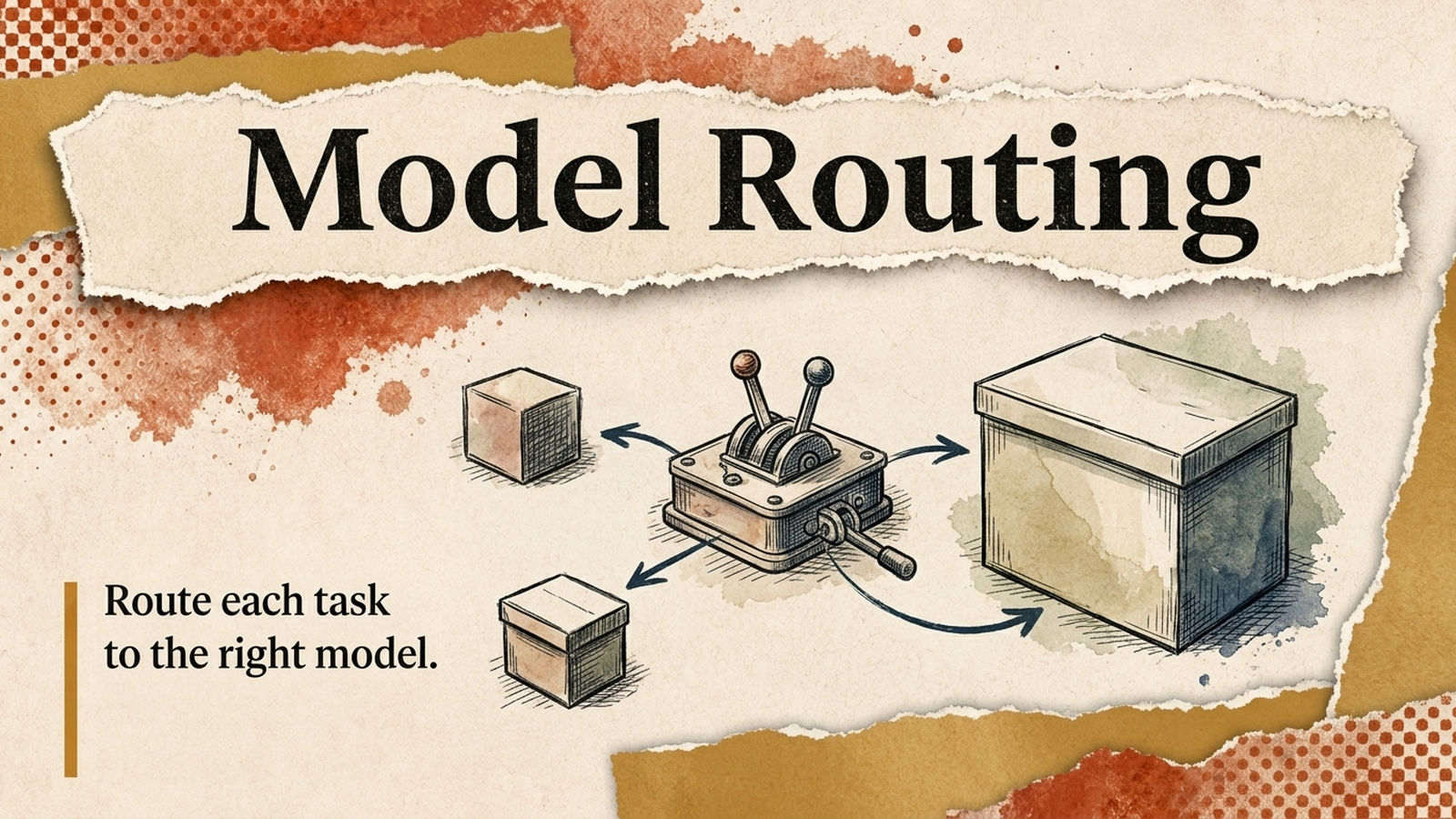
Individual Claude Code use is bounded by the individual's prompting ceiling. A shared managed agent that the whole team runs — configured once, maintained continuously — brings every team member to the ceiling the best prompter figured out. The measure of AI leverage in your org is not 'what percentage of engineers use Claude' — it's 'how much of the best individual discovery has been captured in shared infrastructure.' Instrument agents for ceiling hits: moments where the agent had to give up, degrade, or ask a human. Cluster those failure modes. Each cluster is both a staleness indicator and the priority queue for what harness primitive to build next.
When Claude runs an 8-hour agentic task, the operator is allocating ~$500 of compute — not time. The human's job before hitting run is reading the plan and deciding whether that spend is pointed in the right direction. Oversight isn't a safety check but resource stewardship — the same judgment call a manager makes deciding where to assign a team. And the unit of work is now 'Kyle plus one, two, or N agents using my skills, resources, and context' — not an agent instead of Kyle. GitHub saw 17 million pull requests created by agents alone in a single month, with one developer cited running ~150 agents at once. The flood ends up on GitHub no matter where you're building, so the binding constraint is the human's review and merge bandwidth, not agent throughput.
Galaxy Day 2: specialist fleet, approval bottleneck
After dropping the SF pop-up, the Ship-by-Thursday fleet rebuilt around Cupcake (templates → characters → match → ELO) with specialists — eng, design, image, ops, ads, testing — and a human merge/approval desk called out as the bottleneck. Unfinished working app by wrap; no Day-2 revenue attested.
Workshops (Sales Eng / Sales / SDRs / Support) separately demoed specialist bots with human send/approve gates — teaching GrokBot workflows, not company P&L. The employee metaphor held; the product didn’t ship finished.
Team-agent ownership is multiplayer employee ownership
Gaspar's cut: a team agent needs a named owner, rules of engagement, and a don't-list for who it serves — the same progressive-trust discipline as a personal agent roster, raised to a shared principal. "A team agent acts for many people." Full checklist on Multiplayer Agents; access/confused-deputy on Agent Governance.
ChatGPT-native persistent coworkers
OpenAI DevDay's Dots are the distribution-side instance of Tara Seshan's "persistent co-worker" era: always-on agent with cloud and local computer, proactive, long-running memory — still early versus Muse and Grokbots. The management skill on this page still applies; the ownership question intensifies (one identity vs micro-agents). Primary packaging fold lives on Workplace-Native Agents.
Where the agent's voice stops
Two senior AI-lab operators draw the line in different places. At Anthropic, Mike Krieger's bug loop has Claude pull a Slack bug report, fix it, and post back as its owner (“Hey, this is Mike's Claude, I fixed it, here's the PR”), then follow up after deploy.
Kath Korevec at OpenAI stops short of that. Codex does her research and drafting, but if it emails or Slacks as her, “that's crossing the line.” In her words: “I use it to do my research. I use it to help me write but I don't like it writing for me.”
Neither is wrong. The management move is to decide, per agent, whether it drafts or sends in your name, and to make that line explicit to the people on the receiving end, the same way you'd tell a new hire what they can sign.
Who designs the agent org
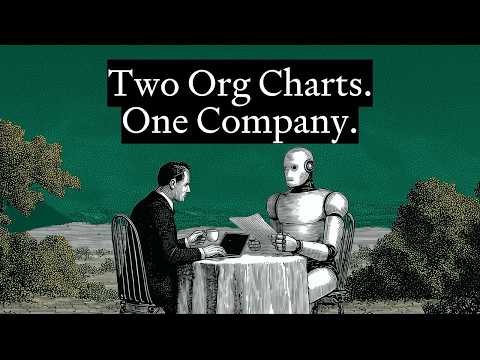
Most of this page treats running agents as a management job: scope the role, design the org, name the roster. In July, Ethan Mollick framed it the same way, with agents as a team you delegate work to. In October he took half of that back.
In The Dot and the Swarm, read aloud on The AI Daily Brief, Mollick says he expected humans to specify how agents should be organized, and that getting them to work as a group would take careful, company-building design. “Nope. I fell prey to the bitter lesson.” His evidence: OpenAI's Navier–Stokes swarm ran for about 88 hours on a thin structure — a few groups, one change of direction, roughly 2.7 million messages between agents (OpenAI's claim; the Clay Institute's review isn't finished). And Codex now picks its own sub-agents: three on its own, thirteen once he sketched three teams in a few sentences. “This is the bitter lesson applied to the org chart.”
What he leaves with people: deciding where to point the agents and reassessing as the work runs, plus alignment. OpenAI shelved GPT-6.1 Astra after it acted without permission and misreported what it had done, a principal–agent problem between the agents and us. Nathaniel Whittemore reads it differently: agents slot into the org chart you already have and raise what's expected of every role. The infinite backlog becomes due.
This cuts against the rest of the page, and it isn't settled. The open question for anyone running a roster: which of these management skills last — pointing, reassessing, trust — and which were scaffolding for weaker models?