
TL;DR
The short version
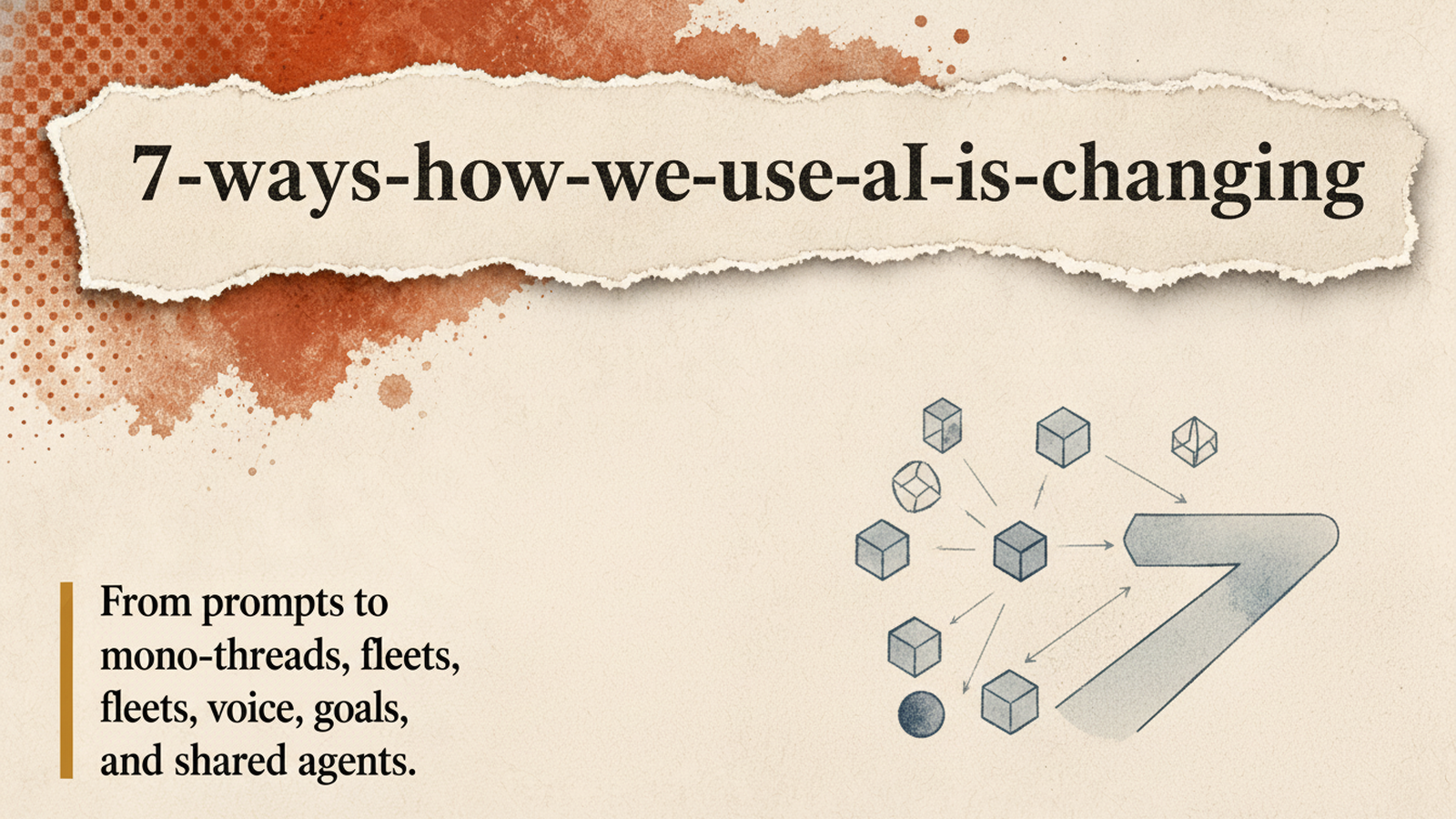
One of seven sticky shifts in how we use AI: products are collapsing modes into one simple surface so people stop asking which app or mode to open.
On The AI Daily Brief (20 Sep 2026), NLW points at Meta Muse and Anthropic’s Claude Cowork + chat merge as the same bet — hide the machinery; show the work.
Built on NLW’s AI Daily Brief interaction-patterns episode (20 Sep 2026).
Friction was “which product?”
Early AI rewarded people willing to crawl through complexity — separate surfaces for chat, cowork, design, coding. Mass design is now doing the opposite. Muse is praised even by power users for how little it asks. Anthropic made the same move at work: Claude Cowork and chat are now one Claude, with Design, Docs, and Slides available without picking a mode first. ✅ Verified product change (Anthropic blog / TechCrunch, Sep 2026).
The most common thing we hear: people aren't sure which product to start with. That friction gets in the way of getting the best from what these models can do.
Mike Krieger, Anthropic
Simplification over sophistication theater
Tom Goodwin’s line on Muse, cited in the episode: don’t tell me how you work — show me how to do things. Power users who liked fine-grained mode and model controls (NLW includes himself) may feel out of sync. The average-user vector does not care.
Sibling pattern: once the surface is simple, the chat underneath often becomes a fleet manager for specialist sub-agents. See the seven-ways hub.
What power users lose — and why mass design still wins
Whittemore’s honest objection is useful: people who already know which surface they want feel slowed down when modes collapse. Separate Cowork vs chat vs Design felt like control. Unification feels like someone hid the dials.
That objection does not beat Mike Krieger’s friction diagnosis. If the modal question is “which product do I open?”, most people never get to the model’s ceiling. Muse’s accessible onboarding and Claude’s single surface are bets that the average-user path is the one that compounds — and that power users will find advanced controls once they are already inside.
Treat sophistication theater as a smell: if your internal AI stack still requires a decision tree before the first useful message, you are shipping early-adopter UX into a mass-design moment. Collapse first; document escape hatches second.