TL;DR
The short version
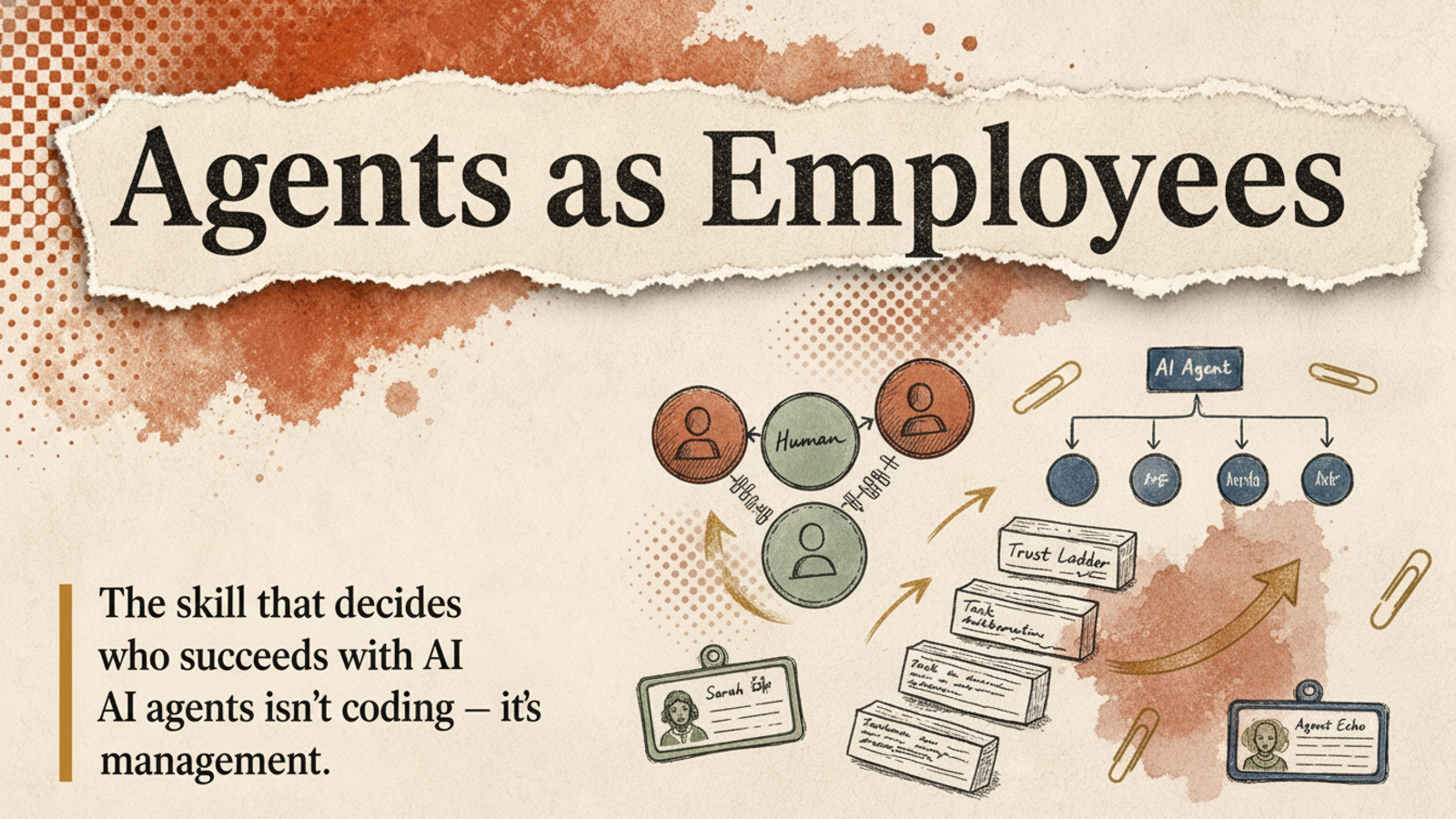
Grok Bot is xAI's AI-teammate app (desktop + iOS), launched in beta on August 11, 2026 out of the merged SpaceX/xAI operation. You staff bots by name and job; each gets connectors, a persistent cloud computer, and scheduled routines. It's the agents-as-employees idea taken literally.
Its pitch is a UX argument, not a capability one. In Claire Vo's hands-on, an everything-works-out-of-the-box teammate solved the maintenance burden that made her self-hosted harness unsustainable — so a reliable 90% teammate won. Still single-player: no human-shared bot in a group chat yet. By September 2026 NLW's personal-agents coverage puts Grok Bot in the consumer-agent discourse tier alongside Muse and Instinct — not only the workplace-teammate lane.
By September 2026 NLW's personal-agents coverage puts Grok Bot in the consumer-agent discourse tier alongside Muse and Instinct — not only the workplace-teammate lane.
Source: Claire Vo on How I AI. Single-vendor enthusiast hands-on; every quantity is her own usage. Product facts cross-checked against xAI docs and independent launch coverage (Unite.AI, digitalapplied).
AI teammates you hire by name and job
The operating model is the employee metaphor made product. You define narrow, named agents rather than one general assistant, and naming a bot lets the platform infer its role.
I like to hire my bots like I hire people for specific jobs and with specific names.
Claire Vo
Vo runs seven as a fleet: Chief (chief of staff), Tadbot (family ops), Look Good To Me (PR closer), Lockdown (SOC 2), Holly (help desk), Penny Pincher (spend audit), and Sylvie Style (shopping). Each reaches your stack through connectors (Gmail, Calendar, GitHub, plus MCP), runs on a cloud computer that keeps working when your laptop is closed, and can be put on a schedule. It can even kick off Cursor cloud agents to delegate coding jobs.
The builder's two founding decisions
Roman Ugarte took Grok Bot from first commit to a working internal product in four weeks, then to a public beta three weeks before he described it. His account of why it won isn't about the model — rivals could technically match the capability. It's about removing friction from delegation.
Once you start breaking out of 'this is AI chat with a set of connections' into 'this is a colleague with a computer,' it just raises the ceiling of what you would think to give to AI.
Roman Ugarte
Two bets did the work. First, erase the line between your computer and the cloud: you should never think about where a workflow runs or whether your laptop is awake — kick it off from your phone and it just runs. Second, treat each bot as a colleague with its own computer and its own credentials, onboarded like a new hire rather than sharing yours. That second framing is the builder's aspiration; the next section is why the isolation it implies doesn't hold in the shipped product.
The rest of the playbook is all friction removal: automations you define in plain language instead of a trigger-builder UI (Ugarte says 99% are now built that way — his own figure); skills and slash commands hidden as background primitives a user never has to learn; long-lived, role-based agents that learn over time instead of disposable chat sessions; and the unobvious call to build from scratch rather than bolt agents onto an existing coding assistant.
Routines are where the value is
A bot only becomes useful once it's on a schedule: an hourly inbox sweep, a 2:30pm pickup-coordination check, a Friday weekend preview, a Monday 8am sale scan. Scheduling is what flips a bot from reactive to proactive.
The ideal thing for an agent for a home is to get you off your computer and with your family.
Claire Vo
xAI's model separates two things cleanly: a skill describes how to do a task; a routine assigns that workflow to one bot and says when to run it. Teach-a-task recordings — demonstrate a task once and the bot learns it — are capped at 10 minutes. Tellingly, Vo often has to tell bots explicitly to schedule work; proactivity isn't the default even in a polished product.
Galaxy Day 2: pop-up dead, Cupcake pivot
Overnight the agents “told us to pivot.” Day 2 abandoned the SF pop-up / pop-up OS bet as too hard for the remaining 48 hours and reshaped Ship by Thursday into a game studio. Working title Cupcake: shareable GrokBot templates → battler characters → draft team → matchmake → auto battles → ELO.
a lot of things don't work yet, but we've hooked up the back end… logged into my real X account and there's a leaderboard with nobody in it yet… there's a bug, so I can't actually add any bots yet.
Galaxy Day 2 livestream
End of day: X login live, unfinished product, no Day-2 revenue attested. Workshops are GTM teaching — not company sales. Caption ASR mangling “Grok Bot” → “Grok Pot” is not a separate entity.
How xAI's own designers use it
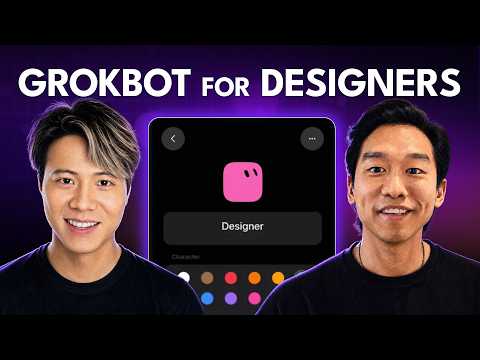
Two designers who build Grok Bot at xAI now use it to do their own design work — a demo of their own product, so read it as best-case, not an independent test. What's new is bots doing production design, not just inbox and calendar ops. One runs a 'Figma Bro' bot wired to Figma through the Figma MCP server: hand it the file link and a few layout rules and it edits artboards and updates marketing assets from a gym voice memo.
Your highest calling was never to design gradient fills in Figma. That was not what you were put on this earth to do.
Claire Vo
The pattern is design by direction, not by tool. One designer built a self-updating personal site with 'no Figma file, no spec' — text a bot a place and it runs Google Places, generates a 3D-clay miniature of the building, and publishes a check-in. The recurring win both name is off-computer work: tasks finishing while they're at the gym, on a call, or in the shower.
Two field-tested guardrails: your bot transcripts may be readable by coworkers (support asks for a session ID to troubleshoot), and when a bot gets a fix wrong, tell it to memorize the fix so it follows the script next time.
In the car: voice errands from a Tesla
Grok Bot launched inside Teslas on 22 September 2026. By voice, it handles errands such as a Starbucks order while the car drives itself, Amazon purchases, email and calendar. It's limited to SuperGrok Heavy subscribers, which The Verge puts at $300 a month.
Nathaniel Whittemore reads it alongside Meta putting Muse on glasses and a pocket device: personal agents are leaving the screen. Earlier AI gadgets failed because the AI couldn't carry the form factor. The open question is whether being in the car or on your face changes adoption, or whether distribution still does most of the work.