
TL;DR
The short version
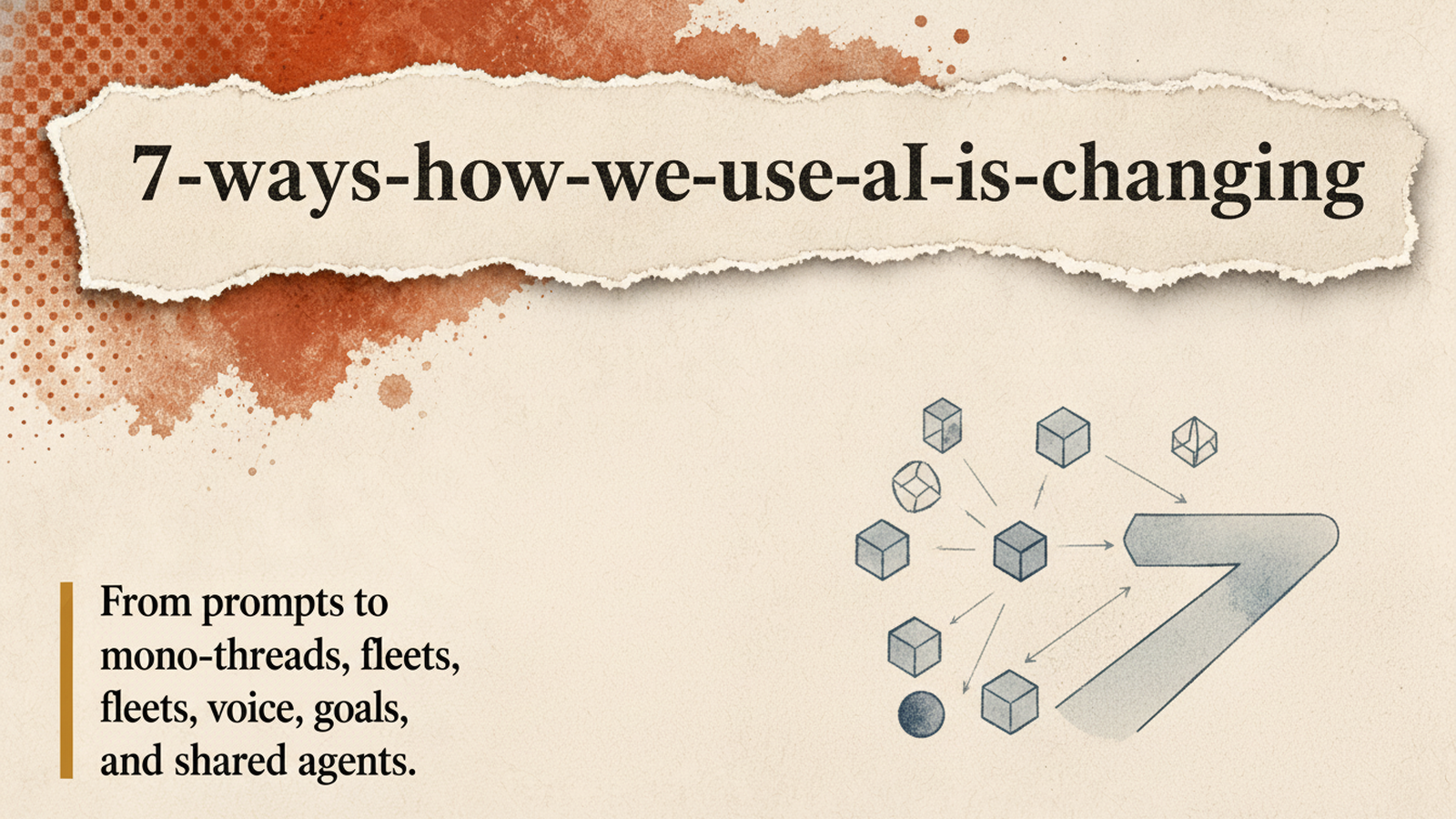
One of seven sticky shifts: instructions move from prompts to goals with measurable success criteria; the agent iterates until the bar is met (`/goal`-style primitives, OpenClaw loop design).
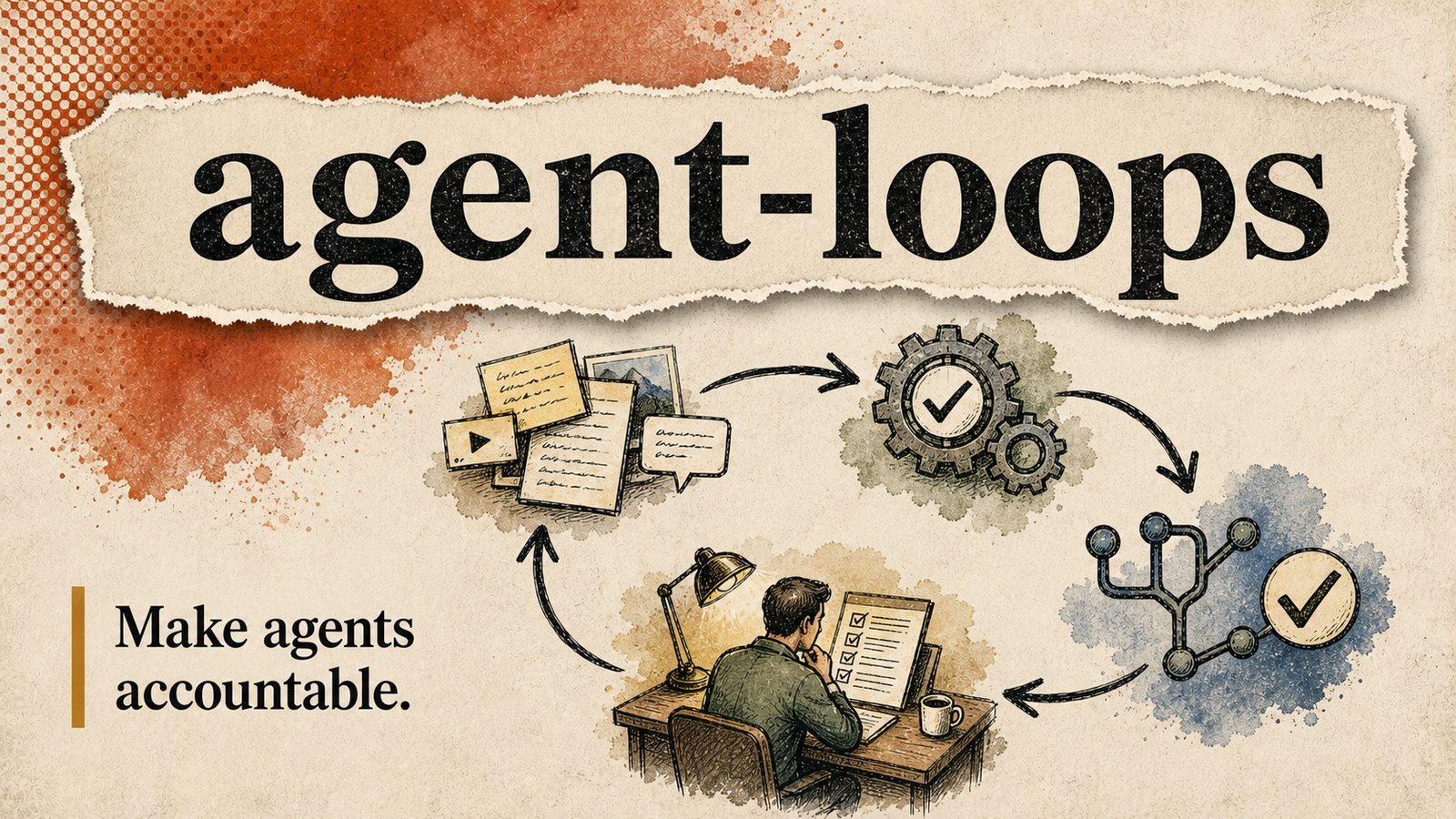
This page is the interaction-pattern card. The operating-model deep dive already lives on Agent Loops — harness, verification, batching, and “until” vs “when.”
Built on NLW’s AI Daily Brief (20 Sep 2026); folds into Agent Loops.
The Steinberger line goes mainstream
You shouldn't be prompting coding agents anymore. You should be designing loops that prompt your agents.
Peter Steinberger (OpenClaw), via AI Daily Brief
NLW’s September 2026 roundup puts that framing in the sticky interaction set — not just coding-agent folklore. Declare the outcome and the evidence that proves done; let the harness work, check, and continue.
Where to go next
For the full loop shape — structured input, machine-checkable finish lines, batch review, judgment models as the decide step — read Agent Loops. Pair with mono-threads (the long-lived coordinator that owns the loop) and multi-model routing (cheap checkers, expensive proposers).
Prompts ask once; loops answer until
A prompt is a request for a reply. A goal is a contract: outcome plus evidence. The harness — tools, tests, permissions, logs — is what lets the model keep working without you typing “what’s next?” every turn. That is why Steinberger’s OpenClaw line lands in a mainstream interaction roundup: the skill moved from witty prompting to loop design.
Knowledge work’s hard part is the missing compiler. “Make it insightful” does not converge. “Every competitor covered in under 150 words with sources linked” can. If you cannot write the bar, do not pretend you have a loop.
Use this card when you need the seven-ways framing. Use Agent Loops when you need harness shape, batching, verification, and judgment-model decide steps.