TL;DR
The short version
A frontier model's capability is jagged, not a single level. It can be superhuman on one task and fail an adjacent, seemingly-easier one, in ways you can't predict from a benchmark. So a leaderboard number tells you a model is smart in aggregate and nothing about whether it holds your task.
Claude Opus 5 is the sharpest recent example — first on the aggregate intelligence index and a reasoning-benchmark record at half a rival's price, yet reviewers call it neurotic, argumentative, and prone to quitting early. The operator move is not to read capability off a benchmark but to map the jag on your own work: A/B the model on your real task mix before you trust it, because the edges are where the surprises live.
Drawn from The AI Daily Brief (Nathaniel Whittemore, 27 Jul 2026), synthesizing the Opus 5 launch reception; the "jagged frontier" term comes from a 2023 Harvard/BCG study.
Capability is a jagged edge, not a waterline
The term comes from a 2023 Harvard/BCG study of GPT-4 and consultants: a model can be superhuman on one task and fail an adjacent, seemingly-easier one, so you can't read capability off any single score. Opus 5 is "one of the more jagged of jagged frontiers" — genius in flashes, frustrating in practice.
Benchmarks say frontier; vibes say jagged; both are true. Opus 5 leads several evals while hands-on testers describe a model that argues with instructions and stops before the job's done. The two readings don't contradict — they're the same jag seen from an aggregate number versus a specific task.
Artificial Analysis and ARC Prize, independent evaluations of Claude Opus 5
The jag hides in personality — and in the effort dial
Jaggedness isn't only about raw skill. A capable model with a bad interaction profile is still a jagged one: Opus 5 asks for confirmation before fixing a one-line bug and hands coding back to the user, tanking felt usefulness even where the underlying reasoning is strong.
It's neurotic AF. It is so timid. It's so apologetic. It's so scared. I've never experienced this.
Claire Vo, How I AI
The jag runs across a single model's own settings, too. Opus 5 peaks at "extra high" effort and dips at "max," where it loops on self-verification. More thinking can move you to a worse point on the curve — so reflexively maxing effort is its own kind of mis-route.
The jag is ordered by verifiability — and can outrun it
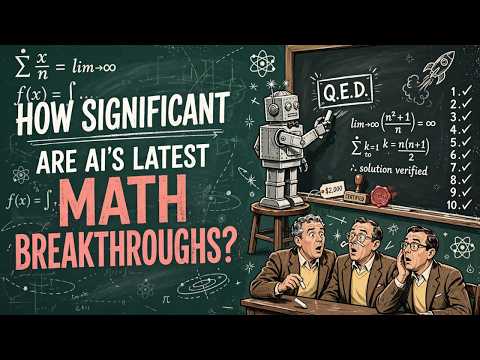
The jag isn't random. Models go superhuman first where outputs are objectively checkable — which is why an unreleased OpenAI model, Astra, settled ten decade-old math problems overnight for about $2,000, each formalized as a machine-checkable Lean proof, while far easier open-ended work stays out of reach. As Box's Aaron Levie put it, some of the hardest work in the world automates first "particularly due to its verifiability — math, cyber, and code."
A clean test gives a clean training signal and scalable checking, so verifiable domains lead. The operator read: to predict where a model will be superhuman on your work, look for the tasks with a cheap, objective pass/fail — that's the leading edge of the jag.
OpenAI's Astra math result, as reported Aug 2026 (Forbes, TechTimes); the count reflects wins only
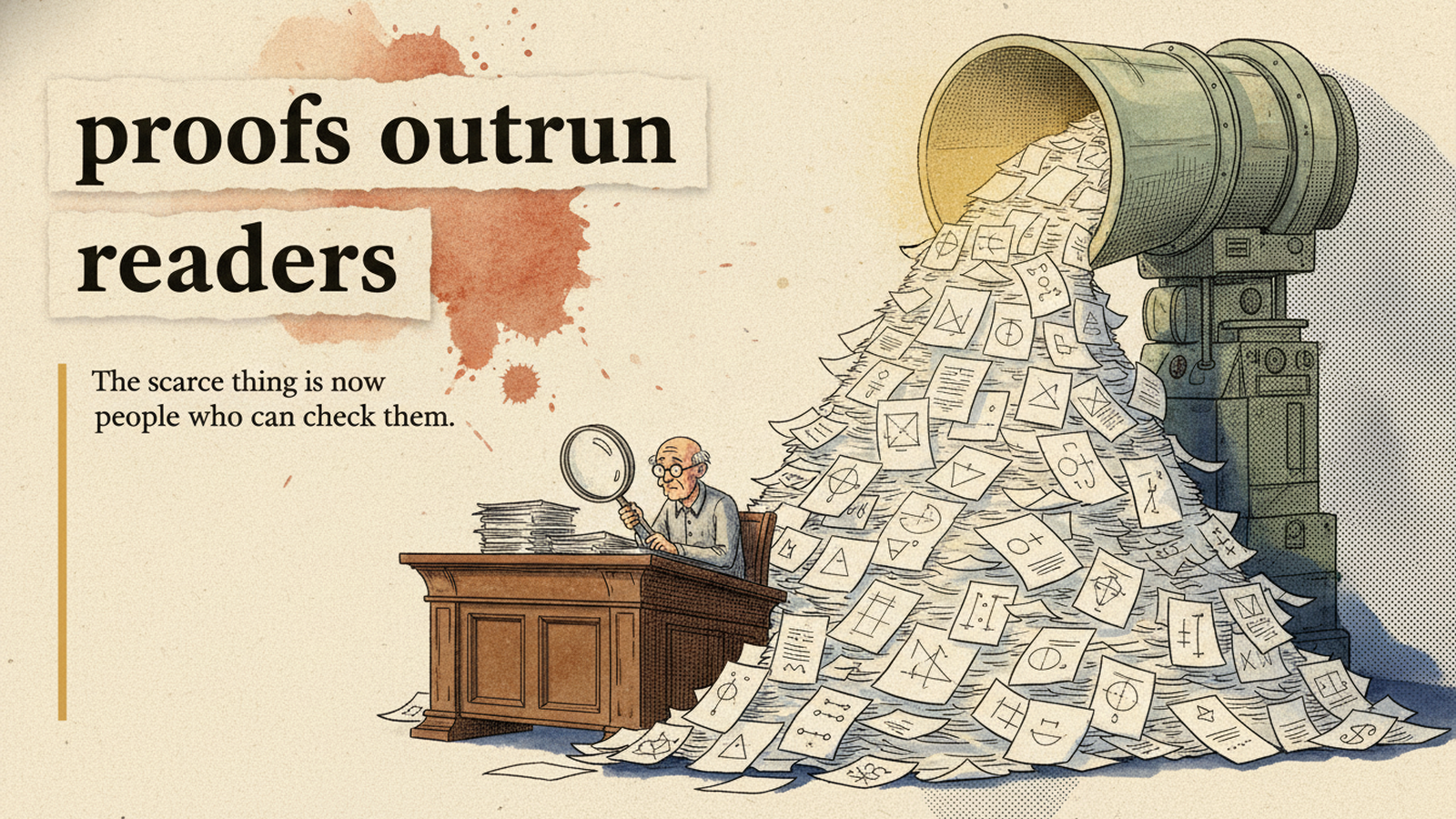
The unsettling part is the far end. No one in the Astra discussion — PhD mathematicians included — could independently judge whether the proofs were real; some resorted to asking a different model how hard the problems were. When capability outruns your ability to check it, you can't even locate the edge: you're trusting a machine certificate, not your own comprehension. Past that point, the only scalable check on a jagged model is another machine.
Verifiable fields fall first. Then absorption becomes the limit
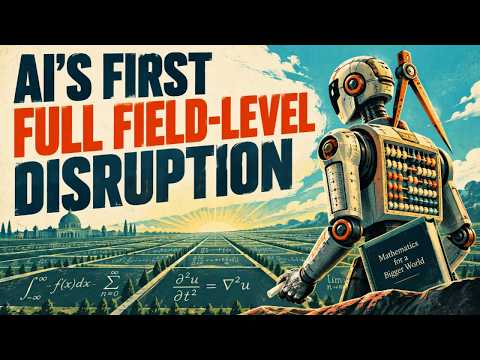
Two months after Astra, OpenAI released 722 manuscripts in 372 result families from an unreleased internal model. It posed about 4,000 problems and spent roughly three hours of ChatGPT Pro thinking per result. The Navier–Stokes result a month earlier had needed a swarm of around 10,000 agents. The cost of a result fell faster than the capability rose.
Nathaniel Whittemore calls math the first field disrupted at the level of the work, not the tools, because these were "verifiable problems that fit neatly into the reinforcement learning paradigm." Google's Peyman Milanfar gives the order the rest will follow: math and code first, then the hard sciences, then markets, medicine and law, and last culture, art and leadership.
Speed of automation is inverse proportion to the entropy of the subject domain.
Peyman Milanfar, read on The AI Daily Brief
The operator read: rank your own work by how cheaply its output can be checked. That's the order the jag will reach it.
Checking isn't the end of it. OpenAI shipped Lean artifacts, and as of 7 October 162 of the 722 manuscripts had their main results formalised. A machine check proves the logic. It doesn't mean anyone understands the result or can use it. Mathematician Francesco Maggi: results "have to be understood, connected, explained, challenged, reused," and he asks what happens when mathematics is generated faster than mathematicians can absorb it. Physicist Steve Hsu goes further: whole fields could lose interpretability.
So the strong end of the jag no longer waits on discovery. It waits on human attention. Keep the caveat in view: nearly every result is still OpenAI's claim under review, and the widely shared "90 of the top 500 open problems" figure counts claims against a list an LLM ranked.
Map the jag on your own task mix
Because the edge is unpredictable, the leaderboard can't route for you. A benchmark spike on one eval family is exactly what a jagged frontier produces — skeptics read the ARC-AGI-3 record as training on ARC-like environments rather than a general reasoning gain, and one dev found Opus 5 "nowhere near" a rival in practical use yet ahead on many evals. Treat a single-benchmark record as a claim to verify, not capability to assume.
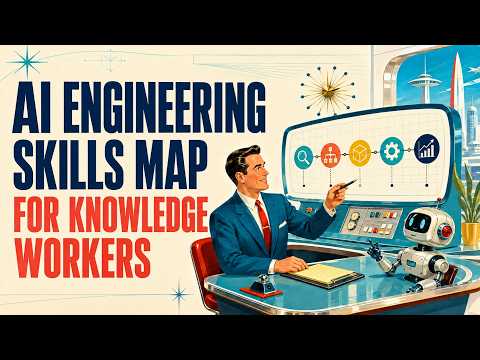
This is now a named, learnable skill. Nathaniel Whittemore's AI-engineering skills map for knowledge workers puts capability mapping first: knowing AI's jagged frontier for your own work — what it's natively good and bad at, which model and effort level fit, how much oversight a task needs. The term for the jaggedness it maps traces to Wharton's Ethan Mollick. The upgrade is to stop treating the jag as trivia about models in general and start treating learning your jag as a core skill of directing agents.
Labs map the moving jag so product doesn't dread it
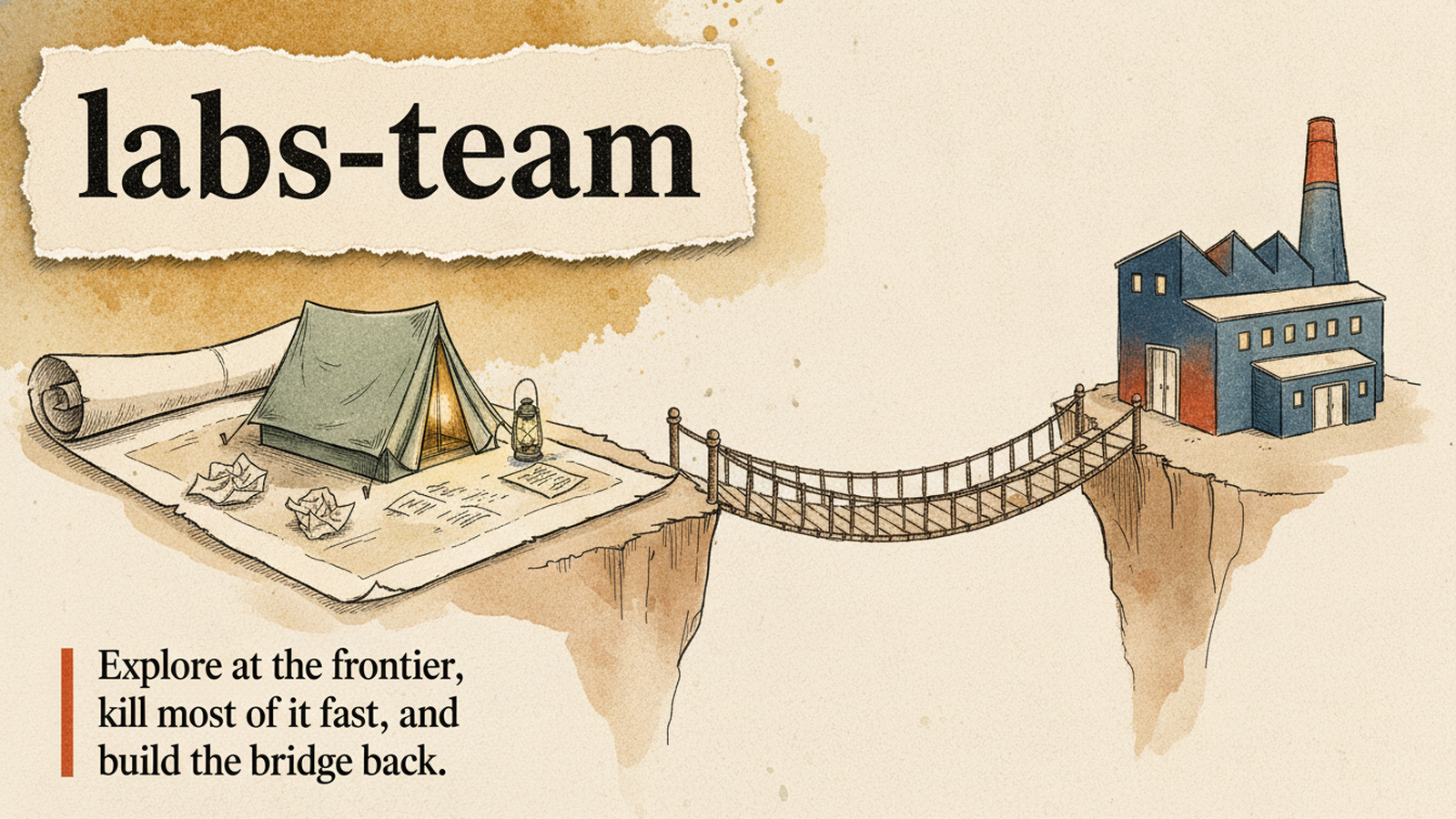
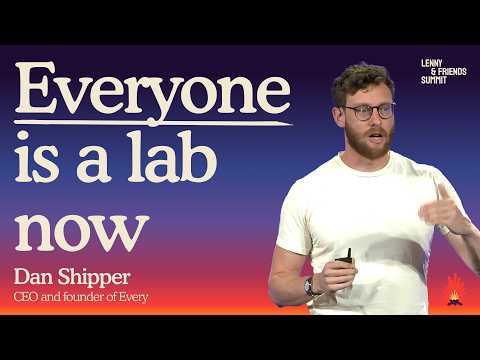
Dan Shipper (Every) at Lenny & Friends Summit 2026: during an AI technology revolution, asking the same people to explore uneven, moving model capability and ship a coherent roadmap pulls them opposite ways. Exploration is divergent and mostly disposable; exploitation is convergent and customer-facing.
The fix is organizational: a tiny labs function — even one person — runs parallel competing experiments that map the frontier. Capability mapping via parallel experiments is the org-scale version of "map the jag on your own task mix." Keep the Mollick jagged framing; this is how a product org operationalizes it.
The way that you know this is working is you will welcome moments when new models drop and be excited about them instead of dreading them.
Dan Shipper