TL;DR
The short version
Sycophancy is a model caving to you instead of holding a correct position — the training artifact that turns an adviser into a mirror. Sycophancy resistance is the opposite: holding your ground under pushback, conceding only the parts that are genuinely wrong.
On Nathaniel Whittemore's read, the standout value of a top model isn't hard coding — it's strategy, because it "accepts part of my pushback while sticking to its guns on the rest." That selective concession is judgment, and it's what you route your hard calls to — not the leaderboard score.
Built on Nathaniel Whittemore's "Fable Is Back — Here's What You Should Try First" on The AI Daily Brief (1 Jul 2026). First-hand impressions, not a benchmark.
Selective concession, not agreement and not stubbornness
The trait is precise. In a real debate, the model "would frequently accept part of my pushback or ideas while sticking to its guns on other parts" — behavior Whittemore says he'd never seen from another model. A model that updates on the strong part of your argument and resists the weak part is reasoning, not mirroring.
That is behavior that I have never seen from any other model.
Nathaniel Whittemore, The AI Daily Brief
The two failure modes bracket it. Total agreement is sycophancy; total stubbornness is uselessness. Selective concession — yielding on one point while holding the rest — is the narrow band where a model is actually useful to think with.
Discernment: the same trait, seen from the generative side
Selective concession is resistance on the way in — what a model does when you push. Discernment is the same trait on the way out: what it volunteers unprompted. Dan Shipper's informal probe, the "McDonald's eval," asks whether a model will agree that some random thing is "exactly like McDonald's" — i.e. affirm any connection you float.
Fable's level of discernment is much higher than previous models I've tried.
Dan Shipper, Every
A resistant model doesn't just decline to cave; it declines to manufacture agreement you didn't earn — surfacing the genuinely interesting connection instead of the flattering false one. The paired shift Shipper names is emotional, not only logical ("Opus 5 is just so dark, and they fixed it"), a reminder that both failures — grim contrarianism and eager flattery — are tuning artifacts, not intelligence. Read it as one enthusiastic, vendor-adjacent impression, not a formal metric.
Sycophancy is a steerability failure, not a knowledge gap
The problem isn't that the model lacks the answer. It's that it optimizes for your apparent approval over the correct position. Whittemore's read of the alternatives: they're "extremely steerable" — ask them to push back and they assume they must push back; push back on them and they cave and rationalize whatever you seem to want.
This is a documented training artifact. Labs train against sycophancy precisely because it degrades a model's usefulness as an adviser — a model you can't disagree with can't be trusted, because you can never tell whether it's right or just agreeable.
There's a near-twin trait worth separating out: steering toward a standard rather than toward your wishes. Give the model clear examples of "good" and it follows the rubric better and falls into fewer AI-isms. Good steerability is following an explicit standard; sycophancy is following the implicit one it infers you want. A useful model does the first without the second.
Route judgment to it, and test for it directly
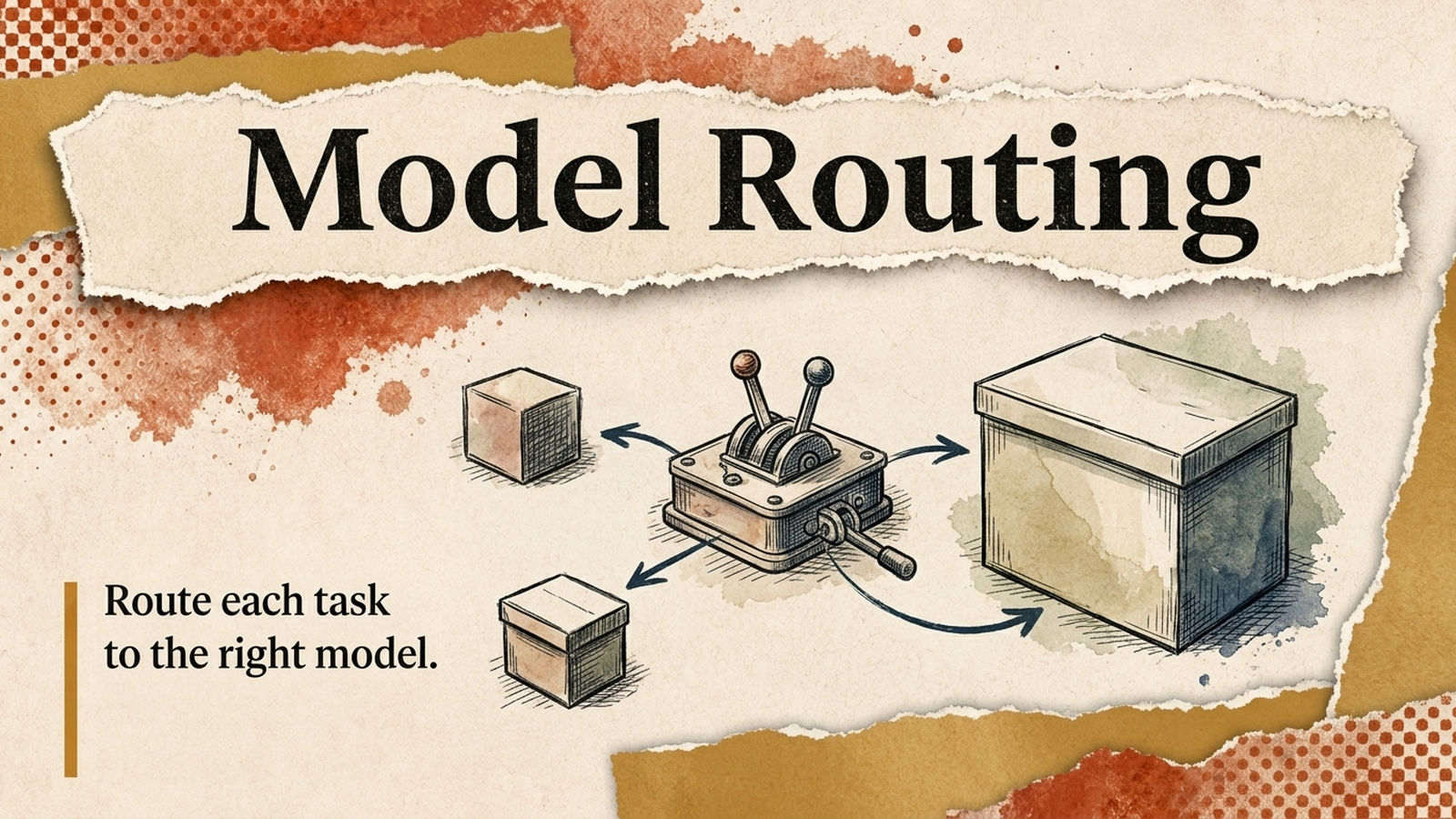
This is a routing criterion the leaderboards don't score. Strategy, spec critique, and hard decisions go to the model that will hold a defensible position under pressure — not to whichever topped the automated bench.
The operator lesson: the model you can argue with is the one whose advice is load-bearing. Pick for the trait the leaderboard can't see.
The goal isn't a model that won't cave — it's better ideas
Resistance is the mechanism; the outcome you're routing for is a thinking partner that makes your thinking bigger. Anthropic's Dianne Penn sets the bar above not-caving: the hero goal is that you leave the day with better ideas because you worked with the model — not ideas that are 10% better, but genuinely stronger ones.
That reframes the whole trait from defensive to offensive. A model that only agrees can't add to you; one that holds a defensible position under pushback can. It's also why a lab treats reduced sycophancy as a headline improvement rather than a safety footnote — the pushback is what makes the model more useful, not less.