
TL;DR
Agent loops need a proof system
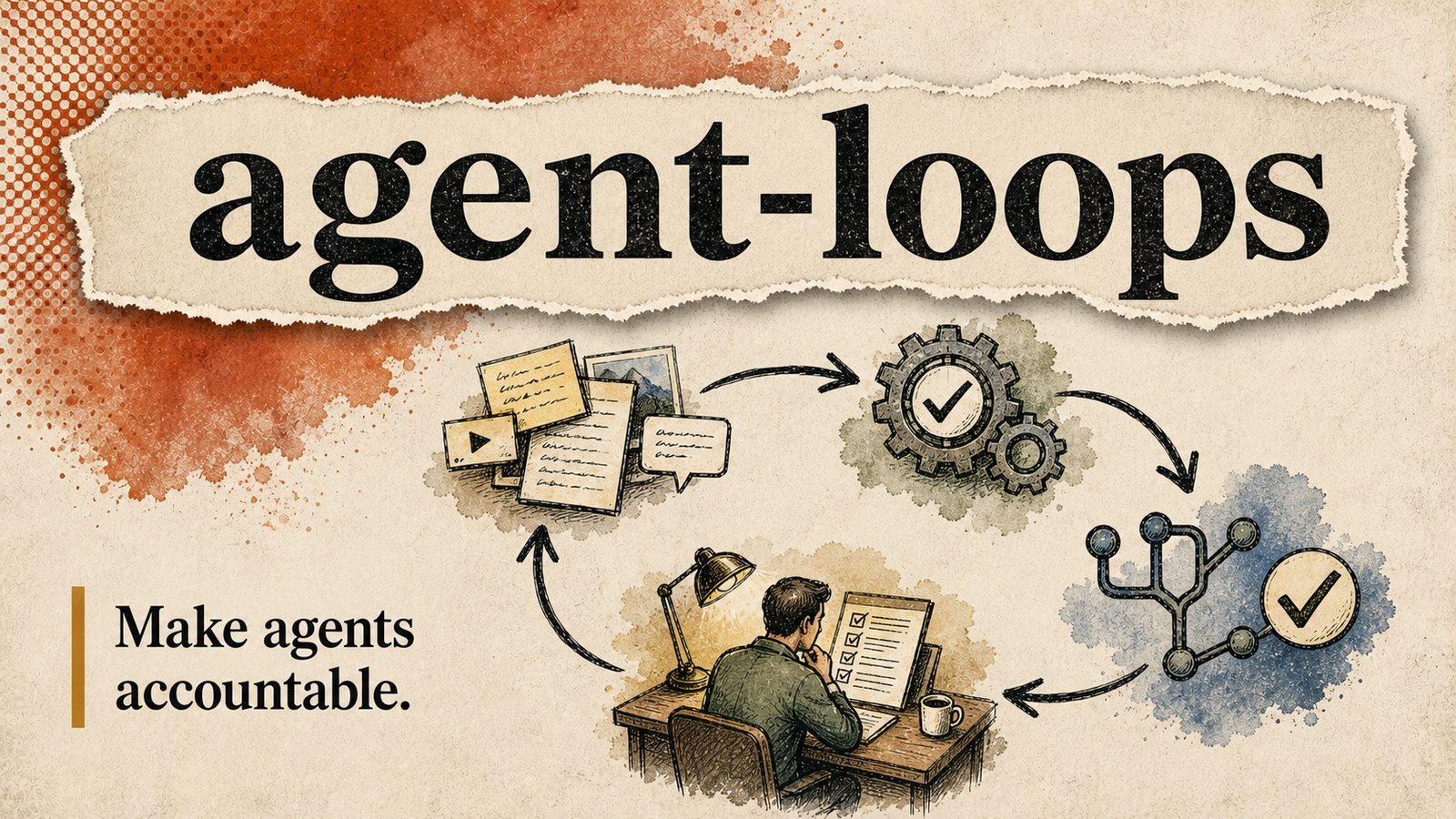
The leverage is the loop shape, not the model. A scheduled agent reads structured feedback, batches fixes into one combined PR branch, and a human reviews and merges. The second shift is the verb: declare a measurable goal with verification criteria, and let the harness self-verify until it reports done.
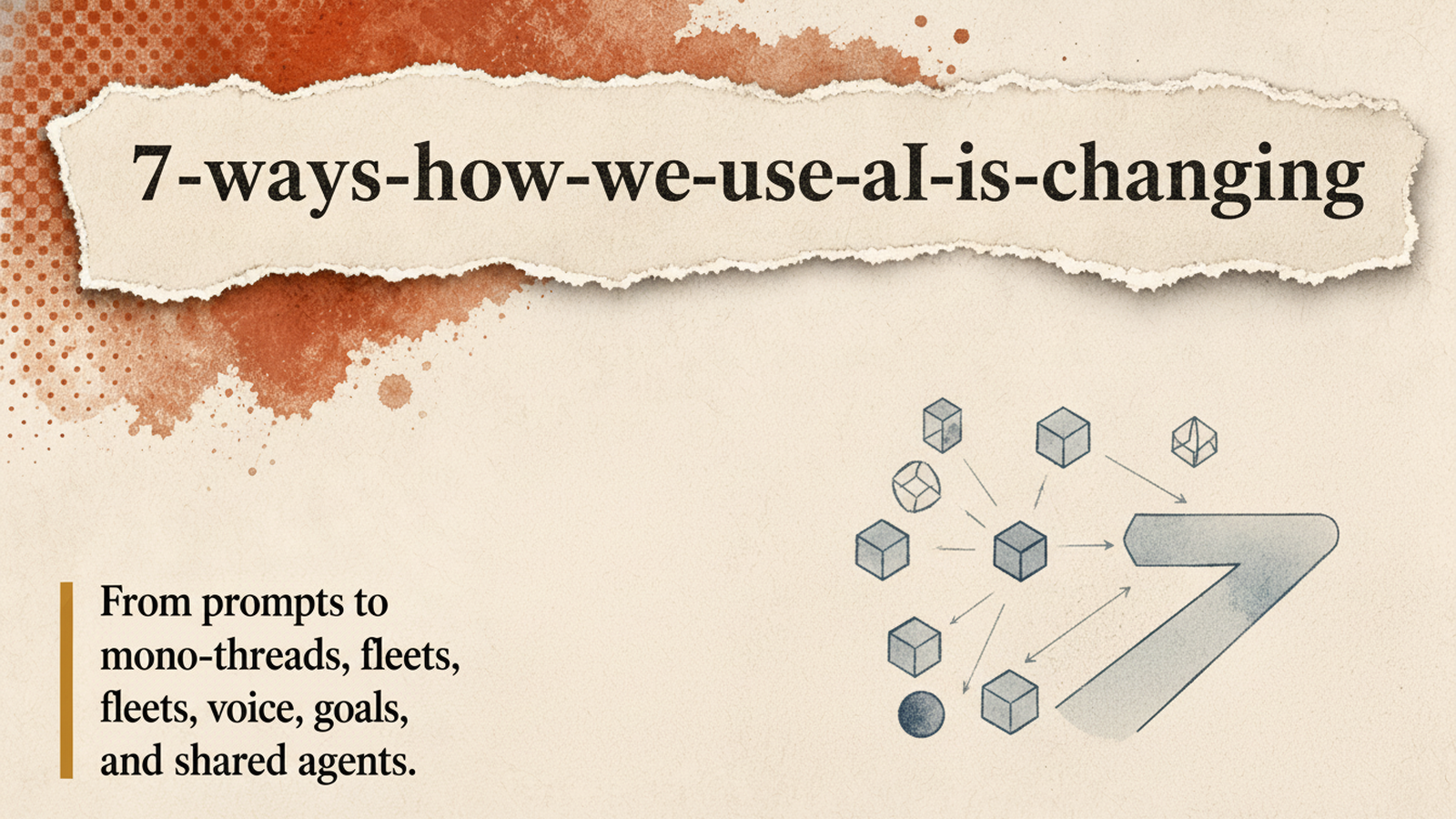
Peter Steinberger / OpenClaw, via NLW's Sep 2026 interaction-shift roundup: "You shouldn't be prompting coding agents anymore. You should be designing loops that prompt your agents." Same `/goal` contract — now listed as one of seven sticky patterns alongside mono-threads and chatbot-as-fleet-manager.
SURFACE (do not overwrite): OpenAI's Head of ChatGPT argues manual loop/graph fiddling is a dead end and the winning shape is an always-on agent that learns from feedback. That product narrative sits in tension with this page's loop-as-leverage thesis — both can be true at different layers (product UX collapses config; operators still design checkable finish lines).
Built on Fable/Codex/`/goal` coverage plus 7 Ways How We Use AI Is Changing (NLW / AI Daily Brief).
The loop replaces babysitting
Most AI work is still babysitting. Ask for one thing, read the answer, tell it what to do next, and repeat until you run out of patience.
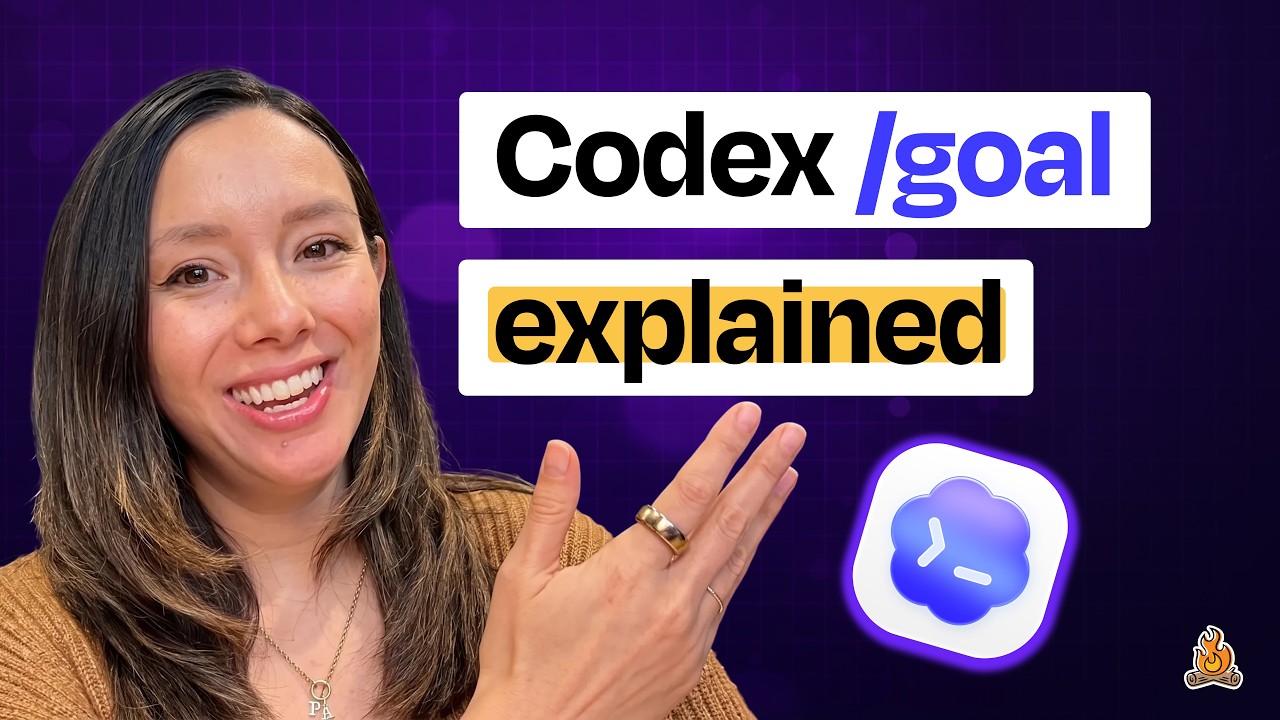
Claire Vo names the giveaway: if you keep typing "what's next?", you are the loop. Codex goals change the contract. You describe the outcome and the evidence that proves it is done. The harness then works, checks, decides the next step, and keeps going until it can report completion.
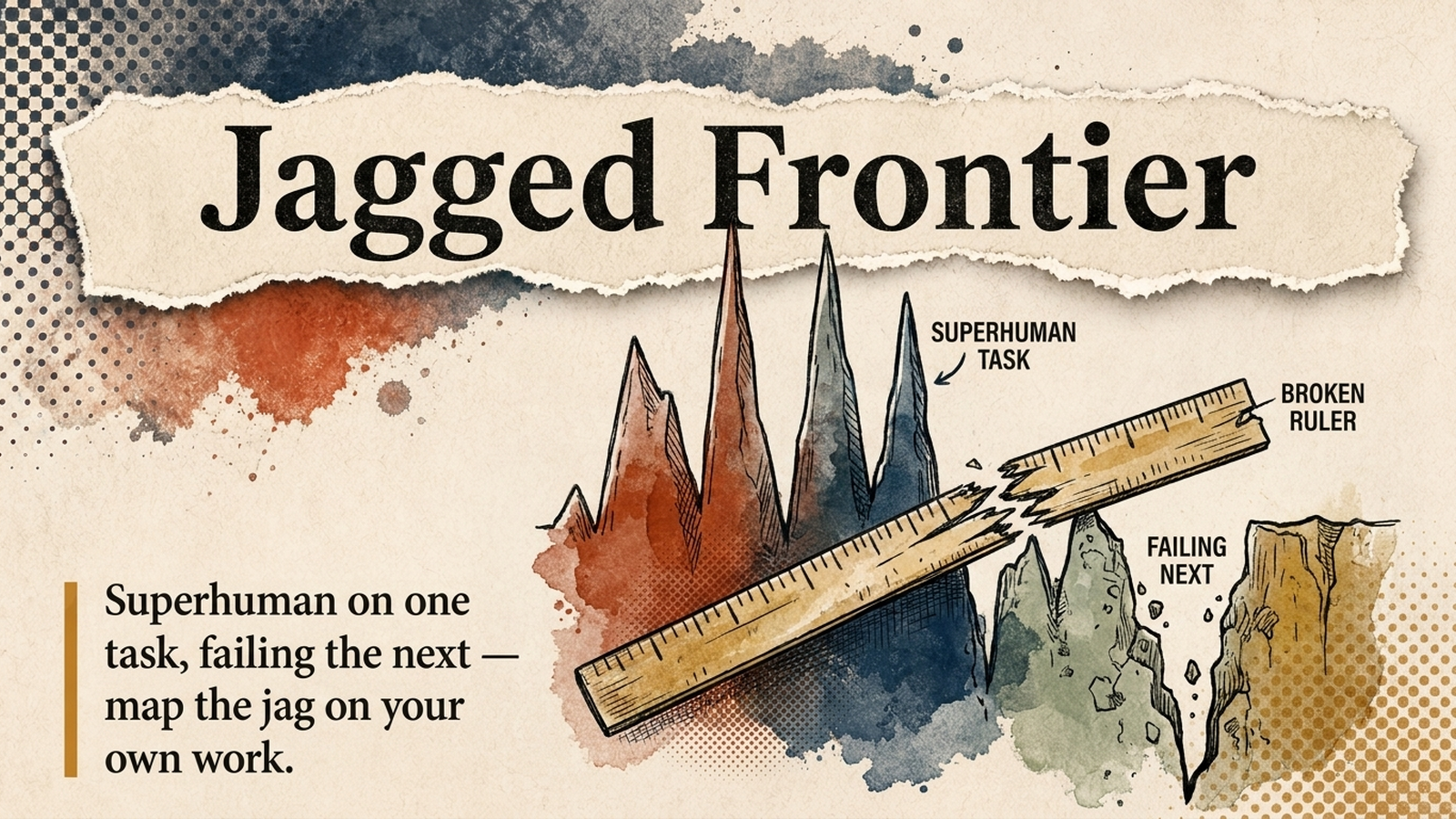
A harness is the working shell around the model: repo access, logs, tests, browser, tools, permissions, and rules. The model does the work. The harness gives it a ruler. The operator question is simple: "What should be true when the work is done?"
"Until," not "when"
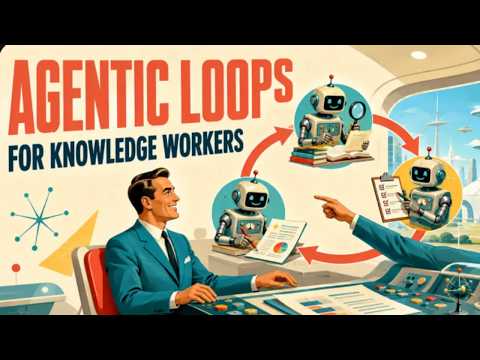
Nufar Gaspar's cleanest correction, in an AI Daily Brief webinar on agentic loops for knowledge workers: a loop answers "until," a schedule answers "when." A loop runs until the work meets a defined bar, however long that takes. Conflating the two is the most common category error.
Coding agents got their bar for free. Code compiles or it doesn't; tests pass or they don't. Knowledge work has no compiler. For a report or an analysis, nobody's compiler tells you it's done — so you build the referee yourself, or you don't loop it.
The finish line has to be boring and machine-checkable. "200 verified data points," "every competitor covered," "summary under 150 words" all converge. "Make it insightful" does not.
Something like make it insightful is not checkable. There is no way for the agent to converge on make it insightful.
Nufar Gaspar
Better input beats a longer run
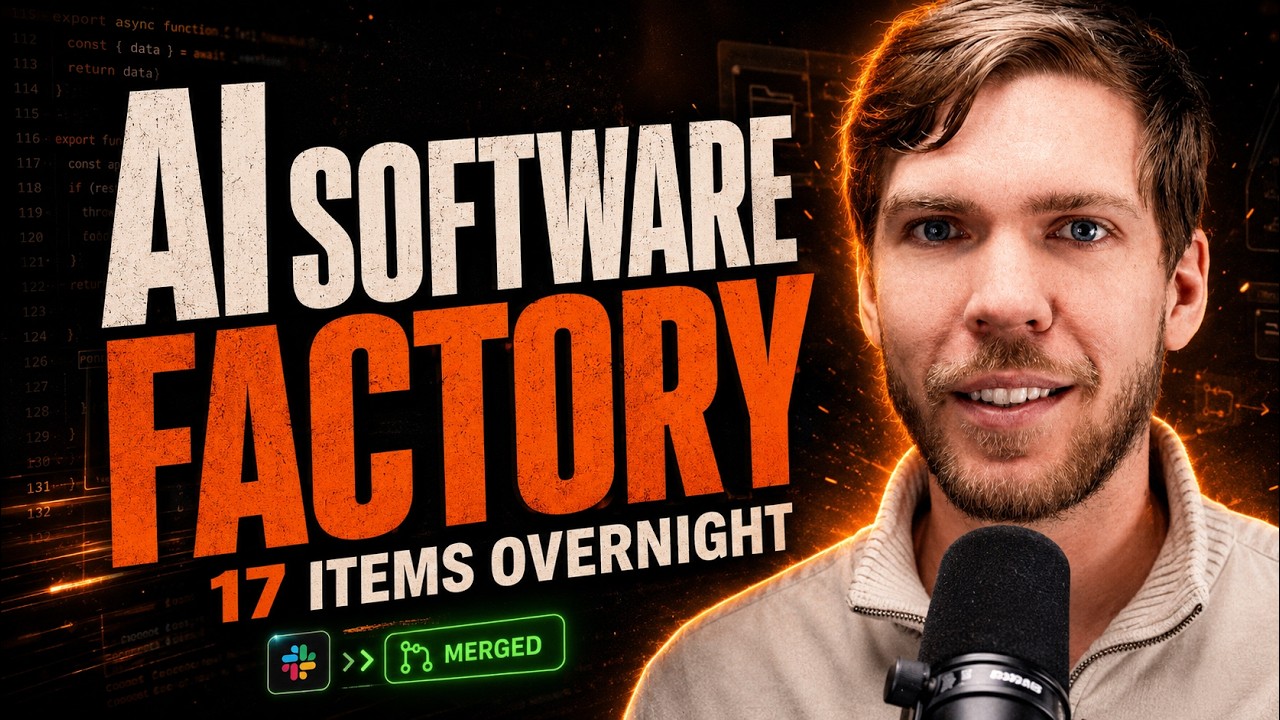
Felix Rieseberg's Kora v2 workflow shows the same idea at team scale. The loop starts in Slack, where people drop notes, screenshots, videos, and RiffRack recordings into an alpha channel.
RiffRack records clicks, spoken notes, network requests, and errors from a React app. The agent gets evidence, not vibes.
Felix describes the scheduled routine plainly: it "just reads everything and structures it." It reads Slack, classifies feedback, checks what is already done, downloads recordings, and creates a pull request with structured state in YAML and markdown. The output is not a chat reply. It is a branch with memory.
Batch it or drown in review
The obvious agent workflow is one issue, one branch, one pull request. That breaks once the agent gets productive.
Felix describes a batch with roughly 17 feedback items. Seventeen pull requests would create seventeen review surfaces. His move is one branch, notes where judgment is needed, and one review.
This is not free. One bad fix can contaminate the batch. You need tests, CI, and a human looking at the actual product, not just the diff.
The decide step can be a judgment model
Not every loop step needs another LLM call. TypeSafe’s Jev pattern — LLM proposes options, a decision-only model returns calibrated probabilities, code routes — is a loop shape. Put the cheap/fast decide inside every if-then; keep the LLM on propose/generate.
Goals and loops as a sticky pattern
NLW's September 2026 roundup puts the Steinberger/OpenClaw line in the mainstream interaction set — not just coding-agent folklore.
You shouldn't be prompting coding agents anymore. You should be designing loops that prompt your agents.
Peter Steinberger (OpenClaw), via AI Daily Brief
Mono-thread fold: with compaction, one long coordinator thread inherits context and spins specialist sub-agents (Codex, Claude Projects, Cursor Projects). The chat UI stayed; chat's job became fleet management. Fold mono-thread here and into workplace-native — don't mint a dedicated page yet.
Labs loops: dogfood, parallel experiments, research pipeline
Dan Shipper separates explore from exploit organizationally. A tiny labs team — even of one; "two-slice" means one or two people, a pirate who sprays experiments paired with an architect who turns winners into systems — dogfoods tightly and tries multiple approaches to the same problem to map an unknown frontier. Product teams converge; labs deliberately don't.
Operating expectation (self-reported): dispose roughly 90% of lab output; product adopts about 10%. Pipeline with promotion gates: lab → internal use → early customers → main product. Promote when people use it and return, when it's roughly 10× better after time, and when affordable at scale. Weekly pipeline review keeps labs and product in sync. Failed experiments still pay — external content, early-adopter programs, capability briefings for the product team.
On a labs team, you're going to expect to dispose of like 90% of what you make. [...] For a product team, you want to expect to adopt about 10% of what the labs team makes.
Dan Shipper
Automate small loops; protect ambitious ones
Ramp CPO Geoff Charles (Lenny Summit 2026) states the product-leadership version of the inner/outer split: AI routes, dedupes, ranks, and fixes small UX issues with minimal human gates so PMs stop living on the dopamine of tiny reactive wins — a nod to Claire Vo's ambition filter.
Each factory stage unlocks the next bottleneck: Inspect (coding) → Review Buddy (PR review) → Testo (browser QA) → Gadget (org Q&A / launches). "Every question is an API." Small loops run unattended; ambitious work stays human-attended. Directional self-reported claim: a majority of identified UX issues fixed within a day.
SURFACE — loops vs learning systems (OpenAI product narrative)
Tibo Sottiaux (Head of ChatGPT) argues that setting up and fiddling with loops is a dead end — over time you want a system that learns goals and preferences from feedback, framed as always-on ambient agents rather than manual loop/graph craft.
Having to set up and fiddle with your loops is something that maybe people got excited about, but I don't think this is the way that it's going to work. Over time, you just want a system that learns.
Tibo Sottiaux, Lenny's Podcast