TL;DR
The short version
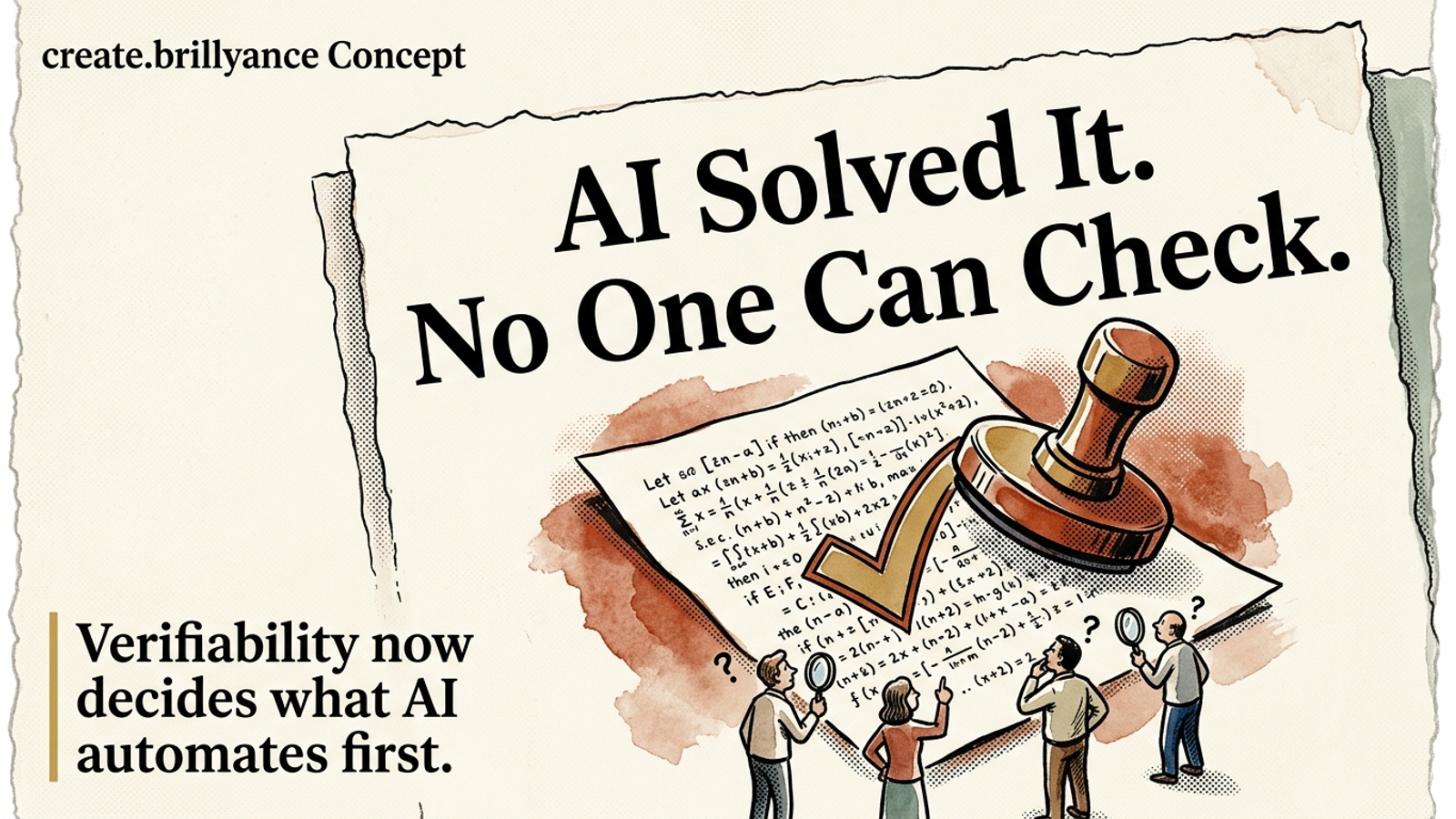
OpenAI has released hundreds of AI-generated proofs at once, and mathematics is the first field where AI has changed the work itself rather than the tools. The scarce thing is no longer finding results. It is people who can check, understand and use them.
On The AI Daily Brief, Nathaniel Whittemore reads the field's reaction to OpenAI's 6 October release: awe, shell-shock, and a warning from mathematician Francesco Maggi that results nobody absorbs stay dead letters. Then he asks which fields come next.
Built on Nathaniel Whittemore's 11 October episode of The AI Daily Brief, with release details checked against OpenAI's repository and scope notes from Declic Media and Revolution in AI.
What OpenAI actually released
On 6 October OpenAI published 722 manuscripts grouped into 372 result families from an unreleased internal model. The company says it posed the model about 4,000 open problems, and the average result used roughly three hours of ChatGPT Pro thinking.
That cost is the quiet headline. A month earlier, OpenAI's Navier–Stokes result needed a swarm of about 10,000 agents. This batch came mostly from a single prompt to a single agent per result.
OpenAI (openai/math README, 6 Oct 2026); Declic Media (7 Oct 2026)
The claims are large. One paper proves a "quasi-Riemann hypothesis": the zeta function has no zeros with real part above 7/8. That is real progress, not the Riemann hypothesis itself, which still needs every non-trivial zero on the 1/2 line. The viral line that AI "solved 90 of the top 500 open problems" is a count of OpenAI's claims against a ranking that language models built. None of it is settled until mathematicians review it.
The bottleneck moved from discovery to absorption
The sharpest response came from mathematician Francesco Maggi, written before the release landed. Experts were still working through the Navier–Stokes proof. Now there would be hundreds more.
Mathematics does not grow simply by accumulating correct statements. Results have to be understood, connected, explained, challenged, reused.
Francesco Maggi, read on The AI Daily Brief
His question carries over to every field: what happens when results are produced faster than people can absorb them? Physicist Steve Hsu, quoted on the show, pushes it further. Machines may verify the proofs, but humans may lose the context to understand them.
Verification itself is thinner than it looks. As of 7 October, 162 of the 722 manuscripts had main results formalised in Lean, the proof language a computer can check. Lean checks the logic. It does not check that the formal statement matches the paper, or that the result matters.
Most of it is impressive, a little of it is practical
Most solved problems are long-standing puzzles with no obvious real-world use, Whittemore notes. The clearest exception is matrix multiplication, the arithmetic underneath AI inference.
Steven Strogatz singled it out: the claimed exponent is no more than 2.25, against a previous record of about 2.37. "This leap in progress is like Bob Beamon's long jump." The paper proves such algorithms exist over the complex numbers. It does not show a faster algorithm you can run today.
Some readers noticed what was missing. Security researcher Justin Drake pointed to how few cryptography results appeared, and Scott Aaronson wrote that labs have begun quietly testing whether internal models can break cryptographic protocols.
Which fields come next
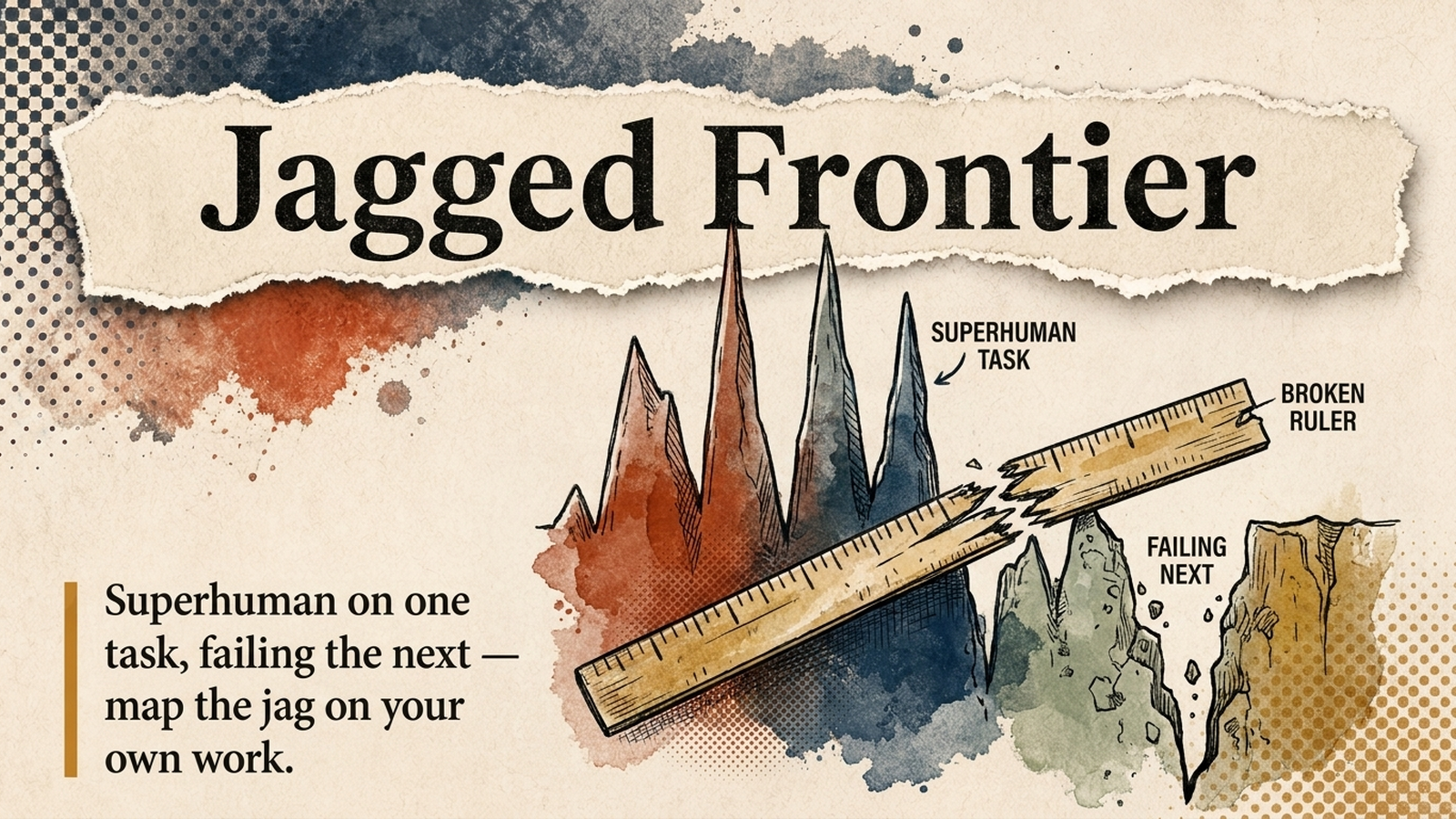
Whittemore's caution is that these were verifiable problems that "fit neatly into the reinforcement learning paradigm". Math is a textbook case of Moravec's paradox: hard for humans, easy for machines.
Google's Peyman Milanfar turns that into a ladder. "Speed of automation is inverse proportion to the entropy of the subject domain." Math and code fall first. Hard sciences are next, slowed by noisy measurement and lab work. Then financial markets, medicine and law. Culture, art and leadership come last.
Ethan Mollick already sees the next wave in social science: everything ever published "will be re-read and re-judged," and "novel discoveries will start to come fast."
Whittemore leaves two open questions: which fields follow math, and what mathematicians do now that each of them has, in effect, a mathematical genie. For anyone outside math, the lesson is practical. If your work has checkable answers, plan for the volume problem now. Decide who reviews machine output, how it connects to what you already know, and what you stop doing by hand.