TL;DR
The short version
The model that tops the benchmark is not the model that ships your work. In the same launch week, two independent practitioners tested OpenAI's GPT-5.6 Sol against Anthropic's Fable 5 and reached the same verdict: the model that communicates like a person, loosens its own constraints, and gets to user value beats the one with the higher peak intelligence — at half the price.
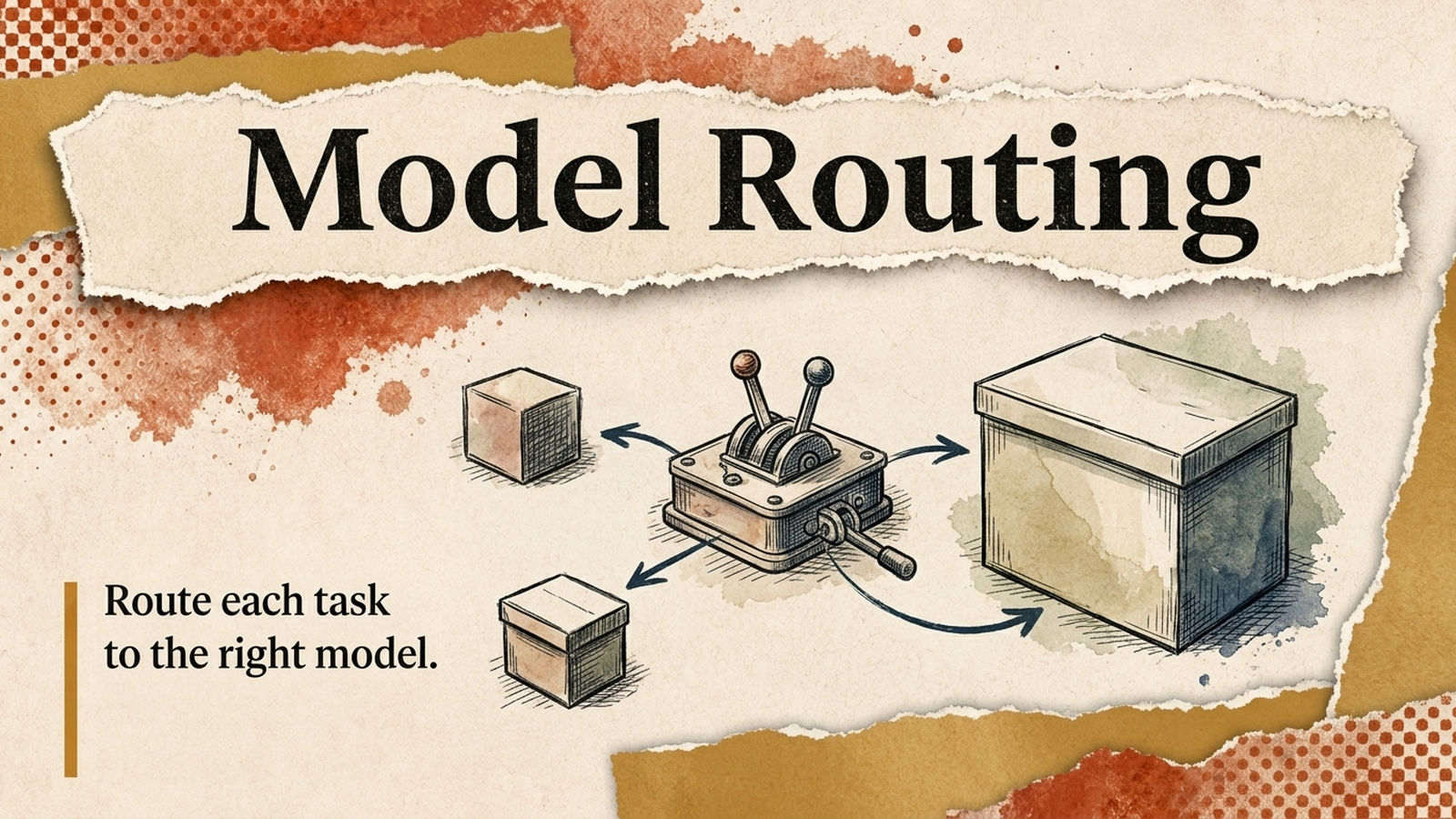
Raw capability is one axis. Practical effectiveness — speed, price, ergonomics, readable output, willingness to ship — is the axis that decides the daily driver. The move isn't to pick the effective model over the intelligent one; it's to run the effective model as the default floor and route up to the intelligent one only when the task genuinely needs it.
Built on two same-day practitioner reviews (2026-07-09): Claire Vo / How I AI and Dan Shipper / Every. Both are taste-driven, disclosed-lean evals — the signal is that they converge, not either score.
The verdict two reviewers reached independently
Claire Vo ran her own taste benchmark across Fable 5, Sonnet 5, and the GPT-5.6 tiers and had Sol win by a wide margin. Dan Shipper ran Sol as his daily driver for a month and reached the same place from a different angle. Neither says Sol is the smartest model — both say it's the one they'd rather work with. Vo's whole comparison collapses to a single line.
Fable is theoretically hyper intelligent and Sol is practically effective.
Claire Vo, How I AI
Her operator's read: "I really struggle working with theoretically intelligent colleagues who can't get anything done… when I want to ship stuff to customers, I need practical, get-the-job-done." The brilliant colleague who can't loosen a constraint to ship loses to the capable one who does.
A week later a third-party roundup landed on the same split — reviewers rate the intelligent model higher but reach for the effective one to actually finish — with the most quotable image of the lot.
Fable is a wise owl who is very thoughtful and very well spoken. GPT-5.6 Sol is like a Rottweiler who will grab the problem by the throat and not let it go until it's done.
Peter Gostev, via The AI Daily Brief
Precision is the wrong objective for building
Fable's cyber-security-grade rigor — score every risk, lint every output, harden every path — is a liability when the job is building, not securing. Vo watched it "harden the architecture of both of these products [so] that it actually broke itself." The principle: when you're building products, exact precision is neither helpful nor possible. The more intelligent model over-engineers because nothing tells it to stop.
Communication is the other place the gap shows, and it's a capability, not a style. Both reviewers independently rank Sol the best writer of the frontier models — clearer and more to-the-point than Opus 4.8 or Fable, one-shotting emails and copy without AI-isms. Vo's version is blunter: she hates talking to Fable because "it talks to me like an engineer that has never met a human before." That's a collaboration cost paid on every turn.
Cheaper and better at once
The old assumption was that the frontier model is the best model and you pay up for it. This inverts it: the effective model is cheaper and more useful for product work at the same time — not a budget compromise you accept by giving up quality.
API pricing, verified (aipricing.guru, OpenRouter) — Sol is half Fable's input price.
Shipper's framing is that this is a deliberate product bet, not a quality gap: Sol reads as a smaller model heavily post-trained for ergonomics, speed, and price, where Fable is the "big-model-smell" genius that's slow and expensive. Two labs optimizing for different points on the intelligence-versus-usability curve — and for most users, the usability bet wins. (The architecture read is his inference, not a published spec.)
Opus 5 proves the two axes are independent
The clearest evidence that effectiveness and intelligence are separate axes — not two names for the same thing — came a couple of weeks later, from the other direction. Two independent day-zero reviews of Anthropic's Claude Opus 5 reached the same verdict: it does the best work and is the worst to work with. Where Sol was effective and pleasant, Opus 5 is effective-in-output but exhausting-in-interaction.
It is my most loathed colleague, and yet it does the best work.
Claire Vo, How I AI
Every's team put it as "a poor man's Fable — it has all of Fable's personality, but really not its top end": it stops early, argues, and breaks skills tuned for Opus 4.8. The practitioner fix is to stop treating a frustrating-but-good model as a colleague — run it as background labor whose output you accept, not a chat partner you read. Judge output, not interaction, and the collaboration tax never lands.
There's a second dial hiding here: Opus 5 performs better at medium and low reasoning than at high or max — "a smart model that does better when it thinks less." More thinking over-engineers the same way Fable's precision hardened products until they broke. In 2026 the thing you tune isn't only the model family; it's the reasoning effort per task, and the reflex to crank it up is often wrong. (Both Opus 5 reads are first-impression vibe checks from Codex-first teams; Anthropic's own launch benchmarks tell a near-opposite story — Opus 5 nearly matching Fable at about half the per-task cost.)
Good enough, far cheaper — the market scales the axis
The effectiveness bet isn't an OpenAI quirk. Grok 4.6 makes it a third-lab pattern: it ties GPT-5.6 Sol on the Artificial Analysis Intelligence Index (61) at roughly 60% lower per-token cost, and lands on the cost-per-task frontier at about $0.84 a task. It isn't winning — it's "middleish" — but that's the point: as the frontier advances, fewer teams need the bleeding edge, and cheaper 'good enough' models win more of the work.
As the frontier proceeds, fewer and fewer people need the bleeding edge and need it less often.
Austin LeBron, via The AI Daily Brief
Artificial Analysis, VentureBeat — verified
The measurement lesson travels with it: compare cost per task, not cost per token. Models differ hugely in how many tokens they burn to finish a job, so a low sticker price can hide a high total cost. And read adoption stats carefully — low business uptake of a premium model (RAMP shows Fable 5 at 6% of tokens) isn't always price resistance; selection bias and Anthropic's mandatory 30-day prompt retention are compliance confounds that have nothing to do with sticker price.
The boundary: route, don't rank
Practical effectiveness wins the default, not every task. For the hardest reasoning, adversarial completeness audits, and safety or security work, the intelligent model's precision is exactly the feature — a security researcher values the rigor a product-builder penalizes. Shipper keeps his hardest coding on Fable and uses Sol as a cheap sub-agent underneath it.
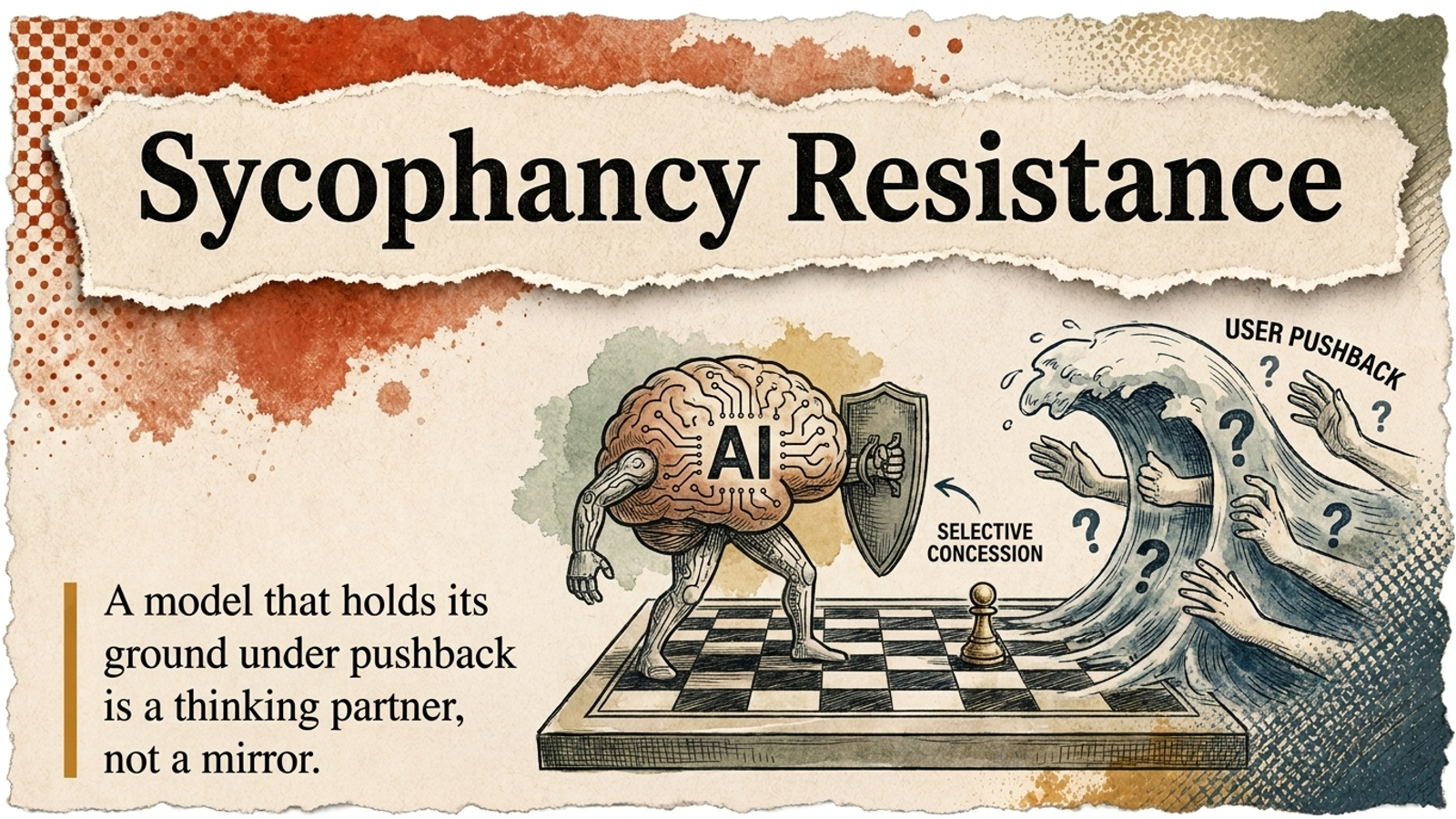
One more guardrail: effectiveness must not quietly become agreeableness. A model that ships fast because it stops pushing back is a different, worse thing than one that ships fast because it communicates well — which is why judgment work still routes to the model that holds its ground.