
TL;DR
The short version
By 2026 the smartest-default is both a quality mistake and a budget mistake. Higher intelligence made one frontier model a better engineer and a worse product manager. And at usage pricing, mis-routing burns real money.
The operator skill is a decision tree keyed to the job, plus a benchmark you run on your own work. Public leaderboard deltas are uneven across task types and do not predict your task mix. The newest twist: open-weight models you host yourself are now a real second source, not a science project.
OpenAI's Decisions API (DevDay) joins TypeSafe Jev in the judgment-model tier — multimodal, fixed-choice, fast. Lindquist's tutorial adds the heuristic: constrained inputs → decision model; open-ended → LLM; multipass when one pass fails.
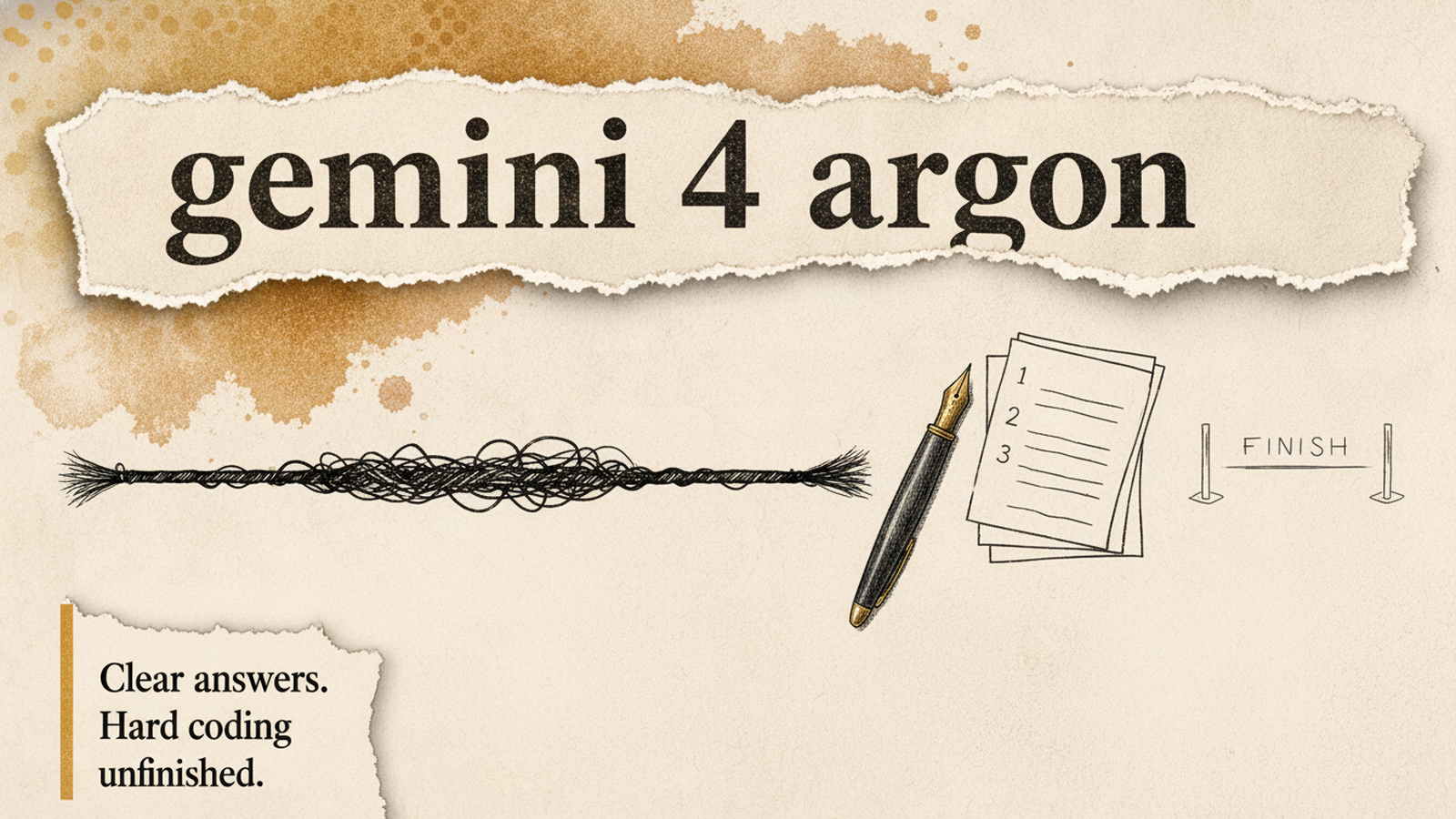
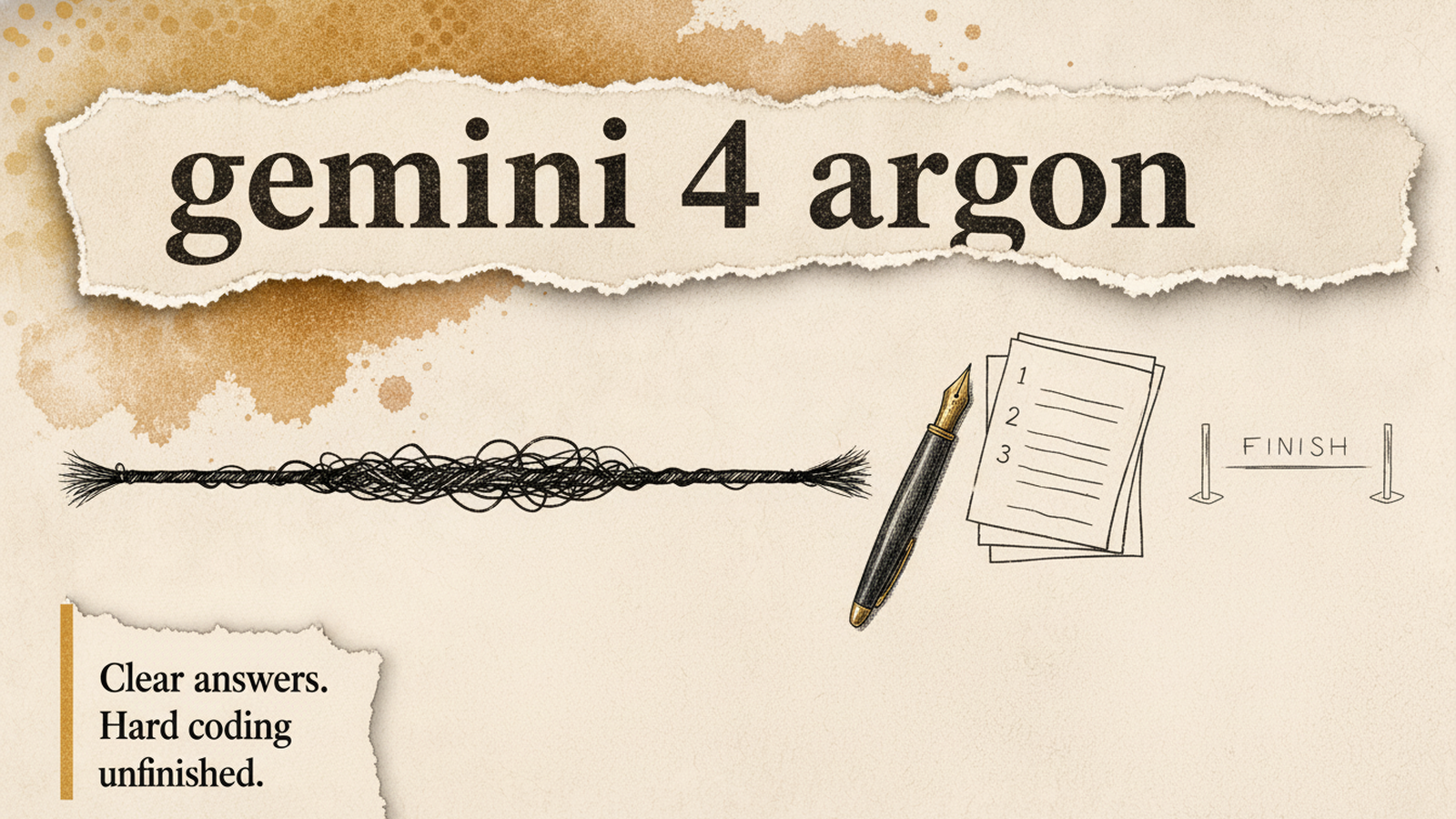
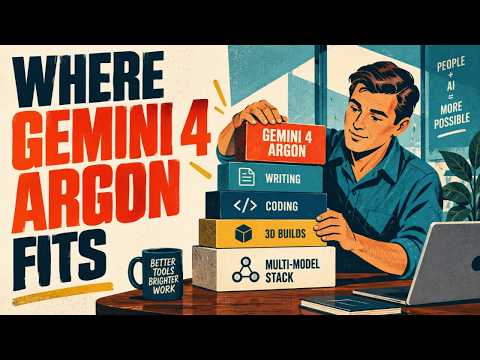
October 2026 update: Gemini 4 Argon is generally available (13 Oct). Whittemore's question is no longer "should I switch" but "where does it fit?" — AA Index 53 (tied with Astra), intro API half-price through 30 Nov, then roughly two-thirds Anthropic. Dan Shipper's Every team keeps ChatGPT and Claude day-to-day and reaches for Argon as an editorial partner or a Google-ecosystem secondary; senior-engineer scores stay weak (~21%, self-reported). Do not reroute production on vendor benches (DeepSWE, Harvey) unless Artificial Analysis confirms.
Built from working reviews by Claire Vo (How I AI), Dan Shipper (Every), and The AI Daily Brief.
What it says
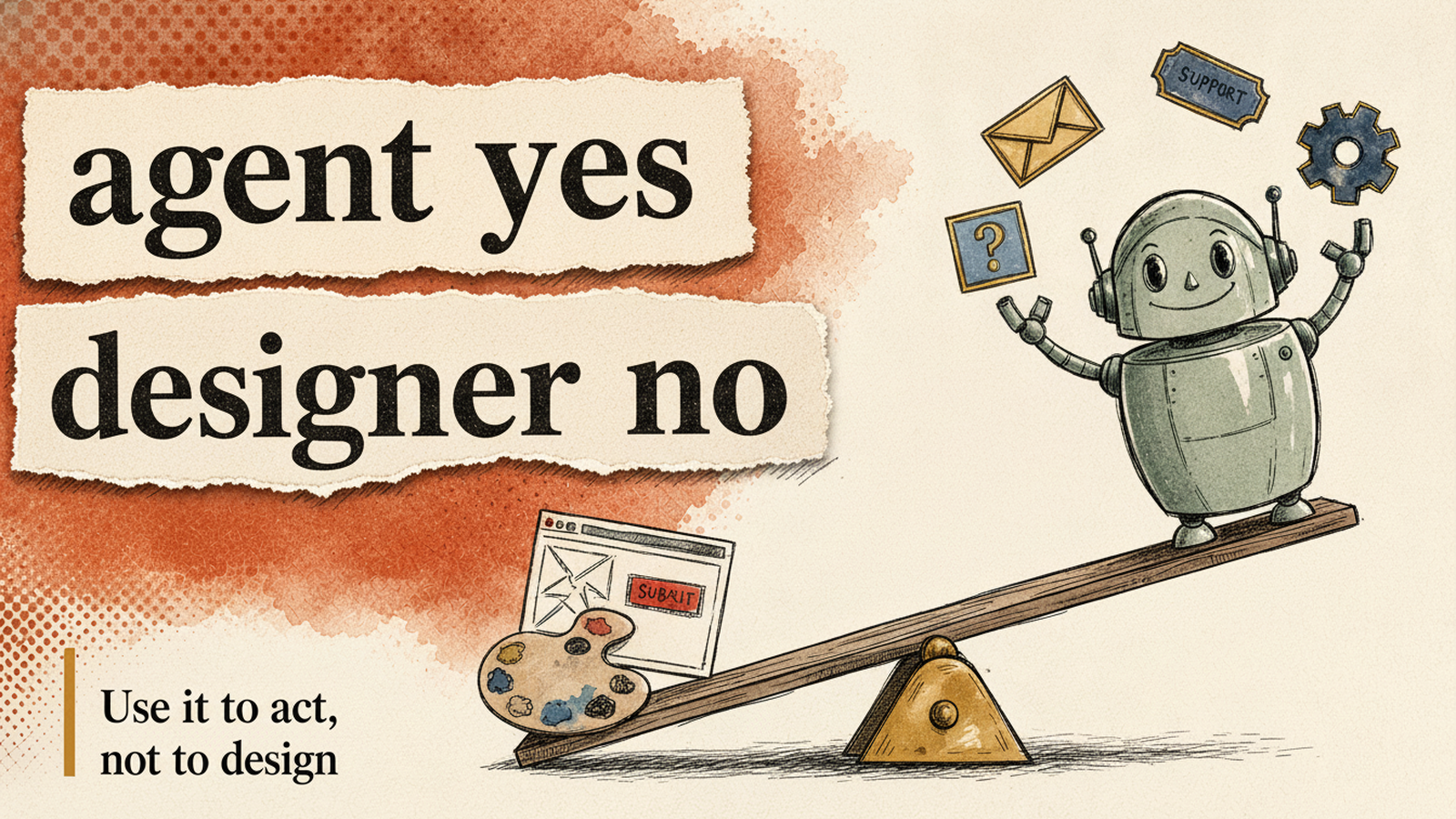
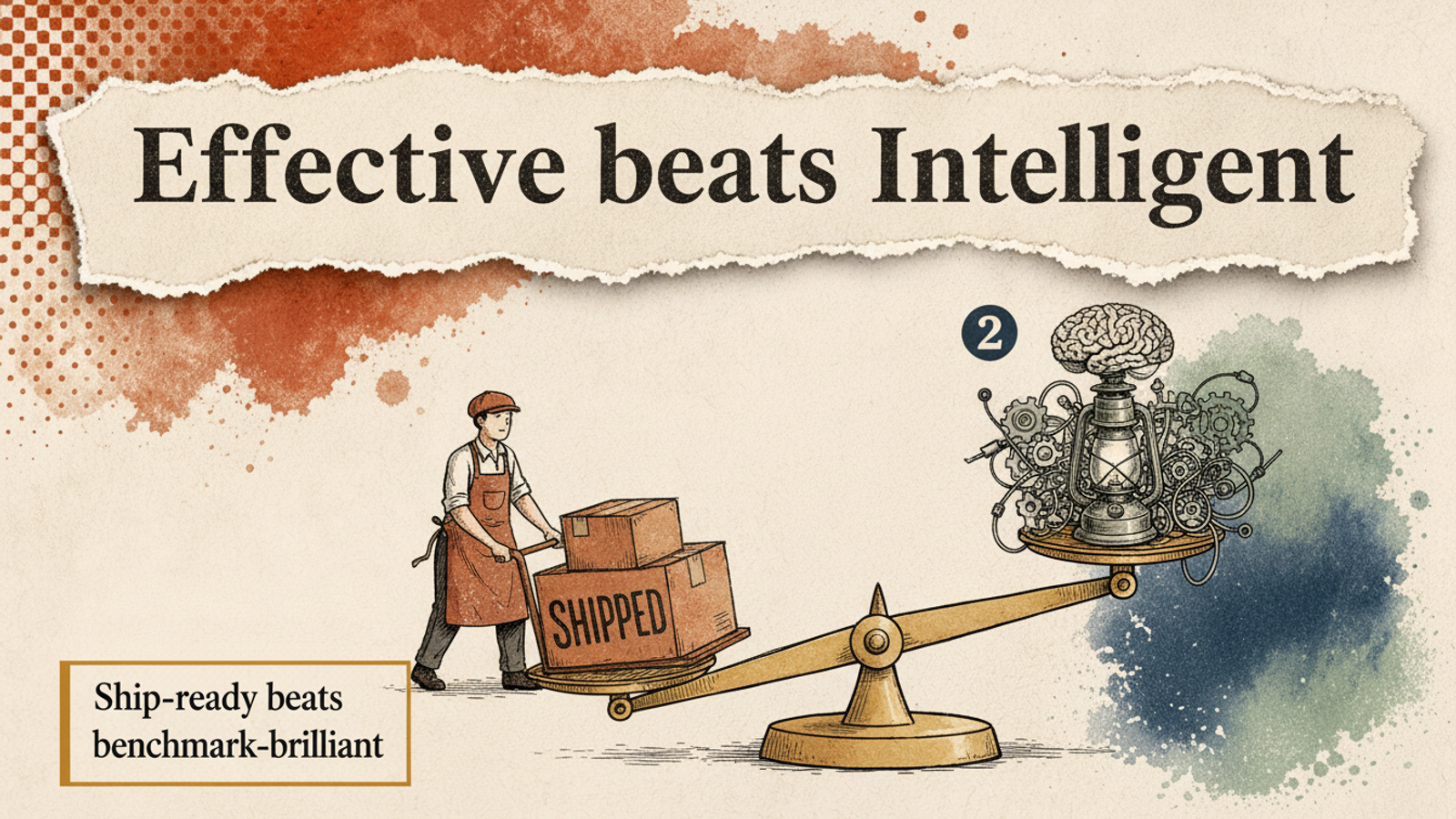
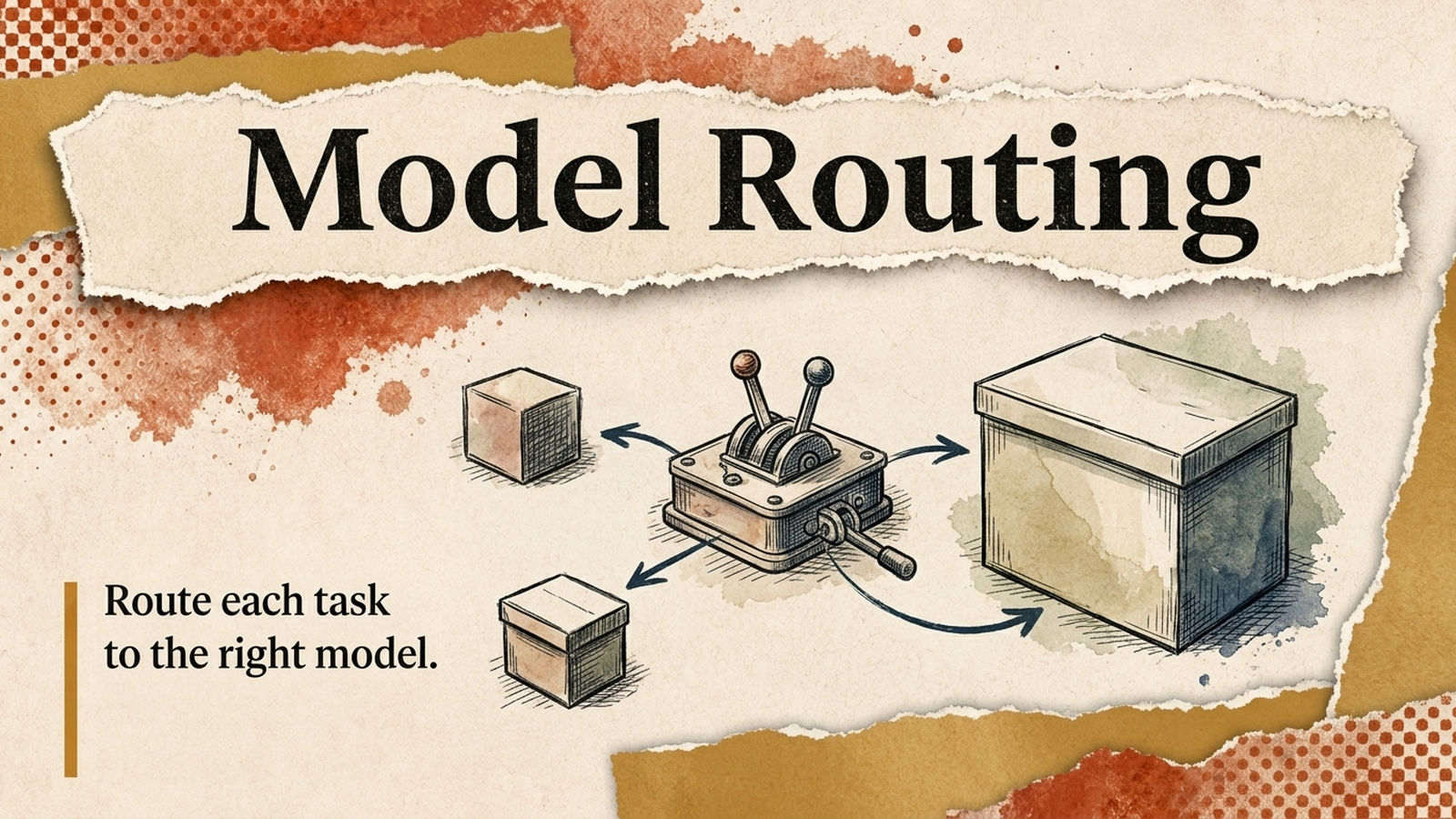
Smartest is not best. Route by job. A model one tier up can be a stronger coder and a weaker PM. The one-word version of the whole idea is "route".
Mis-routing is now a budget mistake, not just a quality one. A top frontier model can run several times the cost per token of a mid-tier one, with higher token burn and tighter rate limits. Usage pricing kills the lazy "top model for everything" habit.
The decision tree. Trivial work to the cheapest model. Routine work to a mid-tier model. Hard non-coding reasoning to a top reasoning model. Multi-hour agentic coding, completeness audits, edge-case hunts, and vision or PDF work to the strongest agentic coder. Prose, specs, PRDs, design, and scoping go to a model with better judgment, not the raw coder.
A cheaper mid-tier model pulls the default down a tier. When a new Sonnet-class model launched at roughly $2 in / $10 out per million against the flagship's $5 / $25 — pitched as "Opus-level tasks at Sonnet-level prices" and aimed squarely at agentic coding — it wasn't just a release, it was a routing event: the cheap-but-good-enough tier moved up, so the default for routine and mid-hard work shifts down and the premium call gets rarer. But route on your own work, not the launch cards. In one blind taste bench that same model topped the automated leaderboard yet had too many broken prototypes and landed bottom of the tester's personal list. New-model pricing pulls the default down; only your own bench tells you which jobs it can actually hold.
Pin your own benchmark. Public benchmark deltas do not predict your task mix. Run an eval on your own codebase and data, not a leaderboard.
A/B before you migrate the fleet. The same release can be a coding gain and a strategy regression at once. Test on your task types before you switch everyone over.
Adviser and executor pairing — now across vendors. Put the expensive model on planning and review, and a cheaper model on execution. This routes intelligence to the layer that needs it and cost to the layer that does not. The split now crosses vendor lines: one practitioner drives a hard task in the smartest model and has it call a cheaper rival model as a sub-agent — the smart model's judgment, the cheap model's fast tokens, without burning the expensive one on high-volume execution.
Cheap per token is not cheap per task. The newest mid-tier agentic model is about 40% cheaper per token than the flagship, but it burns roughly twice the tokens per task — so at full rates a complete run can cost more than the flagship it was meant to undercut. The per-token sticker is not the routing signal; cost per completed task is. The workflow that falls out is an explicit two-tier split: the smartest model as the adviser that plans and judges, the cheap token-hungry one as the fast implementer spawning sub-agents, stacked changes, and adversarial self-review. Use it the way you used the old models and you will have a bad time.
Automate it. The cost fix is a router, not discipline. A lot of token spend comes from people manually picking "the model of the day". An auto-router reads task intent and picks the model, so nobody downshifts by hand for a find-and-replace.
Route-and-panel: the ensemble is a routing strategy too. Fan one prompt out to a panel of models in parallel, have a judge read every response, then have a synthesiser write the grounded final answer. You can hit frontier-level output at a fraction of frontier cost. The insight is not that open models beat the frontier. It is that smart routing beats brute force. And it is no longer theory: once cost and single-vendor sovereignty became joint drivers, both hedges shipped as real deployments — a legal-AI firm ran an open-weight worker model under a frontier advisor at a fraction of the frontier-only cost, and a routing gateway shipped the panel-and-judge pattern as a named product.
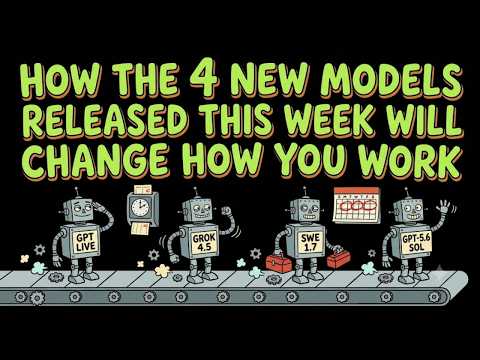
Interaction tiers, not just model tiers. A four-model week — OpenAI's full-duplex GPT-Live voice model, xAI's cheap-but-capable Grok 4.5, Cognition's roughly 1,000-token-per-second SWE-1.7, and the new GPT-5.6 Sol — read as one story about routing, not raw intelligence. GPT-Live hands hard reasoning to a background model, so the adviser/executor split shows up even inside a voice interface. The coding version is explicit: run a cheap, fast implementer (Grok 4.5, SWE-1.7) under a smarter orchestrator (Fable 5, GPT-5.6). The economics make it obvious — Grok 4.5 ran an agent benchmark at about $0.34 per task against the flagship's $1.35, on under half the tokens, at near-top scores. Most tasks do not need the flagship; route them to the cheap implementer and reserve the expensive model for judgment. These application-layer models get there by post-training an open base on proprietary product data: closed frontier for exploration, open models for production scale.
Stakes-based routing for non-engineers — and Gemini fell out of the agentic tier. A consumer-facing cut splits work by stakes, not task type: low-stakes chat runs fine on any model, but intensive agentic work has only two serious choices — ChatGPT or Claude, with Gemini "officially out of the rankings" and no leading frontier model. Entry price for the agentic tiers is about $20 a month. The task-type decision tree above is the power-user version; the stakes-based two-way split is the same instinct for everyone else — and a reminder that the frontier agentic set is currently two labs, not the whole leaderboard.
The routing question matured from "best" to "good enough" — and lock-in is the real constraint. A model can top the aggregate intelligence index and set a reasoning-benchmark record at half a rival's price, and still land as a jagged, neurotic daily driver that argues with instructions and stops before the job is done. The synthesis that matters for routing: most knowledge workers do not route across labs — they are locked into one vendor's lineup, and those are their only choices. So judge a release against the models you can actually reach, not the leaderboard. As an upgrade to the prior flagship for a team already inside that ecosystem, it clearly delivers; as a frontier pick for a model omnivore, it is a sidegrade. And the effort dial is part of the route now: the same model can peak at a high thinking setting and get worse at max, looping on self-verification — so reflexively maxing effort is a mis-route too. As routers hide the model, versioned launches may even stop being milestone events within a couple of years.
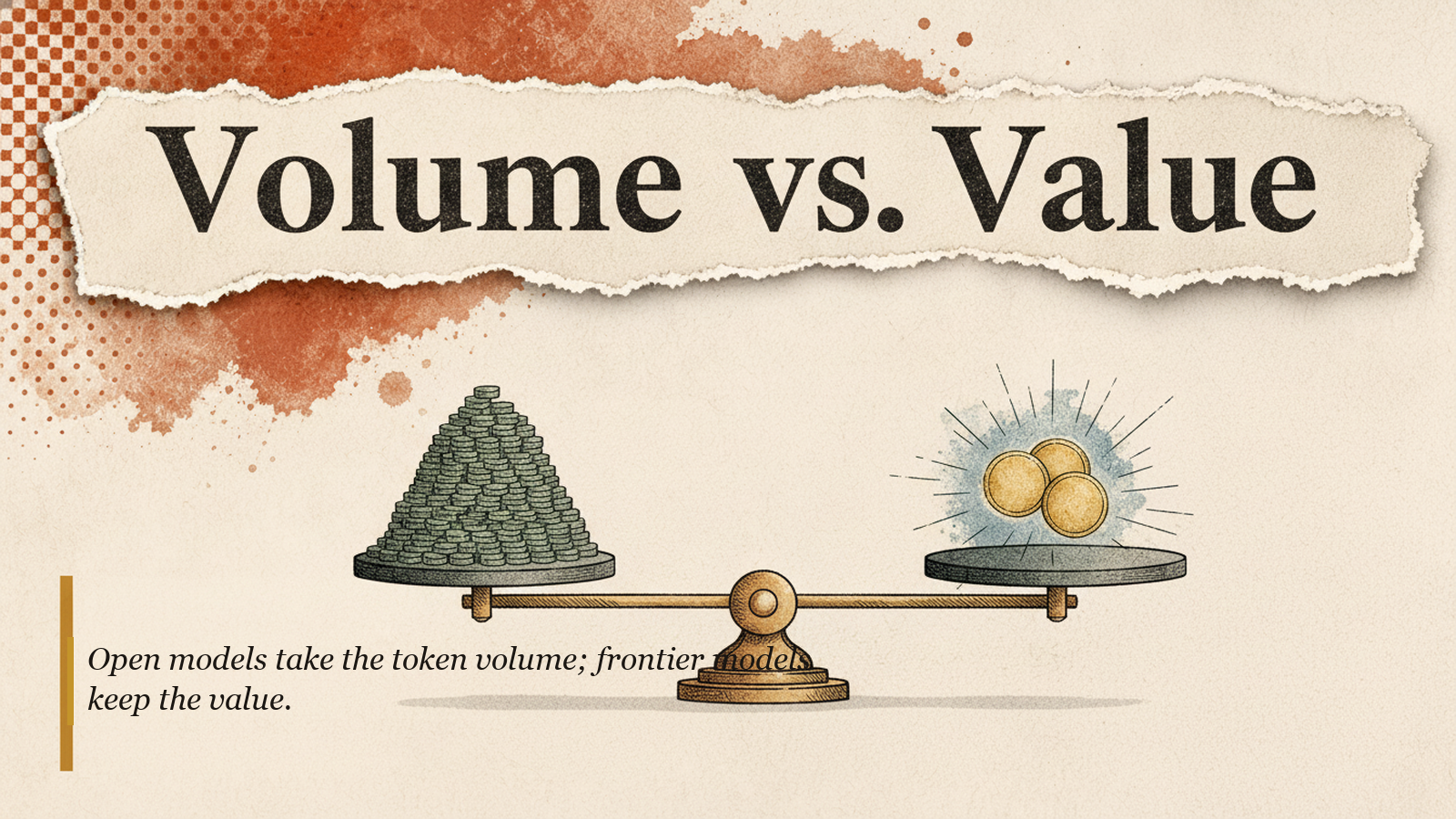
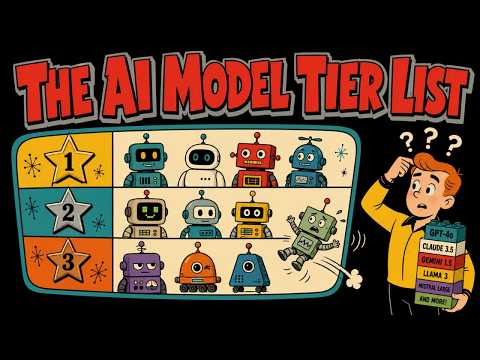
AT&T is the barbell in production — the router is a strategy, not a script. AT&T holds frontier spend flat and shifts volume to open models, already serving 40% of employee AI queries that way (target 60-70%) with an open-source router cutting coding cost 56% for a 2% quality drop. It is the corporate-scale confirmation of every routing thesis here at once: route the volume to the cheap open tier, reserve the value-dense work for frontier, self-host to run inference cheaply. The market-structure reason it works — open models take the token volume while closed frontier keeps the economic value — is the volume-vs-value split; routing is the operator's response to that barbell. A tier list is the wrong tool, because models now compete on capability, cost, token efficiency, and speed all at once.
Task-cost parity resets the top of the tree. A new point-release can carry a higher per-token price than the flagship yet cost about the same per task, because it does comparable work on roughly half the tokens and in about 60% of the time — while keeping the long-horizon delegation power the flagship used to charge a premium for. In one vendor-adjacent, week-long test the reviewer concluded there was "really no reason to use Opus anymore." The routing consequence: the premium delegation model drops from an S-tier reserve to an everyday driver — with one exception that keeps the tree honest, because on long open-ended runs it still fabricates and over-runs, so careful multi-tool chains stay on the more reliable model.
A second launch-window read adds an honest asterisk to the efficiency story. The cleanest statement of the whole idea arrived with the point-release: the question is no longer should I switch to the new model but where does it fit in my personal model architecture — route, don't switch. But a disinterested eval cut against the vendor-friendly “cheaper per task” framing: on an independent benchmark the new point-release came out more expensive per task than its predecessor — roughly 70% more tokens — despite cheaper cache reads. Both readings can hold on different task mixes, but the operator lesson is blunt: its token hunger can make it cost more, not less, on your work, and its habit of spawning sub-agents can burn even a top-tier subscription in under an hour. Pin your own per-task-cost bench before you make it the default.
Cheaper tokens make mis-routing more expensive, not less. When a lab cut list prices sharply, daily usage jumped several-fold and about a third of users stayed at full price anyway — Jevons paradox: cheaper tokens expand consumption instead of shrinking spend. Falling prices do not retire routing discipline; they raise the cost of the lazy "top model for everything" default, because the volume you run at the wrong tier keeps growing. Route harder as tokens get cheaper, not less.
Speed and cost are now routing axes, not tiebreakers. September's model burst (Fable 5.1, GPT-6 Astra, Gemini 3.8 Flash, SWE-2, DeepSeek V4.1 Flash) hardened the shift from picking one best model to matching many models and harnesses per job. Gemini 3.8 Flash lost a build to Opus 5 but ran it 39x faster — "at what point does speed matter more than the last bit of quality?" And "good enough" keeps climbing the price curve: Cognition's SWE-2 hits near-Fable-5.1 coding scores at 64% lower cost. Test the cheaper models and right-size the stack; read each launch as a signal, not just a feature.
The pulled-model risk, and the open-weight hedge
Predictability is a driver, not just cost and quality. A closed frontier model is a single point of failure. It can be rate-limited, repriced, or pulled. When a US export-control directive suspended a top model overnight, the named new risk was overbuilding your strategy around one model that can be shut down at random. Routing some workloads to open-weight models you host yourself buys control.
The second source got real: GLM 5.2 is the first open-weight model to survive contact with daily use. Most Chinese open-weight models top a benchmark, then vanish from people's stacks within weeks. GLM 5.2 is behaving differently — respected builders, not anonymous hype accounts, say it holds up in real work, and Vercel's CEO called himself "almost shocked at how good" it is at coding. One third-party design arena even ranked it first on website design (while putting it behind the flagship on game dev, data viz, 3D, and UI components — a narrow win, not a sweep). The signal worth routing on is the source, not the score.
Open weight is no longer the same as cheap — and "run it locally" is a distraction for almost everyone. Running GLM 5.2 well reportedly needs roughly eight high-end GPUs, and it burns far more output tokens, so even at lower per-token rates you wait longer and may pay more than a hosted frontier model. The right route for nearly all teams is a router or an open-source harness, not a GPU rig. Self-hosting only earns its keep when you genuinely cannot tolerate a model being repriced or pulled.
What it means to be 3 or 6 months behind the state of the art now has a lot more viable use cases than what it meant to be 3 or 6 months behind a year ago.
Nathaniel Whittemore, The AI Daily Brief
The operator move is optionality, not migration. Do not rip out your core subscriptions. But give part of the org a sandbox and a budget to experiment, because as the trailing edge of capability covers more real work, the cost, speed, and quality tradeoffs worth testing widen. Routing maturity is a portfolio decision, not a single swap.
A hands-on test confirms the route — and names the weak spot: React. One practitioner wired GLM 5.2 into Cursor and Claude Code through a router and ran three real tasks on her own codebase: explore-and-explain, redesign a marketing hero, and a 45-minute autonomous "pull the errors, build a fix plan" job. Comprehension and design were strong — it matched the existing design system and even nailed the brand color other models miss — but it stalled repeatedly on TypeScript and JSX. "I don't think it can write React, which is 98% of what I do with these models." The routing rule that falls out: send comprehension, design-system work, and long autonomous backend jobs to the cheap open-weight model, and keep React and TypeScript generation on a frontier model. The economics that make the split worth it: about $3.36 for roughly six million tokens, routed through a gateway — so "as long as the model has good taste, I don't need to be fancy and use the most expensive one."
The cost-routing thesis just got its corporate-scale proof. Coinbase rewired its stack to default engineers to open-weight models through an internal gateway and cut its AI bill roughly in half while token usage grew. Ninety-one percent of its engineers never hit a usage cap — so the spend problem was the default model, not the people. That inverts the usual fix: you do not ration the humans, you change what they route to by default. It is the usage-pricing lesson at company scale, and unlike the single-practitioner checks above, the bill-halving was corroborated by outside coverage. A cheaper frontier tier landed the same week — a new top-lab model at roughly half the price of the incumbent flagship — so the spread of options to route across is widening, not collapsing.
Regulatory risk is becoming a fourth routing dimension. Routers already trade off cost, latency, and quality per request. In a grayer legal environment — a capability ban on one model here, a possible export restriction on another there — a router picks up a governance job: choosing models by regulatory exposure, not just capability. If some models become restricted by jurisdiction or user, the routing layer is where "which models am I even allowed to call for this request?" gets enforced. The router stops being pure cost-optimization and becomes a compliance control point.
Route by upside — and the summer the router won
Cost and quality aren't the only axes. Anish Acharya (a16z) adds a third: the shape of the payoff. Pay up for frontier intelligence where the upside is unbounded — research, drug discovery, sales, engineering, where one better answer can be worth an enormous amount. Use cheap, efficient open-weight models for bounded work where a better answer caps out fast, like closing the books or routine legal review. The routing question isn't only how hard is this task — it's how much is a marginally better answer worth here.
By late summer 2026 that discipline had a name. After a brief agentic spending spree, the CFOs pushed back — because AI can't be costed per seat, and effective spend can run into the thousands per knowledge worker per month. The answer wasn't rationing people; it was routing. Sending each task to a right-sized model is what drove Stripe's roughly $7 billion acquisition of OpenRouter and a wave of cheaper, faster model tiers, while Chinese open-weight models entered the Fortune 500 on cost and data-sovereignty grounds — at one point about 46% of enterprise token usage on the biggest routing gateway.
Daily-driver slots: Sol / Opus 5.5 / Astra — and stack competition
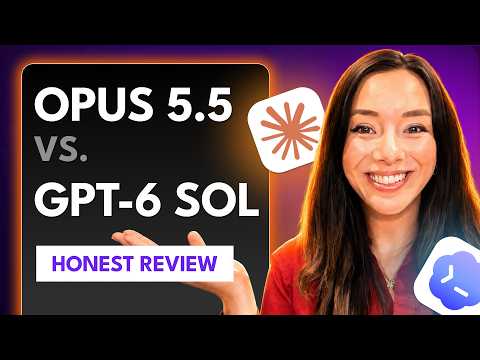
On 22 Sep 2026 three mid-tier refreshes shipped the same morning — Opus 5.5, GPT-6 Sol, GPT-6 Luna — cheaper and faster than frontier Astra/Fable. Opus list pricing is $4/$20 per million tokens (verified Anthropic docs); roughly 2× Sol on Vo's chart. First Opus with Fable-level cyber/bio rails.
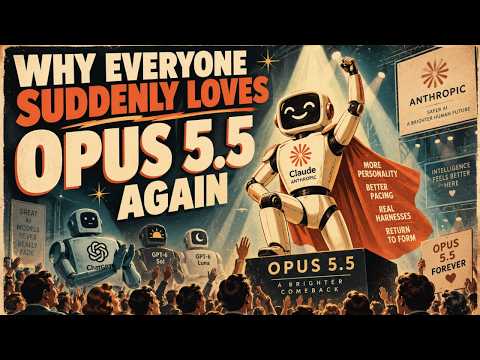
Vo's operating stack after a live blind bench: Sol for cheap daily PRDs and speed; Opus 5.5 for agentic voice, long runs, and selected front-end ("back in the mix"; annoyed zero times — when annoyed she was accidentally on Opus 5); Astra when she wants her favorite heart model. Personality and annoyance ergonomics are routing signals too. Do not mint Opus 5.5 or Sol model pages — the decision tree lives here.
Route by job and by felt fitness. A model that is no longer annoying can re-enter the mix without becoming the default — the harness still picks where the hours go.
Same-week dual-lab read (25 Sep 2026): labs compete for roles in a multi-model stack, not a single champion. "The battle of LLMs is not really about one thing anymore. It's about figuring out what the stack of options needs to be, and then battling for each slot." Opus 5.5 API $4/$20 (Anthropic); Artificial Analysis index 58 vs prior leaders at 53. Personality is UX. Discourse winner ≠ stack winner.
DevDay AIDB add: GPT-6.1 Sol lands near-Astra coding and computer-use at roughly one-fifth Astra token price ($2 in / $10 out per M). Verified benches — DeepSWE high 75.2%, OSWorld max 71.4% vs Astra 73.5%, Artificial Analysis Index 52 vs Astra 53 — make always-on agents economically plausible. New failure mode: effort-max sometimes hurts via overthinking, so more thinking can be a mis-route.
Judgment-model tier: volume snap judgments off the LLM path
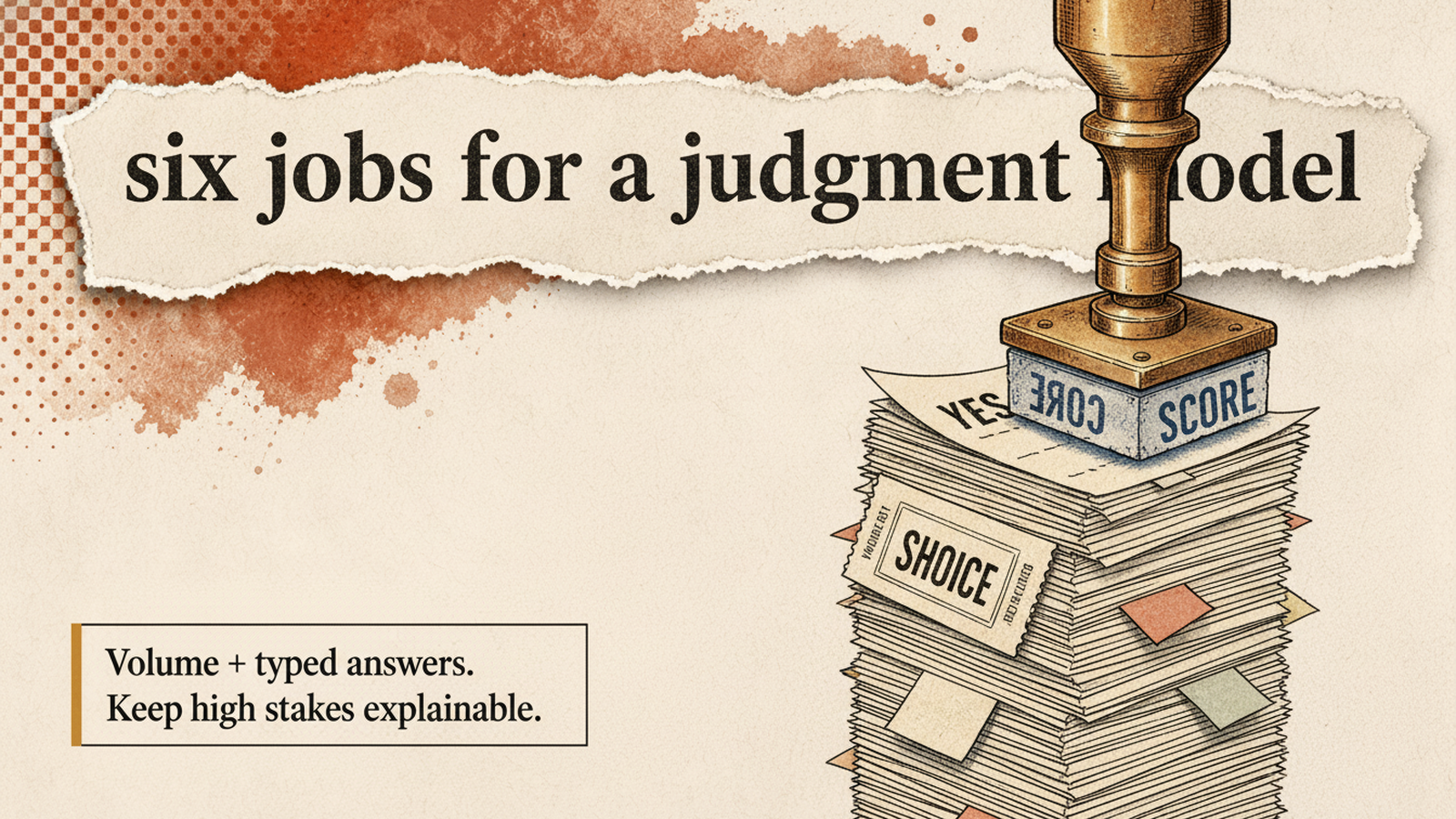
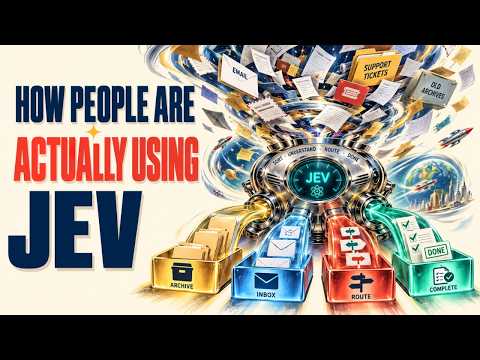
TypeSafe's Jev (Choice ≤255 options / Score 2–10 levels / Noul 0–1 probability) is a routing destination, not a chatbot substitute. Use it when you repeatedly read something, make a small judgment, then take a predictable next step. Six jobs already shipping: pile analysis, semantic search/filter, inbound triage, rule-based grading, agent micro-routing and context pruning, instant response/fill.
It's not just that it's good at judgment. It's that it's fast enough and cheap enough to ask and make judgments about everything.
Nathaniel Whittemore, The AI Daily Brief
Parallel questions on one shared state keep wall-clock flat while cost scales with tokens. Route away from it for hiring, money, security, multi-hop reasoning, math/dates, and anything that needs an attached rationale. Fitness preflight: writable answers, a pile or stream, wrong answers cheap or catchable, text evidence under context — then atomic questions and a small gold set before production. Vendor 20–200× / 40–400× is comparison-dependent; independent remeasures land nearer 1.5× for single-call swaps and ~100× when a multi-step LLM workflow collapses into one typed call. Do not confuse Jev the product with Jevons paradox.
Jev alone is okay. Jev with an LLM buddy is super powerful.
Claire Vo, How I AI
Vo's How I AI walkthrough adds runnable costs and the order of operations: judgment model first for pairwise clustering and triage, frontier model second for analysis and generation on the reduced set. Marketing-site demo: 112 PRs / ~$0.011; ChatPRD ~1,700 PRs / ~$0.09 (self-reported).
Judgment-model tier: Jev and Decisions API
Volume snap judgments — classify, route, score, yes/no — belong on a decision model, not a frontier chat model. TypeSafe's Jev led builder mindshare; OpenAI's Decisions API (DevDay 2026) is the same class with vision. Every reported ~150ms latency in internal tests (self-reported); Claire Vo demoed constrained Luna with thumbnail/hot-dog vision tasks, not fully GA yet.
Whenever you have constrained inputs that are interacting with apps, Jev is a good thing to reach for.
John Lindquist, How I AI
Order of operations stays: judgment model in front for triage/cluster/route, frontier model behind for analysis and generation. Multipass beats brittle single-pass — add another cheap layer rather than quitting. Not Jevons paradox. Fitness bans (hiring, money, security alone) still apply — see Domain Judgment.
AIDB DevDay recap: Decisions API (Luna judgment model with vision) claims ~10x faster than the Responses API — OpenAI marketing, not independently timed here. Same peer class as TypeSafe Jev; do not mint a Decisions-API page.
Argon GA: where does it fit? Sonnet 5.5 recovers the mid-tier
Gemini 4 Argon re-enters the bench board — early access was gated; by mid-October it is generally available. Google's Argon leads knowledge-work and economic-agent benches (Vals Index 68.9%, DeepSWE 77.9%, Harvey Legal 19.6%) while lagging coding and computer-use against Astra and Opus. Independent Artificial Analysis puts it at Intelligence Index 53. Early release was held to trusted cyber defenders (CWE-bench ~68%). Cost color at launch: temporary discount vs hundreds per task for Astra or Fable. Operator rule still holds: do not reroute production stacks on vendor launch benches alone.
Argon hands-on: a writer, not a builder. After a week, Dan Shipper at Every expected gamed benchmarks and found a model that's "surprisingly good in our real hands-on testing." It's strong at structured explanation: numbered, building sections on a hard literary question, and job descriptions that tie the role to company strategy without being asked. It couldn't finish Every's senior-engineer rewrite benchmark, so there's no score. And it ships in Anti-Gravity, which has no classifier to auto-allow routine actions, so he'd rather call it from another agent's command line. Routing read: a third provider for unroll-and-explain writing, not a daily driver if you live in Codex or Claude Code. One team's week, no numbers.
Argon is generally available — ask where it fits. Nathaniel Whittemore reframes every frontier launch: "Whereas it might have been before, how good is it with the implication being should I switch, the question is now much more where does it fit?" Artificial Analysis puts Argon at Intelligence Index 53, tied with GPT-6 Astra and Fable 5.1 in the frontier cluster (Wonder Full and Sonnet 5.5 at 56; Opus 5.5 at 58). Intro API pricing is $2/$10 per million tokens through 30 November 2026 (about $1.99 per AA index task), then $4/$20 — roughly two-thirds Anthropic once the discount ends.
Dan Shipper's Every team calls it "a breakthrough if your company lives in Google's ecosystem and a strong option for Frontier Hoppers as a secondary model for certain tasks" — shaky on refactors, fast on greenfield. His sticky use: keep ChatGPT and Claude open day-to-day, switch to Gemini 4 as an editorial partner to structure a tough essay or sharpen a metaphor. Senior-engineer bench quoted at about 21% (self-reported; earlier week-test had no finished score). Vendor benches such as DeepSWE and Harvey legal stay self-reported unless Artificial Analysis confirms. Pro gets Argon in Gemini CLI; Antigravity needs Ultra — same model, different harness (see the harness thesis).
Whereas it might have been before, how good is it with the implication being should I switch, the question is now much more where does it fit?
Nathaniel Whittemore, The AI Daily Brief
Sonnet is definitely not the same as Opus, just 50% cheaper. […] Opus is able to approach problems with a more strategic mindset […] whereas Sonnet looks more at the tactical question of how do I do this?
Kun Chen, via The AI Daily Brief
Sonnet 5.5 recovers the mid-tier — and the cheap-per-token trap returns. Artificial Analysis Intelligence Index 56; Anthropic's Terminal-Bench 4.0 at 70.6% (independent AA nearer ~64%). Anthropic's "30% cheaper" claim does not hold at max-effort token spend — AA cost per task is $7.60. Same cost-per-completed-task discipline this page already teaches. Kun Chen's named stack: Opus for ambiguous planning, Sonnet for implementation, Fable (or another model) for rescue; Sonnet-as-subagent may be the value case. Extends the adviser/executor split with a mid-tier recovery that still fails the sticker-price test.
Enterprise survey: routing is still rare
KPMG Global AI Pulse Q3 2026 finds model routing is the least common harness capability — only 23% of organizations have built it (17% of experimenters vs 41% of established-ROI orgs). KPMG's frame is gate before switchboard: permission and controls between models and use cases first; routing which model handles which job comes last.
KPMG Global AI Pulse Q3 2026 (verified PDF).
The operator skill this page describes — route by task, not by smartest default — is still uncommon at enterprise scale. Via Whittemore / The AI Daily Brief.
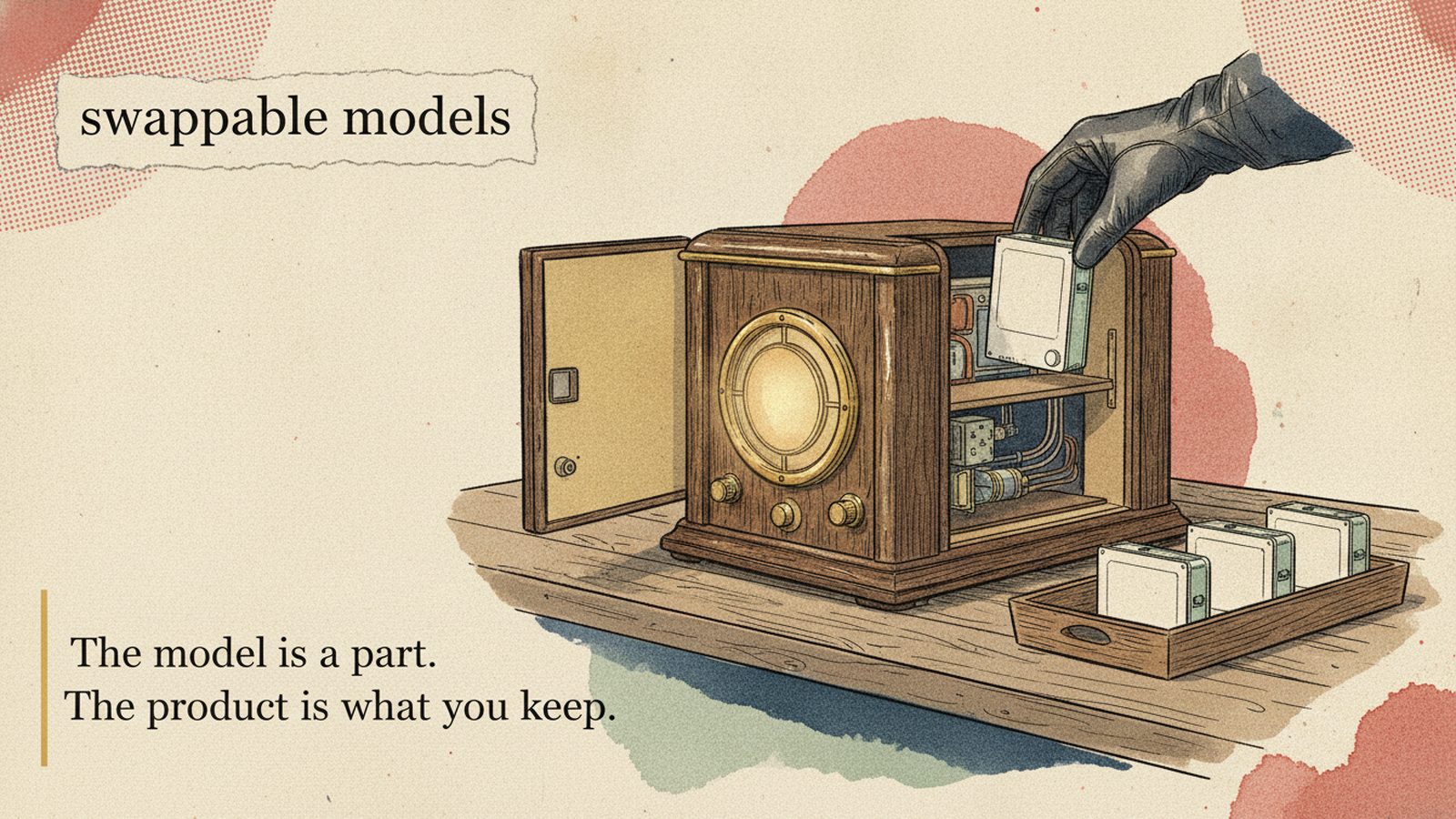
Swappable models, tiered prices, and switch-split-stay
In October 2026 routing moved into a consumer product. Elon Musk posted that Grok Bot will “use the best back-end model for any given task, including Claude Opus 5.5, Midjourney, Suno, and other leading APIs.” Nathaniel Whittemore reads it as the product and its context becoming the lock-in while the models become “mobile and transportable.” It is a curated menu rather than open choice: the partners have ties to Musk or SpaceX compute, there is no OpenAI access, and some Grok users object to paying for rival models.
Claude Haiku 5.5 is a reminder to read price tiers, not launch ratios. “A quarter of Sonnet, half of Haiku 4.5” holds only for prompts over 100k tokens. Under 100k it costs $0.10 in and $0.50 out per million tokens, one-twentieth of Sonnet 5.5, and Anthropic says about 90% of earlier Haiku requests fell under that line. It beats GPT-6 Luna on Anthropic's showcased benchmarks, but it is one of the most token-hungry models Artificial Analysis has measured, so per-task cost, not per-token price, decides where it fits.
Nufar Gaspar's personal benchmark gives “run a benchmark of your own” a working size: four to six frozen tasks, your current model plus about three candidates, judged blind. Its output maps onto routing — switch, split or stay — and her own run split across three models by task. Via The AI Daily Brief and its benchmark webinar.
Muse Wonder: the agent loop, not the front end
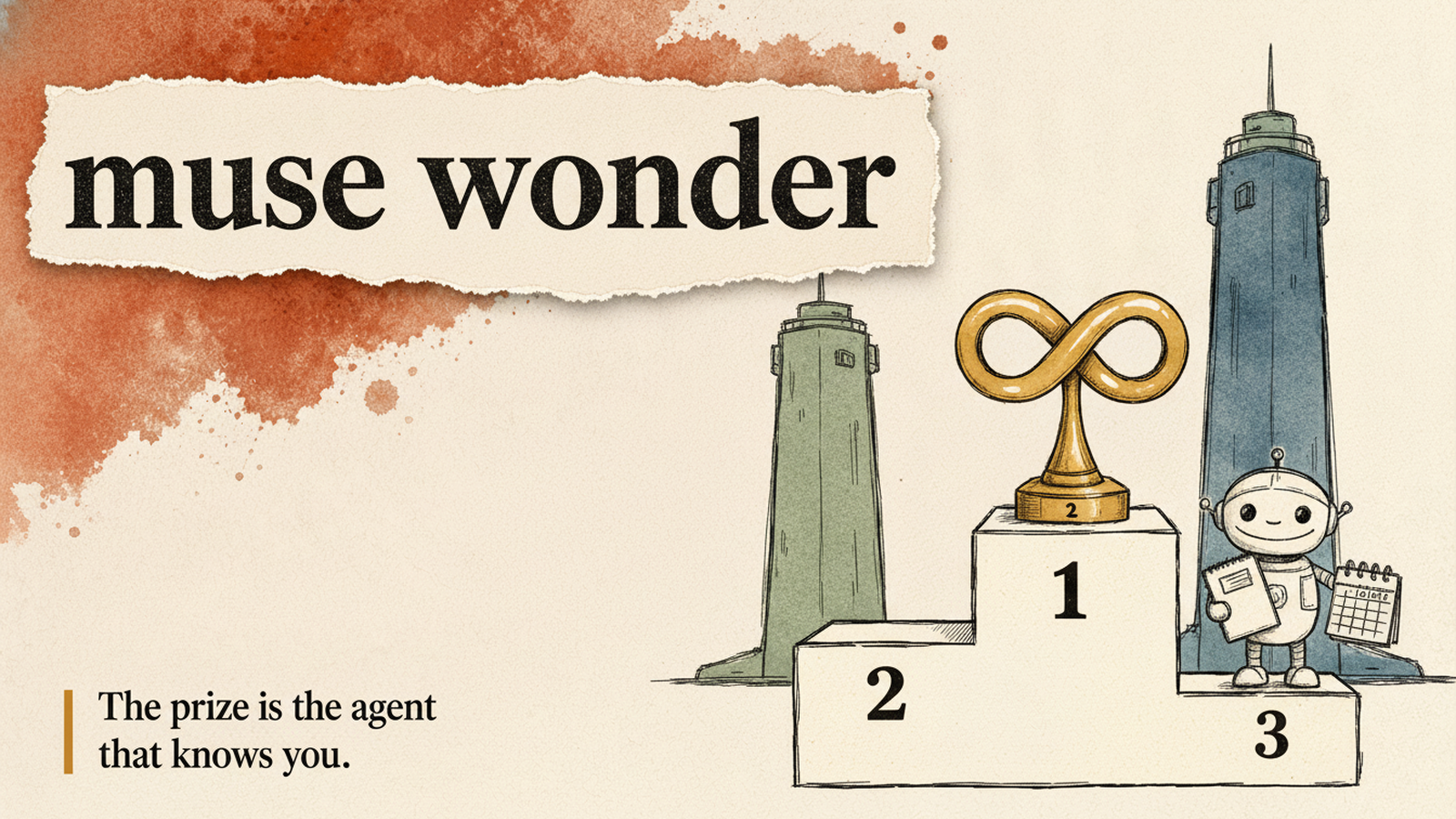
Meta's Muse Wonder family lands near the top of the boards: Artificial Analysis puts Wonder Full at 56 and the smaller Wonder at 52 on its Intelligence Index. Two traps sit under those scores. The first is the name. Wonder is on Meta's API at $4/$20 per million tokens, while the stronger Wonder Full ships only inside Muse Code's $50 and $200 plans, and several testers blamed bad results on the small model sharing the big one's name. The second is the bill: Wonder costs $4.52 per Artificial Analysis index task, about 2.8x Muse Spark 1.3, and early users drained plan limits fast, possibly because of a metering bug, per Meta's Alexander Wang.
Hands-on reads split by task. Dan Shipper's senior-engineer rewrite put Wonder at 52% against GPT-6.1 Sol's 71%, and in a cold open on Every he called Muse benchmaxed and a middling writer. Claire Vo ranked it first on her back-end feature, inbox triage, computer use and email batching tasks, close to Sonnet on assistant voice, and "18 months behind, maybe a year behind" on design.
Her route is specific: use it as "an orchestrator model or a voice model or an agent model in the loop," and keep Opus 5.5 for front-end work. She ran it headless through Claude Code rather than in Meta's own Muse Code, swapping the model while keeping the harness. Neither episode says which Wonder variant each test used, which is the open question behind the split reviews. More: Put Muse Wonder in the Agent Loop and Meta Is Back at the Frontier.