TL;DR
The short version
The AI model market is splitting into a barbell: open-weight models take most of the token volume while closed frontier models keep most of the value. Investor Gavin Baker's estimate — closed frontier tokens end up 60-90% of economic value but only 15-25% of volume.
Vercel's own gateway shows it live: open models ran ~62% of token volume in August but captured under 9% of spend. That's why the coordination layer — Hugging Face, routers, OpenRouter — suddenly commands billion-dollar bids.
Built on Nathaniel Whittemore's The AI Daily Brief, The AI Model Tier List and The Open Weight AI Renaissance Coming to America. ADB house analysis; the FT/Ramp rebuttal is Whittemore's interpretation, credible not settled.
The barbell: open wins volume, closed keeps value
The open-vs-frontier capability gap closed enough over the past year to put open models into serious workflows — so open models win utilization. Frontier models keep the economics because premium intelligence commands a premium.
Most likely end state in my opinion is that closed frontier tokens are 60 to 90% of economic value, but only 15 to 25% of tokens.
Gavin Baker
Vercel's gateway shows the split live: open models ran ~62% of token volume in August (up from ~28% in June) but captured under 9% of spend, while closed models took ~61-65% of spend on a minority of tokens. The barbell isn't a forecast — it's already in one production router's numbers.
Why the coordination layer is suddenly worth billions
Hugging Face fielding acquisition interest at ~$13B (a 2023 valuation of $4.5B), Stripe buying OpenRouter for $7B, Nvidia's $6B+$1B Poolside deal — "a bet on persistent model fragmentation as the future." If no single model wins, the value moves to whoever hosts, routes, and coordinates the many.
The Hugging Face interest became a deal: Nvidia agreed in September to buy it for about $12.9B, expected to close in the first half of 2027. Nvidia's incentive is plain — it sells the GPUs open models run on.
AT&T is the concrete enterprise proof
AT&T holds frontier spend flat and shifts to open models, already serving 40% of employee queries that way (target 60-70%), using routers to cut coding cost 56% for a 2% quality drop. A single enterprise living the split: route the volume to open, reserve the value-dense work for frontier.
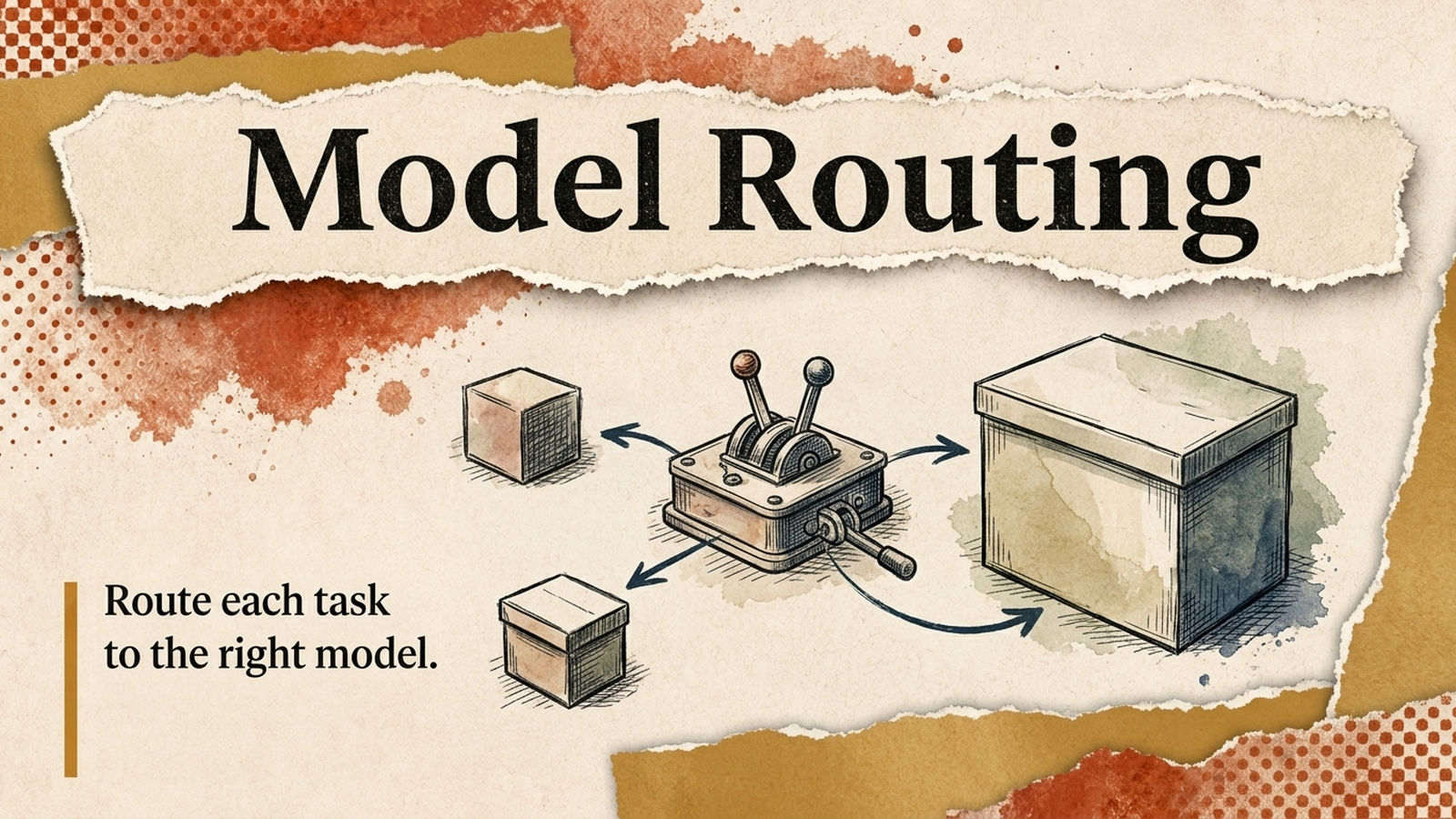
The operator's response to the barbell is model routing — the market structure is the reason the stack, not the model, is the right unit of analysis.
October 2026: tokens up, spend unchanged
On one record day in September, open models handled 78.4% of tokens on Vercel's AI Gateway, according to CEO Guillermo Rauch, as reported on The AI Daily Brief. One day, and tokens, not spend.
Spend tells a different story. Axios's own caveat on the new wave of US open models: in the higher-spending enterprise arena — API and corporate billing — open-weight models still “account for a small proportion of usage.” Same barbell, restated by a third party.
Even the August baseline depends on whose count you use. One report put open models at about 62% of Vercel's tokens that month; Vercel's own August production index puts it at 56%, with a far smaller share of spend. Different number, same shape.
The cheap end just changed nationality
Claude Haiku 5.5 is priced to win short-prompt and sub-agent work at $0.10 in and $0.50 out per million tokens. One investor called it a “narrative violation. If you want the cheapest LLM, you should now buy American,” arguing the cost-intelligence frontier now belongs to US labs.
That cuts against the idea that the volume side of the barbell is open-weight. Both can be true, since cheap closed tokens are still volume tokens. What decides it is Whittemore's open question: was enterprise interest in Chinese open models about cost or about sovereignty? If cost, cheap closed tiers now compete for the volume side. If sovereignty, they don't. This page records the tension rather than resolving it.
Ramp's economist Ara Kharazian adds the spend side: cheaper, token-efficient models push AI spend down, while image and video generation push it up. Via The AI Daily Brief.