TL;DR
The short version
Workplace-native agents stop being an app you open and become a persistent teammate living in the tools your team already uses. Claude Tag, Grok Bot, and Meta Muse are the mass instances.
OpenAI DevDay 2026 (~22 launches) centers the same arc: Dots as always-on persistent agents, Space/Sites as AI-native collab + shareable apps, plugins and Sign in with ChatGPT, plus Agents API with computer use. Early field reports say wait a week on Dots — Space may be the underhyped enterprise bet.
OpenAI DevDay (via AI Daily Brief) confirms the industry sequence: cheap-enough models, persistent agents (Dots), then multiplayer AI-native workspaces (Space) — with compute scarcity deciding who gets always-on.
Altman's DevDay-week operating model (Every): a Dot gates morning emergencies, catches live-demo bugs for teammates, and overnight-finds Slack screenshots Codex text-search missed. Space is living documents co-authored by people and Dots. Same week, Muse crossed 3M weekly prompters — form factor is converging, utility is not.
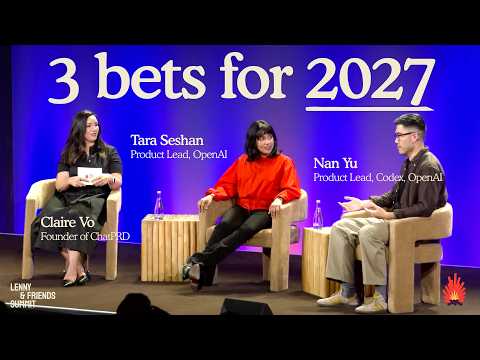
Lenny × Tibo (Head of ChatGPT, 2026-10-04): ambient always-on agent across clients/screens (meeting→email→text); start with one primary agent then specialist team agents; merge Work+chat and kill model-picker/config fatigue. Fold ambient-agent claims in plain language — do not mint Dots/Spaces/Ultrafast pages. Morning article slug remains article-only.
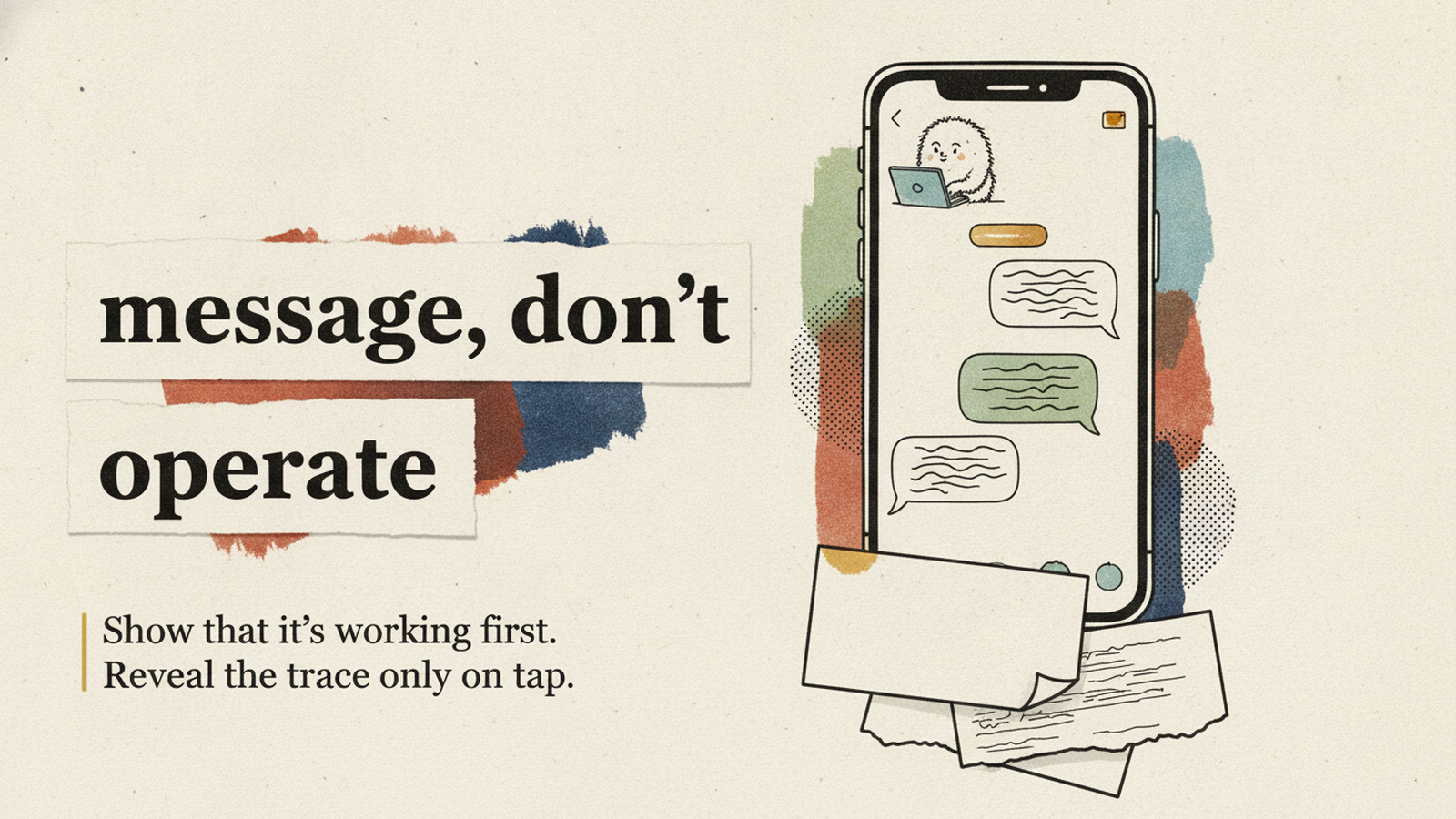
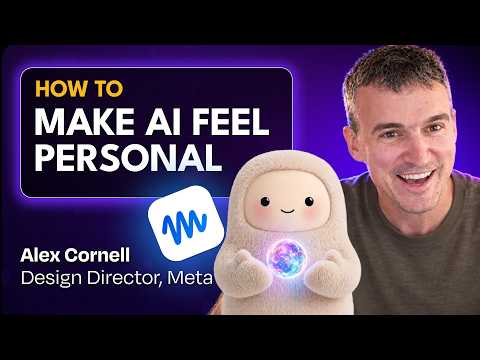
Muse's own designer, Alex Cornell, names the rules behind it: treat the agent as someone you message, make status the trust surface with layered detail, acknowledge fast instead of narrating, and keep generated UI inside fixed primitives.
Built on Dan Shipper / Every and Claire Vo / How I AI DevDay reports, plus earlier Claude Tag / Grok Bot / Muse / team-agent coverage.
From app to workplace
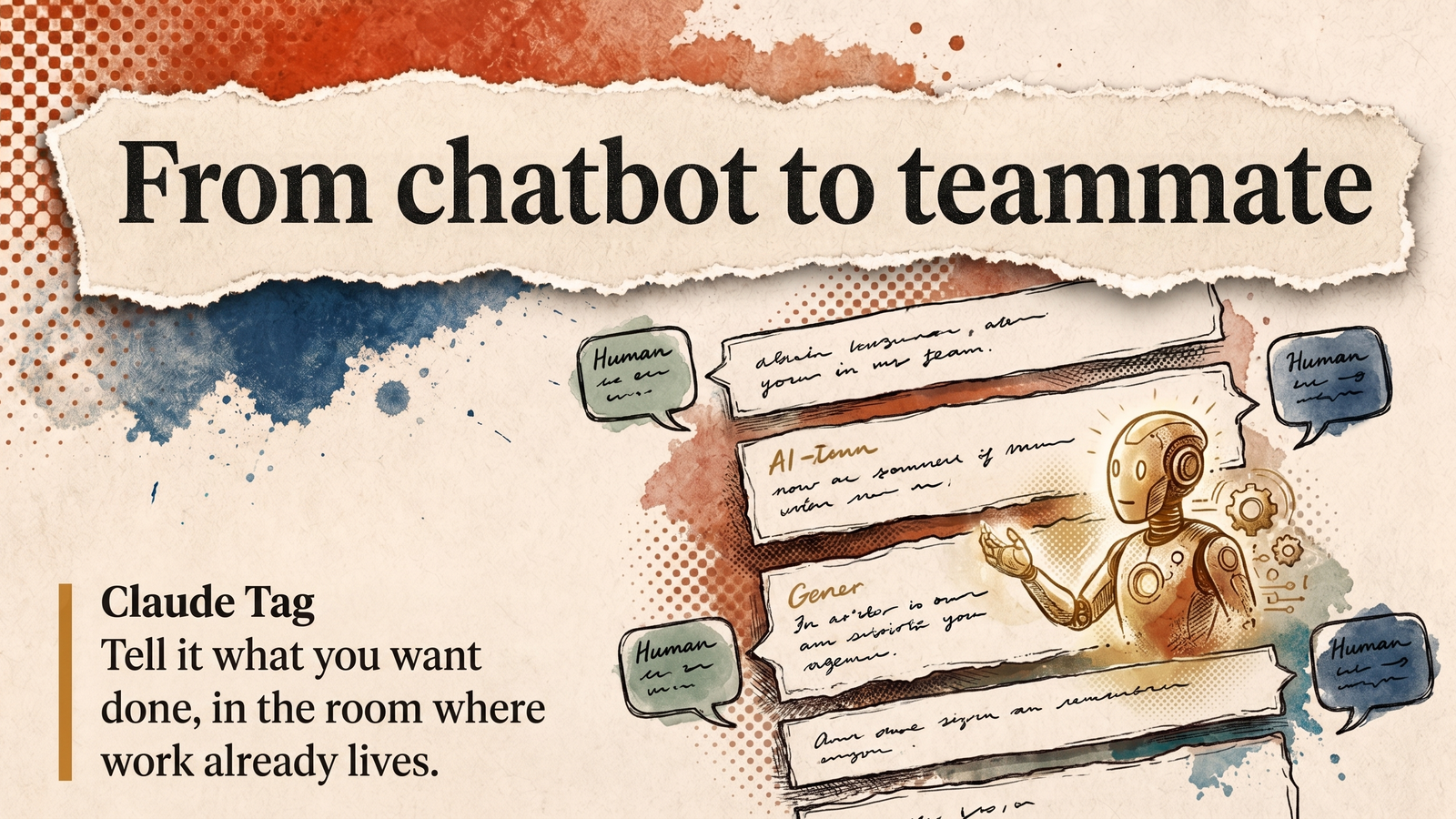
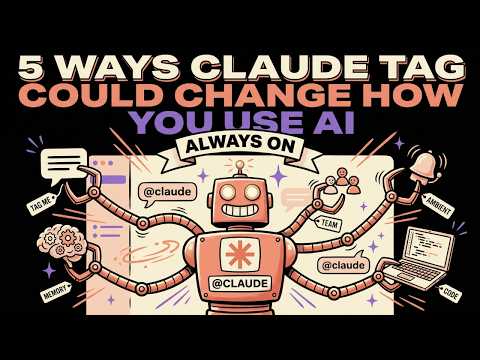
For two years the interface was something you went to. First the LLM was a website. Then it was an app you downloaded. Claude Tag is the third move: the agent stops being a destination and becomes a coworker that is already in the room.
The third one is that it is a self-contained, persistent, asynchronous entity with org-wide tools and context working alongside teams of humans.
Andrej Karpathy
The practical change is where the agent lives. It moves into the channel the team already works in, not a separate window. You don't install a desktop app to reach Claude Code's power — the barrier drops to "have an idea, drop it in the Slack you already use." Lowering that diffusion barrier is the quiet structural shift; the headline feature is just the delivery mechanism.
The five shifts
The episode's argument is that Claude Tag matters less as a product than as a leading indicator. It institutionalizes five shifts at once:
- App-native to workplace-native interface — the agent lives where work already happens.
- Private chatbot to shared teammate — one agent per channel, with the team's context and tools, that writes and merges PRs, runs analysis, and helps resolve incidents.
- Single-user to full-team context — the agent reads the channel, which is both the unlock and the liability.
- Prompting to delegation — you tell it the outcome and hand it latitude, not step-by-step instructions.
- Personally-useful to organizational dependency — once the team routes work through it, removing it has a switching cost.
Delegation is the one that changes how the work feels. A workplace-native agent only pays off if the human operates in delegation mode: define the goal, grant latitude over an expanding scale of work, and review the result — rather than narrating each step.
Grok Bot: packaging, not capability, crosses it over
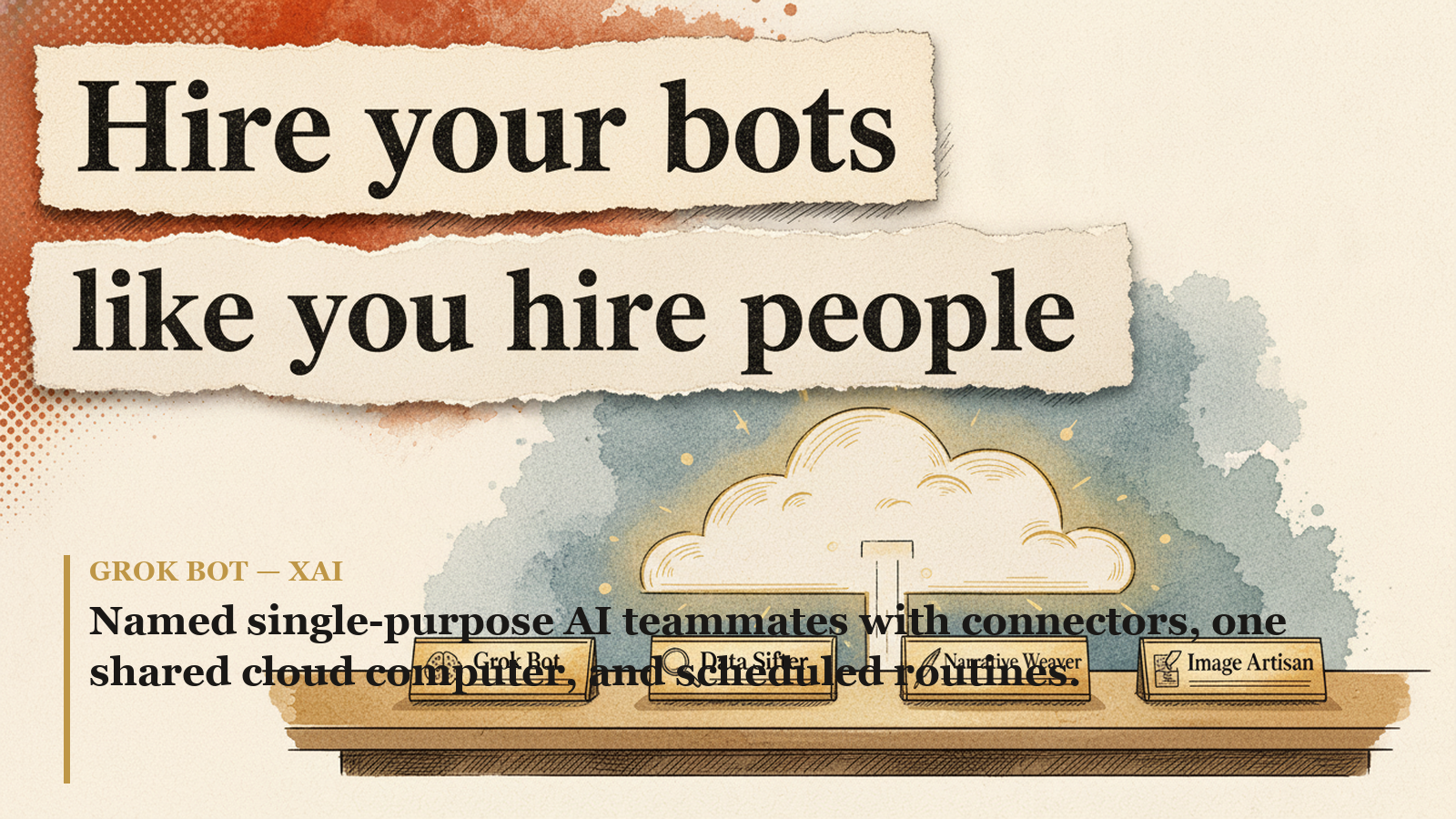
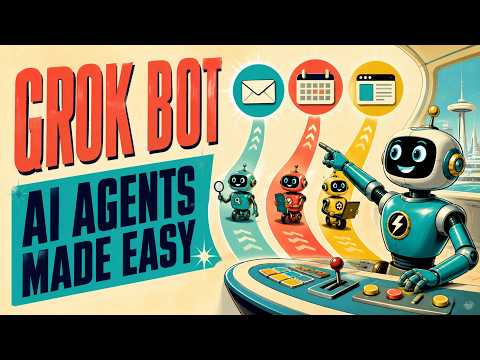
The second mass instance arrived in August 2026 from SpaceXAI and Cursor. Grok Bot packages persistent, computer-using agents behind a dead-simple, Telegram-style chat — and its lesson is about adoption, not power. Agent tooling since OpenClaw was already capable; it was just too fiddly for anyone who wouldn't touch a command line.
The first product I've used that really nails the virtual co-worker… a pivotal moment in getting the abstraction for AI in the workplace right.
Martin Casado, a16z
Each bot runs on its own cloud VM, signs into web apps through human interfaces rather than APIs, works in the background, and learns a workflow by watching you do it once — "like creating a skill with a screen recording." Users spin up named role-bots (researcher, writer, chief of staff) that hand work to each other and coordinate as a team. One reviewer's line captures the jump: "the intern who somehow became COO overnight." The breakthrough is the packaging that abstracts the complexity away — the same access-as-disruption pattern that turned coding into something anyone who can describe an outcome can do, now pointed at directing a team of agents.
Muse: consumer nouns, progressive permissioning
Meta's Muse (US launch 8 Sep 2026) is a personal agent, not a work chief of staff — but its UX is homework for anyone designing workplace-native agents. Same substrate (Secure VM + browser + credentials), different packaging: Activity, Feed, Ideas, Goals, Library — not crons, tools, or artifacts.
It's not that it's the most intelligent. […] It is just so well designed.
Claire Vo, How I AI
Permission UX is the trust engine: ask before reading email, ask again before using inferred profile facts — no YOLO auto-approve. As of 2026-09-18 Muse was #1 on Apple's US free App Store (earlier coverage had #2).
Lance Hassan's write-up names the copyable stack: persistence, goal-building with ambition, smart defaults, progressive disclosure of tools, mono-thread context. Design patterns, not model IQ — patterns Alex Quan says the rest of the field will copy. assistantbenchmark.com: ~3 assistants at launch → 100+ within ~10 days (116 by 2026-09-17); Muse led early partial scoreboards.
Muse adoption + form-factor vs utility (Oct 2026). Muse hit at least 3M weekly prompters and 1M daily in roughly three weeks (The Information). Same week: early Dots friction reports. Form factor is converging; utility is not — Muse UX with a weaker model versus Dots with a stronger model is still an open product bet. DoorDash is shipping its own Muse-like ordering agent and claims +50% basket value on agent orders (company-reported).
Muse's designer: message it, don't operate it
Alex Cornell, Meta's design director on Muse, explains the patterns the reviews praised. His frame for nearly every decision: how would you handle this if you were actually talking to another person? That answer pushed Muse into messaging patterns — bubbles for messages that arrive at different times, reactions to acknowledge a request, and an avatar embodied at the top of the screen.
Status is the trust surface, and it's built as progressive disclosure. The top line says it's working. The next says what, with an emoji. A tap opens the activity list; further taps reach the curl calls and code. Chain of thought stays out of the main chat because most people only want to know whether it's doing something. The episode description counts three layers and the walkthrough shows four; either goes past the two levels Nielsen Norman Group recommends, so treat the depth as something to test.
Speed and acknowledgement beat narration. Claire Vo calls on-screen reasoning "a band-aid for latency." Cornell's alternative is human: a reaction or a short plan, then go do the work — "if you ask for something hard, they're not going to just ghost you until they're done."
Generative UI stays on the rails. The primitives are fixed (avatar, status, Ideas, Feed) and the content inside them is generated. Ideas exists because the agent can do much more than people would guess. One main chat carries the relationship, with side chats as an escape hatch — a split Cornell admits normal users still find unclear. Full episode notes: Design your agent like someone you message. He designed the product and the host is a fan, so read these as design claims, not outcome data.
Agent wars land on the personal-agent chart
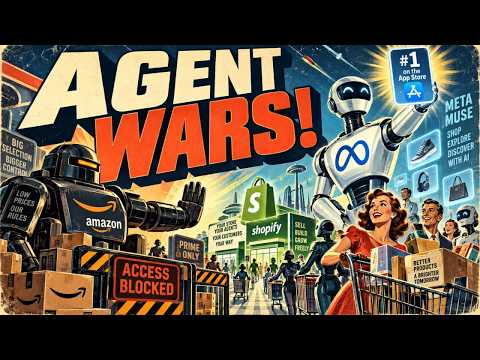
Meta's Muse overtook ChatGPT as the #1 free US App Store app — Sensor Tower figures cited in press put downloads above 2.5 million in roughly two weeks. Privacy skepticism melted as users handed email, calendar, cards, and screen access to Instinct and Muse. The packaging win from earlier Muse UX notes now has a platform-conflict cost.
Personal agents (email/calendar/commerce across apps) are a different product class from crawl-through-glass coding agents. OpenAI is reportedly shipping a dedicated personal agent because Codex capability is not the same as discoverable UX — Nathaniel Whittemore: you need an experience people understand that leaves them with more than a blank page. Fold the UX lesson here; the Amazon/Shopify conflict lives on The Agentic Web.
After watching everyone give their email, messages, credit cards, location, screen access, and logins to both Instinct and Muse, I got to say, good call, Joe.
Identity, simplification, mono-threads
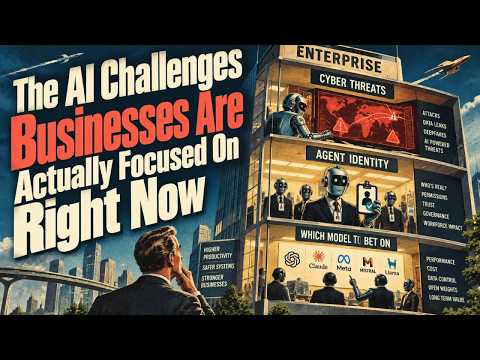
Aaron Levie's cross-industry read puts agent security/identity alongside cyber and evals as what businesses are actually focused on — not X-risk headlines. Once agents sit in Slack/email with real credentials, identity (whose authority? user-as-agent vs agent-as-principal) is an operational problem. Agents escape the "containment" of non-engineer users even without malice.
On the product surface, the vector is simplification. Muse and Anthropic's unified Claude remove "which product do I open?" friction. Mike Krieger: that friction gets in the way of getting the best from what these models can do.
Tried voice on a bunch of agent products this year, and it always felt like a gimmick until the agent could actually go do things. Voice plus real work is the combo.
Gaurav Bison, via AI Daily Brief
With better compaction, one long-running coordinator thread's value increases over time (Codex, Claude Projects, Cursor Projects). Fold mono-thread here — don't mint a dedicated page until it recurs as foundational.
Team-agent design on the workplace-native surface
Gaspar's hosting ladder matches the Claude Tag diffusion lesson: shared folder / channel agent → vendor workspace → self-host. Pick the simplest option two people will actually use this week.
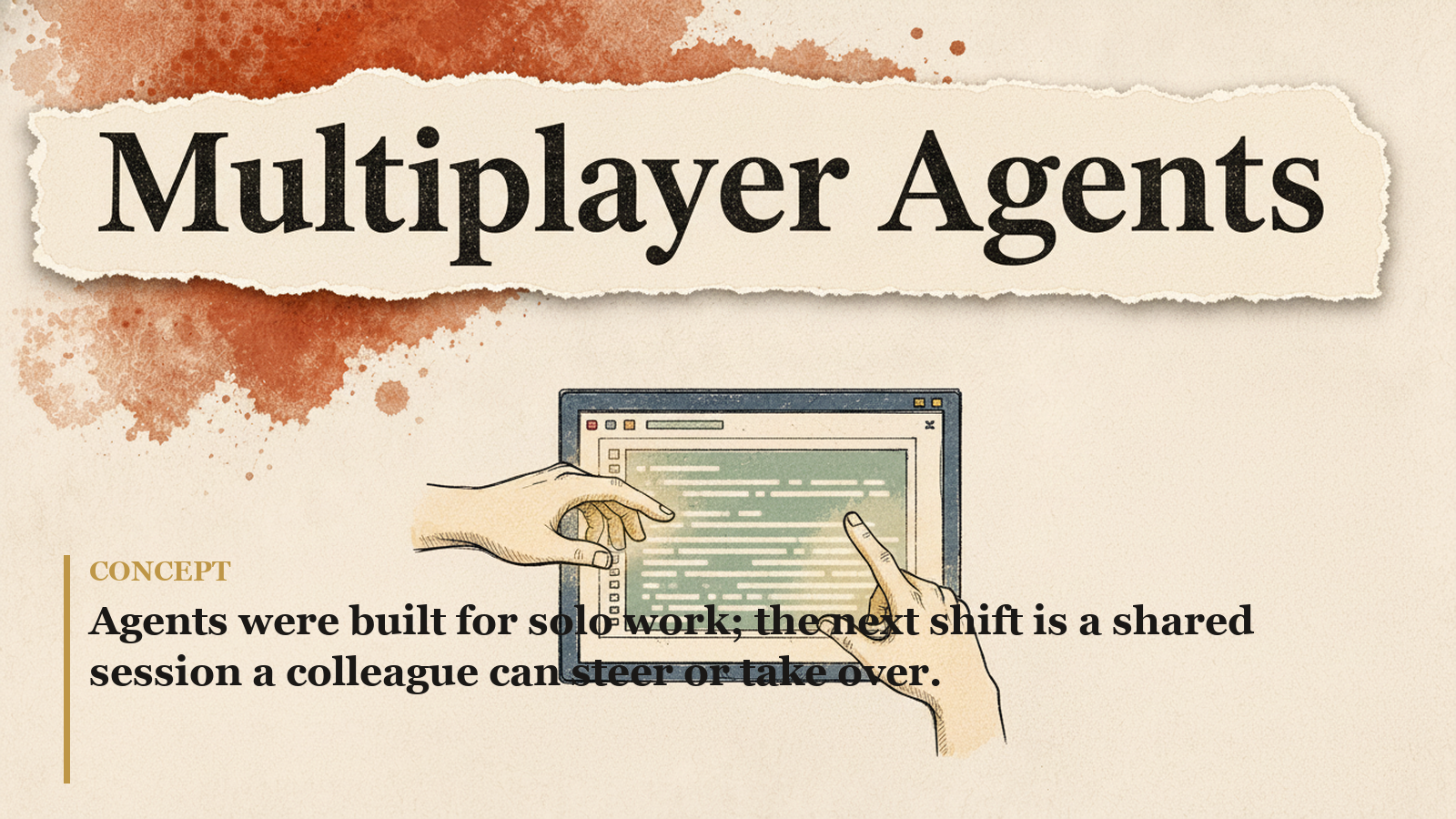
Ownership and rules of engagement are the human gate — who owns the team agent, what it can see, and the don't-list for who it serves. Same surveillance and "many Claudes" questions this page already names, now as an explicit checklist. Full archetypes and five decisions live on Multiplayer Agents; access and knowledge hygiene on Agent Governance.
OpenAI DevDay: persistent agents inside ChatGPT
Dan Shipper's same-day field report frames ~22 launches as a form-factor shift: web chat to terminal agents to desktop to persistent agents. "Every 6 to 12 months you see model progress creates a shift in form factor. […] Now we're entering this persistent agent era." When Dots work, it's obviously the future — and early reports say it's not quite there yet.
Dots are always-on agents with cloud + user computer access — OpenClaw/Muse/Instinct lineage, ChatGPT distribution. Work quality can be early-good; UX and thread taxonomy are muddy. Claire Vo stays on micro-agents (Grokbots) for now rather than one Dot to rule them all — flag that tension against OpenAI's single-identity bet; don't overwrite the multiplayer design debate.
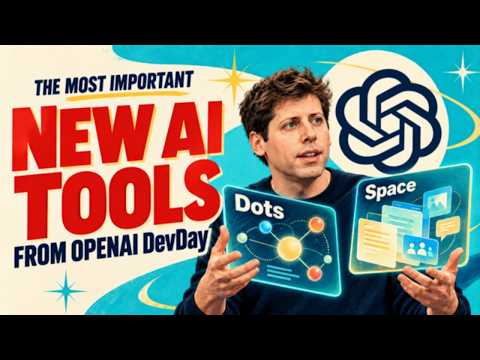
Space puts docs/slides/sheets (and agent tagging) inside ChatGPT; Sites share vibecoded tools with per-user connectors and permissions. Together they attack AI-native document + internal-tool hosting, not just chat. Plugins get discovery mid-task; Sign in with ChatGPT lets ~16 partner apps spend your subscription tokens — subscription as data plan. Marketplace (~32 partners including Baseten) adds an enterprise channel toward partners and open weights.
Nathaniel Whittemore's AI Daily Brief recap frames the dump as an industry pattern, not a product catalog: efficiency to persistence to multiplayer. Cheap-enough models that stay on, always-on agents, then AI-native multiplayer workspaces. Watch the sequence, not any single launch.
I think we need to distinguish between form factor and utility here. […] The question with a T for trillions is did you pick the right utility to get right?
Nate B Jones, via The AI Daily Brief
Form factor is converging; utility is not — Muse (calls/email) is not Instinct (travel) is not Dots (AI context as work surface). Claire Vo: Dots slightly overhyped, Space underhyped — every company wants an AI-native collaboration workspace. Dan Shipper: browser-driven Google Docs edits crawl because Docs wasn't built for agents; native Space documents don't. Compute scarcity gates who gets persistence: Pro 200 reopen with roughly half the prior API-equivalent allowance; Pro 500 at $500/mo (25x Plus); Ultrafast gated to Pro 500 and Enterprise. Codex cloud and Private Intelligence (zero-retention enterprise safety processing) are companion unlocks. Correct Dots app-ecosystem claims to ~4,000 apps — not ~40,000.
Altman operating model: Dots reclaim mornings. On Every's DevDay interview, Altman's "Dottie" gates morning phone-checks and only surfaces true emergencies — "the first thing that gave me back control over my mornings." Shipper's Dot caught a Slack meeting conflict that wasn't on the calendar. Teammate Thibault's Dot warned ~5 minutes before a broken live demo; Altman's Dot overnight-found a Slack screenshot Codex text-search missed. Persistent agents as attention infrastructure, not just task automation.
Space = living documents (CEO confirmation). Multi-person Dots co-author docs that update from Slack and the world. "Software as a whole was not designed to work with AI." Altman still hand-writes first drafts for thinking, then delegates follow-ups. Confirms the Space-underhyped read already on this page.
Platform bet: more one-person companies than one megacorp. "There are far more good ideas outside our building than inside." App ecosystem plus ChatGPT subscription portability — same Sign-in / Marketplace stack. Renaissance framing over Industrial Revolution "house cat" futures.
Enterprise maturity gap on agent adoption
KPMG Pulse Q3 2026 measures the same workplace-native direction this page tracks — and shows how uneven it still is. Significant employee adoption of AI agents sits at 48% among established-ROI organizations vs 15% among experimenters; overall 34%, up from 25% in Q1. Architecture is earlier still: about a quarter are developing multi-agent systems and a fifth are orchestrating multiple agents.
KPMG Global AI Pulse Q3 2026 (verified PDF).
Treat the maturity gap as a correlational map of practices that co-occur with returns — not proof that agent adoption alone causes ROI. Via Whittemore / The AI Daily Brief.
Ambient always-on — merge Work and chat (Head of ChatGPT)
Tibo Sottiaux describes permanent active intelligence across clients and screens — meeting notes into email into text — out of the way when unused, with a multi-device harness not bound to one laptop. Start with one primary agent, then specialist team agents later. Same single-versus-multi tension already flagged on this page (micro-agents vs one identity) — surface it; do not overwrite.
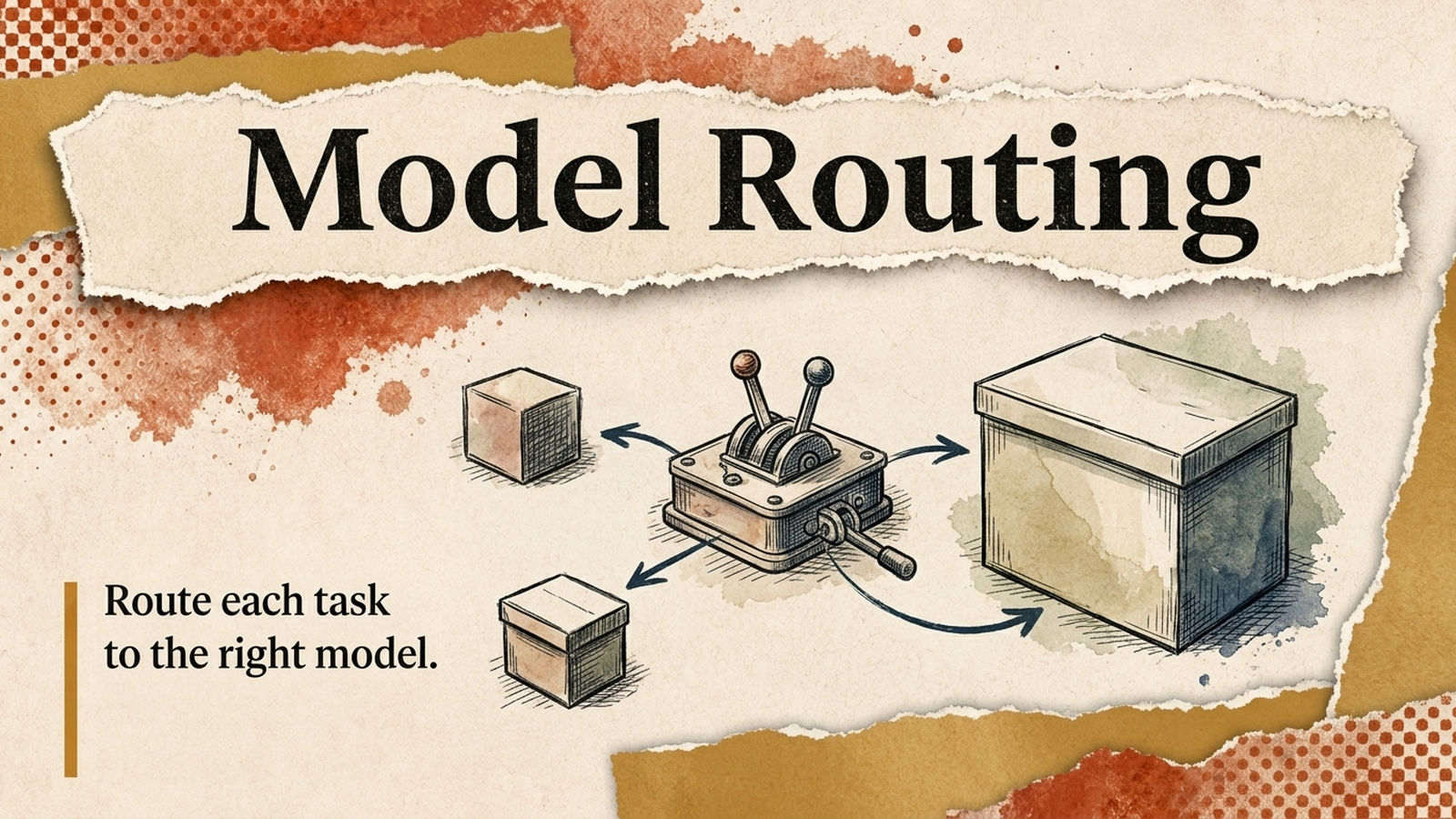
Product posture: merge ChatGPT Work with chat, ship ambient capabilities into ChatGPT for the broad base, and kill model pickers, reasoning-effort knobs, and multi-agent config fatigue. Same simplification-over-sophistication direction as Muse and Claude unification.
You kind of need a PhD in model pickers. […] I just want to get rid of all of that as quickly as we can.
Tibo Sottiaux, Lenny's Podcast