
TL;DR
The short version
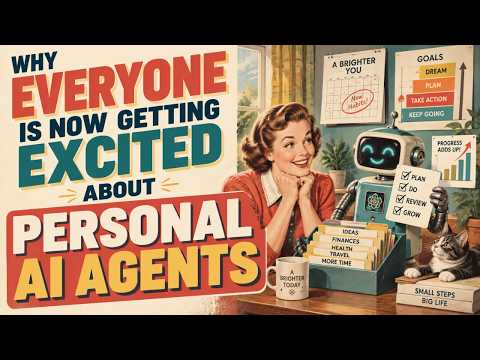
Agents only get useful once the world builds them an internet. Scaling laws are settled and still working — that's not the interesting debate. The missing pieces are agentic memory, identity, entitlements, and open protocols so an agent can take action across every website, API, and system.
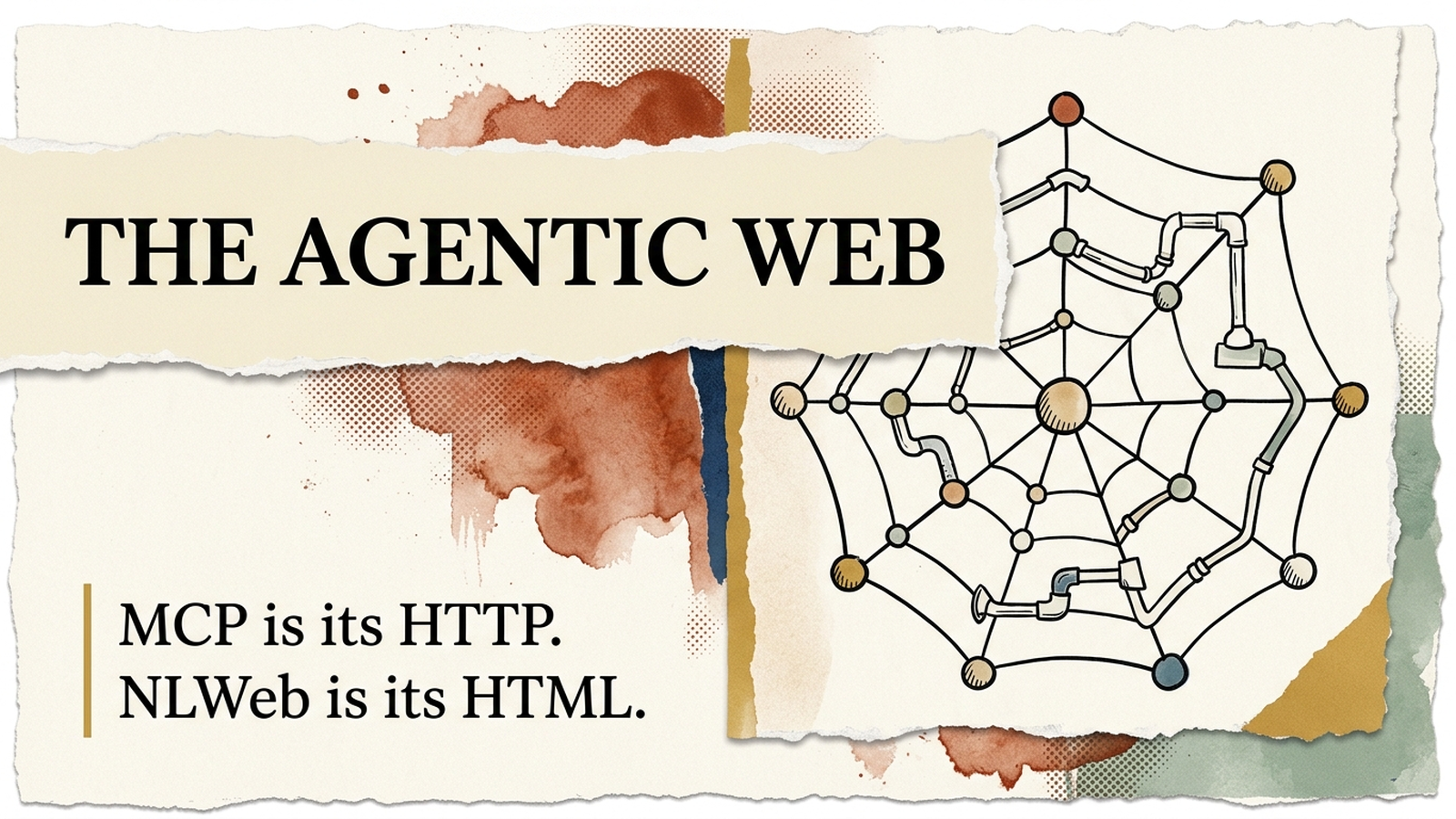
Microsoft CTO Kevin Scott frames the fix as plumbing, not smarter models: MCP is the agentic web's HTTP, NLWeb is its HTML. And the durable edge isn't owning the stack — it's understanding a problem better than anyone, plus permissionless access to reach it.
DevDay week (Tibo Sottiaux / Lenny): majority of internet actions will be taken by agents — MCP/API products must design for agent traffic and economics (Notion surge). ChatGPT's plugin bet pairs revenue share with retention-based discovery. Operating lesson: capacity-plan for agents as primary clients; do not mint ambient-agent product labels from a single episode.
Built on "Microsoft's Vision for an Internet Made for Agents" — Kevin Scott (CTO, Microsoft) with Dan Shipper on Every's AI & I, recorded at Microsoft Build 2025. Read the standards enthusiasm knowing Microsoft champions the protocols it's pitching.
The bottleneck moved from models to plumbing
The interesting debate is no longer scaling laws — those are settled and still working. Model reasoning has run ahead of what shipped products actually do, a gap Scott calls a capability overhang. The industry's job is delivering the capability that already exists to users, not waiting for the next model.
What closes the gap is infrastructure: agentic memory, identity, entitlements, and a shared protocol layer so an agent can act across systems. "This agent acts on behalf of this person, entitled to these resources" is a plumbing problem, and Scott wants it solved in the open rather than baked proprietary into one vendor's agents.
Computer use is the consumer unlock
Protocol plumbing is one path. The other is agents that drive human UIs. a16z's Justine Moore: agents acting through the UI — not waiting for per-service APIs — is what made personal agents suddenly useful in September 2026.
That's the same primitive as Anthropic computer use, OpenAI Operator, and Grok Bot's VM. Muse, Instinct, and Grok Bot chart-topping products ride this path today. MCP/NLWeb and UI-driving are complementary routes to the agentic web; consumer adoption is currently on the UI route while rails (payments, login, apps) still need rebuilding.
Permissionless, not verticalized
Verticalized-versus-open is a false dichotomy. Permissionless innovation removes low-value gatekeeping middle layers, and AI itself can supply robust security — so you don't have to trade one for the other. The corollary: there won't be one agent to rule them all. Diversity comes from product understanding of a specific problem, not differentiated infrastructure.
The best startups, in Scott's read, aren't trying to out-build the platform — they tune existing infrastructure to a problem they understand better than anyone. That's where the leverage sits when the plumbing is a commodity.
Synchronous to asynchronous is the next shift
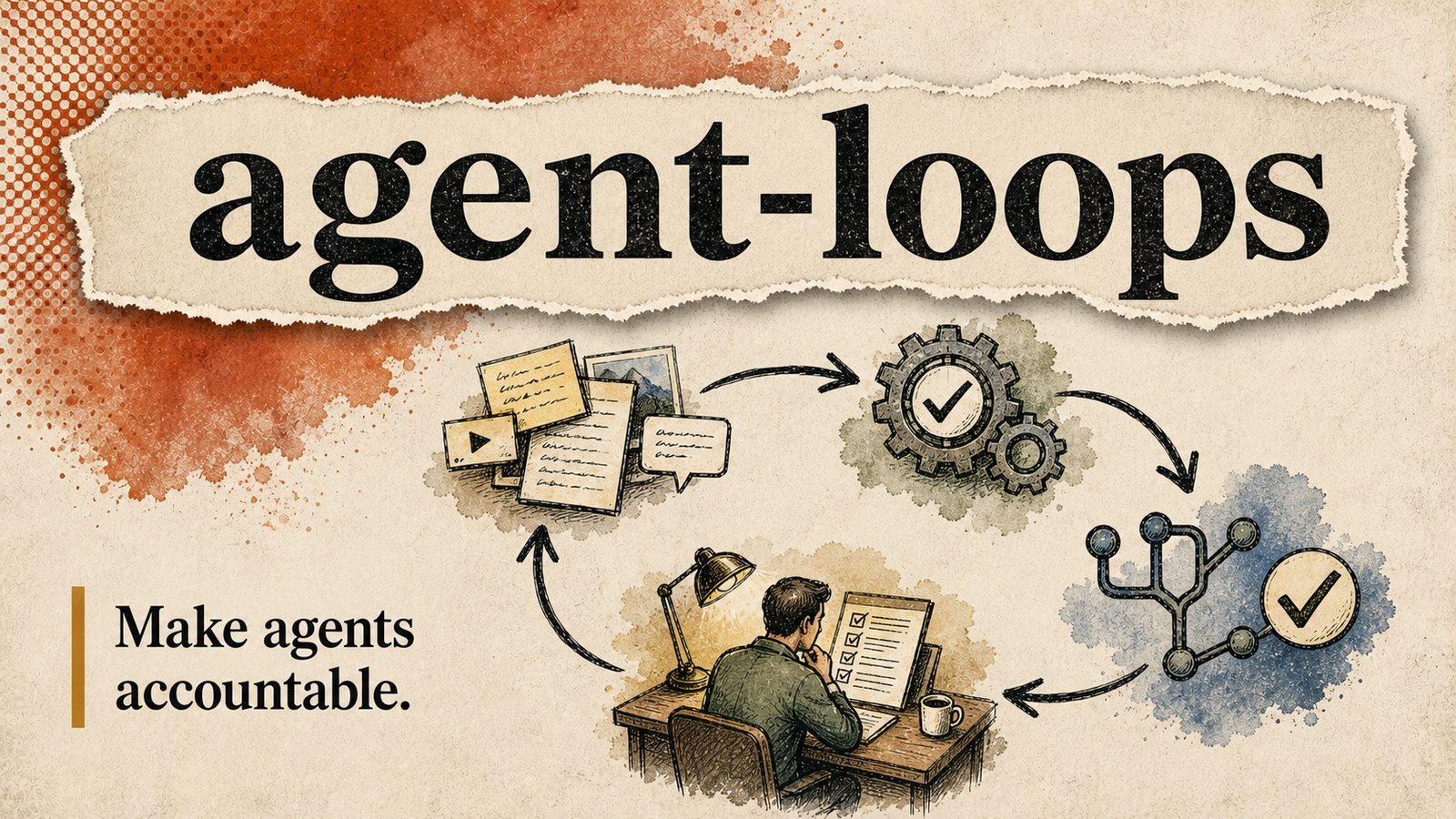
Expect a move from "prompt and wait" to delegating long-running tasks that fan out across systems, iterate, and return later for your next decision. That's the infrastructure claim behind agent loops and overnight delegation — and it only works once the protocol layer lets an agent reach everything it needs while you're away.
Scott's framing for why a platform company builds the substrate before the demand is proven: "The cost of betting on failure versus betting on optimism is a real big difference."
The buyer is now an agent — build headless
The agentic web has a demand side, and it's ruthless. Once the customer evaluating your software is an agent, good UX stops mattering and value math takes over. As Tina He put it in Every's Thesis Statements collection, agents are rational actors, not loyal ones — an agent will cancel a $30K CRM at 2 a.m. if it only delivers $12K of value, and it neither sees nor cares that the product looks good.
So the winners build headless: machine-to-machine infrastructure and the "boring" toll-road layers — compliance, routing, orchestration — that agents pass through by necessity, not preference. It's the demand-side complement to MCP and NLWeb. The plumbing lets agents shop; they shop on value alone.
Agent wars: platforms refuse to be dumb pipes
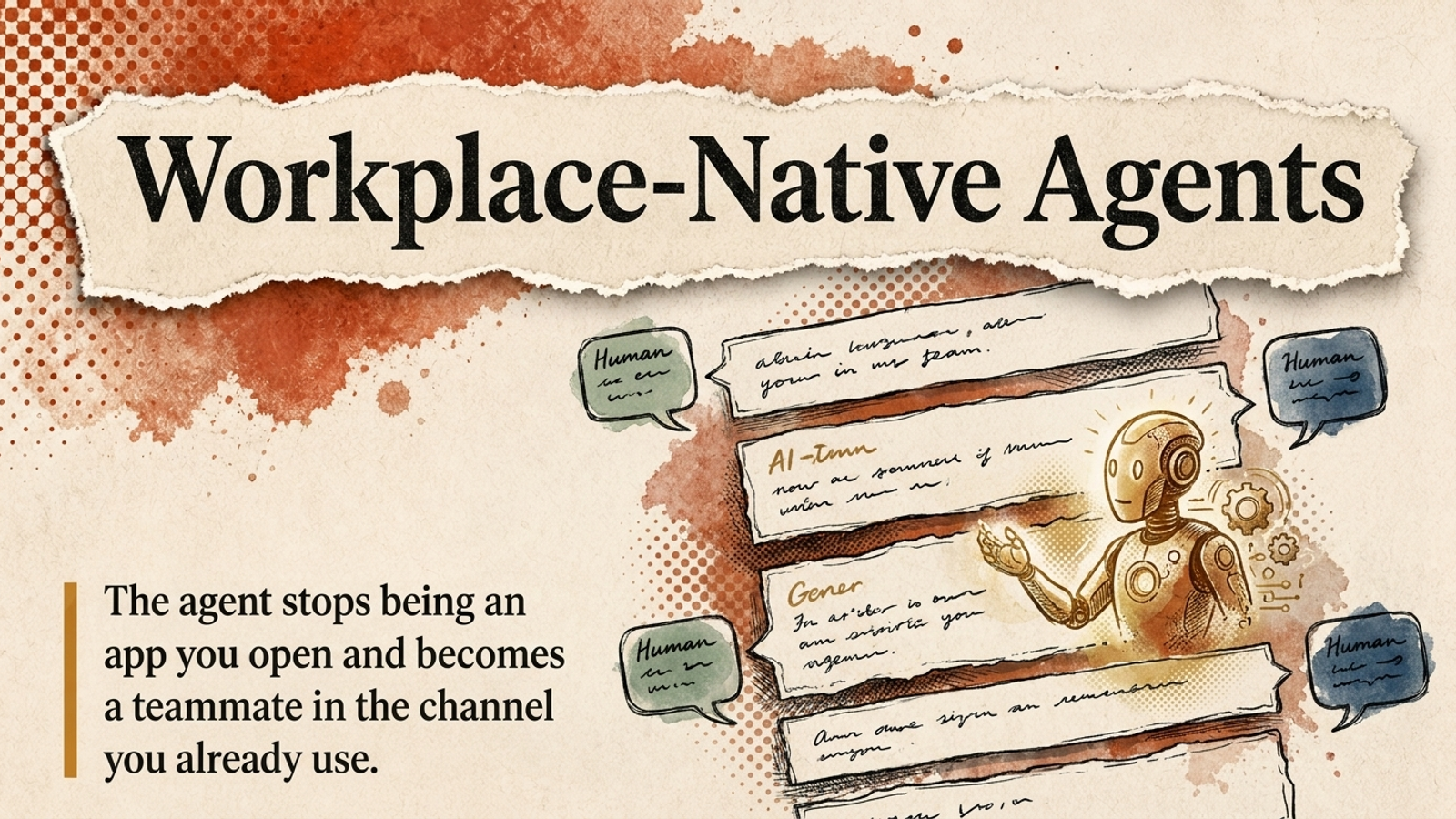
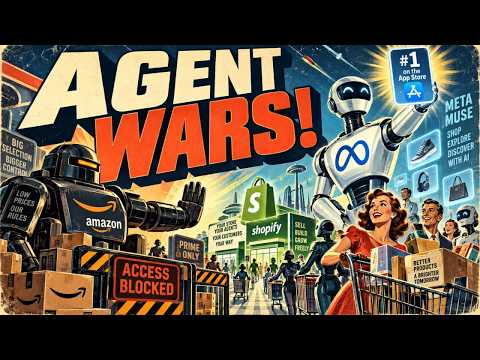
When Muse hit #1 on the free App Store, Amazon labeled it an unauthorized AI agent, blocked shopping, and said third parties must operate openly and respect provider opt-in. Shopify took the opposite bet — Muse plus Shop Pay agentic checkout across Shopify stores.
Whittemore maps Aggregation Theory inverted: platforms that aggregated users now risk being aggregated by horizontal agents. End-states look like revenue-share access fees, verified-agent programs, or exclusive vertical agents — Balkanization, not one open agentic web. Skeptics still doubt agentic shopping displaces browse dopamine.
Customers want one agent that knows them and can get things done. The platforms being aggregated want the opposite.
Design for agent-scale traffic and economics
Tibo Sottiaux, Head of ChatGPT, puts the demand-side claim bluntly: the majority of actions on the internet will be taken by agents. Products that expose MCP or APIs — Notion's MCP traffic surge once agents could do real work is the cautionary example — must design for sudden agent traffic, unit economics, and agent-facing interfaces, not only human UIs.
The majority of actions on the internet will be taken by agents.
Tibo Sottiaux, Lenny's Podcast
OpenAI's product bet pairs this with a ChatGPT plugin ecosystem: revenue share for popular plugins, discovery by retention and quality rather than keyword gaming, and Sign-in-with-ChatGPT partners as distribution into ChatGPT's surface. Capacity-plan and monetize assuming agents as primary clients; treat ambient-agent product names as launch narrative, not wiki labels to mint.