TL;DR
The short version
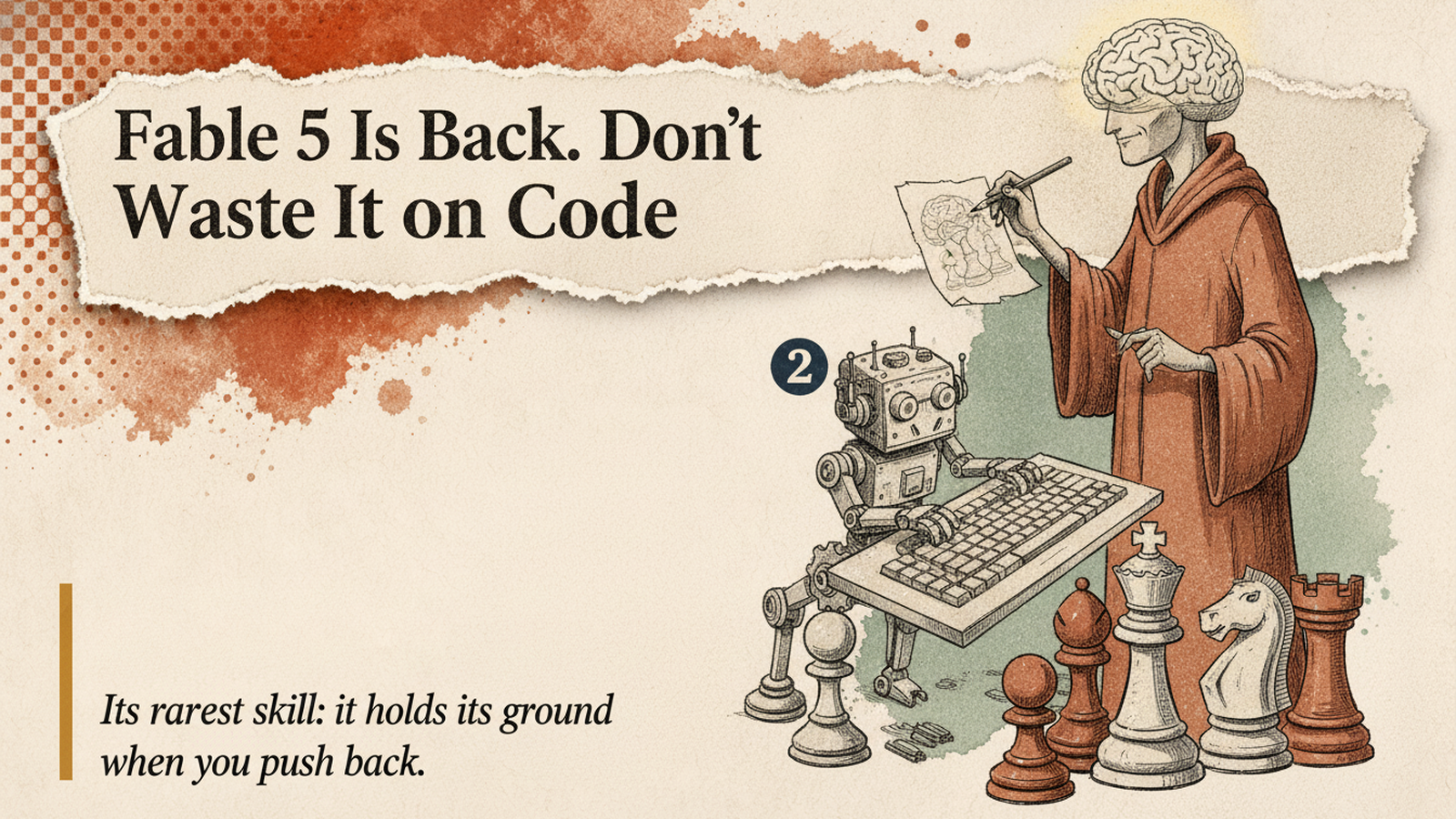
Fable 5.1 isn't a big capability jump. Most benchmarks move 2–4%; the real change is efficiency — roughly Opus-5-grade work on about half the tokens, plus a 75% cut to cached-input pricing.
That makes long-horizon delegation cheap enough to be a default, not a treat. Two boundaries: set a token budget so autonomous runs don't over-run, and fact-check long outputs — and read the source's enthusiasm with care.
Based on Every's week of testing, hosted by Dan Shipper.
The gain is efficiency, not a leap
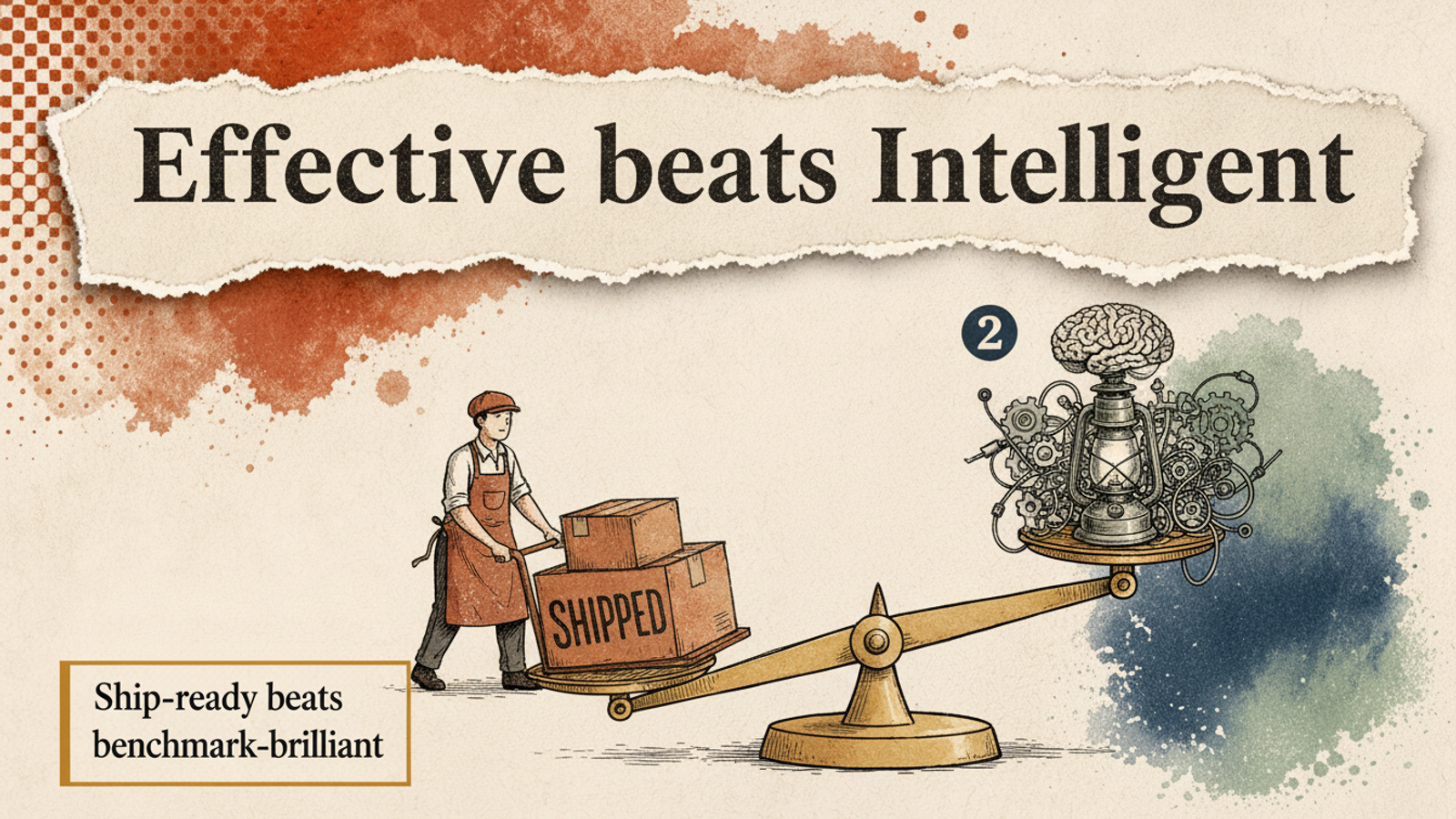
Most launch coverage asks whether the new model is smarter. For an operator, that's the wrong question. The one that changes your week: what can I now delegate that wasn't worth delegating before?
Read the vendor benchmarks and the story is modest — most scores move 2–4% against Fable 5 or Opus 5. The one large jump is a niche science-agent benchmark, Terminal-Bench-Science 0.1, where Fable 5.1 scored 52.6% versus Fable 5's 24.7% (Anthropic). Impressive, narrow.
The real delta is tokens. On Every's internal agent benchmark, Fable 5.1 averaged 766 tokens per request against Opus 5's ~2,000, at 22 seconds of latency versus 37 — Every's own numbers, internally consistent, not independently reproducible.
It works at the cost and speed of Opus 5, but gives you the delegation power of Fable that used to be pretty out of reach unless you're willing to spend a ton of money.
Dan Shipper, Every
Per token, it's more expensive — that's the point
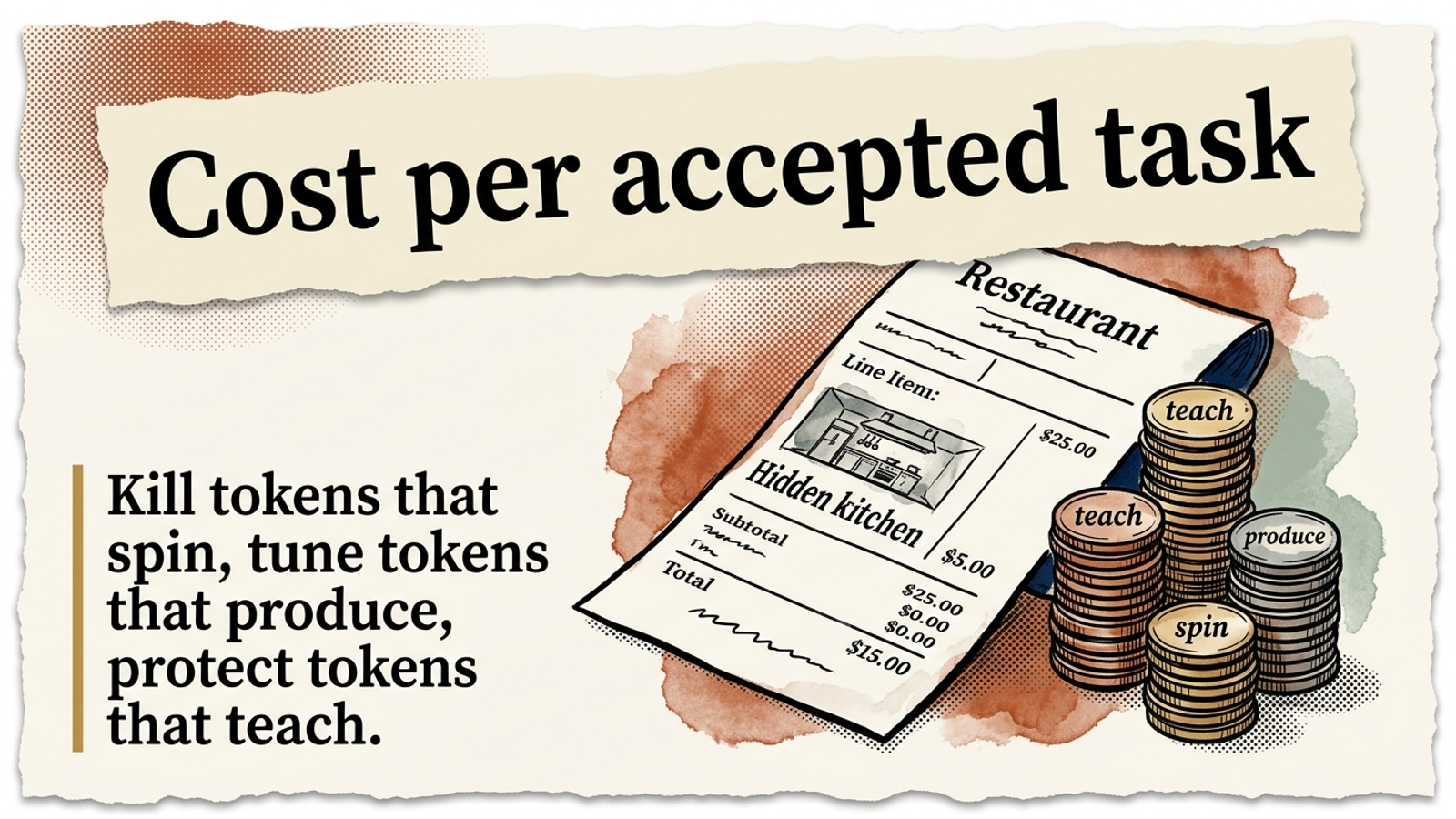
Here's what trips people up. Per token, Fable is more expensive than Opus — $10/$50 per million versus $5/$25 (Anthropic). “Opus-level price” is a per-task effect: about half the tokens at double the rate lands near Opus cost, helped by a new 75% cut to cached-input pricing. The sticker price didn't drop. The bill for a finished task did.
Anthropic pricing; Every internal benchmark
What cheap delegation looks like
The showcase was a build, not a chat. Shipper describes “hands,” a desktop computer-use agent that lets other agents drive his Mac remotely, built end to end from a few prompts in about a day.
It maps to a working style he calls letting it “cook”: on the highest effort setting the model goes quiet, spawns subagents, and returns later with finished work rather than staying conversational. For a leader, that's the mode that removes you as the bottleneck on a chunk of work — instead of keeping you in the loop token by token.
A quieter result matters for anyone who ships words. After Sonnet 5 and Opus 5, Every's writers had defected to ChatGPT; Shipper says Fable 5.1 is the first Claude model in a year they want to draft with, and better at flagging what's actually interesting rather than affirming any connection you feed it.
Two boundaries before you rewire anything
The operator move isn't to switch defaults on a launch-day video. It's to pick one recurring task you've kept in-house because delegating it cost too much — a research pass, a first-draft deck, a refactor — put a budget on it, and see whether “cheap enough to delegate” is now true for you.