TL;DR
The short version
Aggregated across a thousand-plus companies, generative AI banked about $110B over twelve months and sits at a roughly $175B annualized run rate — growing about 3x faster than any prior IT wave. Starting Q1 2026, quarterly AI revenue began exceeding the depreciation on the hardware it runs on. Demand is revenue-validated, not just hype.
Two things matter to an operator. The subsidy era funding cheap inference is ending — a wholesale model rate converts to token pricing, cloud GPU prices rose, and memory is spiking — so cost discipline returns. And the gap between firms that use AI well and those that don't is enormous: top-quartile spenders grew revenue more than 100% over three years against 15–20% for non-adopters.
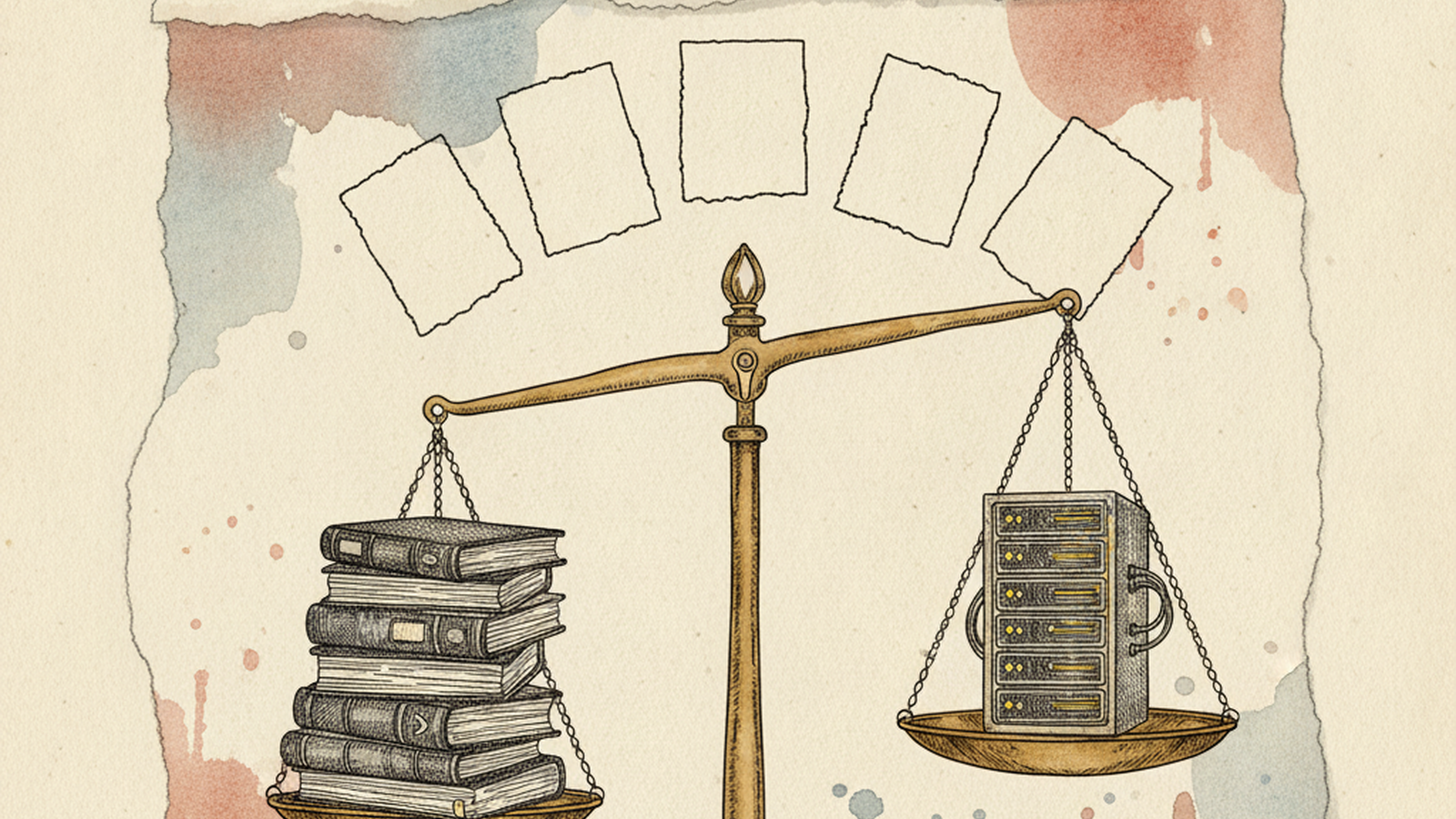
By October 2026 the question has moved from "is it a bubble?" to "does the money math close?" Lab revenue is huge, but so is a roughly $730B capex year, and Bain's bar is about $6T of annual AI revenue by 2031, with most of it still to come from markets that barely exist yet.
Built from The AI Daily Brief's walkthrough of Exponential View's inaugural State of the AI Economy report.
Is it paying back, or is it a bubble?
Demand is revenue-validated. The report aggregates spend across a thousand-plus companies — weighting audited accounts over executive quotes and deduplicating so a dollar is counted once — and lands on roughly $110B banked over the trailing twelve months, a ~$175B annualized run rate, growing about 3x faster than any previous IT wave.
The largest buildout in tech history is paying back — for now.
Nathaniel Whittemore, The AI Daily Brief
But the hedge is load-bearing. Starting Q1 2026, quarterly AI revenue began exceeding CapEx depreciation, and GPUs are earning yields into years seven to nine — well past the six-year depreciation assumption. Independent coverage pegs Q1 2026 AI sales outside China at roughly $25B against about $21B in quarterly data-center and chip depreciation. That covers the running bill, not the cumulative one.
Still a rounding error on GDP. AI revenue is about 0.42% of US GDP against the IT sector's ~9.4%. The base is tiny; the slope is steep — AI-revenue-to-GDP has grown 3x versus a year earlier and 10x versus two years earlier. As one observer put it, not enough people are emotionally prepared for the case where it isn't a bubble.
The subsidy era is ending
Cheap inference has been partly subsidized, and the props are coming off. A major wholesale model rate converts to token-based pricing next year, a large cloud raised its GPU capacity-block prices about 20%, and a memory shortage is taxing all electronics — a leading memory maker posted a record 84.9% gross margin as DRAM prices rose roughly 60% quarter-on-quarter. Blended token price still fell from about $17 to $2 per million over two years, but the tailwind behind that fall is weakening. Cost-per-outcome is about to matter again.
The distillation trap. As models become strategic assets, labs are getting defensive about being copied through their own tools. One major lab barred rival AI coding tools on its data-labeling tasks to avoid training its own frontier coding model on competitors' outputs — model distillation violates the leading labs' terms of service, and accusations of large-scale distillation are already flying. Every lab building an internal frontier model hits the same bind: the best available tool is also a contamination and legal risk.
Most of the headline growth figures here are the report's own analyst-modeled aggregates rather than audited numbers — directionally strong, but read the methodology before repeating any single figure. The pricing and margin data points are independently verified.
The money math, and who it depends on
A year after his first "five debates" episode, Nathaniel Whittemore retired the fall-2025 bubble argument for a sharper one: "even with all that bonkers revenue growth, does it add up to enough fast enough to pay for the infrastructure buildout bill that's coming?"
The revenue side is enormous. Anthropic reported about a $65B annualized run rate at the end of July. OpenAI sits near $50B on its own basis, or about $70B when investors gross it up to Anthropic's partner-inclusive method. Lab "ARR" numbers aren't comparable until you check how each one counts.
The cost side is bigger. 2026 capex guidance across Alphabet, Amazon, Meta and Microsoft is about $730B (about $825B with Oracle), and Moody's sees that cohort near $1T in 2027. Bain puts the bar at roughly $6T of annual AI revenue by 2031. Today's consumer and enterprise use gets to $1.2–1.8T, so the rest has to come from new markets like search ads, robotics and drug discovery. Revenue covering the running cost, the point above, is not the same as revenue covering that cumulative bill.
It turns out that AI is not a seat game. It's a token game.
Nathaniel Whittemore, The AI Daily Brief
Concentration is the bear case's new shape. Ramp's data shows about 80% of OpenAI and Anthropic enterprise revenue coming from about 1% of customers, though Ramp's sample skews toward tech-forward companies. Reporting also has about half the hyperscalers' roughly $2T backlog coming from those two labs. Read it both ways: fragile if that 1% changes its behavior, or a huge untouched market if the other 99% look like them. And the bill has moved off balance sheets into equity and bond markets, a risk that didn't exist when the hyperscalers paid from cash.