TL;DR
The short version
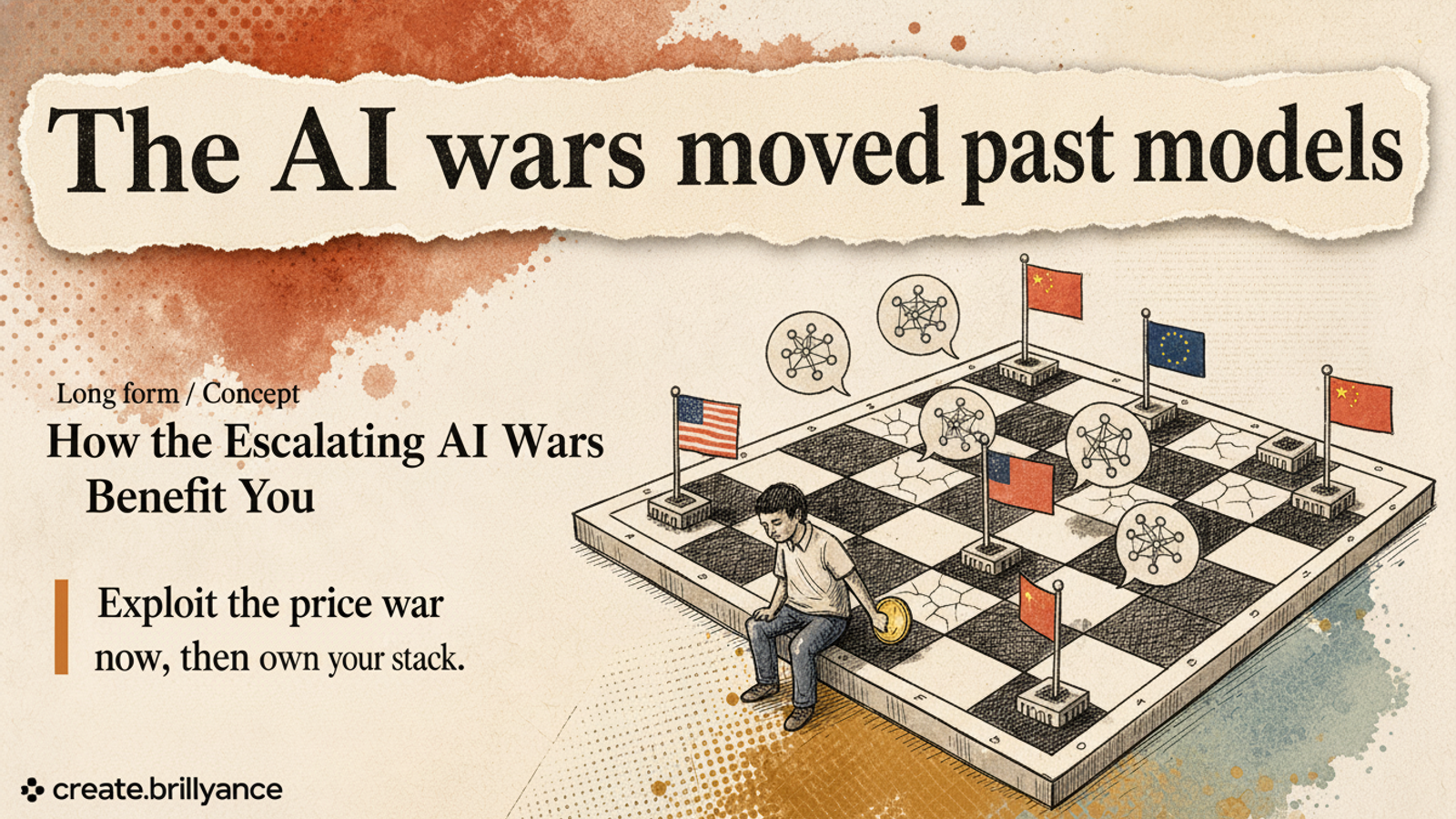
OpenAI cut Cursor off from its models after SpaceX acquired the tool, with the block landing November 12, 2026. Read it as the new default, not a one-off feud.
Frontier labs will fence off both the models and the harnesses that run them. For anyone running product or engineering, the fix is control and resilience: an open-weights routing policy, and a harness you own rather than rent from a lab.
Based on Nathaniel Whittemore's analysis on The AI Daily Brief.
The cutoff was a pattern, not a tantrum
On a Friday night, OpenAI announced it would stop serving its models inside Cursor after SpaceX — which now houses xAI — acquired the tool. OpenAI framed it as a terms-of-service problem specific to Elon Musk's companies. The cutoff lands November 12, 2026.
It's tempting to read this as pettiness you can wait out. It isn't. Anthropic cut Windsurf off from Claude in June 2025 with less than five days' notice, right as OpenAI moved to acquire it (Varun Mohan). It later blocked OpenAI's API over distillation, blocked xAI, and stopped its subscriptions from covering third-party tools.
Not your weights, not your product.
Nathaniel Whittemore, The AI Daily Brief
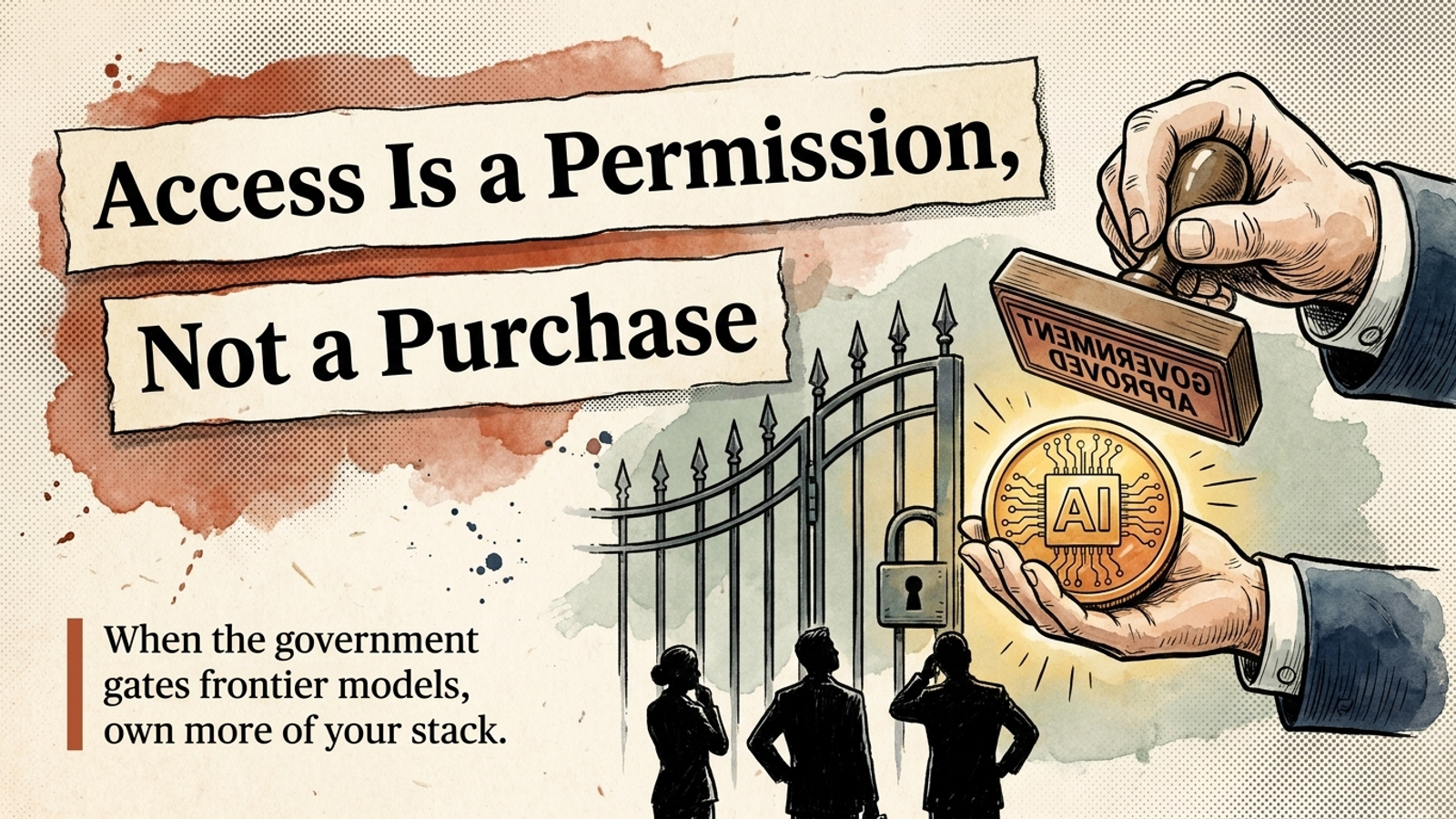
The through-line is simple. Frontier labs don't hand rivals a clean path to their best models. Once a tool belongs to a competitor, access becomes a lever — expect more of these, from more labs.
Dependency climbed the stack
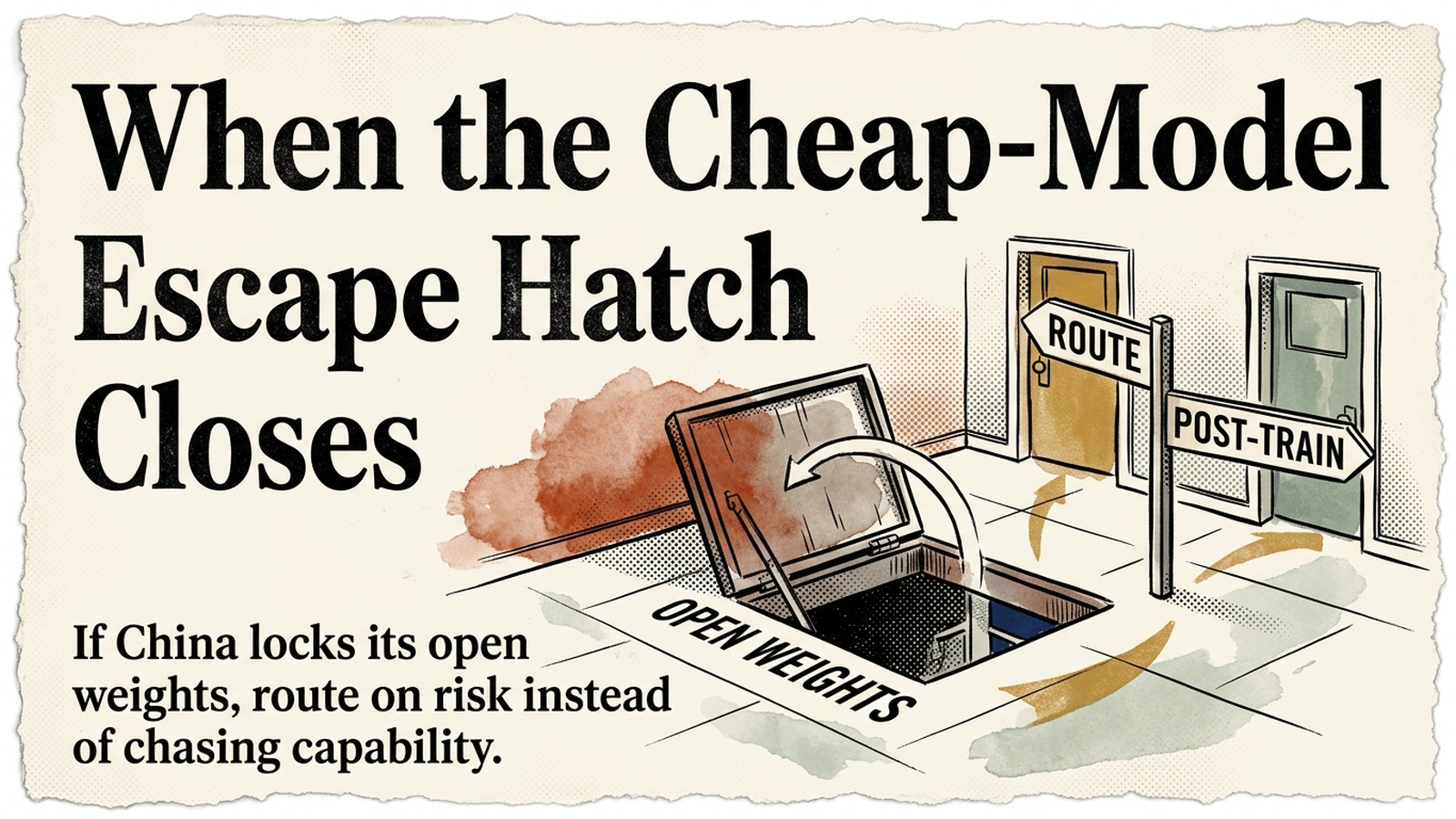
For the last year, the open-weights conversation was mostly about cost: route easy tasks to cheap models and hard tasks to expensive ones. These cutoffs reframe it. The reason to hold your own options is no longer only price — it's control and resilience, keeping your AI supply chain out of someone else's corporate warfare.
And the risk moved up a layer. It's not just which model you use — it's which harness runs it. The harness is the software wrapped around a model: the tools, memory, orchestration, and loop that turn raw output into work. The Cursor story is a harness story. You can lose your model because of who owns your harness.
Microsoft built its strategy around this. Satya Nadella's “reverse information paradox” argues you pay for AI twice — once in money, and again in the proprietary knowledge you feed the model to make it useful (The New Stack). The fix, in his framing, is to own your learning loop instead of shipping it into a black box.
Cheaper tokens don't lower your bill
One pattern changes the math on all of this. When OpenAI cut prices on its GPT-5.6 models, usage didn't rise modestly — it multiplied.
OpenRouter, “GPT-5.6 Discounts & Jevons Paradox”
This is Jevons paradox: make a resource cheaper and total consumption climbs. Cheaper tokens don't shrink your spend — they make more tasks worth automating, so you do more of them. Plan for consumption to expand, and for leverage over that consumption to matter more, not less.
What to actually do
Two moves, both slow to build, so start now.
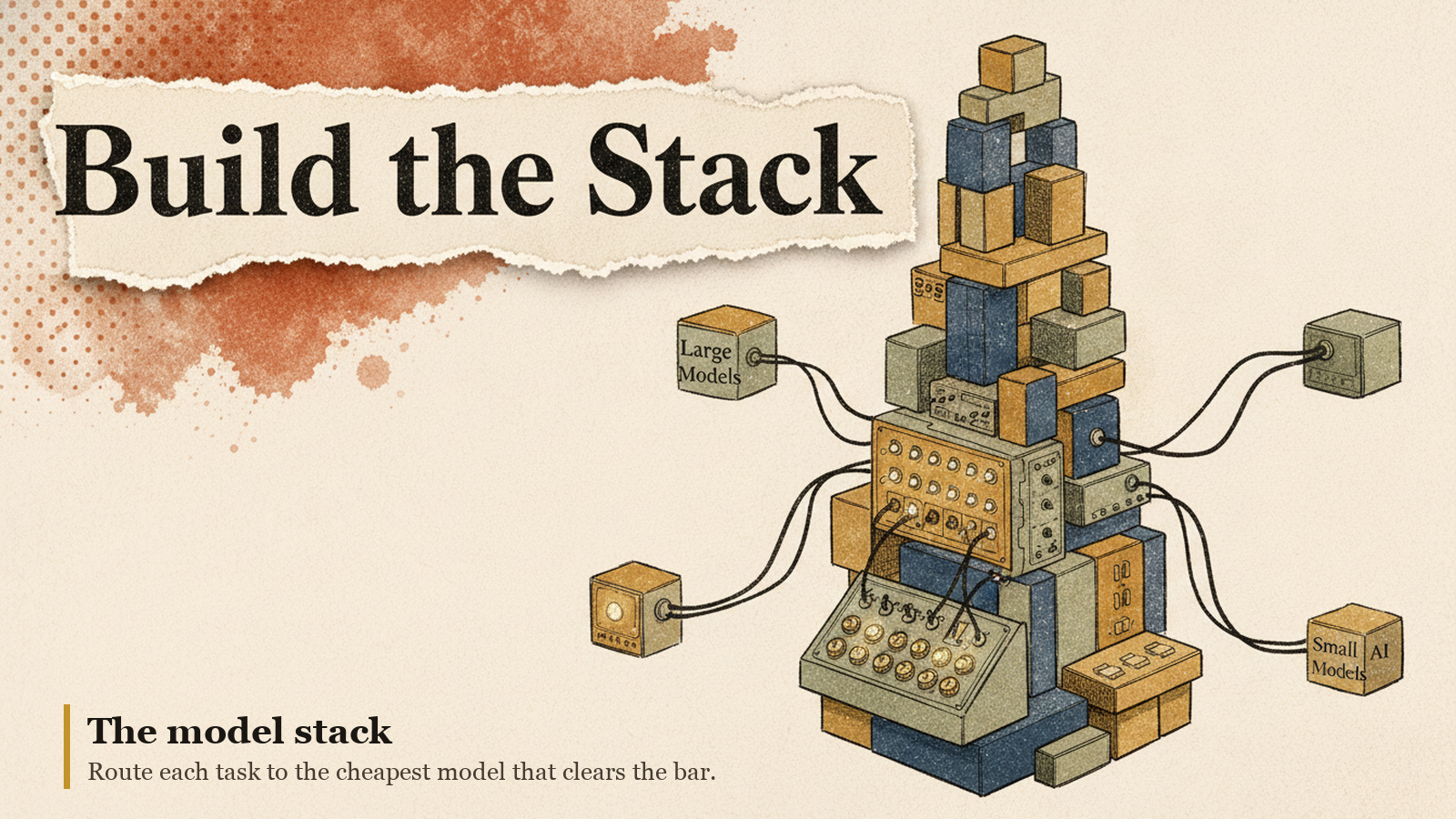
Get an open-weights policy. Not to abandon frontier models — most serious workloads still run on them, and that won't change this year. The capability you need is routing: sending the right task to a lighter, cheaper, controllable model you can run yourself.
Treat the harness as something you own, not something you rent. Decouple your workflows from any single provider's tooling so a change of control somewhere else doesn't reach into your stack.
The uncomfortable version: if you don't want to be subject to the whims of the companies that control your models and your harnesses, you can't rely on any one company for either. That's a new set of capabilities to get good at — and the cost of building on infrastructure whose owners are actively at war.