TL;DR
The short version
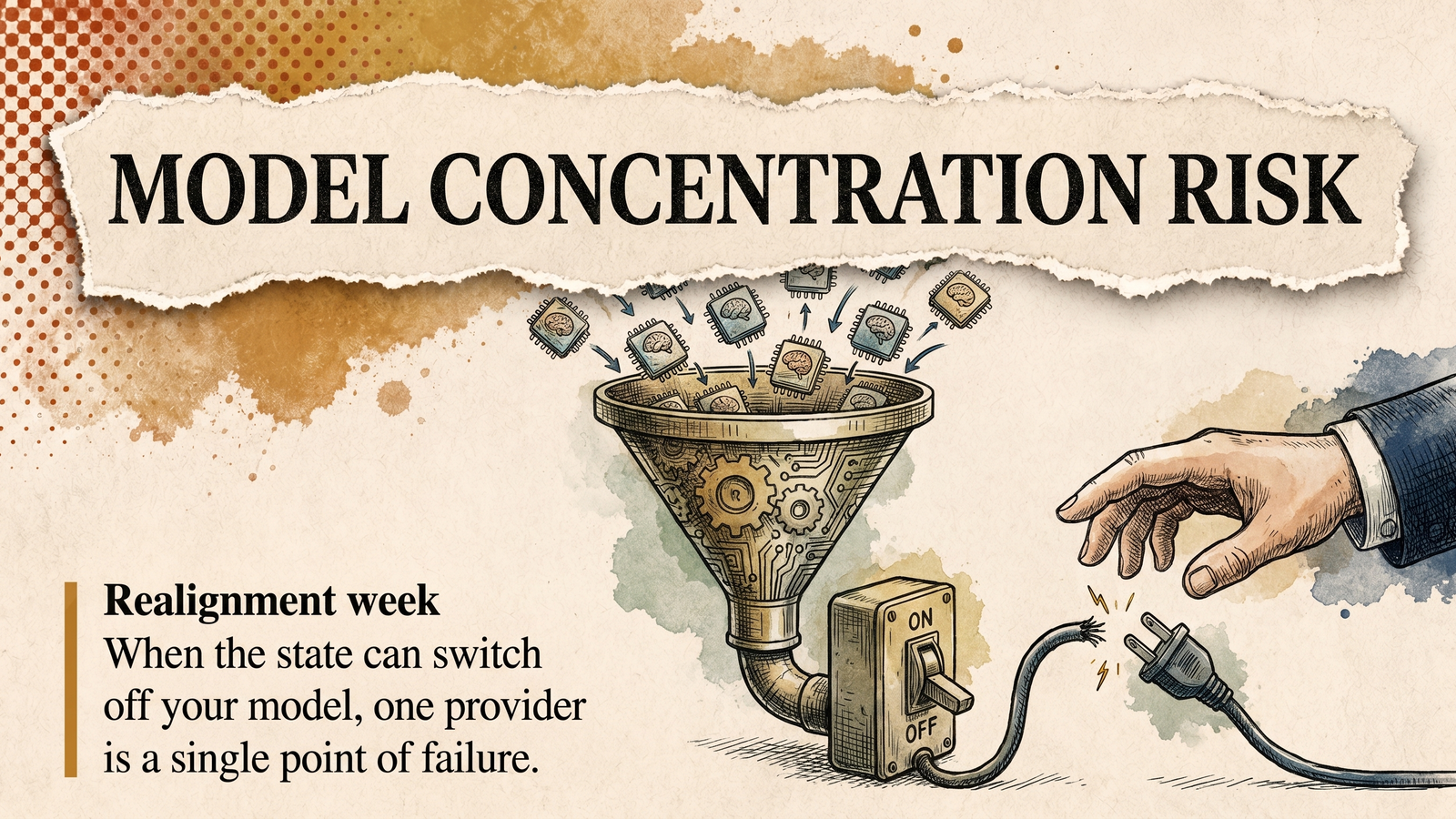
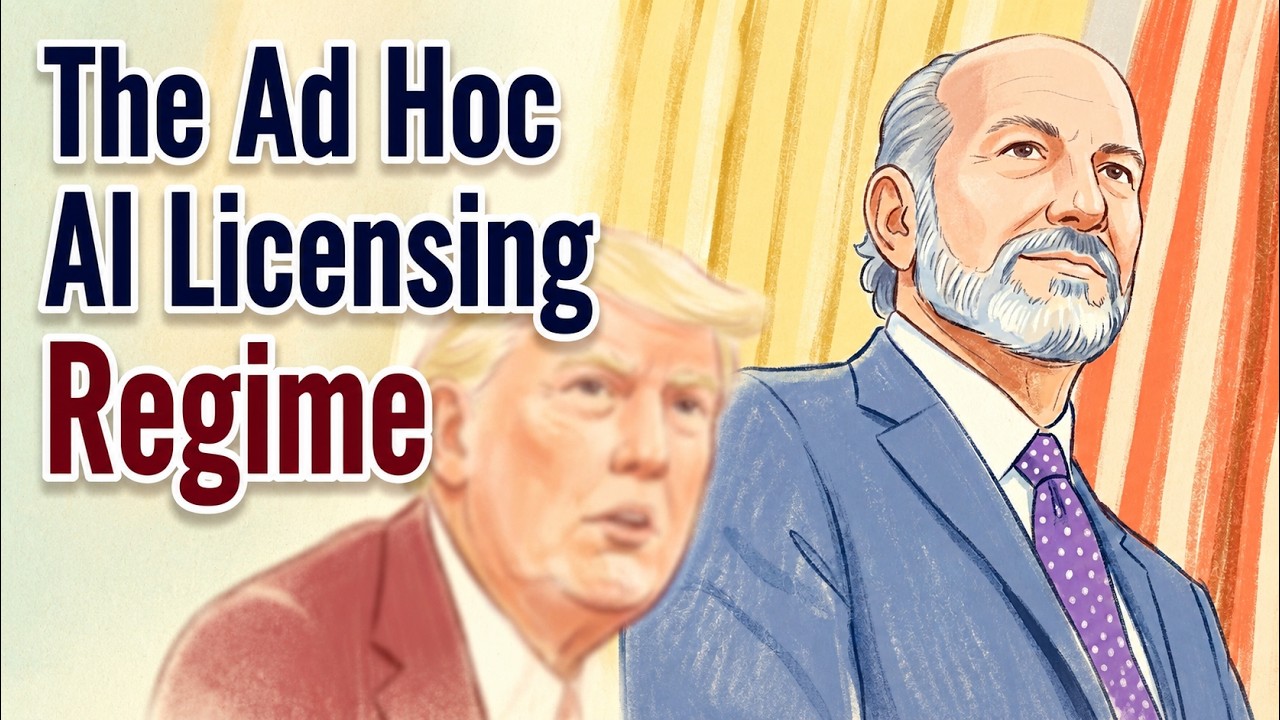
For two years the question was which AI model is best. This week it quietly became which model you are allowed to use. A frontier model stayed blocked except for about 100 selected institutions, and OpenAI's next release was forced into a limited, customer-by-customer preview at the government's request.
On The AI Daily Brief, Nathaniel Whittemore calls this an informal, ad-hoc licensing regime, and argues it is worse than red tape because it slows public releases without slowing what the labs build privately. The operator's response: stop betting your roadmap on a single closed API.
Built on the 27 Jun 2026 AI Weekly Brief from The AI Daily Brief (Nathaniel Whittemore), with figures verified against KPMG and primary reporting.
The thing that changed this week
For two years the question was which model is best. This week the question quietly became which model are you allowed to use.
A frontier model from a major lab stayed blocked, available only to about 100 selected institutions. OpenAI's next release was pushed into a limited preview, with the government, in Sam Altman's words to staff, "approving access customer by customer." Altman called it "not our preferred long-term model."
Whittemore's read: this is no longer a spat between the White House and one lab. It is "an informal, unaccountable, and seemingly not particularly technically competent licensing regime." That is a structural shift, not a news cycle.
Why it is worse than red tape
Red tape is annoying but legible. You can read the rule, plan around it, and route through it. An ad-hoc regime gives you none of that.
Arbitrary, unknown, non-transparent license requirements are far worse than red tape.
Neil Chilson
There is a second-order problem: the block slows releases, not training. The labs keep building at full speed; the public just sees less of it. So the gap between what exists and what you can touch widens from here on. Whatever you can access today is, by design, an increasingly old snapshot of the frontier.
Worth knowing how it started: a US agency's red-teaming exercise — a controlled test to find a model's worst-case behavior — showed unusually strong capability. That got relayed publicly as the model "breaking into" classified systems. A test result became a political event, and the political event became your procurement constraint.
The operator's move: own more of the stack
If access to the best closed model is now a permission someone else controls, the hedge is obvious: control more of the stack yourself.
The market is already doing it. Will Brown of Prime Intellect reported a "huge uptick in large enterprises wanting to secure compute and post-train their own models in-house, frequently on top of GLM 5.2." Post-training means taking an open-weight model — one whose parameters you can download and run — and fine-tuning it on your own data. You trade a little frontier capability for data sovereignty, cost control, and a model nobody can switch off.
This is not a call to abandon the big labs. It is a call to stop being single-threaded on them. If your entire product depends on one API you do not govern, a memo you will never read can change your roadmap.
Capability is not only the model anymore
The week's other signal: the model is no longer the whole game. The harness around it is, and so is who owns the decision.
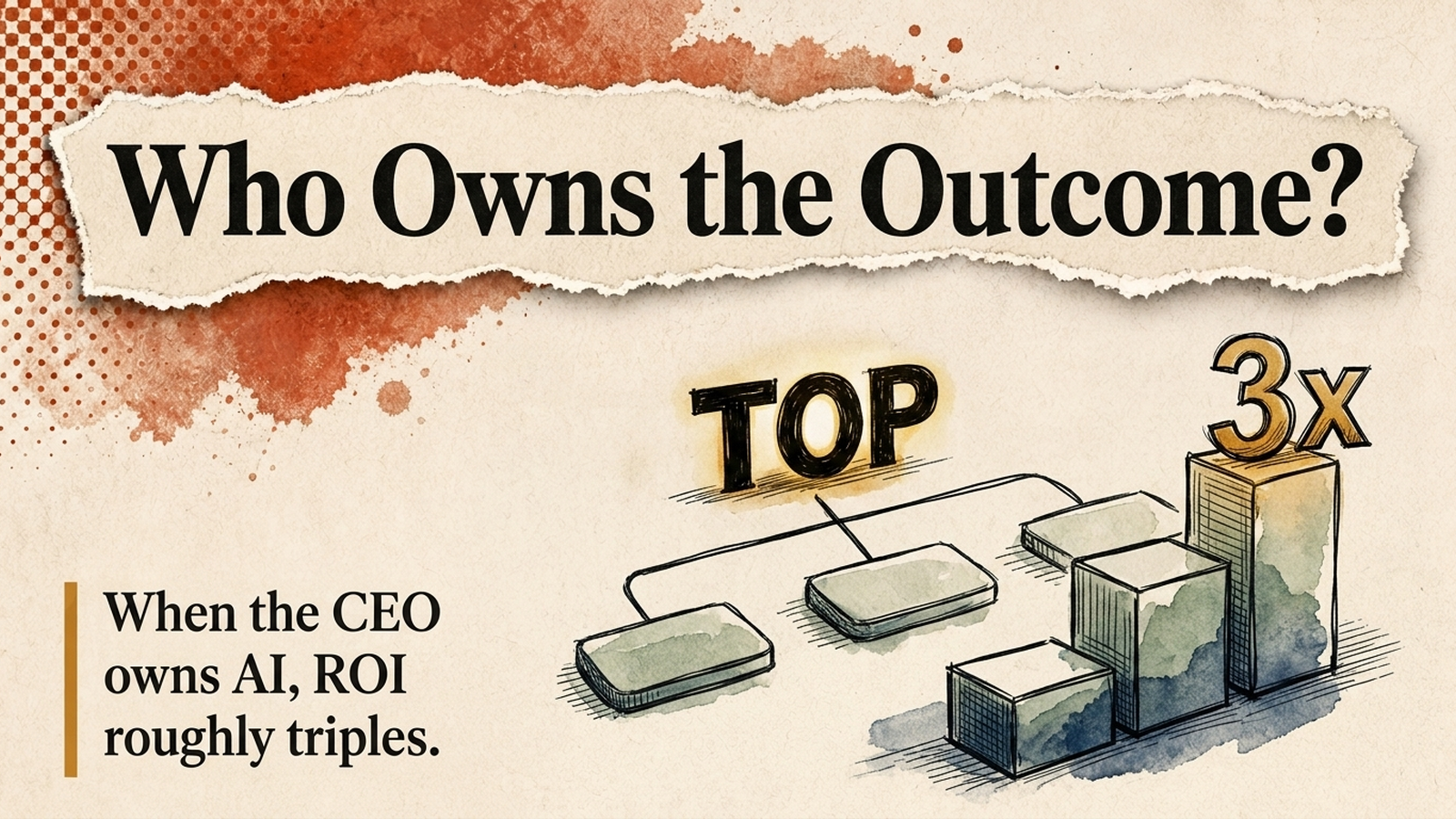
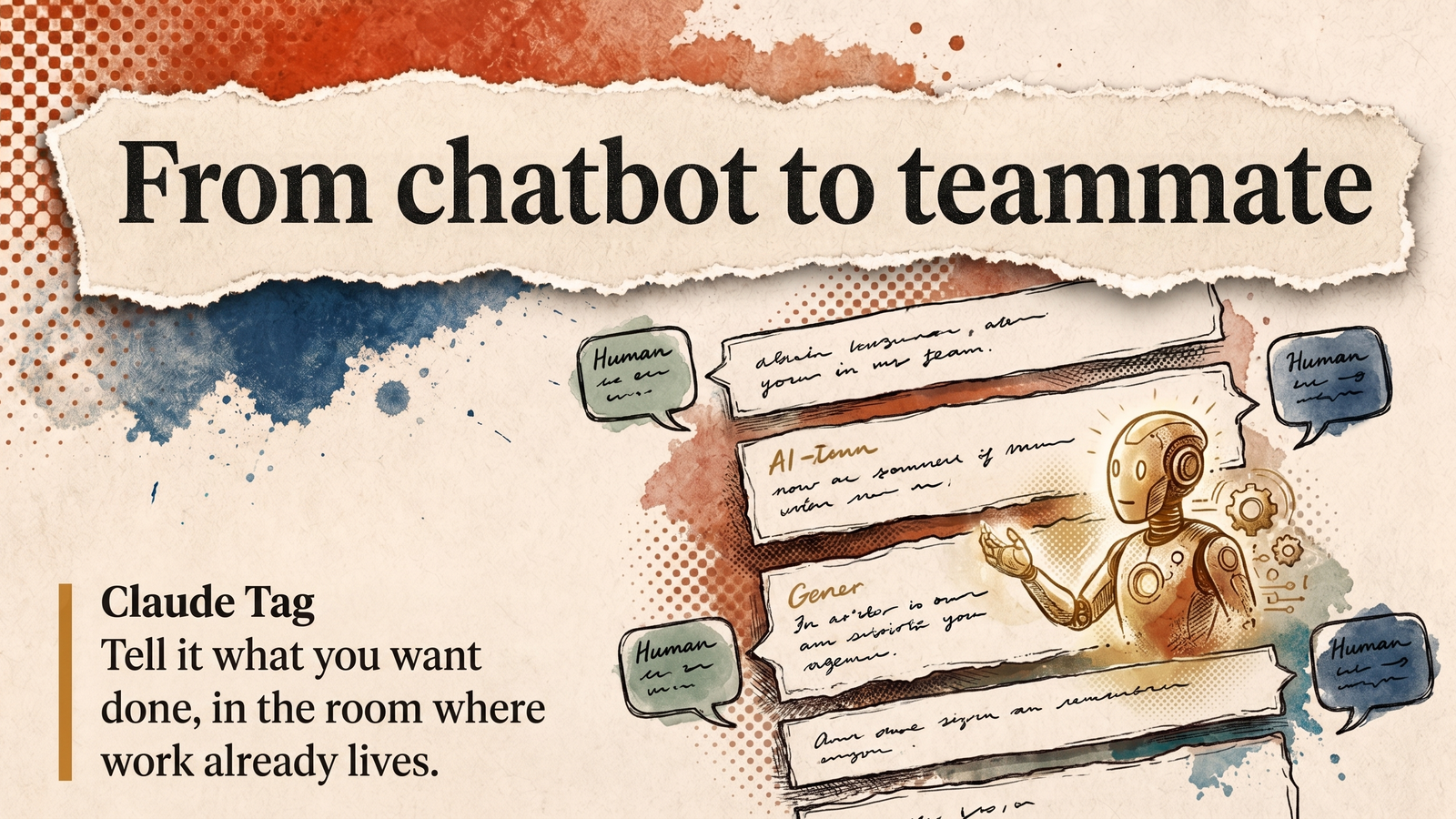
Anthropic's Claude Tag — its assistant living inside Slack — is the case in point: the company says roughly 65% of its own code now runs through that workflow, where people describe what they need in a channel and the agent acts on it. The leverage is not a smarter model; it is where the model sits. Ownership matters at the top too. KPMG's Q2 2026 survey found teams with CEO-level accountability for AI far likelier to show returns.
KPMG Global AI Pulse Q2 2026; Anthropic (self-reported)
The teams getting value are not the ones chasing whichever closed model topped the leaderboard this week. They are the ones who own the decision, the integration, and increasingly the weights.
What to copy
- Treat any single closed-model dependency as a roadmap risk, not just a vendor choice.
- Run a real evaluation of an open-weight model (GLM 5.2, Gemma 4) for at least one workload you cannot afford to lose access to.
- Put the model where the work already happens — the harness beats the benchmark.
- Name an owner for AI with actual authority. The ROI data says accountability, not model choice, is the variable.
The frontier is still moving fast. You just no longer control when it reaches you. Build for that.