TL;DR
The short version
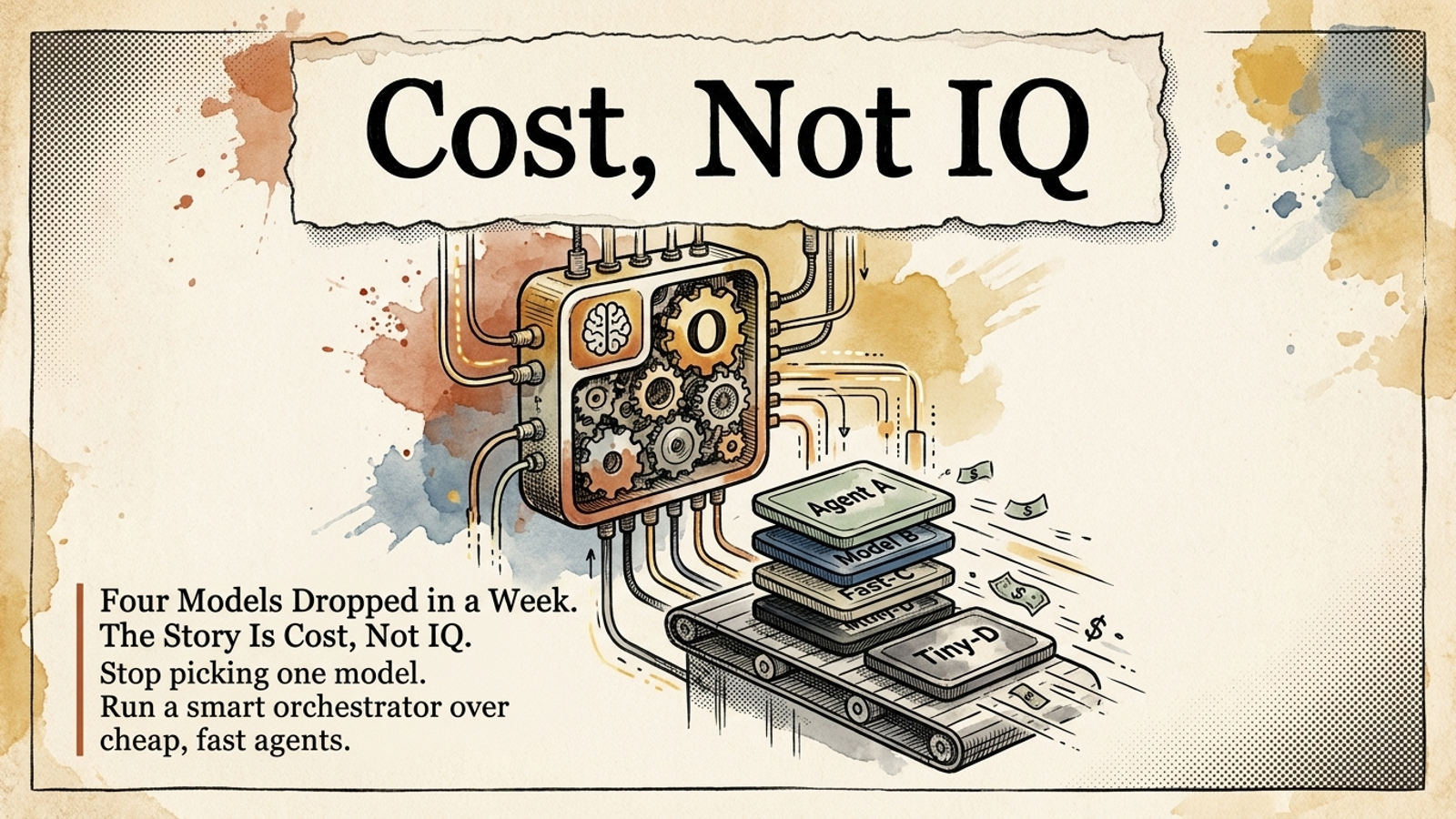
AI competition has jumped past 'who has the best model' into hardware, geopolitics, and architecture. In this unstable in-between period, the fight spills over as a subsidy war that hands individual users an unusually good deal.
But the subsidies are temporary. The durable move, argued by Nathaniel Whittemore via Satya Nadella's essay, is to own your learning loop — don't let the value you create by using AI accrue only to the model provider.
Built on The AI Daily Brief episode 'How the Escalating AI Wars Benefit You' (Nathaniel Whittemore), threading Apple v. OpenAI, the UAE chip deal, the Fable-vs-GPT-5.6 subsidy war, and Nadella's 'Reverse Information Paradox.'
The battleground stopped being the model
For a while, the AI race had one scoreboard: whose frontier model is best. That era is closing. On a single week's news, Whittemore threaded five stories into one theme — the vectors of competition are multiplying, and the instability is spilling over in ways you can exploit right now.
As he put it, it's "no longer just about models, it's about the entire ecosystem around them." Hardware, geopolitics, and cost are all live fronts now.
Hardware is now a battleground
Apple sued OpenAI for trade-secret theft, and the Wall Street Journal called it the "thermonuclear option." The suit alleges OpenAI didn't just hire away 400-plus Apple staff — it actively encouraged departing employees to bring IP out the door, from confidential files on an unreturned MacBook to hardware parts carried into interviews. The backdrop is OpenAI's acquisition of Jony Ive's hardware startup io Products.
The specifics will get litigated for years; the signal is immediate. And the money underneath it is enormous — the same week, SK Hynix pulled off the largest-ever US IPO by a foreign company to fund AI-memory capacity.
Both verified against primary reporting (Bloomberg, TechCrunch, Al Jazeera).
Geopolitics is now a battleground
Two moves in one week. After China's GLM 5.2 climbed toward frontier performance, the Trump administration is rumored to be drafting an executive order on open-source AI — enough that one advocate wrote a piece titled 'six months to live for open models.'
At the same time, Commerce eased export controls so UAE firms G42 and MGX can buy advanced AI chips without a license. That's a real break from precedent: license-free access to controlled US tech was previously reserved for formal allies — even Saudi Arabia and Israel still go through licensing. Whichever way the open-vs-restrict debate breaks, chips and models are now instruments of statecraft.
The model layer too — and that's the part you can use
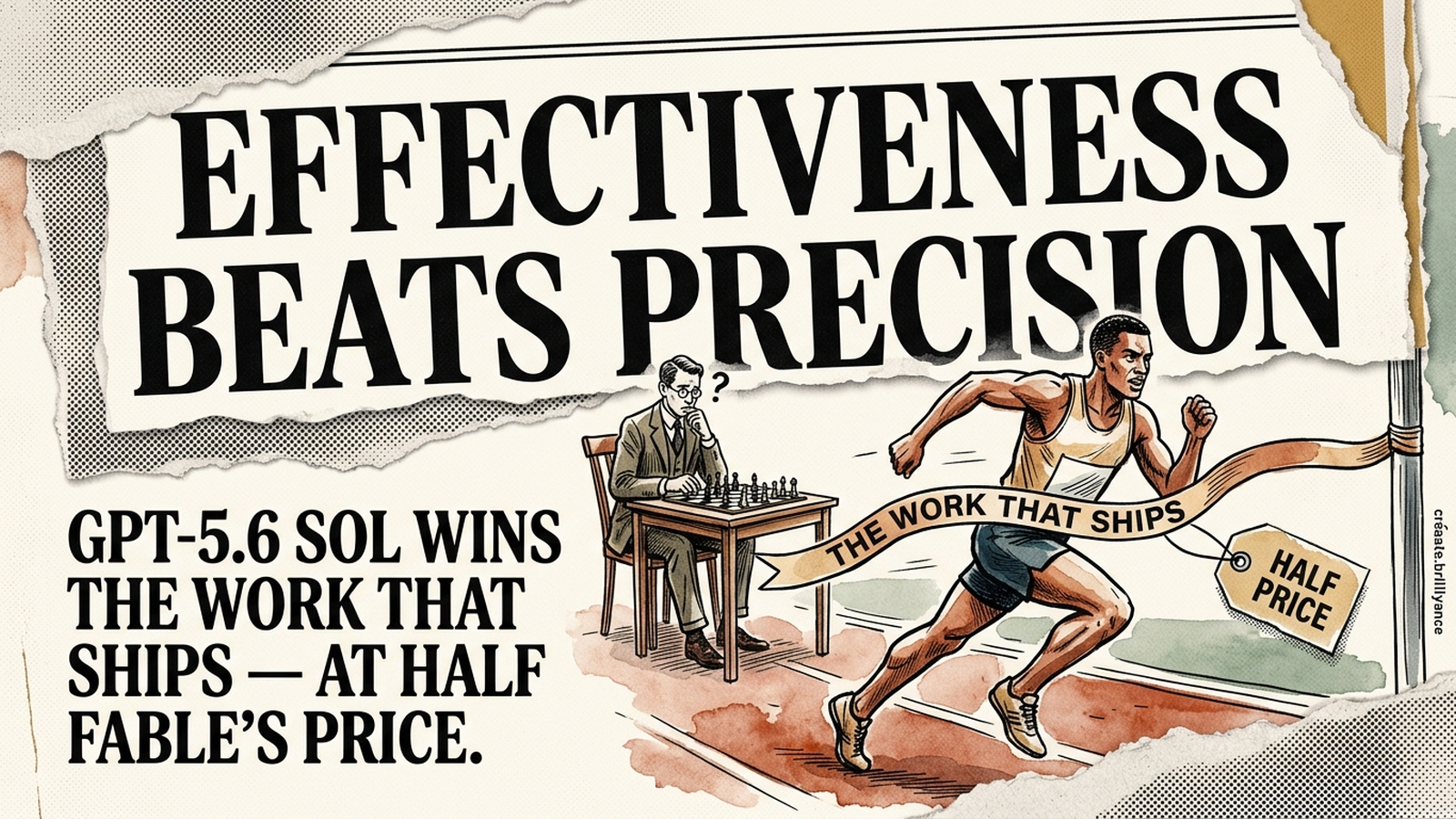
Here's where it gets good for you. GPT-5.6 Sol launched to complaints that users were burning tokens absurdly fast. OpenAI reset usage limits repeatedly over one weekend and pushed efficiency fixes. Anthropic, rather than let its Fable trial expire into full price, extended it twice and kept Claude Code limits 50% higher.
As one developer put it: "Capacity wars between labs are one of the best things that can happen to us who build with this." SemiAnalysis estimates the $20 tier still returns hundreds of dollars of token value a month, and the $200 tier runs into five figures. Those are estimates, and the average user never extracts that much — but on a weekend of multiple resets and extended subsidies, the deal is real. So the first takeaway is blunt: use it while it lasts. The frontier won't be subsidized forever.
The durable move: own your learning loop
The short-term play is exploitation. The long-term play is ownership. Satya Nadella's essay 'The Reverse Information Paradox' makes the sharpest version of the argument.
You essentially pay for intelligence twice, once with money and again with something even more valuable, the proprietary knowledge you must reveal to make that intelligence useful.
Satya Nadella, Microsoft CEO
Models learn from exhaust: your prompts, your tool calls, and especially your corrections. If learning flows only one way, value converges to whoever owns the learning infrastructure — not to you, who created the knowledge. The prescription from Nadella, Palantir's Alex Karp, and Vercel's Guillermo Rauch rhymes: keep organizational memory in your own tenant, own your data and evals, and decouple orchestration so you can switch models without losing what you've accumulated. (These leaders all sell decoupling, so weigh the interest — but the mechanism holds.)
Don't overrate the speed of the shift
The market is already pricing this in. Michael Burry reads the move toward 'cheaper, smarter systems' as a bubble unwinding. Gavin Baker reads the exact same shift as bullish — margin dollars redistributing from frontier labs to infrastructure providers as intelligence-per-dollar rises.
Whittemore's caution splits the difference: the frontier labs won't 'just roll over.' GPT-5.6's cheaper tiers already undercut GLM on cost, and most firms still can't get employees to use the Claude subscriptions they already pay for. The tectonic plates are shifting. Nobody has a handle on where they settle — which is exactly why the spats are getting louder, and exactly why, for this in-between period, a smart individual can benefit mightily.