TL;DR
The short version
Most enterprise AI cost plans quietly assume you can always fall back to a cheaper Chinese open-weight model. Beijing is now exploring restrictions on that supply, and the math changes if it lands.
The durable answer isn't a cheaper model. It's tuning a Western model on your own data and routing tasks by risk. From The AI Daily Brief.
Built on the 9 Jul 2026 AI Daily Brief (Nathaniel Whittemore) on how AI economics shift if China limits access to its open-weight models.
The fallback nobody writes down
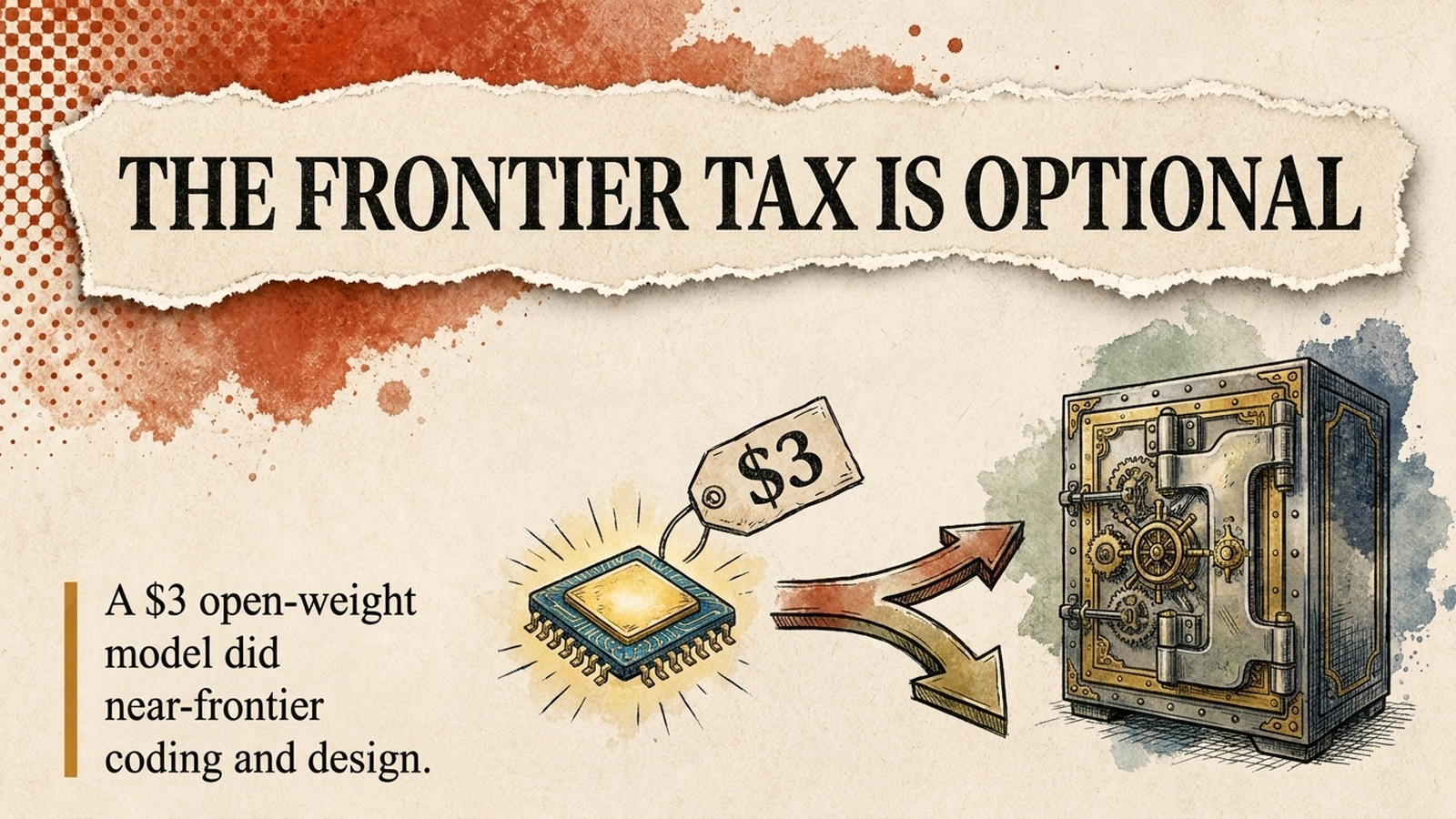
When teams talk about controlling AI spend, the first two moves are blunt: cap token budgets, or switch to a cheaper model. Tesla did the first, applying a spend cap evenly across the company. The second usually means reaching for a Chinese open-weight model — parameters you can download, self-host, and fine-tune for a fraction of frontier prices.
That second move is a load-bearing assumption. Sovereign AI plans and enterprise budgets both assume continuous releases of open-weight models that keep pace with the frontier. Take that away and the math changes.
Continuous releases of open weight models that keep pace with the frontier.
Ethan Mollick, on the assumption baked into most AI cost plans
Why the trigger is credible
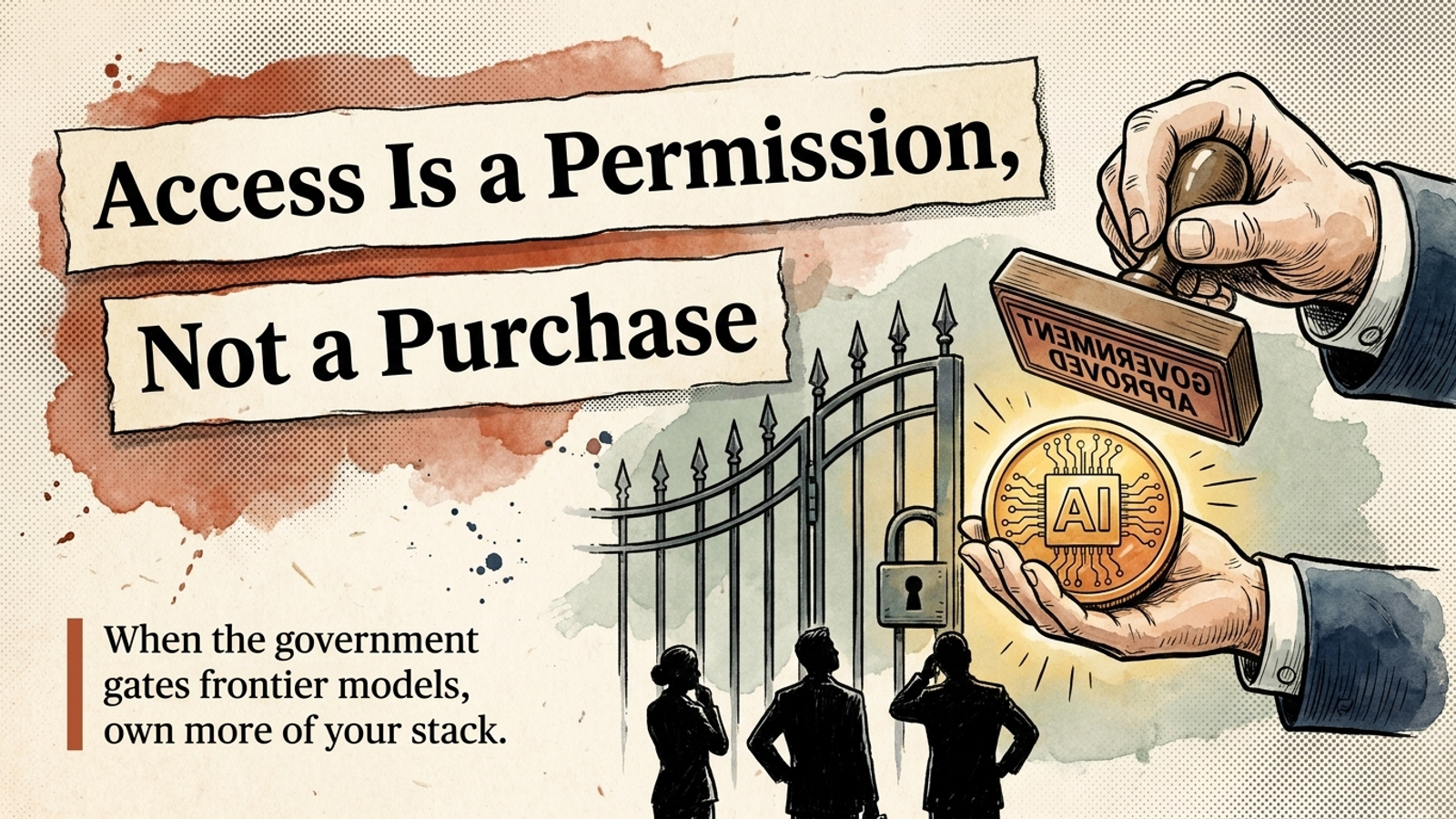
Reuters reported in July 2026 that Chinese authorities held meetings with Alibaba, ByteDance, and Z.ai about limiting overseas distribution of the country's most advanced models — both open and proprietary. The talks were led by the Ministry of Commerce, not the tech regulator, which signals this is economic-planning territory. Options reportedly went as far as treating AI-tech leaks as a national security crime.
No decision has been made, and any rule would likely apply to future models, not weights already on the internet. Skeptics argue Reuters overread a public court dialogue, and ask why Beijing would surrender the soft-power win its open models just earned. The honest read: this is exploratory, but it is no longer safe to assume China keeps open-sourcing at the frontier forever.
Note the token-cost problem itself doesn't come from China. It comes from the frontier labs' cost of serving models and the compute shortage around them. A Chinese cutoff doesn't create the cost pressure — it removes the easiest escape valve.
The better pattern: tune, don't rent
The stronger answer was already emerging: take a Western model and post-train it on your own data. The clearest evidence is Bridgewater's work with Thinking Machines' fine-tuning platform. Frontier models — GPT-5.2 through Claude Opus 4.8 — scored 74–78% accuracy on the firm's financial-judgment tasks at $20–90 per task. A model fine-tuned on Bridgewater's expert-labeled data hit about 85% at single-digit dollars.
AI Daily Brief, citing Thinking Machines and Google
This isn't one lab's trick. Microsoft shipped "Frontier Tuning" for its in-house MAI models; tuned for Excel tasks, one matched GPT-5.4 while running up to 10x more efficient. Nvidia keeps pushing its Nemotron open models. None of these depend on Chinese weights staying available. The point isn't which lab wins — it's that a smaller model tuned on your proprietary data can beat a larger model you only prompt, on both cost and accuracy. Restricting Chinese open weights makes that path more valuable, not less.
Routers stop being just a cost tool
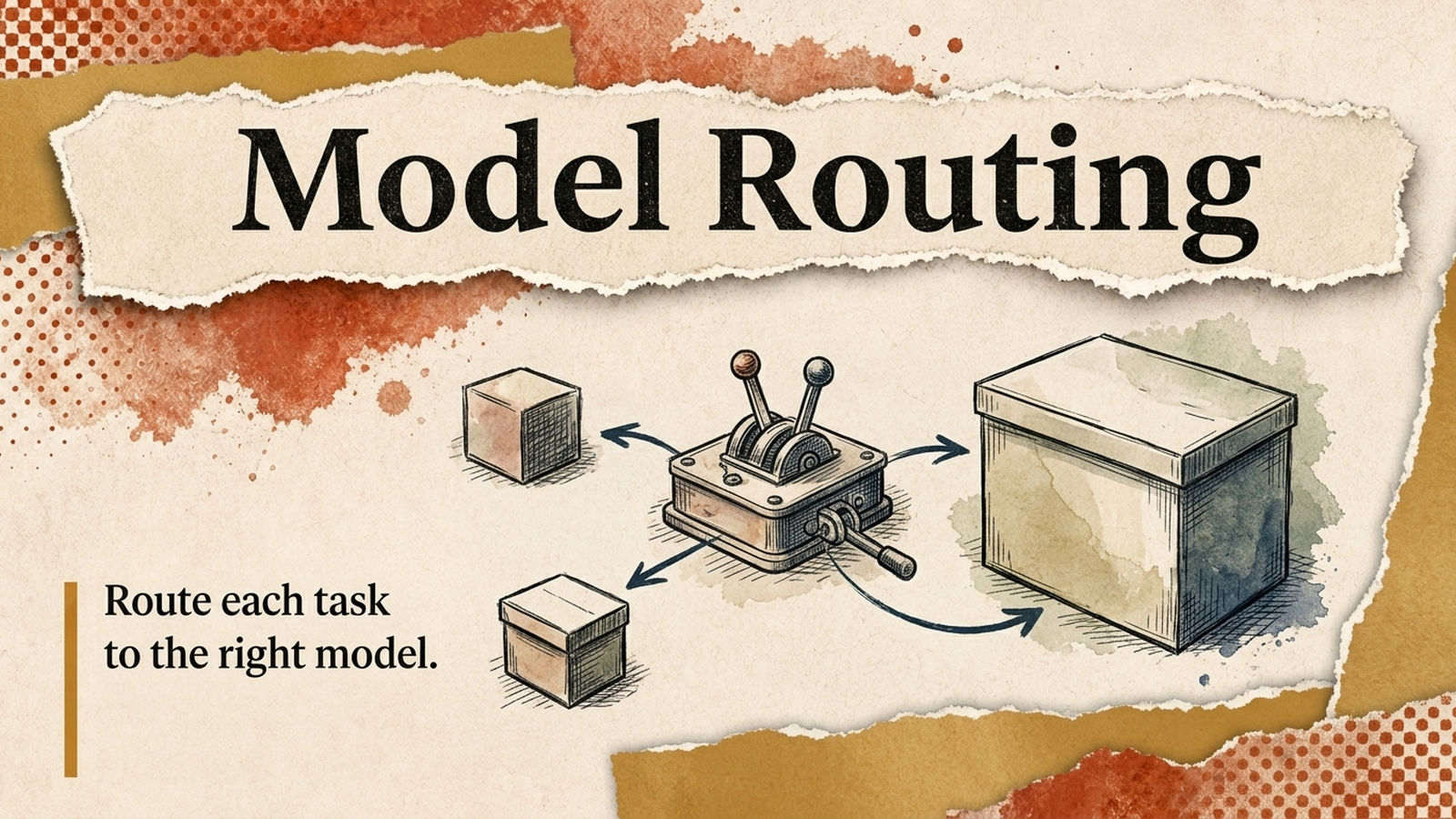
Model routers — the layer that picks the right model per task — have been sold on efficiency: send the easy request to the cheap model, the hard one to the frontier. In a grayer regulatory environment, they pick up a second job: routing by risk, not just capability. If some models become legally restricted, the router is where you enforce which model is allowed to touch which workload.
Vercel's Guillermo Rauch has described the shift already underway — companies moving from picking a single AI lab to building multi-model architectures. Compliance is about to be one more input to that routing decision.
What to do now
The trend lines were set before this Reuters report. A Chinese cutoff just removes the comfortable off-ramp and forces the harder work forward. Three moves follow from the evidence:
- Find the one or two workflows where you have proprietary, expert-labeled data. That data — not a bigger base model — is the edge, and it's what makes a tuned smaller model beat a prompted frontier one.
- Treat your model layer as swappable. If your cost plan names a single model, you're one policy change from a rewrite.
- Add risk as a routing dimension now, while it's cheap to design in.
If you buy AI at an enterprise, this makes your life more complicated, not less. The teams that treat the cheap-Chinese-model fallback as permanent will feel it first.