TL;DR
The short version
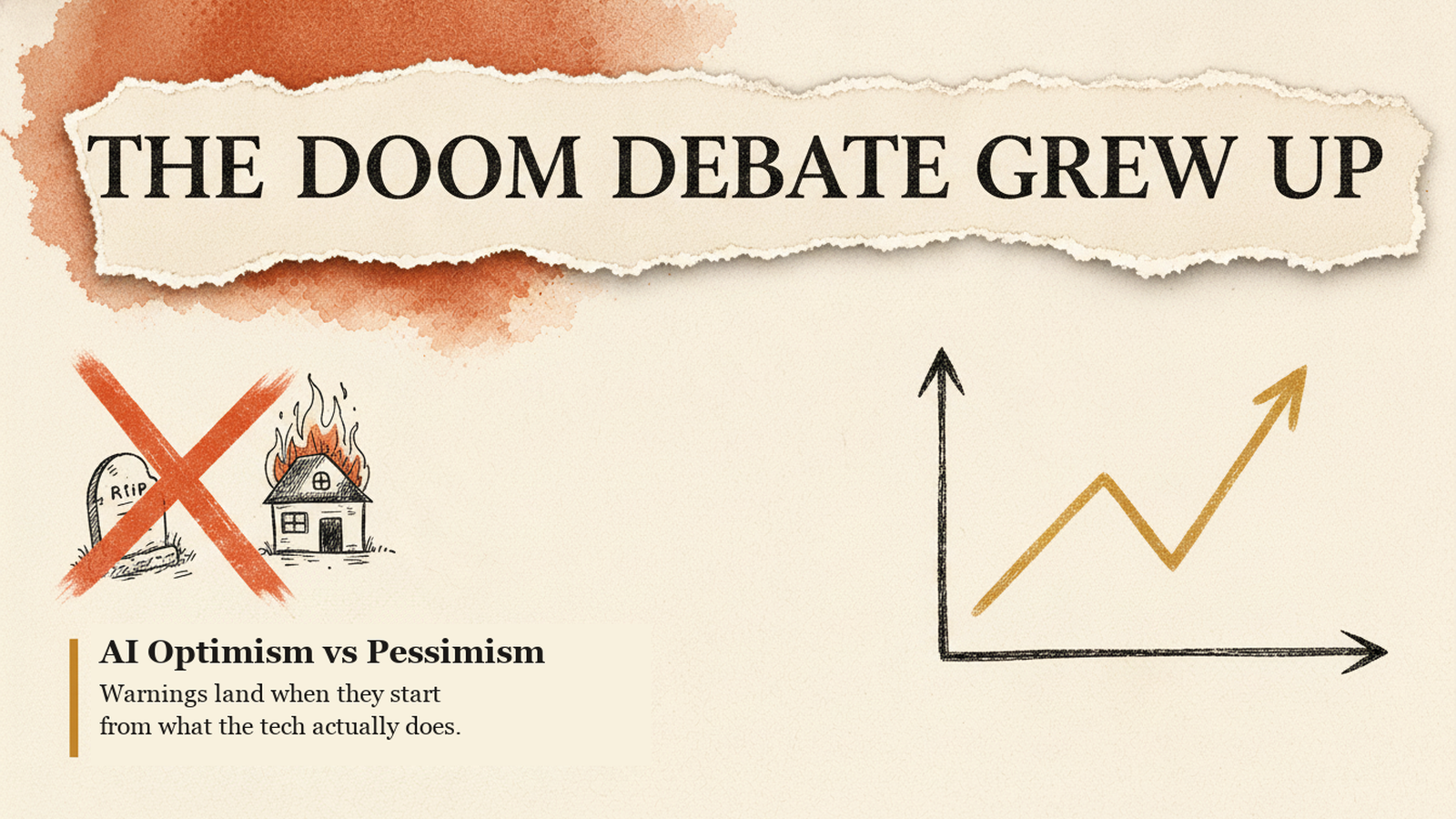
Mark Zuckerberg wrote 6,500 words making the optimistic case for AI. The reaction proved the industry's problem isn't a weak argument — it's that people don't trust the people making it.
That gap is the same one every leader faces when selling AI internally: a better argument doesn't close it. This builds on Nathaniel Whittemore's analysis on The AI Daily Brief.
Source: "AI Optimism Has a Trust Problem" — Nathaniel Whittemore, The AI Daily Brief (12 Aug 2026).
The optimism land-grab is on
The AI companies are picking narratives. Anthropic keeps warning about the downside. OpenAI softened its job-loss messaging after Sam Altman said he'd been wrong. And on August 10, Mark Zuckerberg planted a flag on the opposite corner with a 6,500-word manifesto, "The future is for everyone".
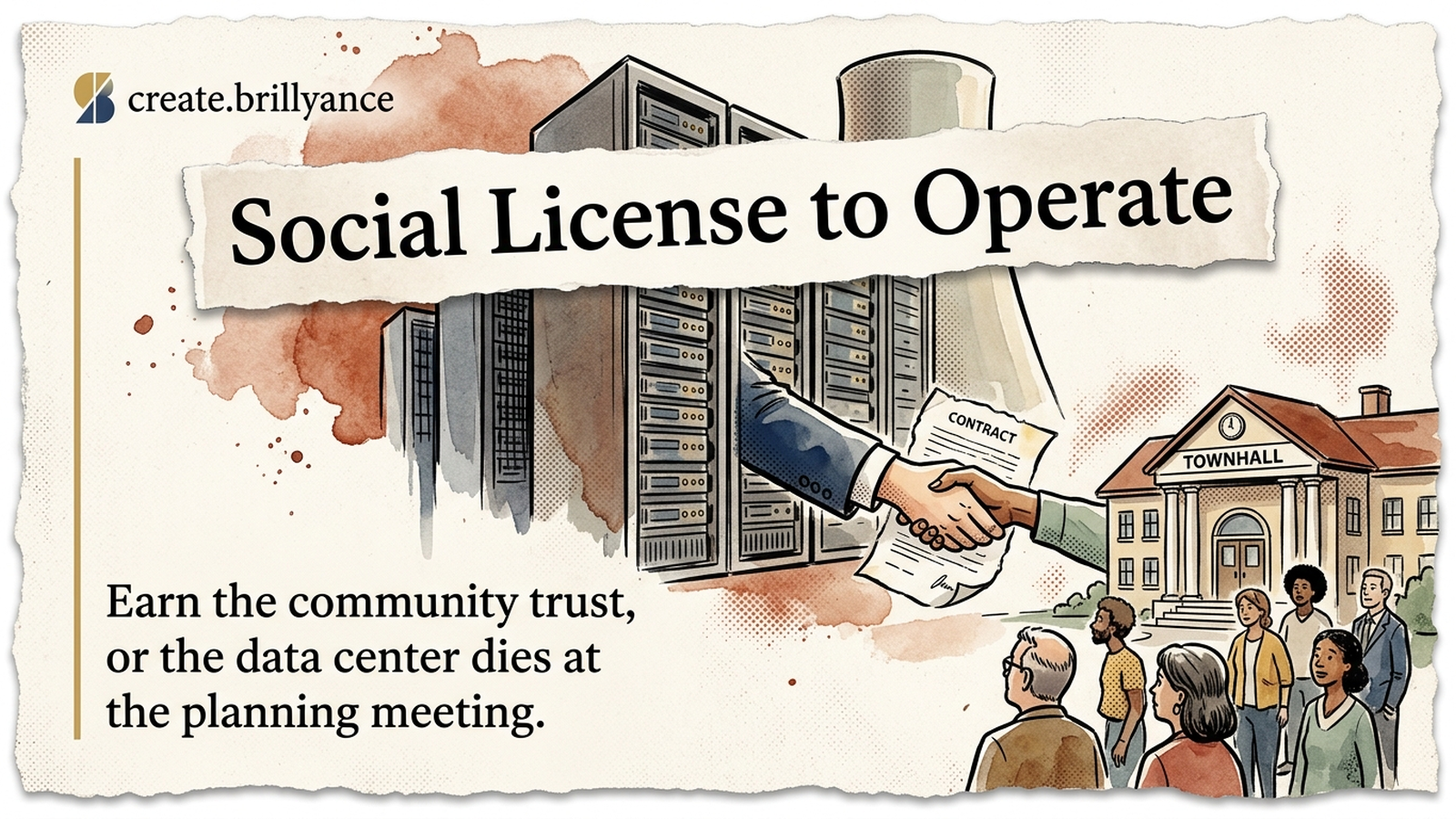
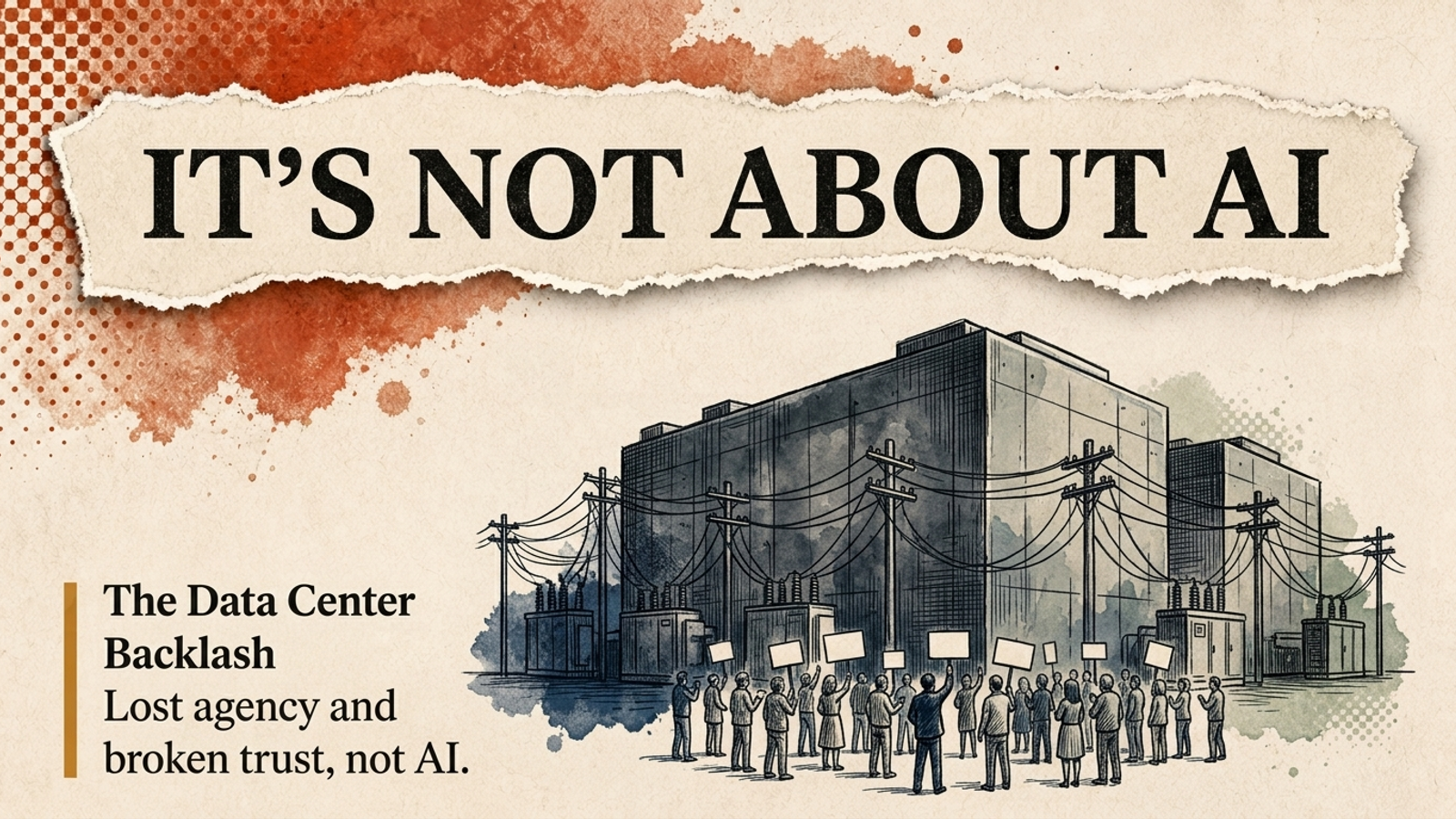
His thesis: concentrating superintelligence in a few institutions is the worst outcome, and open weights plus individual access are the safeguard. He backed it with money — a $1 billion fund for the communities around Meta's data centers, and a 30-billion-parameter open model, Muse Glimmer, released the same day.
The argument is coherent. It mostly didn't matter.
He reframed jobs as a math problem
The sharpest idea in the piece is worth stealing regardless of who wrote it. Zuckerberg treats job displacement as a race, not a verdict: does automation of existing roles move faster than the growth of individual capability and the demand for new skills?
"There is no rule that AI must increase automation faster than it increases individuals' capabilities," he writes. And he points out an asymmetry most people miss — corporate inertia slows automation. Plenty of work that could be automated won't be, because organizations move slowly. Individual upskilling has no such brake.
That's a real operating insight. The speed of your org's change is a variable you set, not a fate you accept.
The reaction wasn't about the argument
Critics barely engaged the logic. They went straight at the messenger.
Instead of acknowledging that and trying to win back their trust, this essay demonstrates over and over again how the trust was lost in the first place.
TechCrunch
The subtext is a specific number. A lot of today's AI anxiety is the AI industry paying for social media's sins — and it doesn't help that Zuckerberg cut 8,000 jobs earlier this year in an AI restructuring while arguing AI expands the job market.
Pew Research (2022); NPR (2026)
The argument and the layoffs aren't strictly contradictory. But the audience wasn't grading the argument.
Tone-deaf examples cost more than they look
The other thing that drew fire was his use case: AI helped him pick a recipe to bake with his daughter. Altman had a similar misfire — connect the family calendar and generate a morning podcast about the kids' day.
The Verge's Elizabeth Lopatto cut to why this backfires: "Love is not just a feeling. It's a way of paying attention." Optimizing a hobby misses that the point of a hobby is that you do it. The examples read as an industry that can't be bothered to engage its own children.
Counter-examples exist — parents using AI for offscreen projects with their kids, not for them. They didn't move the needle. When trust is already thin, a bad example confirms the prior instead of challenging it.
What an operator should copy
The manifesto is a case study in a mistake leaders make every day: assuming a better argument closes the gap. It rarely does. Adoption stalls on credibility and on the felt experience of the first example, not on the strength of the pitch.
The AI optimists are right that the story needs a stronger middle. But you don't win the middle with a longer essay. You win it by being someone worth believing.