TL;DR
The short version
AI market panics repeat in a small set of shapes — cheap models undercutting premium pricing, circular financing, revenue not justifying spend, runaway capex, spend caps, and performance plateaus. Each recent scare has been walked back by later evidence.
This is The AI Daily Brief reading the latest freakout — cheap Chinese models like Kimi K3 — as the newest instance of a recurring cycle, not a new threat. For a leader, the job is telling the load-bearing signal from the seasonal noise before you change a single plan.
Built on Nathaniel Whittemore's AI Daily Brief episode, with the load-bearing figures traced to Bloomberg, J.P. Morgan (Michael Cembalest), and the MIT NANDA report.
The panic has a taxonomy
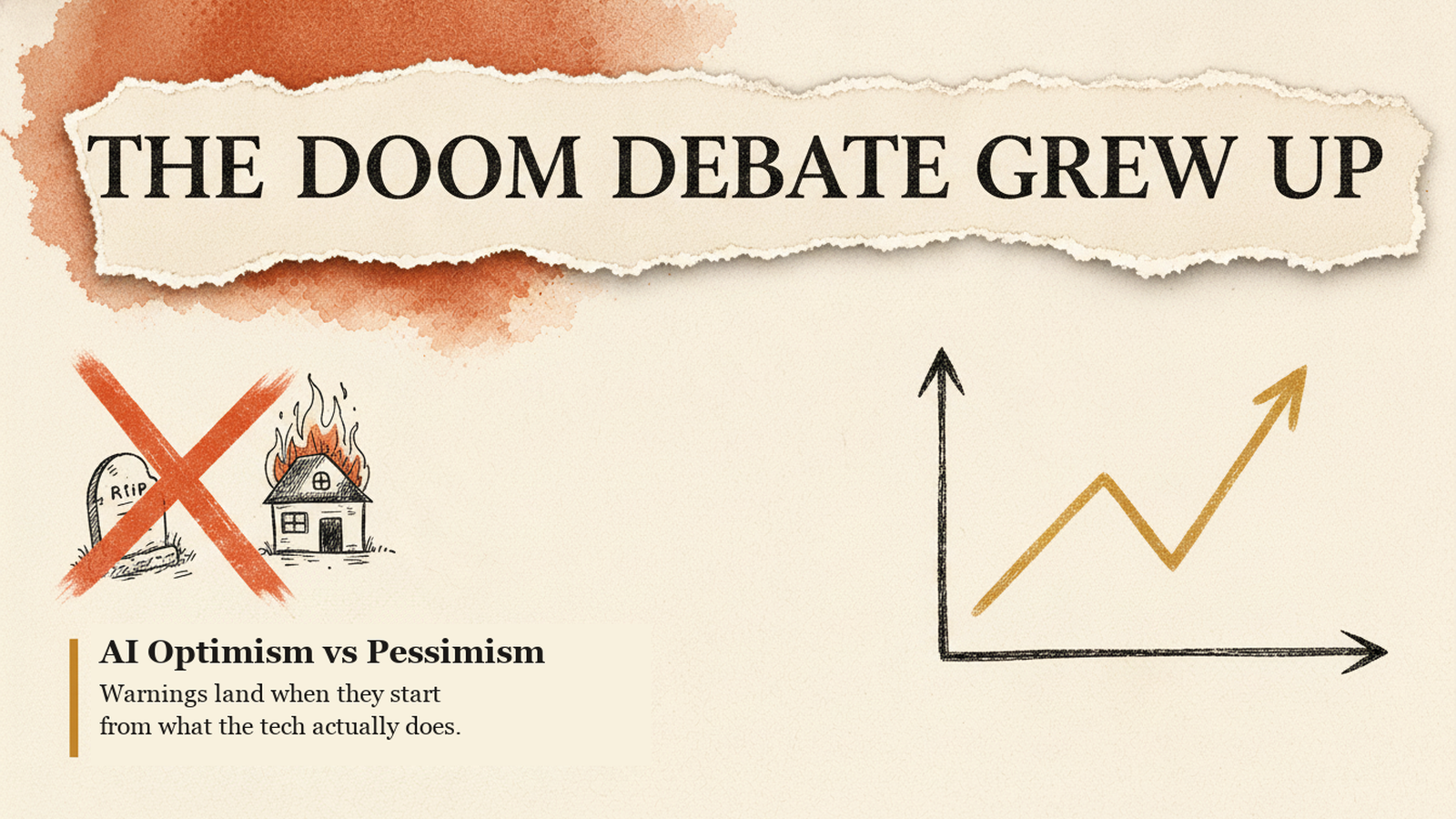
Whittemore's argument is that AI scares are not random. They recur in six shapes: cheap models undercutting premium pricing, circular financing, revenue not justifying spend, capex growing too fast, limits on AI spend, and performance plateaus. Once you can name the shape, you can stop reacting to the headline and start checking the mechanism.
That matters because the stakes are now systemic. When a single bet carries the market, every threat to it reads as a crisis — and the fragility, not the news, is what moves the price.
Bloomberg analysis; J.P. Morgan — Michael Cembalest, Eye on the Market.
The headline always outruns the facts
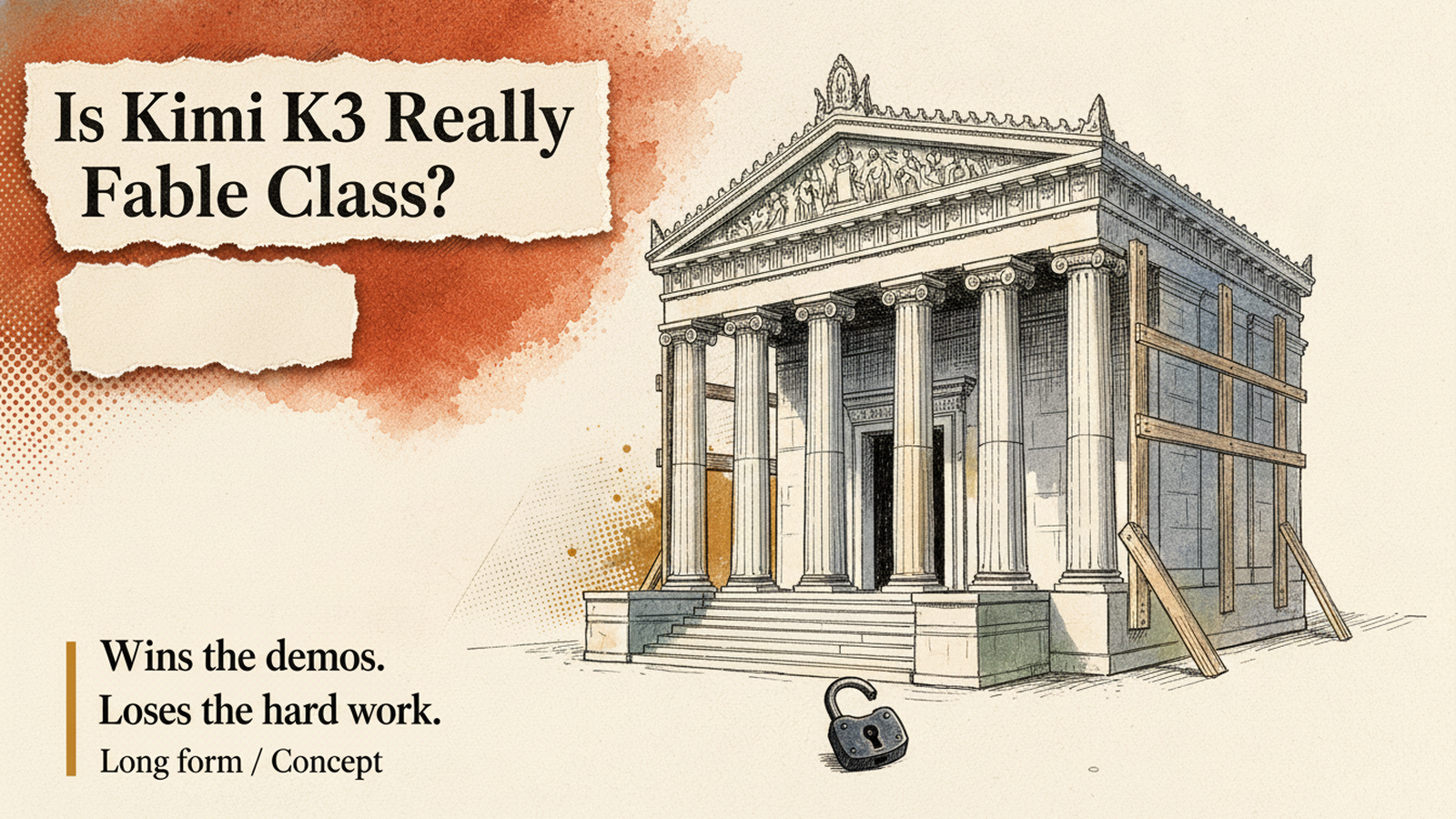
The current freakout is cheap Chinese models — Kimi K3 — supposedly gutting OpenAI and Anthropic pricing right before they go public. It runs the same script as the DeepSeek scare of early 2025, when a Chinese lab looked like it had matched frontier AI for a few million dollars. That framing later collected asterisks: R1 was the first free reasoning model, not a capability leader. K3 is real and cheaper, but served at roughly a third the price of Fable — not pennies on the dollar.
The pattern holds even for numbers that stick. Last year's MIT report claiming 95% of generative-AI pilots fail landed on every trading desk. The figure is real, but its scope is narrower than the headline: pilots that fail to show measurable ROI, not projects that collapse. The gap between what a number says and what it gets used to say is the thing to watch.
The brakes are structural, not sentimental
The reasons these panics keep resolving are boring and physical. Data centers take years to permit and build; roughly half of this year's announced centers have been delayed or canceled. Capacity struggles to outrun demand, which buys everyone time to adjust. And a cheap model is worthless without the inference to serve it — Moonshot was tapped out of compute on K3's launch weekend.
The fact that the market is so determined to have a bubble logic at all times is one of the biggest things preventing a runaway bubble.
Nathaniel Whittemore, The AI Daily Brief
Every time the rally gets ahead of itself, the fear acts as a pressure release. There is no 1999-style frenzy because nobody trusts the party.
What a leader actually does
Strip out the market drama and there are three operating lessons.
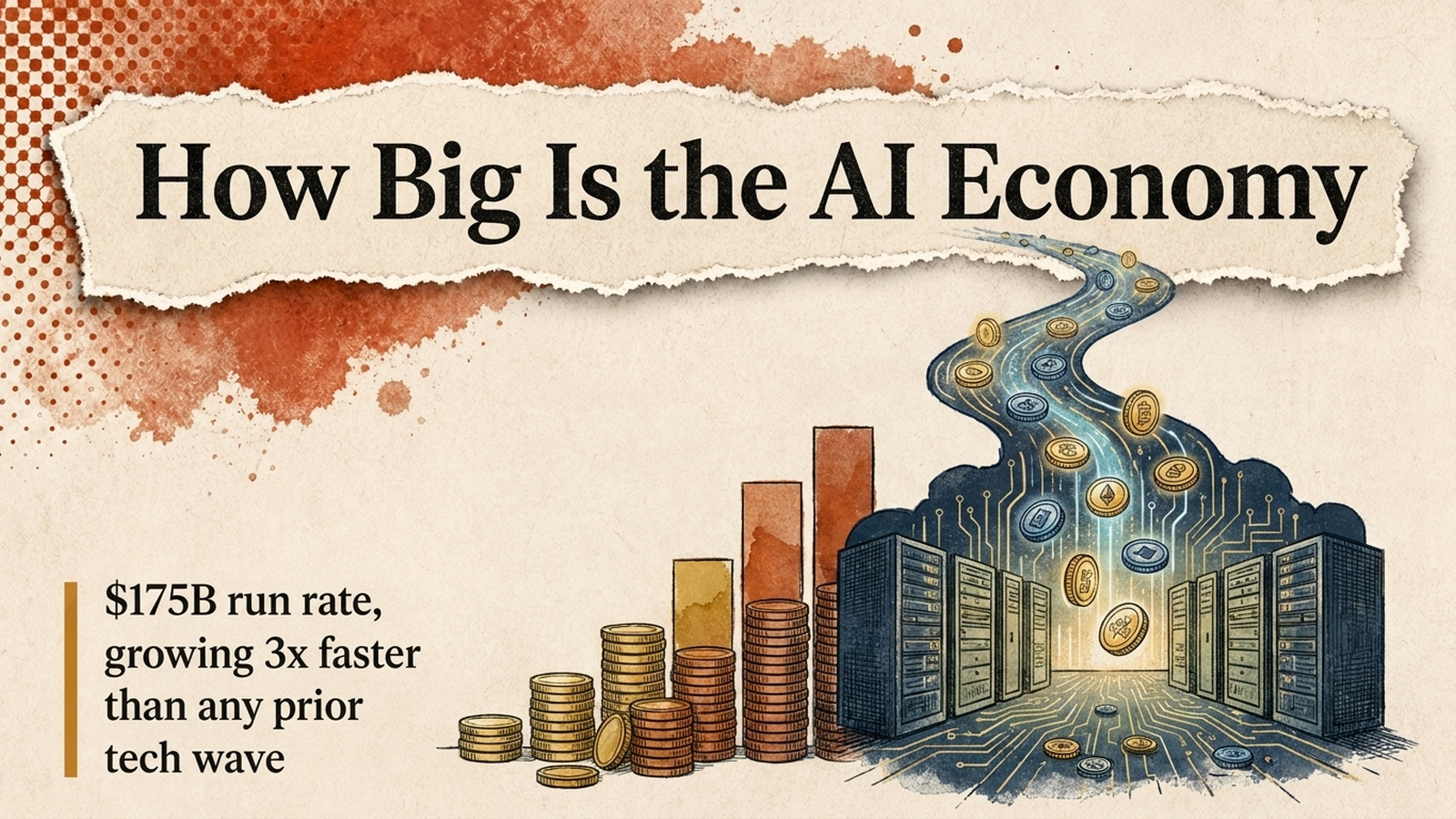
First, separate the durable number from the dated one. AI's GDP and S&P concentration are verifiable and load-bearing. Most scare-cycle figures — token caps, quarterly capex lines, this week's model price — are fast-moving and often walked back. Decide which kind you're staring at before you replan.
Second, read supply, not vibes. If your worry is a competitor's cheap model, the real question is whether they can serve it at scale. Inference capacity, not benchmark price, is the constraint that bites.
Third, watch the revenue de-concentrate. The interesting move isn't the two big labs defending margin; it's the flood of routers, verticalized fine-tunes, and post-training plays spreading AI revenue across the stack. As investor Nick Carter put it, "The US government does not owe either of the large labs a business model." The same logic applies to your own vendor bets — the ecosystem is wider than any single provider you're anchored to.