TL;DR
The short version
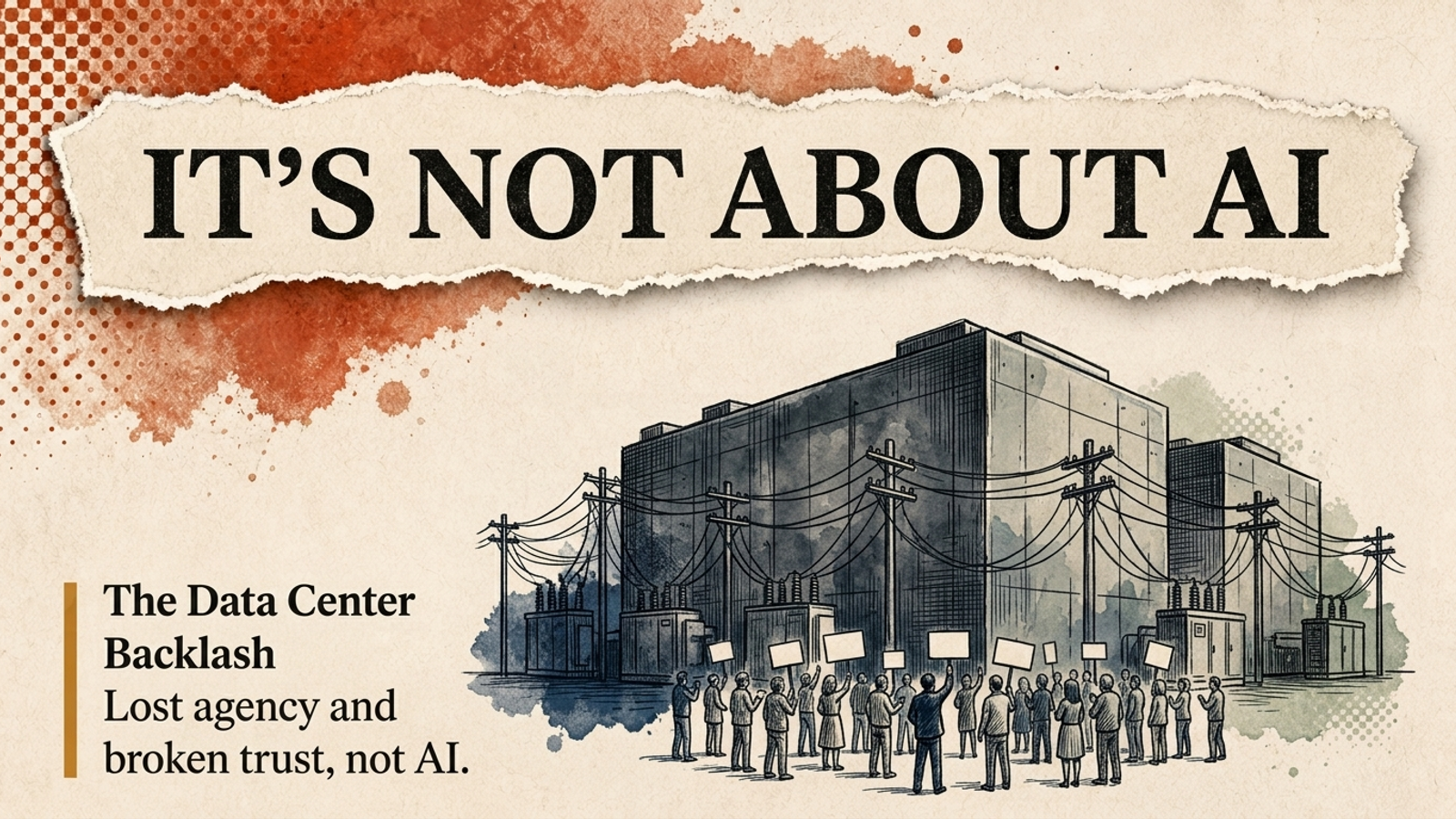
Opposition to AI data centers went bipartisan and vertical in a year. The physical infrastructure your AI roadmap depends on is now gated by community trust, not just capital.
The moves that work are transparency and shared value, not better arguments — the towns that said yes are the ones that got paid, visibly. From Nathaniel Whittemore's AI Daily Brief.
Built on the 22 Aug 2026 episode of The AI Daily Brief. Figures verified against Gallup, Heatmap, Echelon, and Morning Consult.
The constraint on AI moved from silicon to sentiment
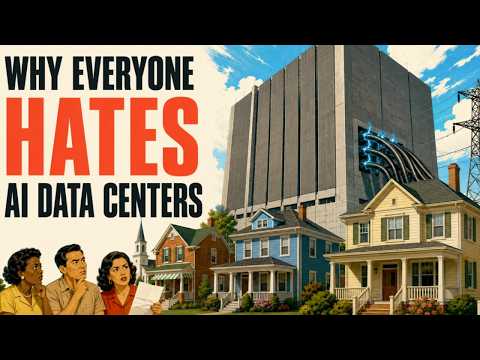
Opposition to a nearby data center ran at 71% in Gallup's spring poll, 48% of it strong (Gallup). By Heatmap's August tracker it hit 75%, strong opposition at 61%. It is not partisan: net support sits at −43 with Republicans, −65 with independents, −75 with Democrats (Heatmap). New York just became the first state to pass a moratorium.
Gallup (May 2026); Heatmap/Embold (Aug 2026)
If you build AI products, treat this as a roadmap input. The compute your features run on has to land somewhere physical, and the thing gating that is no longer chip supply — it is whether a town will host it.
You cannot rebut your way out of a trust gap
The instinct is to correct the record. Many scary numbers are wrong: the viral water statistic traces to a unit error in Karen Hao's Empire of AI that inflated it by a factor of 1,000, which she acknowledged. But when Puck News tested the corrected math on voters, only 8% found it very convincing. The "thousands of local jobs" argument fared little better at 12%.
The reason facts bounce off is that confidence in big business sits at 17%, an all-time low. As one widely shared line put it: it's not Skynet, it's the oligarchy. People are not litigating cooling systems — they are reacting to deals struck behind NDAs they cannot see.
Closed-loop cooling systems? I don't believe them. Paying millions in taxes? I don't believe them. Creating a thousand jobs? I don't believe them.
Jasmine Sun, quoted in the episode
The lesson transfers past data centers. When trust is the bottleneck, a sharper argument is the wrong tool. That is the same dynamic you hit inside your own org the moment you ship AI that touches people's work.
The towns that said yes got paid — visibly
The counter-evidence is not messaging, it is structure. Quincy, Washington took data centers for two decades; its poverty rate fell from 29.4% in 2012 to 6.2% in 2024, and the centers now cover 57% of local property taxes, funding a $15M aquatic center and a $120M high school. In Loudoun County, Virginia, data centers pay about 42% of local tax funding and hold the residential property rate to 0.8%.
What those places share is not better PR. It is that residents can see the trade. And voters say they want it offered: 57% prefer clear rules to a moratorium, and 78% back requiring companies to pay for the grid upgrades their facilities need (Morning Consult). Builders are adjusting — OpenAI's Pike County, Ohio deal includes a $40 million community fund whose priorities the town sets, plus $84M in credits for roughly 844,000 Ohio students.
What changes for a leader building on this
Three shifts follow.
Treat social license as a dependency, not a comms afterthought. Where your capacity comes from now carries political risk that can strand a multi-year plan. Ask your infrastructure partners how their siting deals are structured before you commit a roadmap on top of them.
Default to visible value over closed doors. Microsoft ended its NDAs with local governments this year; the direction of travel is transparency. Any AI initiative — external buildout or internal rollout — clears faster when the people affected can see what they get.
The boundary: none of this makes the backlash cheap or fast, and it will likely get louder before it eases. But the pattern that works is now clear and copyable — pay your way, show your work, and hand people a real choice.