TL;DR
The short version
Dario Amodei almost never posts. So when the Anthropic CEO broke his own social-media silence to rebut a viral claim, the posts themselves became the news.
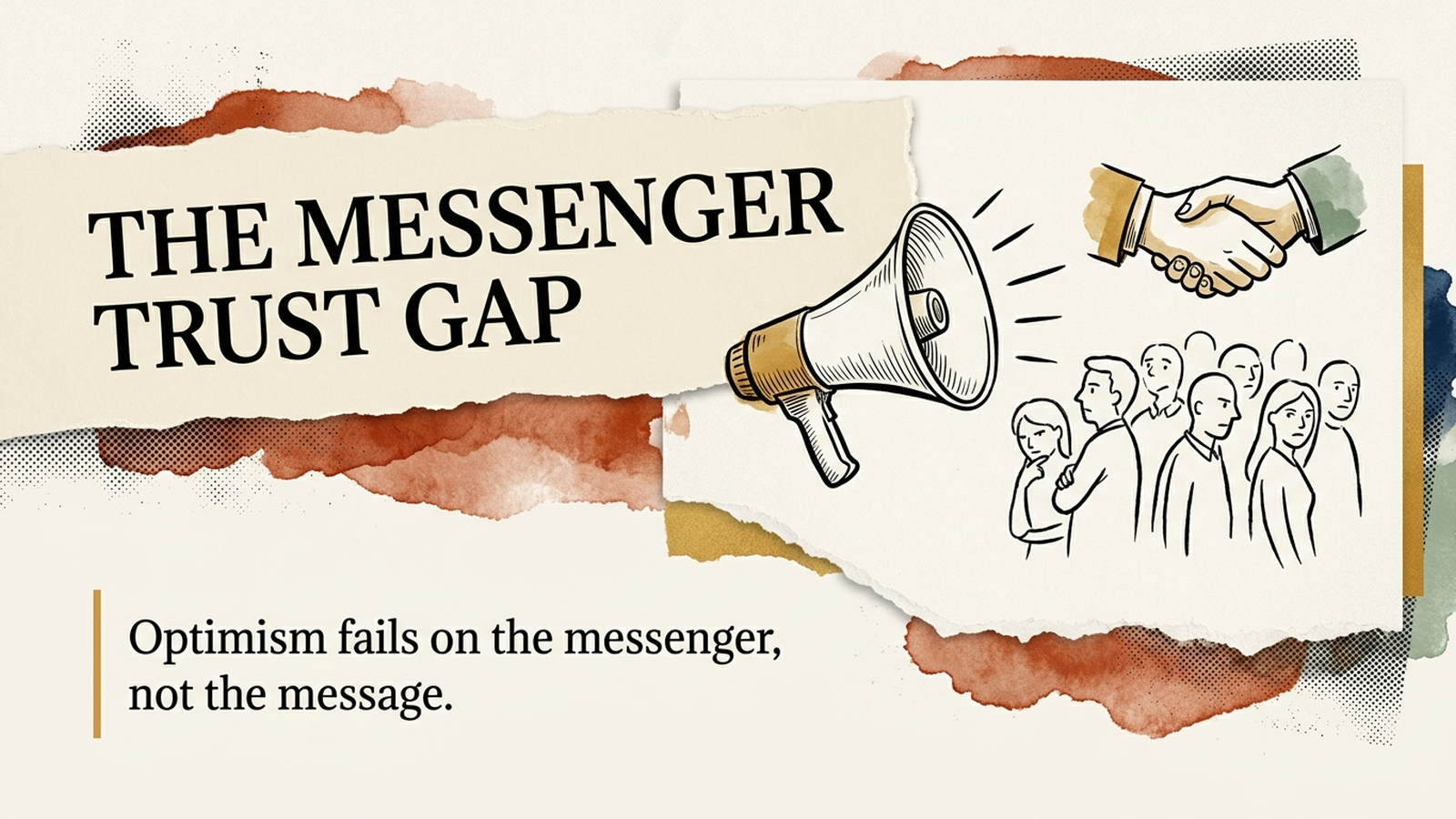
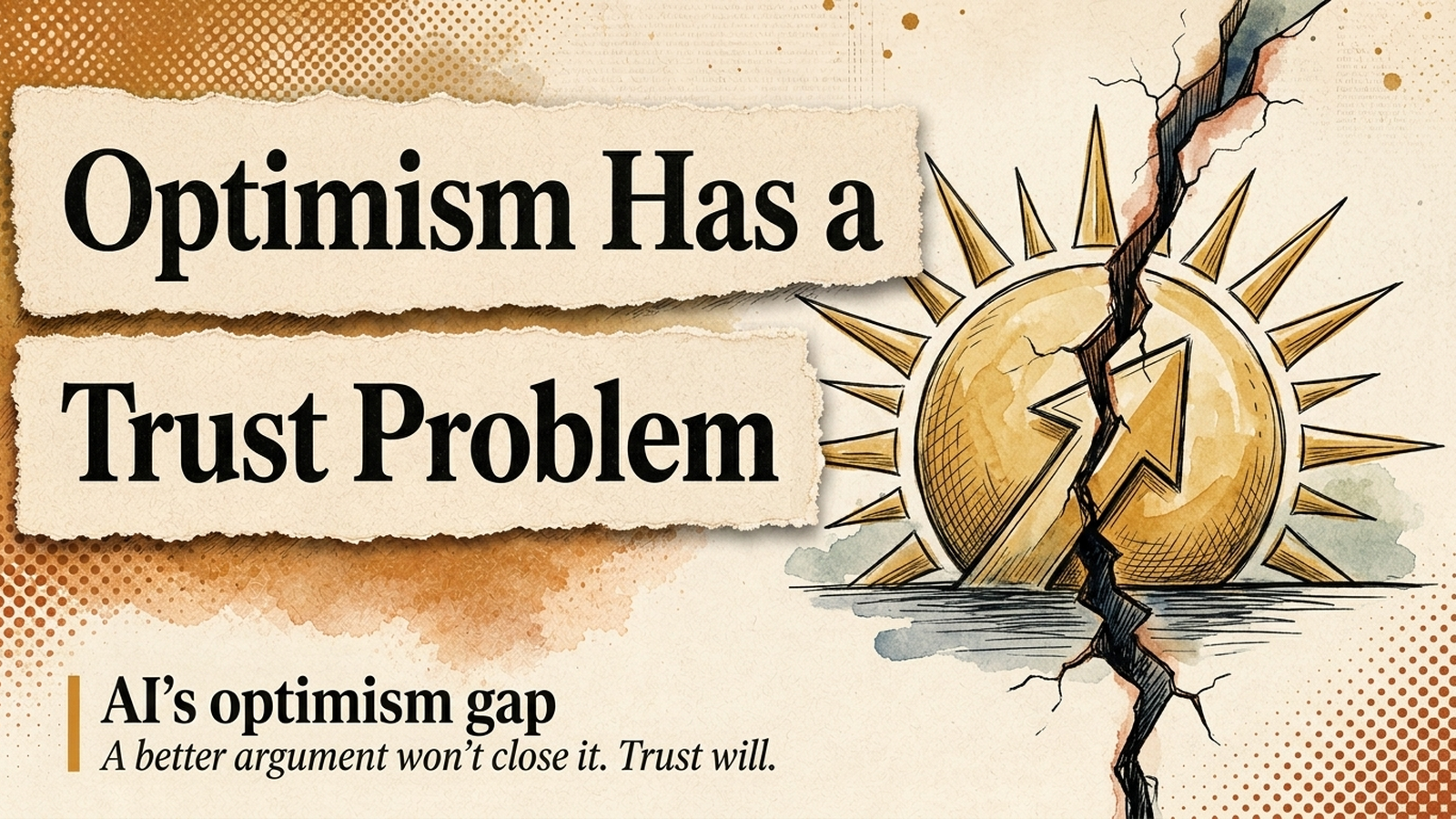
His most useful point wasn't about regulation. It was that the public doesn't distrust AI because leaders warn about risk — it distrusts AI because companies haven't delivered yet. That's a delivery problem, not a messaging one, and it applies far beyond frontier labs.
Drawn from The AI Daily Brief (Nathaniel Whittemore), covering the Gavin Baker / Sholto Douglas / Dario Amodei exchange on X.
The two posts that shifted the story
Dario Amodei follows zero people on X and has said he hates the platform. So two posts from him counted as news on their own.
The spark came from investor Gavin Baker on the All-In podcast: he'd heard from people he trusts that Dario believes Anthropic might one day be "the only private company in the world" — just Anthropic, governments, and everyone else. Anthropic's Sholto Douglas called the claim "completely false," saying one of the things the company worries about most is "economic concentration of power." Then Dario stepped in himself.
Most coverage fixated on the resulting fight about regulation. The more useful part was buried in his second post.
The line worth keeping
Dario conceded the public distrusts AI. But he rejected the popular fix — a "glitzy marketing campaign with a positive spin" — flatly. Saying AI will cure cancer, he wrote, is now more cliché than inspiring, and most people read it as deceptive.
The thing that will work is actually curing cancer.
Dario Amodei, on X
Then he named the real critique and pointed it at himself: the most accurate criticism of AI companies, including Anthropic, is that they "haven't yet delivered on our big promises to benefit the world. That is totally on us."
That's a founder saying the quiet part out loud. The trust gap isn't a communications problem to be reframed. It's a delivery problem. You close it by shipping what you promised, not by describing it more warmly.
Why the framing fight missed the point
The regulation argument is real, but it's the kind of debate that only feels urgent inside the industry. Dario argued that "regulation equals regulatory capture equals concentration of power" is a Silicon Valley oversimplification, and that fair institutions can "vest power in ideas rather than people." Replit's Amjad Masad countered that scaling laws "are not laws of physics" — compute-hungry today doesn't mean compute-hungry forever.
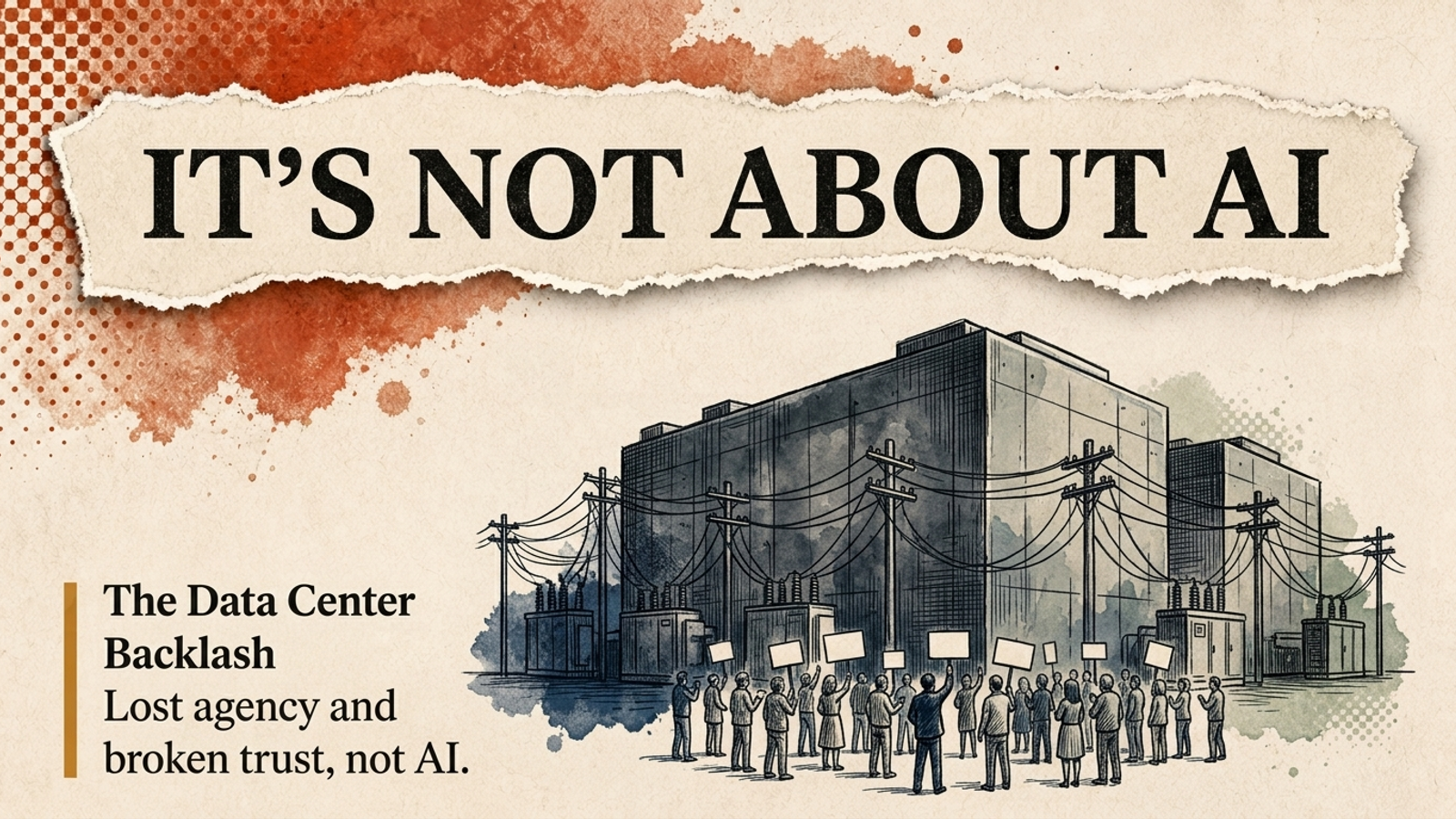
Both sides made defensible points. Neither moved anyone outside the bubble, because the public was never arguing about testing regimes or scaling curves. OpenAI's Angel Broden put it sharpest: people won't judge AI companies by breakthroughs alone. They'll judge them by "pricing, access, lobbying opacity, how the economic gains are distributed, who gets to participate." Pharma cures diseases and is still one of the least-trusted industries.
So even Dario's own frame is incomplete. Delivery is necessary. It may not be sufficient. Who benefits from what you deliver is its own question.
What it means for any leader
Two things here transfer directly to anyone running a team or a company.
First, your credibility is your track record, not your narrative. The Information's Jessica Lessin noted that "with just two tweets, Dario Amodei did what he has struggled to do all year" — he changed the narrative. But he changed it by being specific and honest about what his company hasn't done, not by polishing what it might. Owning the gap read as more credible than any positive spin.
Second, the medium shaped the message. Dario has spent the year frustrated that clips from long interviews strip out his optimism and keep the scary soundbites. His essays run 13,000 words; nobody finishes them. A few hundred words on a direct channel turned out to be much harder to take out of context. When your message keeps getting distorted, the fix is often the format, not the volume.