TL;DR
The short version
Telling a frontier model "QA the onboarding flow" beats handing it a 25-item checklist. The checklist is the bug: it overwrites the model's planning step with a worse plan written by the person who already has the blind spots.
The catch is that under-prompting is not a prompting trick. It is what you earn once the standing scaffolding — instruction files, approved-style tooling, past-performance data, a review channel — is good enough that one line is sufficient. Claire Vo and Every's growth team landed on the same finding the same week, from opposite ends of the work.
Built from three source episodes: Claire Vo on How I AI, and two Every episodes covering OpenAI's Codex team and Every's own All Access launch.
The checklist is the bug
The standard move, inherited from 2023, is to enumerate. Write the twenty-five things you want checked, hand them over, get the twenty-five things back. Claire Vo's finding is that this now makes the output worse — because the enumeration replaces the model's planning step with yours, and yours is thinner.
Under prompt your frontier models. Let them use that intelligence to come up with their own plans.
Claire Vo, How I AI
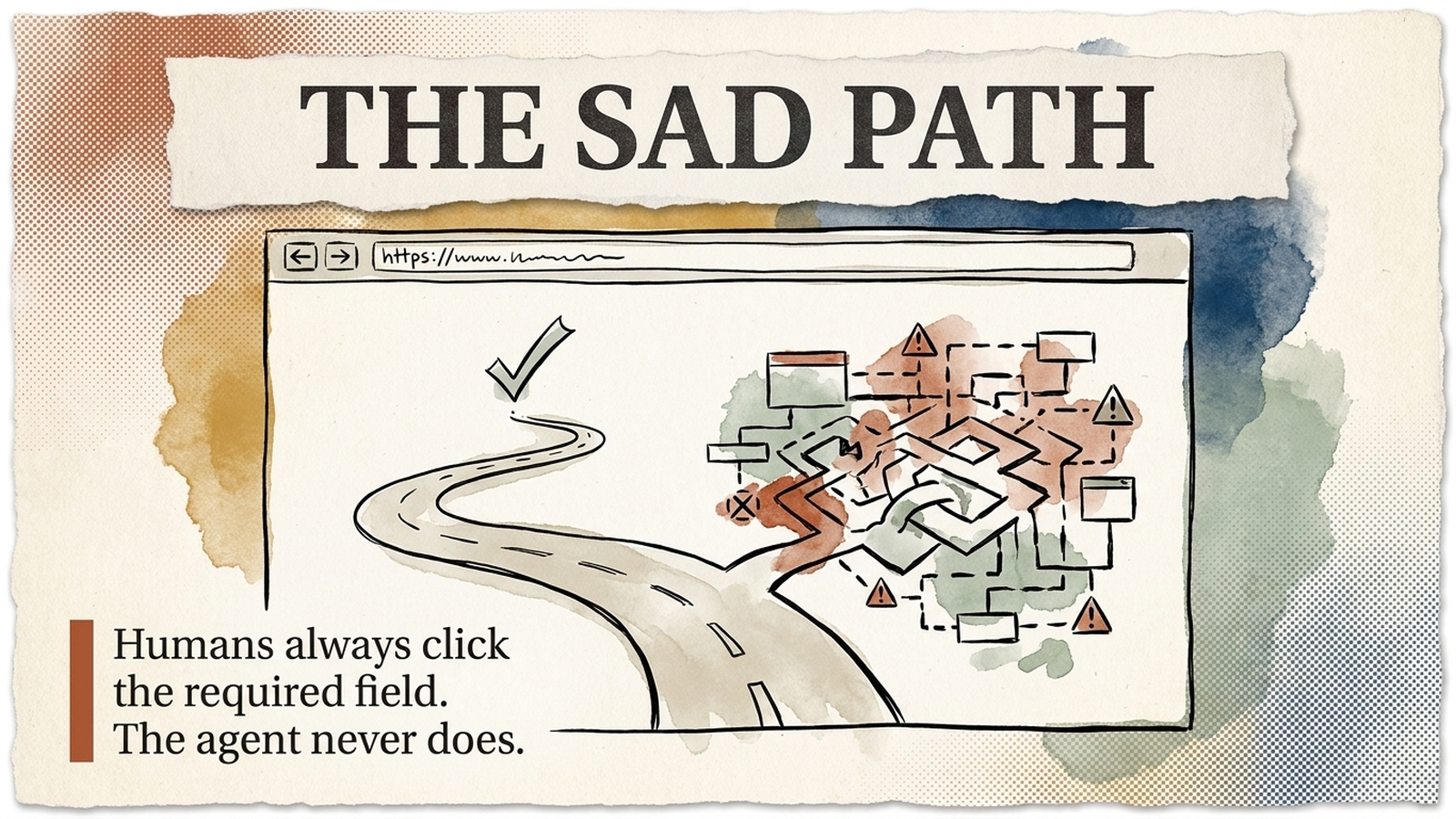
The proof is in what the short prompt found. Pointed at her own live onboarding flow with a single sentence, the agent surfaced eleven issues — including a high-severity navigation blocker caused by a required field with no validation, which had shipped and survived for months. Her explanation is the load-bearing part: she always tested that flow as a human, and a human always fills in the required field.
A checklist written by the person who built the flow inherits that person's blind spots. The agent has no learned workarounds, so it submits empty forms, hits error states, and resizes the viewport — not because it is smarter, but because nothing taught it not to. That is a durable advantage over a spec list, and it disappears the moment you write the spec list.
It only works on top of scaffolding
The second source is what stops this from being a trick. A growth lead at Every screenshotted a Slack thread suggesting a retargeting email, typed one command into Codex, and went to the gym. He came back to four audience-segmented emails, drafted in the company's approved voice, benchmarked against past sends, scheduled, and posted to a review channel for a human to read. Ten minutes of edits later they shipped.
If you looked at my prompts in Codex, you would be like, I think this guy doesn't know what the hell he's doing.
Every growth lead
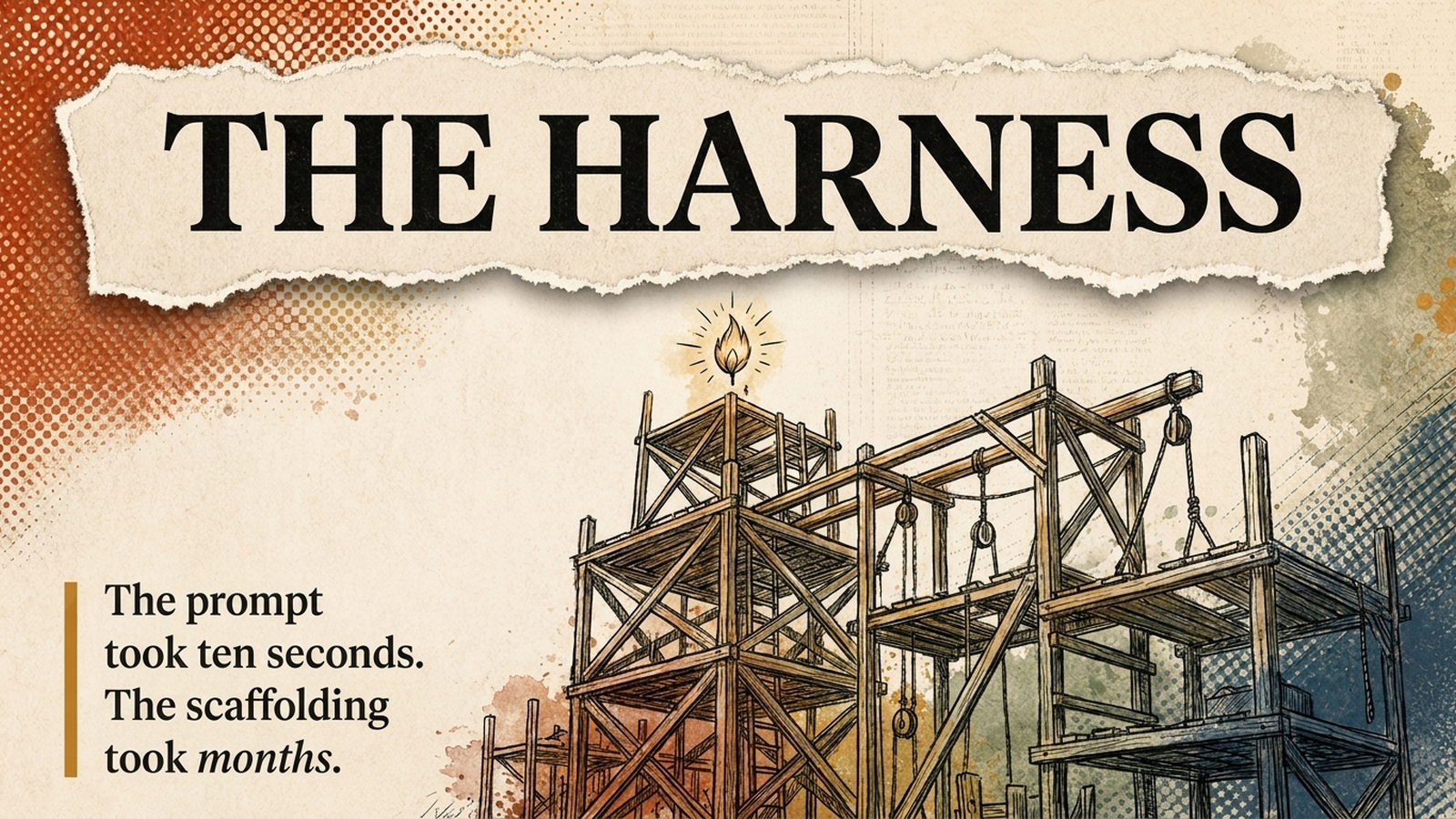
His very next sentence is the one people skip: he knows his team has already built the scaffolding the agents work inside, which is why he can trust a one-line instruction. That email system had been improving incrementally for months. The sparse prompt is the visible tip of a long, boring investment — copy the prompt without the investment and you get generic copy.
The detail doesn't disappear — it moves
Set against Vo's advice, the OpenAI episode looks like a contradiction. Kyle Cobber runs strategic finance, has no engineering background, and built the company's monthly compute-close system himself over roughly a month of evenings — by being extremely detailed. His method is to take the hardest recurring process, run it the old way once while the agent watches every file, doc and Slack thread, and codify each repeated step as a reusable skill on the way through.
It is not a contradiction. Detail belongs in the durable layer — skills, agent instruction files, review rules — not in the disposable layer, which is the message you type. Cobber's own summary is that the system is only as good as the skills you give it. Once the process is written down where the agent can load it, the prompt can shrink to a sentence.
The same logic explains his advice on trust. He treats a new agent process like onboarding an analyst: correct it once, encode the correction, and expect accuracy to climb over weeks rather than arrive on day one. Those numbers are self-reported and internal, so read the shape rather than the figures — front-loaded cost, compounding return. It is not less work initially. The payoff comes later or not at all.
Intent engineering: let the model pull the prompt out of you
The same finding shows up from the far end of the technical spectrum. Grace Clark teaches AI for a living and writes no code; she runs a relationship-driven business on a stack of Claude skills. Her name for the shift is intent engineering, and she treats hand-crafted prompts as the thing to stop doing.
Prompt engineering is dead, but intent engineering is where we need to be focusing our time. Claude needs to get the prompt out of you.
Grace Clark, How I AI
In practice that means talking, not typing. Her most-used skills started as two-to-three-minute voice notes rambled into the mobile app on a walk — describe the problem and the outcome, then let the model reverse-engineer the specification. Over-directing gets in its way. It is the elicitation direction stated plainly: the work is handing over context and intent, and the model does the job of turning that into the plan.
The durable layer still carries the detail. Clark's keystone is a reusable "voice guide" skill — how she decides, how she phrases things, which words she avoids — that auto-fires on nearly every task so output sounds like her without re-prompting. That is the same codify-detail-into-skills move as the finance operator above, reached from the opposite background. Read the pattern and discount the numbers: this is a demo from someone who sells the skillset, and the "anyone can do this in thirty minutes" framing sells the class.
Now the model-makers ship the rule
What started as one operator's QA finding is now documented vendor guidance. OpenAI's own GPT-5.6 best-practices tell you to state each instruction exactly once — the giant rule-lists written for older models make answers worse and cost more, with a number attached.
OpenAI's GPT-5.6 guidance (internal testing, relayed via The AI Daily Brief)
It is OpenAI's internal eval of an OpenAI model, so treat it as a vendor claim — but a precise, load-bearing one that matches the checklist-is-the-bug finding from the other direction. The corollary is that sparse doesn't mean fuzzy: swap abstract tone words for concrete behavior. "Friendly" gets ignored; "name the customer's problem in your first line, give the fix as numbered steps, skip the apology paragraph" is checkable and lands.
The same rule from outside code: a fashion prompt is a spec
The cleanest proof that this is about specs and not about code comes from a domain with no code in it. Yana Welander builds an AI-native fashion brand, and her "fashion prompt" reads like a PRD for cloth: silhouette, volume, how the fabric behaves in motion, how the garment is constructed, even the sound it makes. Spell that out and the model renders fabric as fabric; leave it vague and it renders fabric as paper.
Your prompt is a spec. What's good for AI is good for humans — this is the exact information a human would need to do a good job.
Claire Vo, How I AI
That line generalizes the whole idea. The precision that makes a model's output good is the same precision that always made human delegation good — a clear definition of "done" and "good" transfers to any executor, person or model. So the artifact worth investing in is the spec itself, not the phrasing of any one prompt, which is why the leverage keeps moving upstream: write the brief well, then choose which brief to hand over.
The next scope up: hand over the whole job
Under-prompting starts as say it once. The sharper version is delegate it whole. Nick Baumann, an engineer on OpenAI's developer-experience team, describes refusing to touch the tedium of editing his own videos — culling bad takes, blurring confidential frames, deciding how to keep a clip genuine without leaking anything — and handing the entire ambiguous job to the model rather than a checklist for it.
It's a non-starter that I'm going to make blurs manually — that's not going to happen. I just leave it to the ChatGPT app.
Nick Baumann, How I AI
The bottleneck moved with it. It is no longer the model's capability; it is discovery and willingness to delegate — knowing a job can be handed over, and being willing to let go of it. The same caveat as everything above holds: it only lands because ChatGPT Work and Codex already carry the standing context. And this is an OpenAI engineer demoing OpenAI tools on a show that opens with product praise, so read the operating pattern, not the polish.
Where it breaks
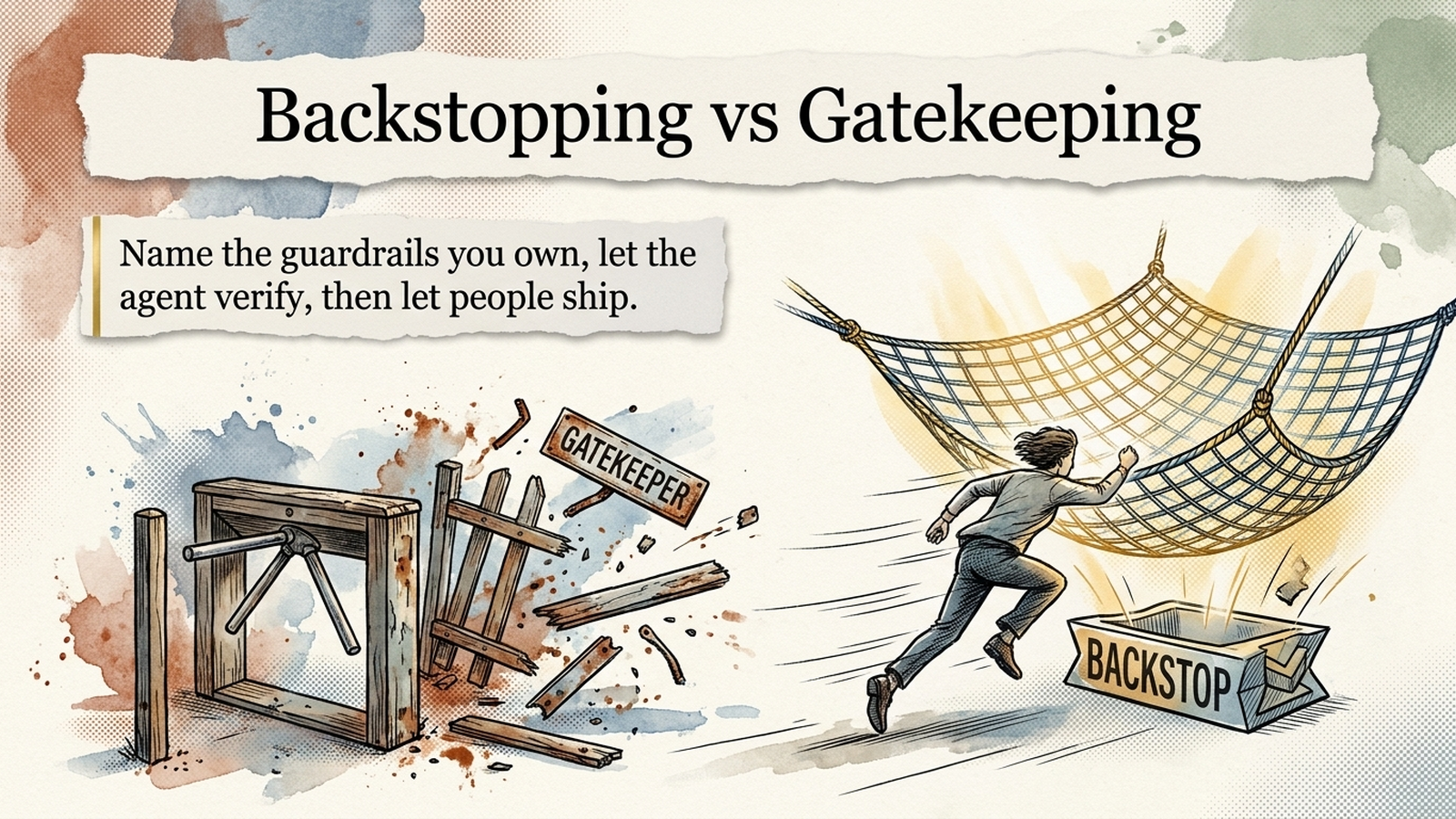
An under-prompted run plans differently every time. That is exactly what you want for discovery — a QA sweep, a research pass, a first look at an unfamiliar surface — and exactly what you do not want when you need a guarantee. Agentic QA is exploratory testing, not regression testing; it belongs alongside a deterministic suite, not instead of one. Vo concedes as much herself.
The second limit is context. Both cases here are operators pointing an agent at a domain they know cold, which means they can judge the plan the model came back with. In an unfamiliar domain you cannot tell a good plan from a confident one, and the sparse prompt stops being leverage and starts being abdication.
So the practical rule is a swap, not a subtraction. Take the effort you were spending on phrasing and spend it on two things instead: choosing which problem to point the agent at, and building the review surface that catches what comes back. Both of those are judgement work, and neither scales with credits.