TL;DR
The short version
Every's team tells a story about four agent-drafted emails that made $25,000 while the author was at the gym. The transferable part isn't the agent. It's the months of scaffolding that made a one-line prompt sufficient.
Three patterns survive the launch-marketing framing: the harness comes before the idea, the governance gate is a Slack channel rather than a person, and none of it works unless automating your own job is safe.
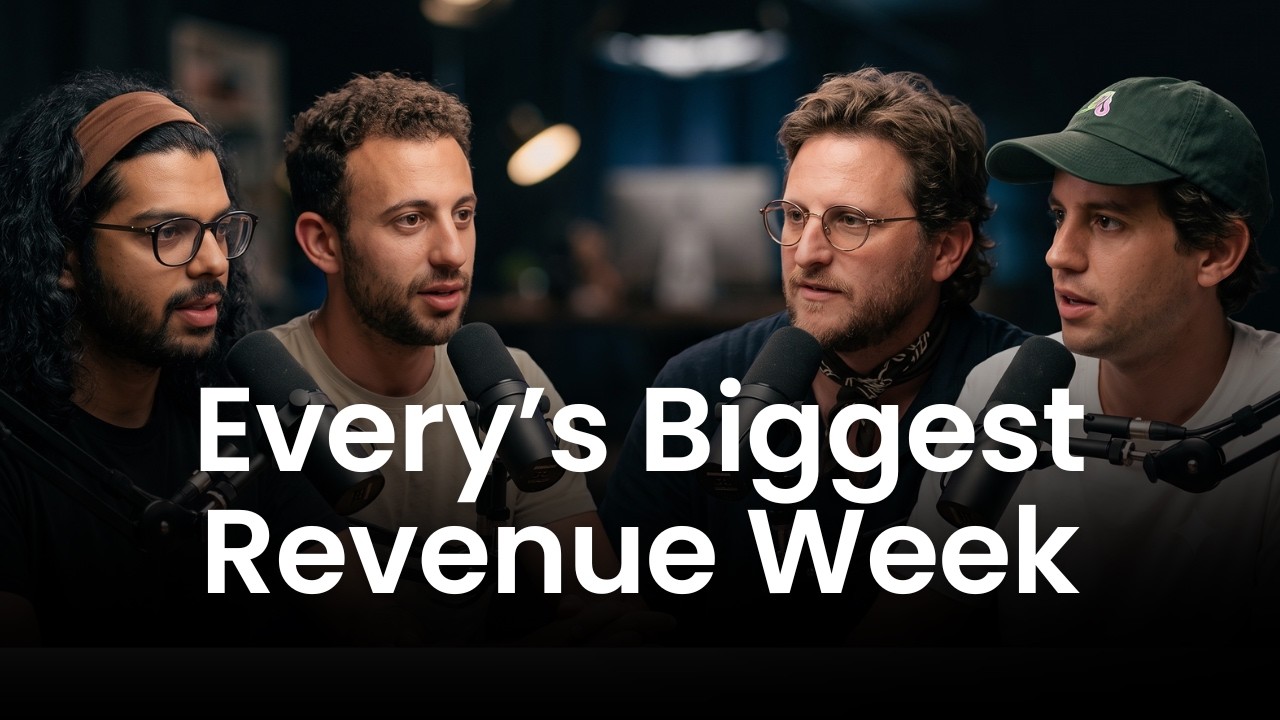
Built on the 22 July 2026 episode of Every's AI & I, featuring Brandon, Yash, Austin, and Douglas of Every, with an intro from Dan Shipper.
Seven in the evening, one line, then the gym
Here's the story Every's team tells about their All Access launch week.
The east-coast team has signed off. A Slack thread suggests emailing people who hit checkout during the early-bird window and didn't convert. The growth lead screenshots the thread, drops it into Codex, types roughly "can you do this?", runs the `/LFG` harness command, and goes to the gym.
He came back to four audience-segmented email drafts. Each written through their approved-style MCP. Each benchmarked against what had driven opens and clicks in previous sends. One reused a social image that had performed. All four scheduled for the morning, and posted to a review channel for the team.
He spent ten minutes tweaking headlines. Those emails made over $25,000 the next morning.
The interesting part is not the agent
It's the sentence he says twenty minutes later, almost in passing.
I know that either I or my team have set up the harness that the agents can work inside of to be trusted.
Every growth lead, AI & I
He'd been trying to automate those marketing sends for months. Each attempt got a little better. The harness — the instruction files, the style MCP, the access to past send performance, the review channel — is what makes "can you do this?" sufficient.
Strip that away and the same prompt to the same model produces generic email copy. The model wasn't the variable.
That reframes what adopting agents means. The gym story is the visible end of an invisible, unglamorous, months-long process of encoding how your team already works. Teams that skip that part and go straight to the prompt get a demo.
Governance is a channel, not a person
One detail worth stealing outright.
Every agent-built email send posts to a Slack channel called `#all-emails` before anything goes out: here's what's being sent, to whom, and why.
Nobody is defending their job
The cultural precondition is easy to miss and probably the hardest thing to copy.
Yash joined Every's growth team, spent his first month manually setting up A/B tests and audience segments, decided it was boring, and automated the pipeline he'd just been hired to run.
Everyone is very secure in what they do, so we are okay with automating our jobs. If it was some other organisation I'm going to try to stretch this out for like a year.
Yash, Every
That's the sentence a lot of AI-adoption programmes crash into. The technical work of automating a role is now easy. The organisational work of making someone want to automate their own role is not, and no tooling budget fixes it.
If your team believes automation precedes redundancy, they'll build slowly and you'll never know why.
SaaS didn't die. It became a backend.
The other reversal in the episode is quieter.
January to March, the team did what a lot of teams did: started building their own CRM, their own dashboards, their own design tooling. Then, in their words, it sucked. So they stopped.
Now they trust PostHog for analytics and Notion as the source of truth — and reach both through MCP rather than opening them. Their Notion pages, one admits, may look incomprehensible to a human. It doesn't matter, because no human opens them.
That's a genuinely strange product implication. If the primary consumer of your software is an agent, you compete on the quality of your service and the surface you expose to models — not on your interface. A decade of design assumptions gets re-priced.
The boundary
Read this one carefully. It is a launch artifact: four employees of a media company explaining how good the tools are in the $625 bundle they're selling, with a mid-roll ad for a tool that's in the stack.
The offer details check out — $625 a year, launched 14 July, more than $7,000 in partner credits. The results don't, and can't. "Largest revenue increase in our history" is unaudited. And $25,000 from retargeting people who abandoned checkout during a launch window is the easiest revenue in any funnel — the agent wrote it fast, but a human would also have made money on that send.
What survives the lean is the sequence, and it's the thing to take: build the harness on your slowest recurring process first, put the review gate in a channel, and make sure automating your own job is safe before you ask anyone to.