TL;DR
The short version
Browser-driving agents finally work well enough to use daily. The best use isn't shopping — it's QA, because an agent clicking through your product is exhaustive in exactly the ways a tired human tester is not.
Claire Vo pointed Codex at her own product's onboarding flow. It came back with eleven issues, including a blocking bug that had been live for months — a required field with no validation. Her explanation of why is the whole argument: she always clicked the required buttons, because humans do.
Built on the 22 July 2026 episode of How I AI, hosted by Claire Vo. The persona technique is credited in-episode to EJ Lawless.
Every human tests the happy path
Claire Vo pointed Codex at her own product's onboarding flow and asked it to test usability and mobile responsiveness. It came back with eleven issues. One was a blocking bug: a required field with no validation, so users could click Continue and go nowhere.
That bug had been live for months.
The reason why this bug exists is because I always tested this flow as a human and I always click the required buttons.
Claire Vo, How I AI
We fill in the fields because we know they're required. We don't get bored, exactly — we get efficient, which is worse. The agent has no such instincts. It tries the empty submission, the wrong viewport, the back button, the error state, at four in the afternoon, without complaint.
Three surfaces, three permission levels
Worth getting the mechanics right, because they're not interchangeable.
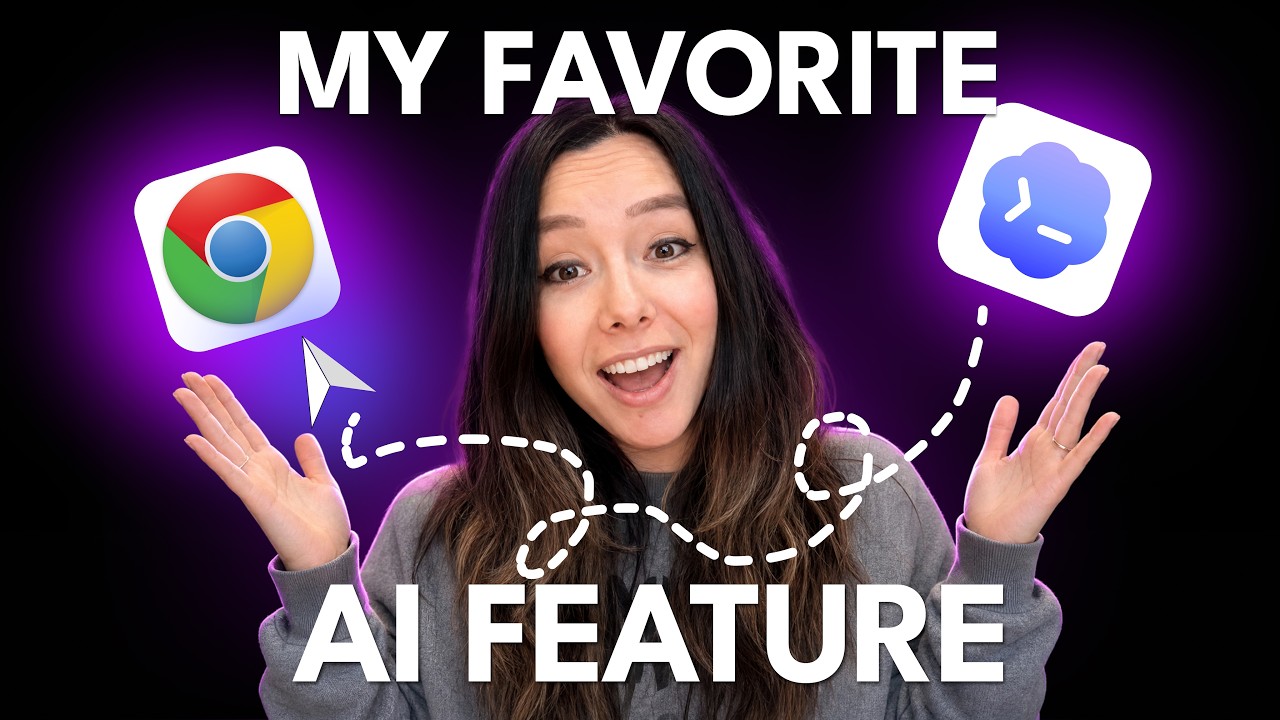
`@browser` drives the agent's own side window — good for local dev servers and public pages. `@chrome` drives your actual signed-in Chrome through the extension, with your cookies and open tabs. `@computer` drives the whole machine.
That's not a convenience ladder, it's a permission ladder. `@chrome` hands the agent everything you're currently authenticated into. Vo uses it to triage LinkedIn, which works precisely because there's no official API — and which is the same reason a security team would want a word first.
Under-prompt the model
The most transferable thing in the episode has nothing to do with browsers.
Vo's finding is that detailed instructions now make frontier-model output worse. Telling it "QA the onboarding flow" beats handing it a list of 25 things to check.
The reason is structural. A checklist replaces the model's planning step with yours, and yours is shorter. You wrote it from memory of what usually breaks; the model reads the actual interface. Over-specifying is how you get exactly what you asked for and nothing you didn't think of.
Personas are a cheap research proxy
The second use case is more interesting than the QA one, and less proven.
Vo runs the same product three times as three different people: a PM turning meeting notes into a PRD, an engineer turning that PRD into a technical spec, a team lead trying to see how their team uses the tool. Then she asks for a research-style critique — friction, delight, improvements.
The engineer run found something real. You can create a document, but you can't reference it from another thread. A structural gap her team knew about abstractly and that the agent hit immediately, because it had no learned workaround.
That's the actual mechanism. Not that the agent simulates a user well — Vo is openly sceptical of synthetic users — but that it has no accumulated tolerance for your product's rough edges. Everyone on your team stopped noticing that gap years ago.
Findings go in a sheet, not a chat log
Small operational detail worth stealing: Vo has the agent write its findings into a Google Sheet — issue, viewport, repro steps, screenshots, suggested fix.
That sheet isn't a report. It's a work queue. Fix agents read it directly, because it already contains everything needed to reproduce the issue.
The pattern generalises. Agent output that lands in a chat window is something you have to re-handle. Agent output that lands in a structured artifact is something the next agent can pick up.
Where it breaks
The shopping demo hit a bot-detection wall. Vo's response is the honest frame for all of this: sometimes we put AI to use for us, and sometimes we need AI to put us to use.
And read the lean. This is a founder demoing a tool she likes, on a show built around enthusiastic tool demos, with two sponsor reads. Every result is a single live run on her own product and her own accounts — the bug count is an anecdote, not a measurement.
She is also unusually honest about the failures, which makes the rest easier to trust. Browser use is slow. It picked a mini-skirt for a postpartum mother. It got flagged as a bot, correctly.
The one thing the episode doesn't address, and defers to the comments, is security — an agent holding every session you're signed into is an exfiltration path, and page content it reads is untrusted input. Worth deciding your own boundary before you type `@chrome`.