TL;DR
The short version
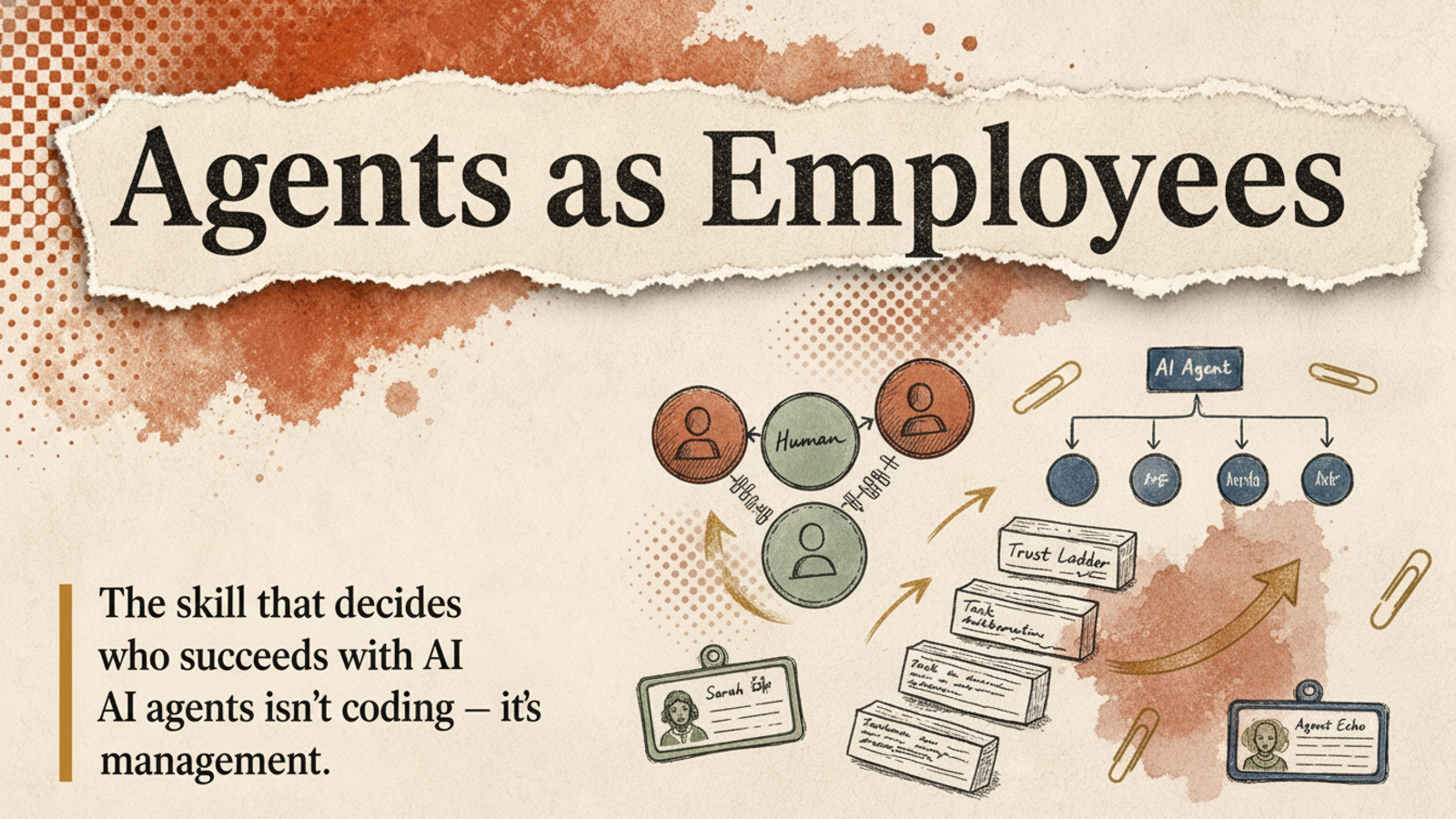
When anyone on the team can point a coding agent at the codebase and ship a working feature, engineering time stops being the scarce resource. Trust and guardrails become it. So the leader's job inverts: from gatekeeping — ration the roadmap, approve each unit of work — to backstopping: name the constraints you're accountable for, have the agent verify a change against them, and let people run at what they're already excited to build.
In Every's own case study, an editor wanted paywall-free "gift links." Historically that's a pitch, a roadmap fight, and a wait on the one engineer. Instead he used deep research to build the case and Codex to build the feature. The growth lead — accountable for revenue — never had to win the priority argument. He backstopped it against his two real worries (does it break the site? does it give away too much?), asked Codex, got a clean answer, and let it ship.
From Dan Shipper, Austin Tedesco, and Jack Cheng on Every's AI & I (2026-07-17). It's a genuine internal case study — and also a company whose brand is "AI-native knowledge work" arguing for that thesis. Treat the result as n=1 and not yet measured.
The bottleneck moved — again
Once a feature is cheap to build, the operative question is no longer is this a roadmap priority? but do we have the systems for someone to ship it safely? The scarce resource isn't the engineer's hours anymore. It's the trust — and the guardrails — that let a non-engineer's change go live without breaking things.
Backstop, don't gatekeep
Every's head of growth — self-described control freak, accountable for MRR — never granted a roadmap slot. He named the two constraints he owns (don't break the site, don't give away too much), had Codex check the plan against them, and let it run. That's the whole move: the leader stops pre-approving each unit of work and starts defining the boundary the work has to stay inside.
I'm backstopping it against the things that I really care about. And Codex said, no.
Austin Tedesco, Every
The corollary is a bias to let people move: "It's much better to let people run at the thing they're excited about... as long as the systems are in place to do this work really well."
The pitch got automated too
The editor had ChatGPT deep research produce one document that did three jobs at once — the market case for gift links, a codebase-specific implementation plan, and a measurement plan. Buy-in artifact and spec became the same object, collapsing what used to be separate cross-functional steps. When the spec argues for itself, the meeting to approve it starts to look optional.
Cheap-to-build rewrites the experiment math
A P3/P4 feature that would never earn an engineer's time is now worth trying, because the cost of finding out is near zero. Let the data, not the meeting, decide. The growth lead stayed openly skeptical the feature would make money — and counted that as the point.
Frankly, I still remain extremely skeptical this will make us any more money... But I'm so happy we never had to have that argument... ultimately, what this allows for is to just let the data show us.
Austin Tedesco, Every
One caveat worth keeping in view, voiced inside the room: backstopping answers how do we ship safely, not who owns the twenty things non-engineers just shipped. The maintenance and ownership question is real, and this case study doesn't measure it.
Verifiability is replacing authorship
The same inversion shows up at the desk, not just across the org. Anthropic's product lead Dianne Penn wants Claude to write her monthly business review end-to-end and act as its reviewer — with her as the final sign-off. Her point: who's verifying now matters more than who's writing.
Backstopping generalizes past agent-shipped features to knowledge work itself. When authoring is cheap, the durable thing a person owns is the verification and the accountability — naming the constraints, checking the result against them, and signing off — whether the output is a merged PR or a business review.