TL;DR
The short version
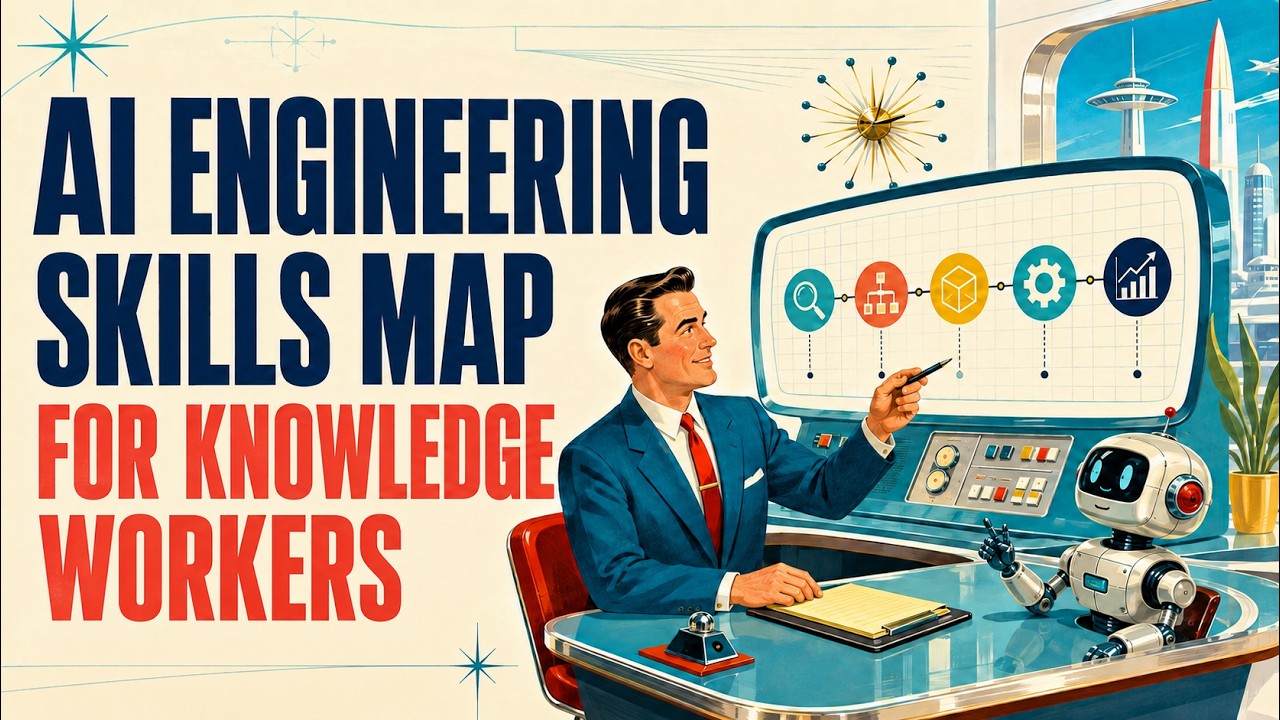
Andrew Ng published an AI Engineering Skills Map for software engineers, backed by 10,000+ job postings. On The AI Daily Brief, Nathaniel Whittemore extends it past engineering — to marketers, analysts, operators, anyone who does knowledge work.
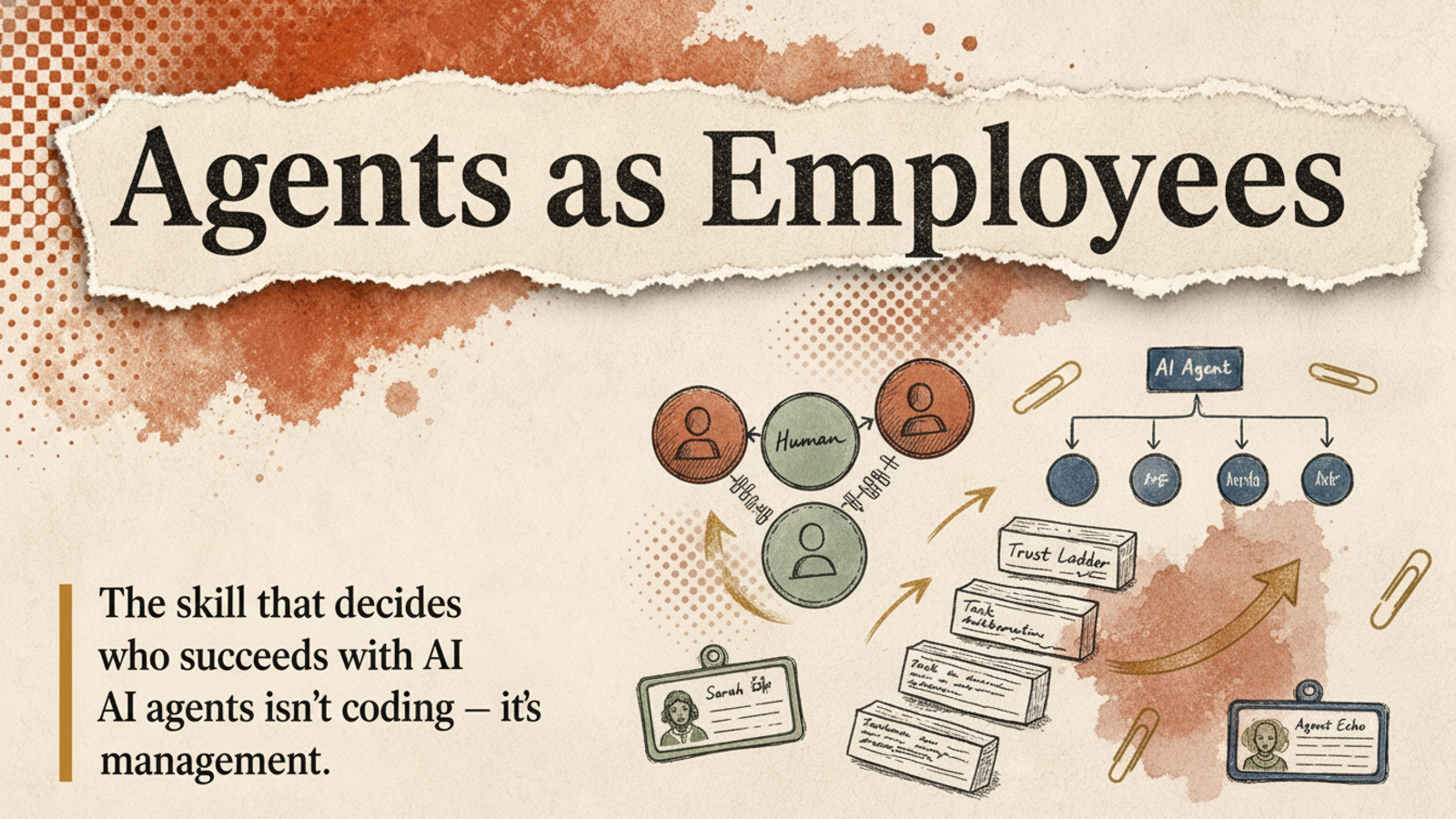
The premise: the core motion of your job is shifting from performing tasks to directing agents that perform them. Five learnable skills reward that shift, and all five rest on a foundation of domain judgment that AI doesn't replace.
Built on Nathaniel Whittemore's The AI Daily Brief, extending Andrew Ng's AI Engineering Skills Map.
The foundation: domain judgment
Before the five skills, the thing underneath them. Ng's map rests on "software engineering fundamentals." The knowledge-worker analogue is domain judgment — the ability to define quality, recognize trade-offs, understand consequences, and take responsibility for a decision.
This is why AI doesn't flatten expertise. ChatGPT can write every line of copy, but you wouldn't hand a marketing campaign to someone with no marketing experience, because they can't tell good from passable. And it's specific: not marketing in general, but marketing in the context of your organization — the things that never made it into the training data.
Judgment has three sources, which means you don't need 20 years to have any of it: personal (what you've internalized), borrowed (working with more experienced people), and embedded (expertise captured in rubrics, policies, and evals — the context you feed the AI).
The five skills that sit on top:
- AI capability mapping — knowing the jagged frontier.
- Context and harness management — setting the AI up to succeed.
- Problem and product prototyping — building things to do parts of the job.
- New-opportunity identification — finding what's newly possible.
- Rapid new skill acquisition — the meta-skill that compounds the rest.
Map the frontier, then set up the harness
Skill 1, capability mapping, is knowing what AI is natively good and bad at — its "jagged frontier," Ethan Mollick's term for a tool that dazzles you one minute and fails a task the least capable intern would handle the next. In practice it's matching tasks to approaches (assisted, workflow automation, or fully agentic), picking the model and effort level that fit, and judging how much oversight a task needs. Nobody can hand you this map; you learn it by doing.
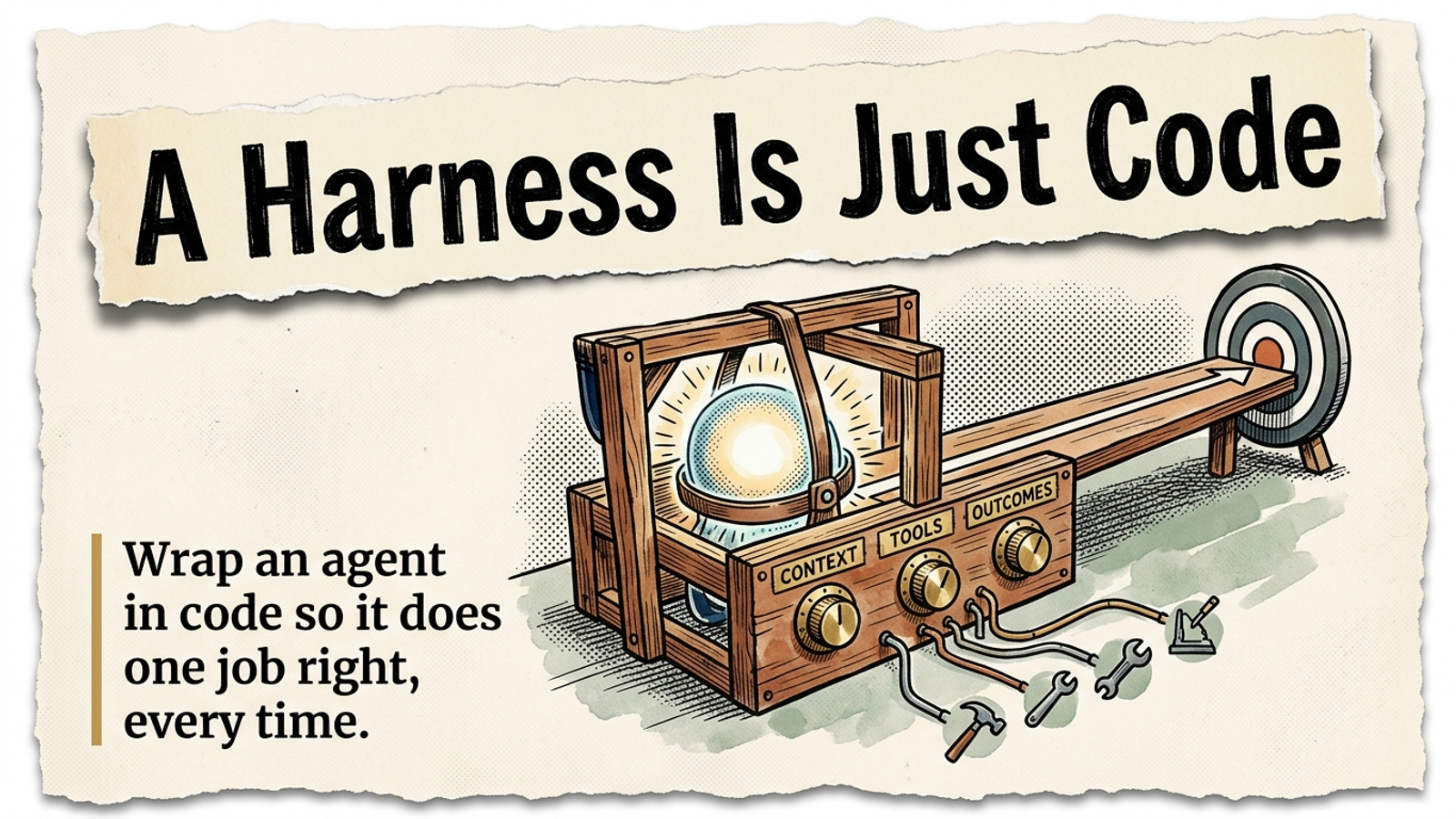
Skill 2, context and harness management, is how you set the AI up to succeed. Context engineering is giving the model the information it needs — past performance, feedback, real data — instead of a bare prompt and a hope. Harness management is everything else around the model: instructions, tool access, permissions, memory. Both are moving targets: the best practices today will look different in six months.
Build things, then find what's newly possible
Skill 3, problem and product prototyping, is the big one. When knowledge workers can push code, a lot of previous work gets done differently — not by becoming software engineers, but by building things that do parts of the job. Take the marketer's monthly report: instead of exporting data from each platform and wrangling it in a spreadsheet, you build the analytics engine under the dashboard, connect to the APIs, and let the AI surface the first layer of insight.
Being able to build things to solve problems and do parts of our jobs is perhaps the most significant shift in how knowledge work will happen that we've ever experienced.
Nathaniel Whittemore
Skill 4, new-opportunity identification, is Skill 3's advanced pair. Skill 3 uses code to do your existing job better; Skill 4 asks what your job could now include that was previously impossible or uneconomic. Whittemore's framing is the "infinite backlog" — everything you'd do with unlimited time and resources — and agents pull a big slice of it into range. A useful prompt: imagine you were handed a team of engineers and told to build whatever you wanted. First you'd automate the manual work; before long you'd start inventing things.
The meta-skill, and the open problem
Skill 5, rapid new skill acquisition, cuts across the rest. The opportunity set changes weekly, so this is the ability to recognize what just became valuable, make space to learn it by doing, and judge whether it's worth keeping — a continuous habit, not a quarterly seminar.
There's an unsolved question under all of it. If experienced people use AI to do what junior people used to do, how does the next generation build the domain judgment that everything else depends on? Whittemore's tentative answer is a shift from AI as single-player to AI as multiplayer — moving the core unit from the individual to the small team. It's worth sitting with, because the map only works if the foundation keeps getting rebuilt.