TL;DR
The short version
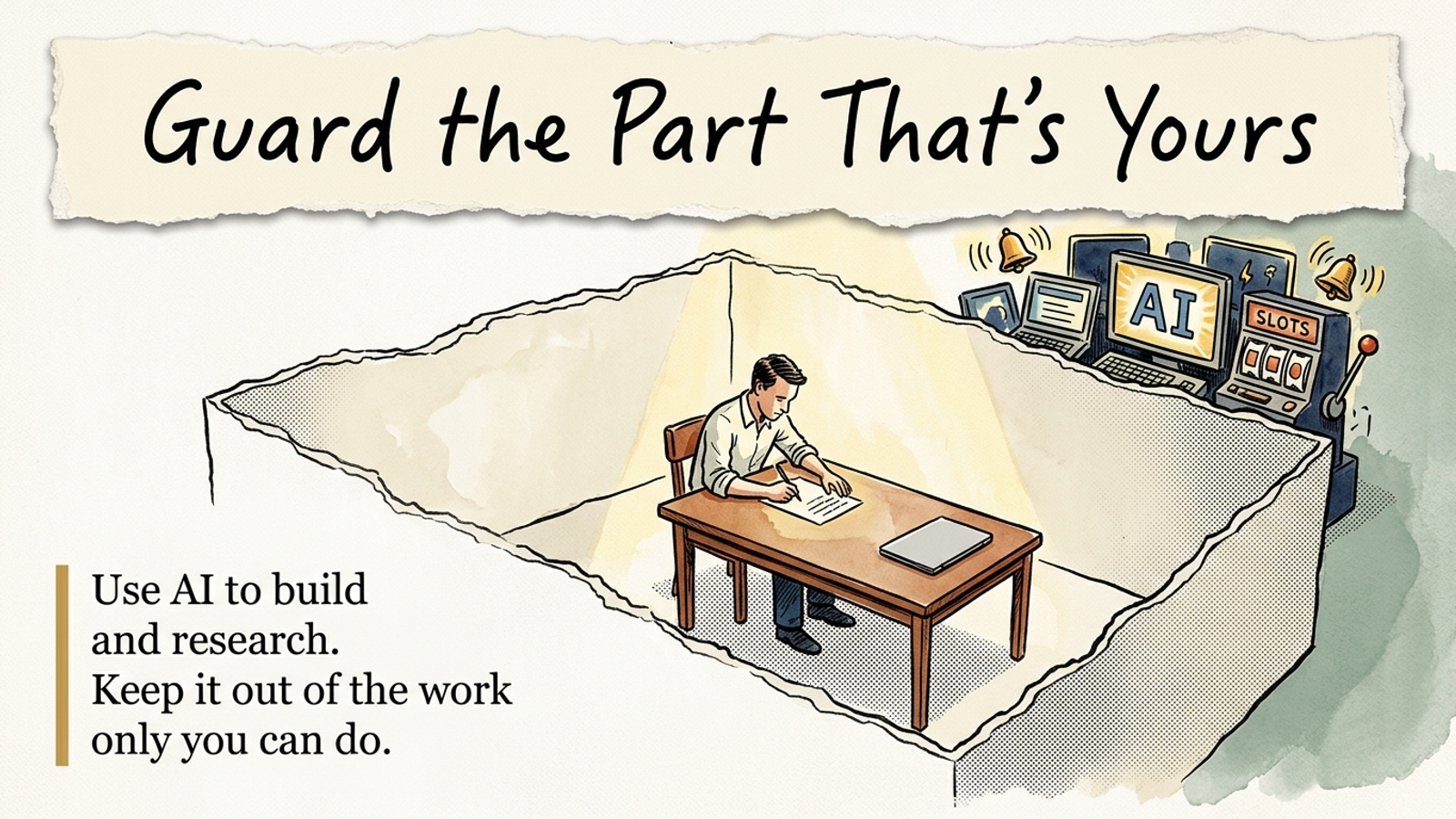
Alex Lieberman's read on AI slop: the machine isn't the problem, the person feeding it is. His "content machine" never generates new claims — it interviews him, then shapes the ideas he supplies into a voice he's codified in files.
The bigger lever isn't the writing at all. It's turning employees into distribution — the one defensible edge left when technology commoditizes fast. Most of the win, though, comes before any model: from writing your workflow down.
Built on Alex Lieberman's demo on How I AI with host Claire Vo. Self-reported figures are flagged as his.
Map the work before you automate it
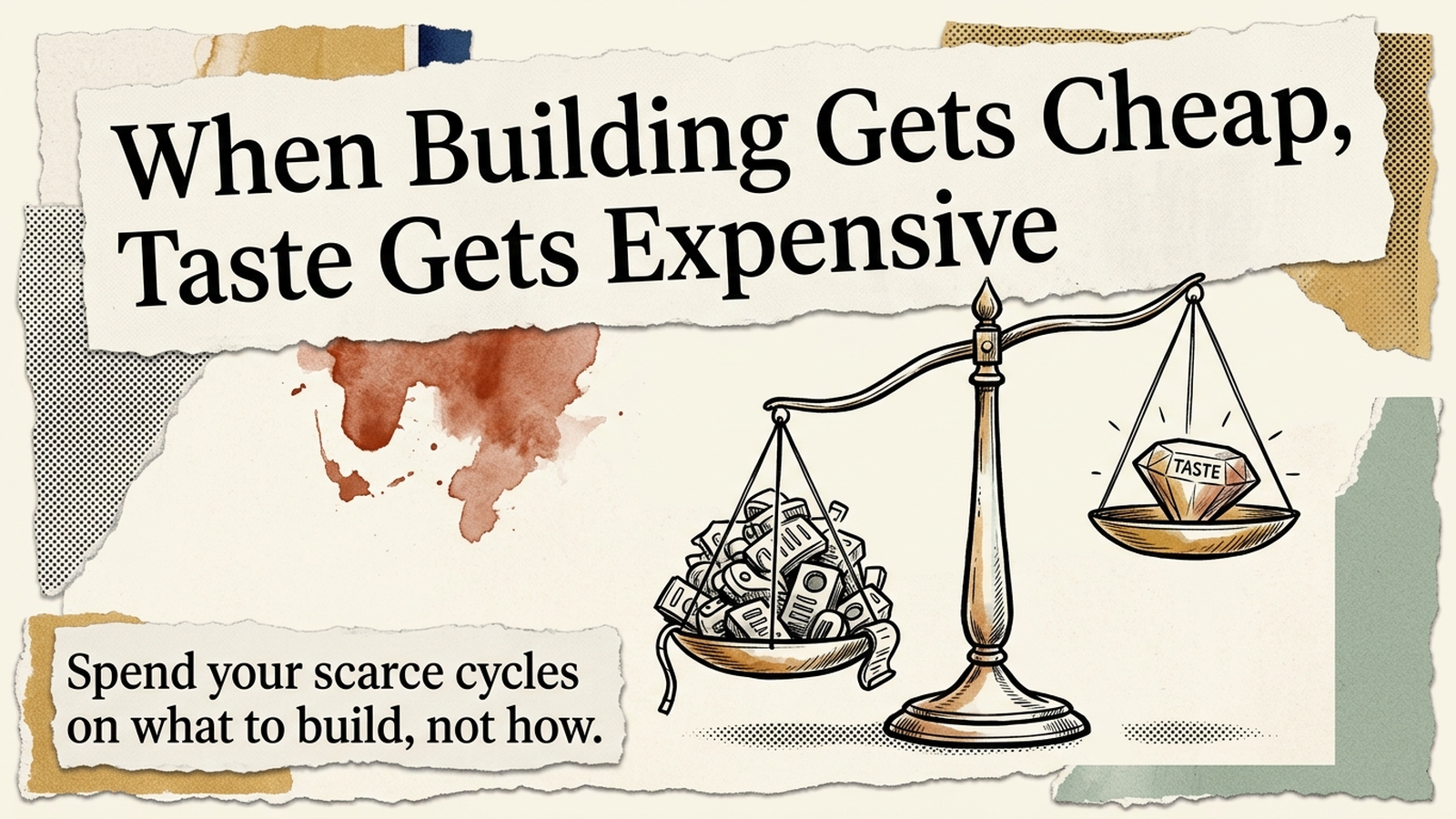
Lieberman didn't start with a model. He drew his existing content process on paper — find idea, research, dump thoughts, pick format, draft, edit, publish, repurpose — and only then asked where AI should drive and where it should co-pilot. Most of the efficiency showed up before AI entered at all, just from seeing the steps laid out.
Claire Vo added the sharpening move: don't map what you do under today's constraints, map what you'd do with none — a researcher always mining ideas, every asset cut into micro-content — then remove the constraints one by one.
That's the transferable part, and it's the step most teams skip. You can't reimagine a job you've never made legible — which is also why subject-matter depth still matters. Lieberman could rebuild the process because he'd run it thousands of times.
Interview, don't prompt
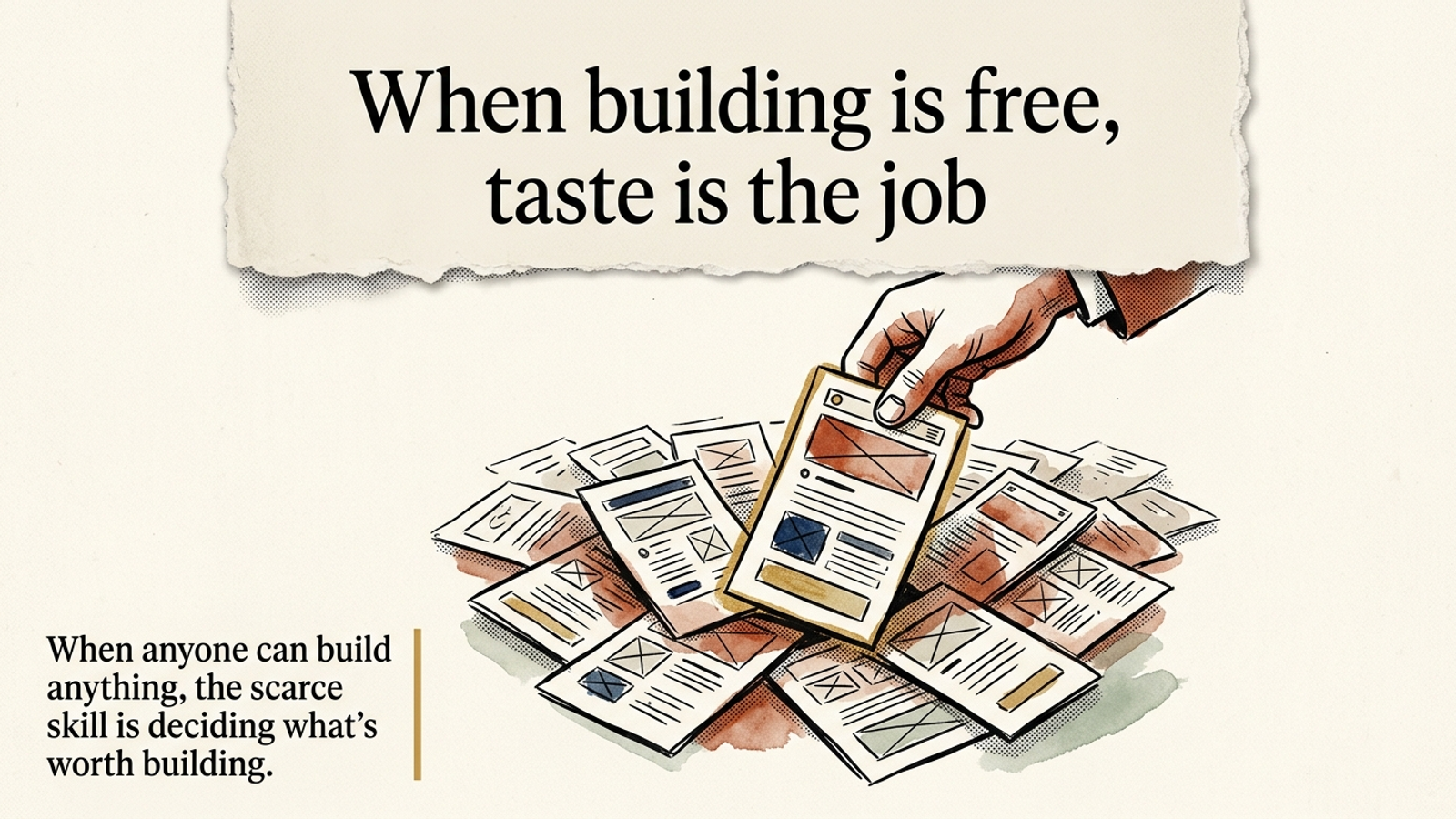
The core mechanic is a "content machine" — a directory of Claude skills wired to his systems of record (Slack, Notion, Linear, Git, Gmail). An "Oracle" scans the last seven days and ranks about fifteen "content spikes," scoring for stories, strong points of view, and specific examples. That alone, he says, is the most useful piece: it takes you from blank page to concrete idea.
Then comes the part that stops the slop. Instead of prompting for a draft, six interviewer personas interrogate him for specifics, and he answers out loud. The transcript of that interview becomes the near-total source of words for the piece.
The job of the writer is really to almost be shaping the clay of the content, not inventing net new things.
Alex Lieberman, on How I AI
Voice isn't a vibe here — it's a file: a style guide, a voice guide built from his top-performing posts, and a running `content-lessons.md` that logs every past mistake so the editor never repeats it. The model isn't asked to be clever. It's asked to compress ideas a human already had into a voice a human already defined. Bad output means weak input.
Worth reading past the convenience of that framing: it defends only the shaping step. The critique Lieberman cites from Lulu Meservey — AI raises the floor for weak writers but caps the ceiling for great ones — still bites at the drafting itself. The interview-first design dodges it; it doesn't refute it.
The real lever is distribution, not writing
Halfway through, the topic shifts from craft to moats. Lieberman's bet: in a world where technology commoditizes fast, trusted distribution is one of the few defensible edges left — and the cheapest way to build it is turning employees into creators.
He's run the experiment. At Storyarb, an "Own the Internet" campaign that encouraged staff to post drove 40% of inbound leads that quarter — his own number, not independently verified, but the mechanism is the point. At 10X he now runs a gamified "Creator Cup": points for posting and for engaging with colleagues' posts, team-wide unlock games so no single impressions-winner dominates. His cost math: even if it generates zero leads, hiring one engineer off it beats a recruiting-agency fee.
The objection he names directly is the CEO fear that a visible employee gets poached. His answer inverts it — the thing that jumps someone out of your company is not being able to talk about their work and build a name. He points at Anthropic's Claude Code team as people who read as extensions of the brand and make him trust the product more than corporate messaging would.
What to copy
Three moves survive the demo. Write your workflow down before you reach for a model; most of the win is in the map. Make AI interview you and shape your own words rather than generate from a prompt — and encode the mistakes as lessons it re-reads. And treat distribution as an org-design problem, not a content problem: the channel you're underusing is the people already on payroll.
One verified fact anchors the episode's backdrop. The "hottest job in AI" Lieberman drafts a post about — forward-deployed engineers — is real and moving: Amazon stood up a $1 billion AWS FDE org on 30 June 2026, following OpenAI and Anthropic (TechCrunch). The rest of his numbers are self-reported. The framework is the takeaway, not the stats.