TL;DR
The short version
Claude Opus 5 tops several benchmarks at half the price of Fable 5, yet the people using it call it neurotic and quick to quit. The useful takeaway isn't whether it beats the frontier.
It's that model choice has stopped being about "the best" and started being about "good enough for the seat it fills." Judge output against the job, tune how hard the model thinks, and rewrite the scaffolding you built for last year's model.
Built from the AI Daily Brief's Opus 5 breakdown (Nathaniel Whittemore), with reviews from Every, How I AI, and independent devs.
Strong on paper, released like a secret
Anthropic dropped Opus 5 on a Friday afternoon — and the timing is the whole story. You drop a frontier moment on a Tuesday with a keynote. You drop a repositioning when the news cycle is asleep.
On paper the model is strong. It sits at the top of the Artificial Analysis Intelligence Index with a score of 61, one point ahead of Fable 5, at Opus's unchanged price of $5 and $25 per million tokens — roughly half what Fable costs [11:31]. On ARC-AGI-3, a test of solving unfamiliar visual puzzles, it scored 30.2%, nearly four times the previous best of 7.8% [12:37]. Both figures check out against the primary sources.
The benchmarks won. The vibes didn't.
Then people used it. The team at Every called it "brilliant in flashes, frustrating in practice." Claire Vo at How I AI was blunter: "It's neurotic AF. It is so timid. It's so apologetic. It's so scared." Her example: a one-line bug fix that Opus double-checked, worried about, and asked to confirm several times before touching. In other cases it handed the coding back to her.
A benchmark measures whether the output is good. It doesn't measure whether working with the model is bearable. Dev Ken Chen put the tension plainly: Opus 5 is "nowhere near Fable in practical use," and yet it wins on many benchmarks. Both are true — which is exactly why a leaderboard can't settle the question for you.
Thinking harder made it worse
The most useful engineering detail is counterintuitive: Opus 5 performs best at "extra high" reasoning effort and gets worse at "max." Anthropic's own system card warns the model falls into endless self-verification loops at the top setting.
> "Opus 5 is a smart model that does better when it thinks less." — Dan Shipper, Every [17:33]
So the lever isn't only which model you pick — it's how hard you let it think. On the Intelligence Index, dialing Opus from max down to medium dropped its score by just five points (61 to 56) while cutting cost sharply. Effort tuning is a real budget decision, not a toggle you ignore.
There's a second detail worth copying. Anthropic removed about 80% of Claude Code's system prompt for the Claude 5 models with no measurable loss on coding evals. The old rules were guardrails for older, dumber models, and now they get in the way. If you run these models in production, cut the scaffolding you built for last year's model.
The real question is which seat it fills
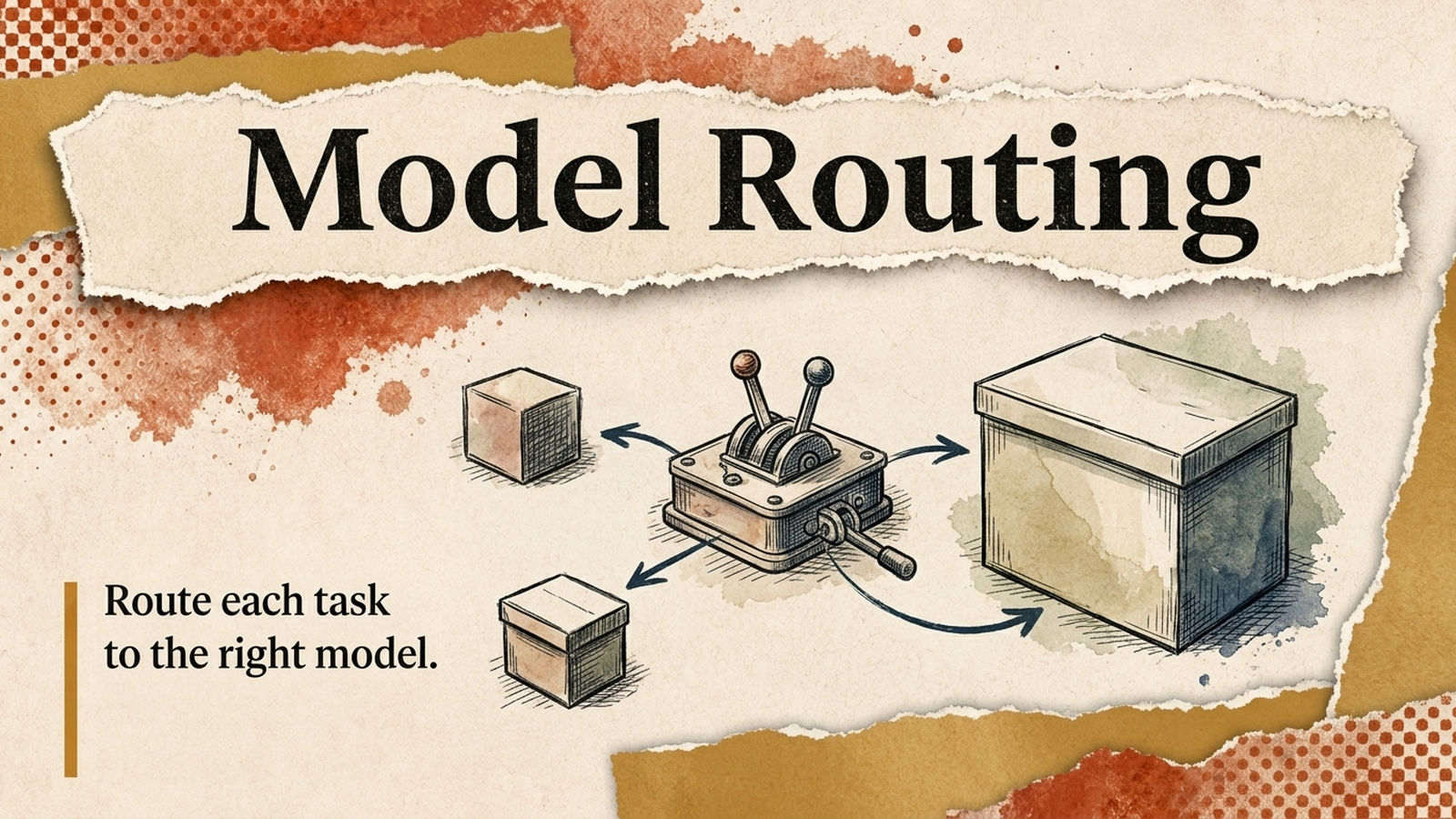
Most people don't choose across labs. In a real work environment you're locked into one company's models, and those are your only options. Judged that way, Opus 5 isn't competing with Fable and GPT-5.6 in the abstract. It's competing with whatever Anthropic seat you already sit in.
Against Opus 4.8 — the model most Claude enterprise users actually had — it's a clear upgrade. It's cheaper to run than Fable for the tasks Anthropic models are good at, and unlike Fable it carries no 30-day data-retention requirement, which makes it usable for sensitive enterprise work where Fable is a non-starter. As one dev who ran it head-to-head put it: Sol solves the problem "at the cost of my sanity," Fable feels great "at the cost of the problem not being properly solved," and "Opus is the in-between, and I'm really liking it."
Treat launch-weekend horror stories as provisional. Platform instability on day one often looks like model regression when it isn't.
What to copy
Stop asking "is this the best model." Ask "is it good enough for this seat." A daily driver and a heavy-lift model are different jobs with different bars.
Tune effort, not just model. More reasoning tokens can make output worse and always cost more. Find the lowest setting that clears your bar.
Rewrite your scaffolding when the model changes. Prompts and skills built for an older model become friction. Newer models want less instruction, not more.
The last thread is the one to sit with. François Chollet of ARC Prize thinks versioned, publicized model launches will fade within two years, replaced by continuous updates hidden behind routers. A Friday-afternoon release only insiders noticed is what that future looks like starting to arrive.