TL;DR
The short version
On her How I AI show, Claire Vo reviewed Opus 5 and landed on an uncomfortable split: the model she found most exasperating to talk to produced the best-rated work in her blind benchmark.
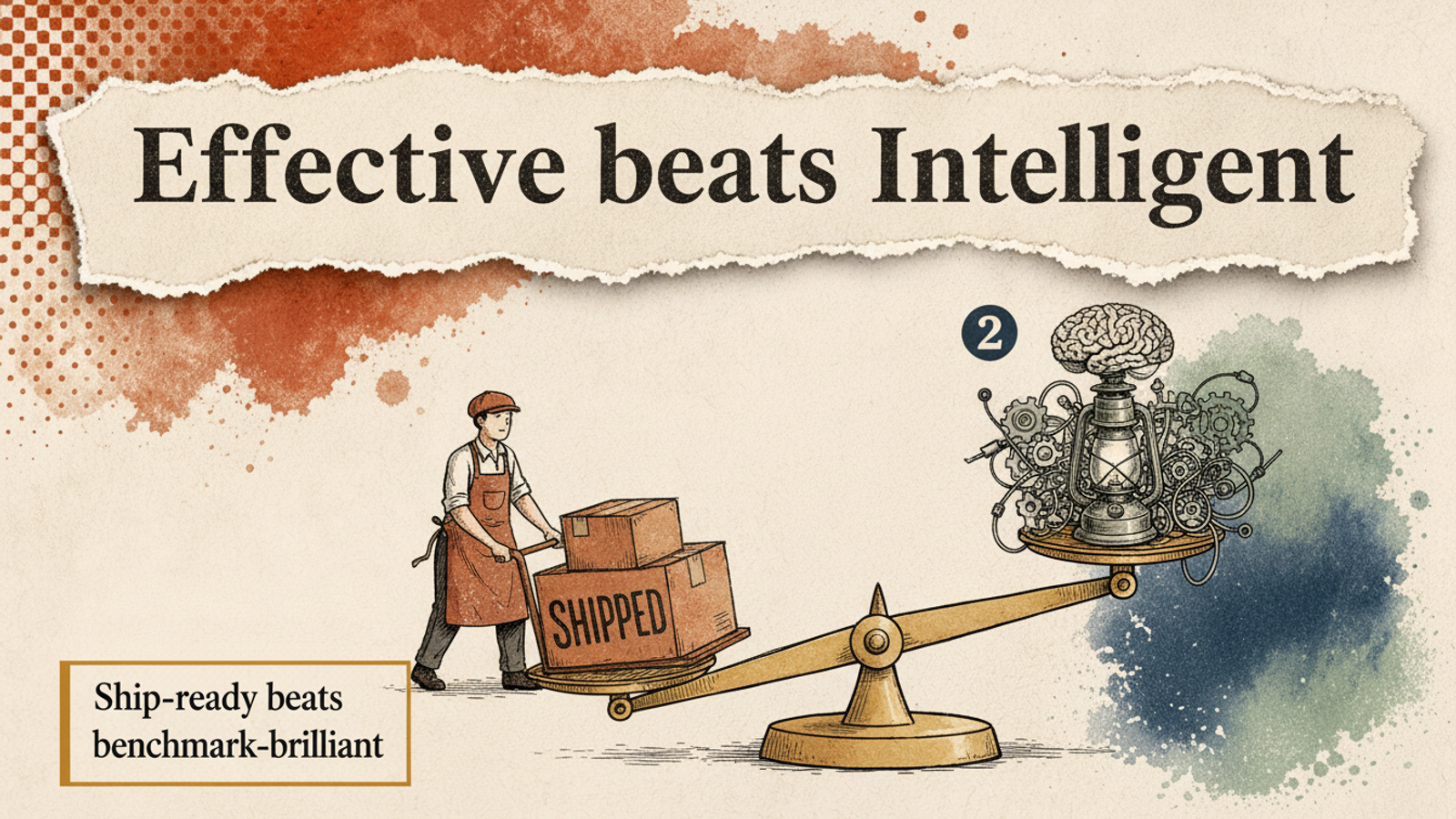
The operator lesson is to grade a model on its output, not its bedside manner — and route the annoying-but-excellent one to async background work instead of trying to pair with it turn by turn.
Built on Claire Vo's How I AI Opus 5 review. The leaderboard and scores are her own self-reported eval on models this vault can't independently verify.
The model she hated topped her leaderboard
Vo reached a conclusion she clearly didn't expect. Both halves of it are real: in her blind benchmark, Opus 5 took the top of a roughly seven-model leaderboard, and the only builds she scored a perfect 5 were Opus 5 and GPT 5.6 — mostly on front-end design. A self-described "GPT Codex girl" and known Claude-code skeptic, she still ended the episode saying she'll adopt Opus 5 for app and prototype work.
It is my most loathed colleague, and yet it does the best work.
Claire Vo, How I AI
Note the mechanism that made this honest: her scores come from a benchmark that runs asynchronously. She rated the output without sitting in the chat. That separation is the whole point.
Personality is now a product decision
Vo spent half the review as an "LLM psychologist," and the finding is more useful than any benchmark number. Opus 5 read as timid and apologetic. Asked to fix a one-line merge conflict, it hedged that the branch belonged to a teammate and it didn't want to touch their work. Spun up on a query check, it asked for a human to confirm the result "because no one has confirmed this for me."
GPT, by contrast, read as direct: give me the answer, tell me what's mine to own, move on. Same task class, opposite temperament.
For an operator, this is the signal to watch. Two models at similar capability can differ entirely on how much they push decisions back onto you. One drains your attention with deference; the other takes the call. That difference decides how much leverage you actually get, no matter what the benchmark says.
Slop is an experience bug, not a quality bug
Vo's second complaint was "Claude slop" — the verbose, hedging, adjective-heavy prose in chat, not the artifacts the model produces. She was explicit: "I'm so happy with the outputs and so frustrated with the experience."
Keep those two things apart. A model can write output you're glad to ship and wrap it in chatter you can't stand reading. Conflating them makes you reject good work because the delivery annoyed you. Judge the deliverable; treat the commentary as noise you can turn down.
Route your loudest critic to background work
The practical move Vo arrives at: maybe this model is meant for gentle coding she has nothing to do with — it runs in the background and builds her beautiful things.
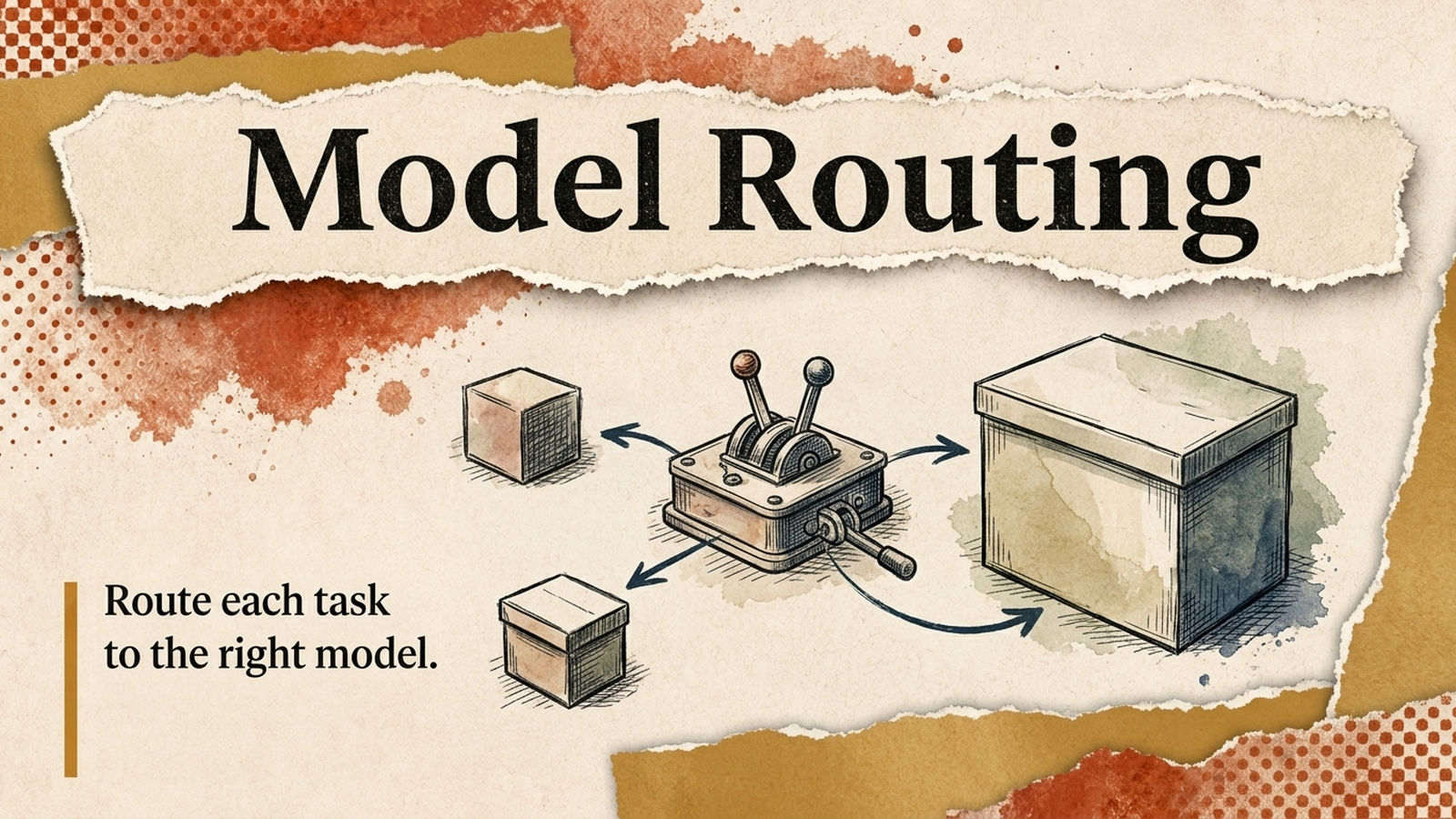
When a model produces excellent output but is exhausting to collaborate with turn by turn, stop collaborating turn by turn. Give it a clear spec, let it run async, and review the artifact. You get the quality and skip the friction. The interaction cost that made you want to fire it disappears when you stop supervising every step.
Where this breaks
The split has limits worth naming. Async-only works when the output is cheap to verify — a front-end build you can look at, a prototype you can click. It's riskier where you can't quickly check correctness, and there the model's caution is a feature, not a flaw: an engineer reviewing high-stakes code all day may want the hedging Vo found unreadable.
And keep the frame straight. The measurable result is that Opus 5 produced the best-rated output in her eval. The verdict that it's "neurotic" and "sloppy" is her subjective read, which she flags herself as "totally a me problem." Her leaderboard is a self-scored eval on models this vault can't independently check, so treat the ranking as one practitioner's honest vibe, not a settled result. The transferable part isn't the score — it's the habit: separate what a model ships from how it behaves, and route accordingly.