TL;DR
The short version
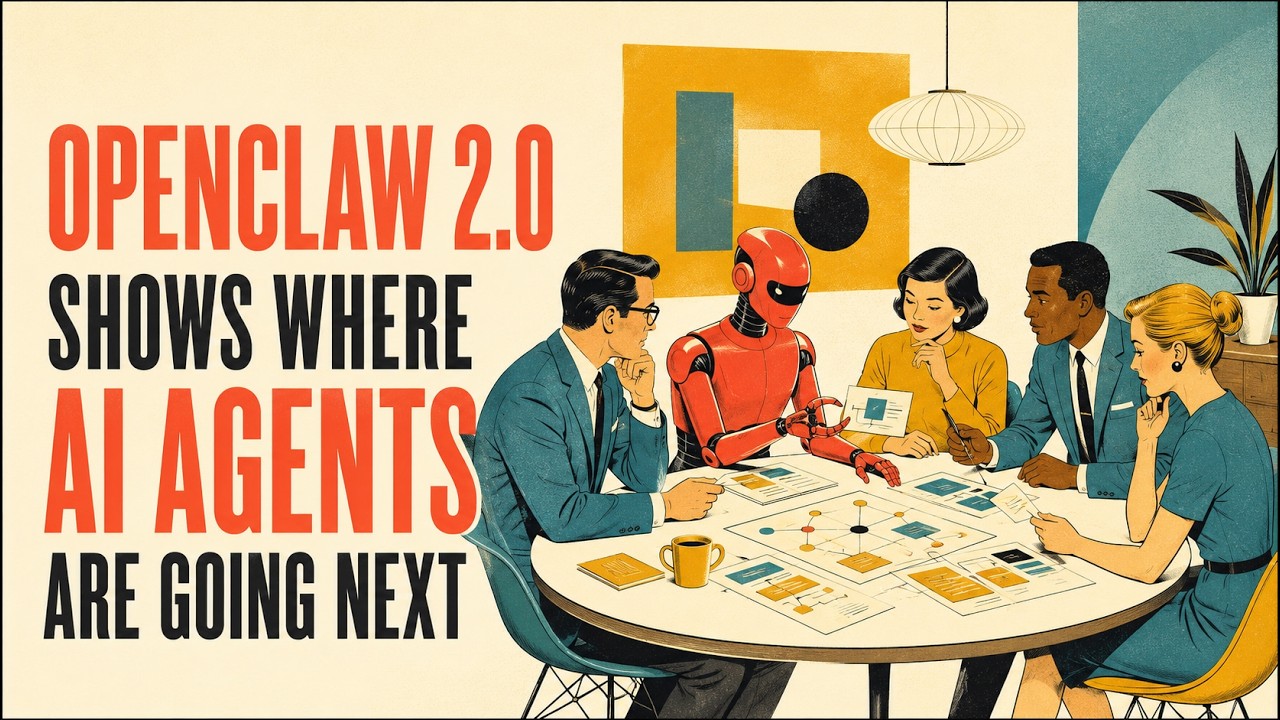
OpenClaw 2.0 is a ground-up rework of the open-source agent harness, and most coverage went to its simpler install. On The AI Daily Brief, Nathaniel Whittemore argues the change that matters is multiplayer — shared agent sessions a second person can open, steer, or take over mid-task.
That points at the assumption baked into almost every agent tool today: one human, one agent, one private conversation. A huge share of real work is collaborative, and agents have ignored it. The next unit of agent work isn't the prompt — it's the shared session.
Built on Nathaniel Whittemore's analysis on The AI Daily Brief, with the multiplayer thesis and quotes traced to the episode.
The upgrade everyone noticed is the wrong one
OpenClaw 2.0 is a ground-up rework of the open-source agent harness — 933 contributors and more than 16,000 pull requests (OpenClaw blog). Most coverage went to the simpler setup: it now latches onto an existing ChatGPT or Claude subscription and defers the fiddly configuration into a chat with the agent.
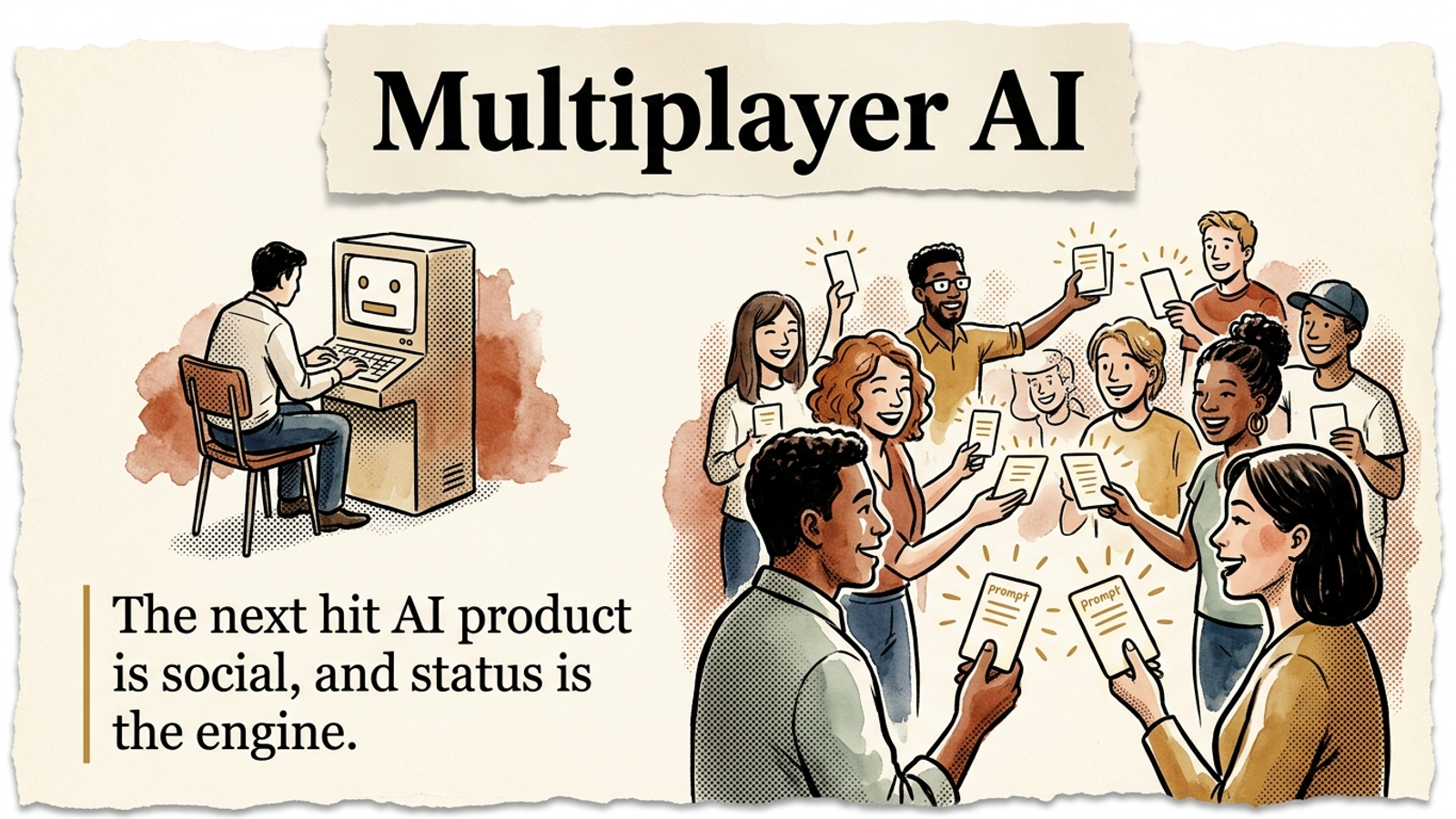
That is a real fix. It is not the interesting one. Whittemore argues the load-bearing change is the move to multiplayer — a shared workspace where more than one person can be inside the same agent session. Keep the finding and the bet separate: the finding is that OpenClaw shipped shared sessions; the bet is that the pattern spreads to every serious agent tool next.
Solo is the assumption baked into every agent tool
Here is the assumption worth noticing, because it is invisible until someone breaks it. Almost every agent workflow today is built for one developer, one terminal, one private conversation. The final output gets shared; the process of getting there stays locked inside an individual session.
That mirrors how a team actually splits its work — some alone, a large share with other people: pairing, handoffs, second opinions, covering for someone out sick. Agents were designed for the first kind and ignored the second.
So far, agents have only really been designed and enabled for work you do alone. And yet, a huge portion of our work is work we do together.
Nathaniel Whittemore, The AI Daily Brief
The cost shows up at every handoff. When one person's agent has learned the shape of a problem — which approaches failed, which decisions were made and why — that context lives in a private transcript. Passing it on means reconstructing it in a document or a long message.
What changes when two people share one session
OpenClaw maintainer Colin described the moment it clicked: setting up a fresh development server, he needed to hand the project to someone else. Normally that means assembling everything he knew into a document. Instead, the other developer started a thread with their shared agent, Colin opened the same thread and added the missing context directly, and both of them plus the agent worked from one continuous record.
The session itself became the handoff document.
Colin, OpenClaw maintainer
That reframes what a session is. It stops being a private conversation between one developer and a model and becomes a shared piece of work that another trusted developer can inspect, steer, or take over. No transcript dump, no rebuilding context from scratch — you open the work and continue.
What a leader should do now
Treat open harnesses as cheap R&D, not your production stack. OpenClaw and its rivals are where early adopters hack through inefficiently and surface which interaction patterns are worth productizing later. You do not have to adopt the tool; you do have to watch what its users discover, because the patterns arrive in mainstream tools a beat later.
Keep the boundary honest. Shared sessions are a collaboration feature, not a security model — independent coverage flags that OpenClaw 2.0's multiplayer "is not a security boundary," and questions of ownership, authority, and access are unresolved (implicator.ai). This is early, and the people building it say so. But the direction is clear enough to plan around: the next unit of agent work is not the prompt. It is the shared session.