TL;DR
The short version
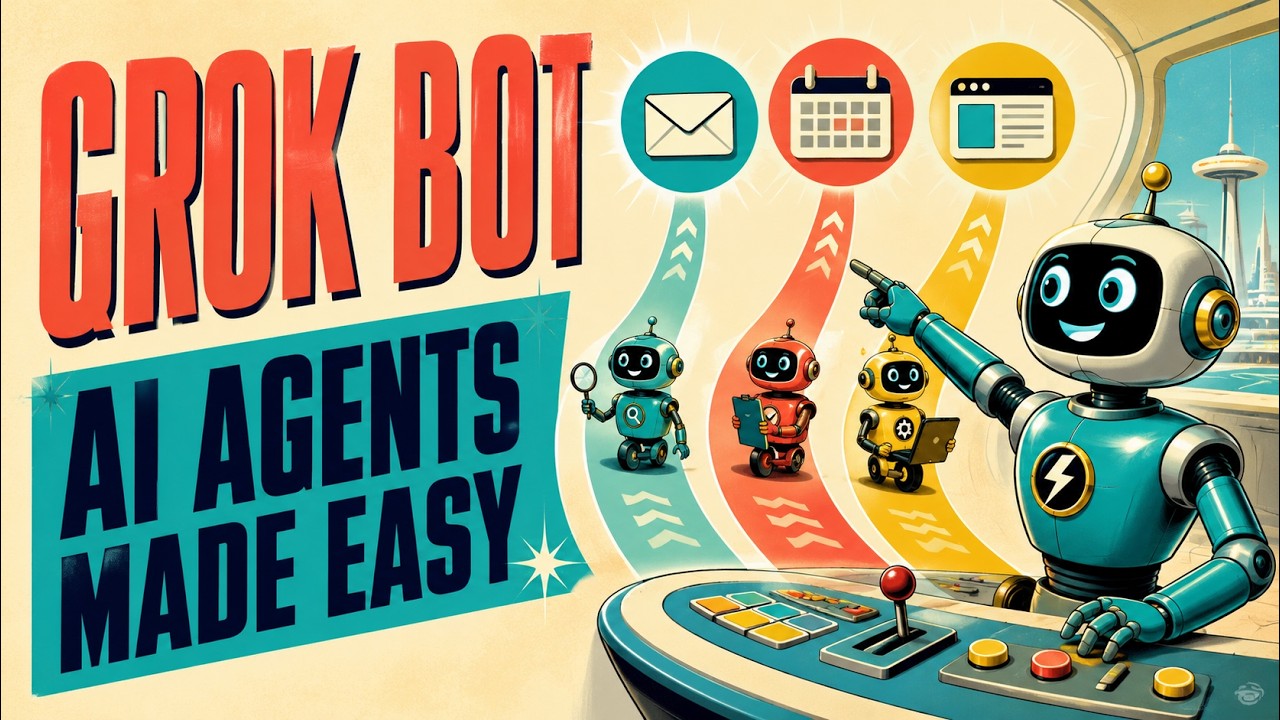
SpaceXAI and Cursor's Grok Bot got the AI community excited not because it does something new, but because it made "a team of agents" simple enough for a non-engineer to run.
The lesson for anyone building or operating agents: the moat is the harness, and the barrier is trust. This builds on Nathaniel Whittemore's analysis on The AI Daily Brief.
Source: "Grok Bot Finally Makes AI Agents Easy" — Nathaniel Whittemore, The AI Daily Brief (13 Aug 2026). The show is openly bullish on the product; benchmark and pricing claims are verified in the underlying digest.
The breakthrough is packaging, not capability
Agents have been powerful all year. Since the "Open Claw" moment early in 2026, people could already spin up researchers, writers, and chiefs of staff that coordinate through a chat window. The problem was that doing it was extremely technically complex.
Grok Bot, launched in beta on August 11 by the merged SpaceXAI and Cursor, changes the experience, not the underlying trick. It puts everything behind a chat surface that abstracts the complexity away. One reviewer summed up the shift: people open a coding agent, don't know what is going on, and bail because they don't feel like figuring it out — then installed Grok Bot, connected their tools, and it just handled the rest.
For an operator, that is the whole story. The models were good enough months ago. The adoption gate was setup cost.
Computer-use is the primitive that makes it feel human
Each bot runs on its own cloud virtual machine and signs into apps the way a person does — through the interface, not the API. It can reach a local folder with no toggle to configure. You demo a workflow once and it saves the steps as a routine you can correct and reuse, like creating a skill with a screen recording.
That design is why the reactions landed. Users built named role-bots — a researcher, a writer, a chief of staff — and reported they coordinated out of the box when they fully expected them to fall apart.
This is less AI assistant and more the intern who somehow became COO overnight.
Vishal Singh
The moat moved to the harness
The people who built it are blunt about where the value sits. Cursor's Rookie Dorr called it flawless execution of an old concept — "mind-blowing what a good harness, cloud computing, massively advanced computer use, and state-of-the-art models are capable of." a16z's Martin Casado called it the first product that really nails the virtual co-worker.
None of those ingredients are proprietary models. They are integration, background execution, memory, and a chat surface a non-engineer can drive. If you are deciding where to invest in your own agent stack, that is the signal: the differentiated work is in the harness and the workflow layer, not in swapping model weights.
The real barrier is credential trust
The honest reservation in the episode is not capability. It is what you have to hand over.
Because these are computer-use agents, you are not granting an analytics API key — you are giving a remote machine access to your actual accounts to click around inside. The host, otherwise sold on the product, paused before logging it into his Spotify for Creators account, thinking about how devastating it would be if something went wrong. He had no such hesitation with email, where a mistake is recoverable.
Price reinforces the gate for now — access sits behind roughly $200-a-month tiers (VentureBeat).
The metaphor is still up for grabs
Not everyone thinks a swarm of teammates is the right shape. Fletcher Richman of type.com argues dozens of AI teammates is a vanity metric, and that teams actually need a shared workspace: "Grokbot is pretty slick, but it's not how people are going to work." One user called the token economics a broken slot machine and flagged weak memory across long tasks — a minority view in the episode, but a real one.
The useful frame is that personal agents and team-integrated agents may turn out to be two different products with different rules. Grok Bot made the personal version easy. Whether "teammate" or "consultant" is the better model for the team version is the more important question, and it is not settled.