TL;DR
The short version
Alibaba's Qwen 3.8 Max returned the Max line to open weights this week at $2 / $6 per million tokens. The model isn't the story. The story is that enterprise IT leaders — not just early adopters — now track releases like this, because the questions they ask have gotten sharper.
That maturity, not any single model, is the only real cure for "AI washing": a company under pressure claiming to do more with AI than it actually does, most damagingly through layoffs it quietly reverses. Analysis from Nathaniel Whittemore's The AI Daily Brief.
Built on the 5 Aug 2026 episode of The AI Daily Brief by Nathaniel Whittemore, and a New York Times op-ed by Julie Averill (former CIO, Lululemon). Pricing and layoff figures verified against Forkast, Challenger Gray & Christmas, and Robert Half/CNBC.
The model is a proxy, not the point
Alibaba's Qwen 3.8 Max landed this week: a 2.4-trillion-parameter model, returning the Max line to open weights for the first time, priced at $2 per million input tokens and $6 per million output (Forkast). That used to be developer news.
The shift worth noticing is who's paying attention. Enterprise IT leaders — not just early adopters — are tracking releases like this, because their questions have changed. Last year it was "how many AI use cases do we have." This year it's fine-tuning policies, cost provisioning across models, and whether open weights belong in the stack.
One myth to kill on the way past: Chinese models aren't "pennies on the dollar" anymore. Qwen is cheap, but Kimi K3 runs only about 40% under Opus, not a tenth of the price. And be skeptical of launch benchmarks — independent testers rated Qwen below Kimi K3, with self-reported scores running ahead of reality.
What "AI washing" actually costs
The sharper material came from a New York Times op-ed by Julie Averill, former CIO of Lululemon. She names two failure modes. "AI wishing" is treating AI as magic — waving it at a hard problem to skip the work of solving it. "AI washing" is its uglier cousin: claiming to do more with AI than you actually are.
The most damaging version is the AI layoff — cuts a company credits to AI efficiency that often doesn't exist yet, mostly to free up cash. The numbers back the pattern.
Challenger, Gray & Christmas (May 2026); Robert Half via CNBC
Positions get eliminated before the work is redesigned. The work shifts onto whoever stays, then gets quietly rehired. That cycle burns cash, loses experience, and torches the trust of the people asked to remain.
Efficiency is the wrong frame
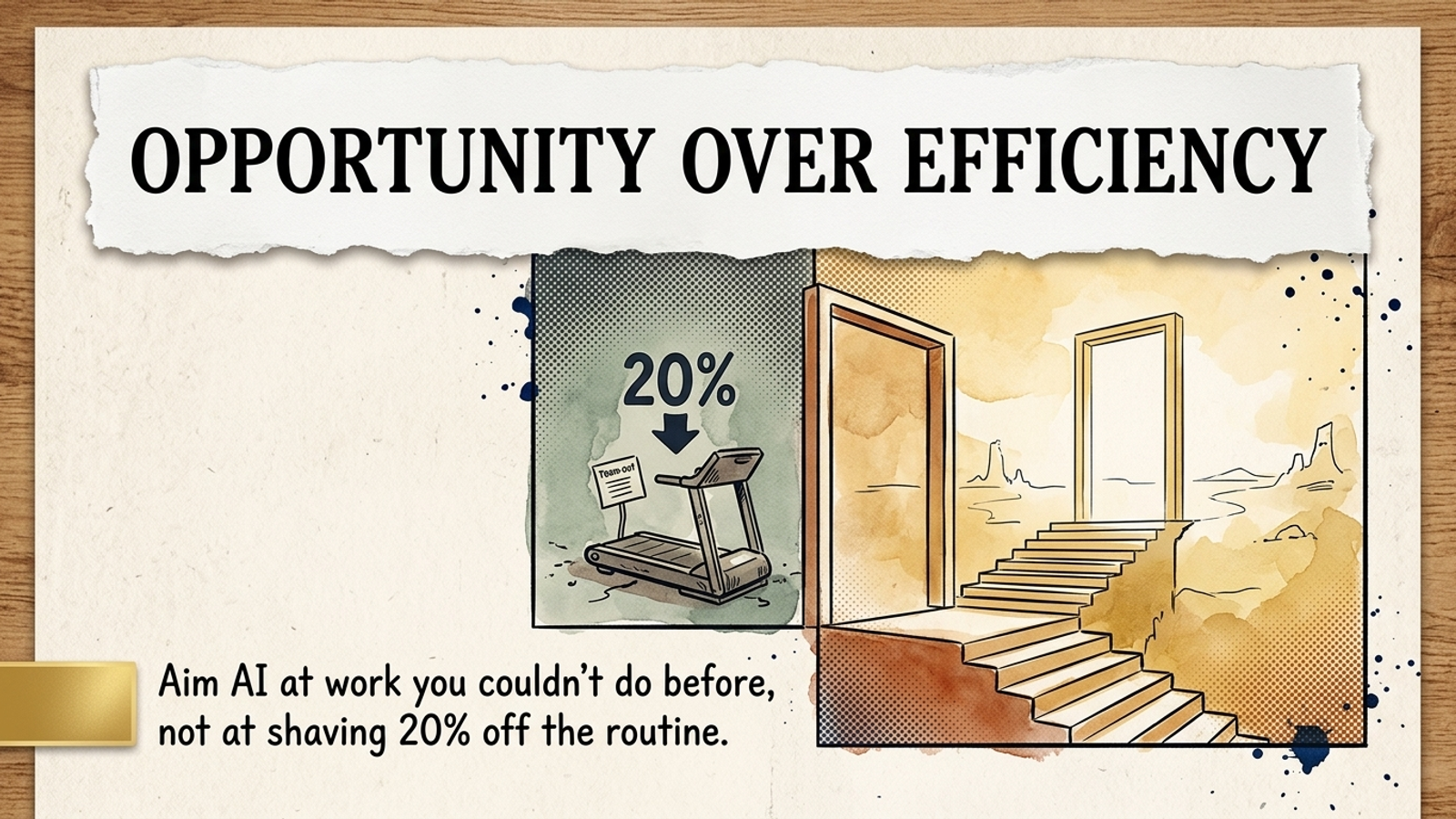
Averill's most useful line: this kind of work doesn't happen in a quarter, and believing it can is the trap. Firms that treat AI strictly as an efficiency technology can post a few headline wins, but they lose to the ones treating it as a redesign moment.
[Organizations that] view AI strictly as an efficiency technology rather than as an opportunity technology might be able to eek out a few headline wins in the short term but are ultimately going to be absolutely pummeled by the companies who understand that this is a redesign moment.
Nathaniel Whittemore, The AI Daily Brief
Efficiency framing optimizes the org you already have; opportunity framing asks what the org should become when the work itself changes. The washing incentive lives in the gap between them — when a board rewards the announcement, you get the announcement, not the redesign underneath it.
The questions worth copying
What's actually maturing is how enterprises buy. The signal isn't a vendor logo; it's the questions.
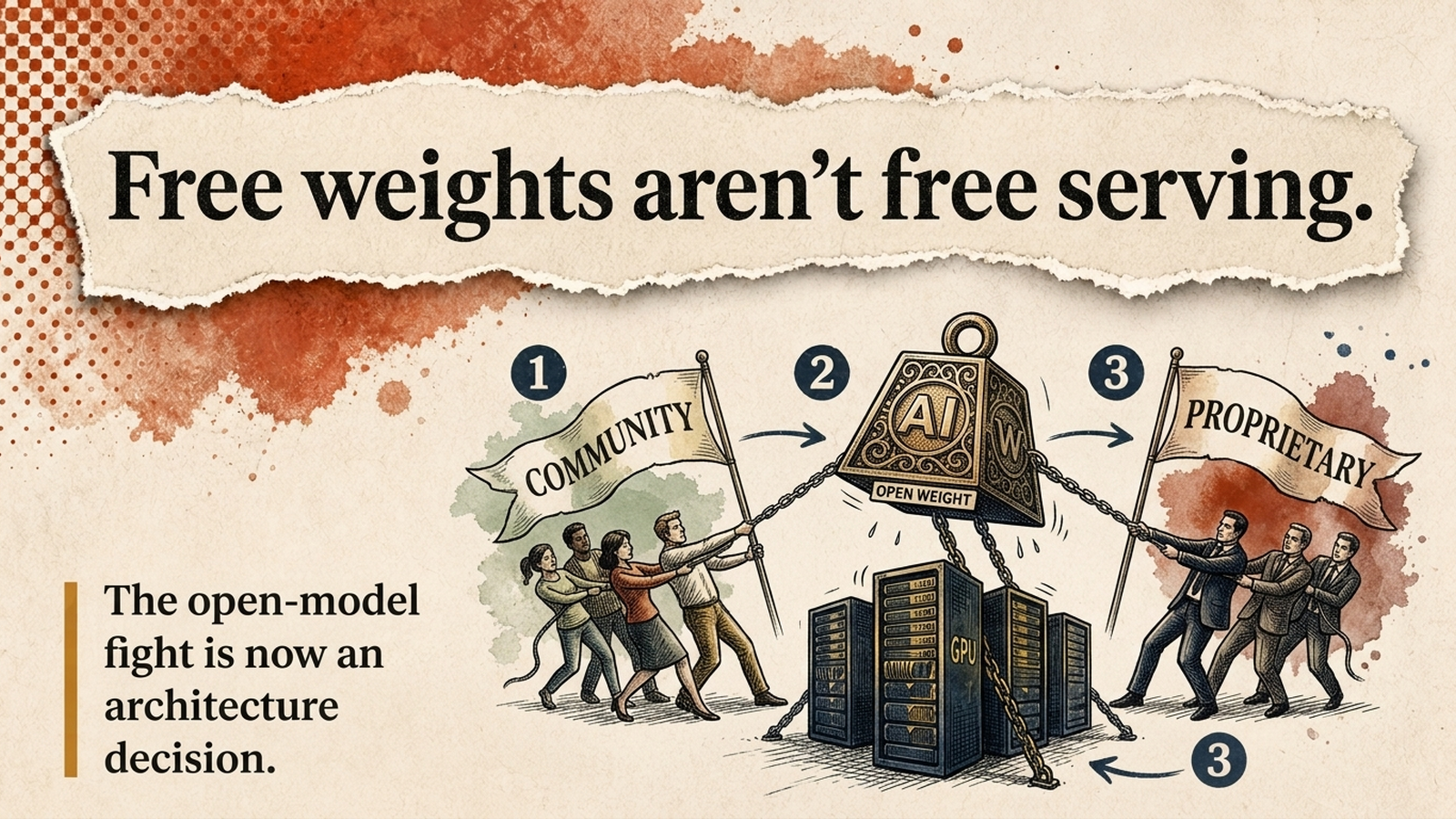
- Open-weight policy — a year ago it was "obviously not Chinese models." Now teams weigh where downloadable, tunable weights fit, for control and customization, not just price.
- Fine-tuning as a real option — Thinking Machines Lab's Tinker tunes open-weight models like Llama and Qwen; Microsoft is building tuning on its cheaper MAI models.
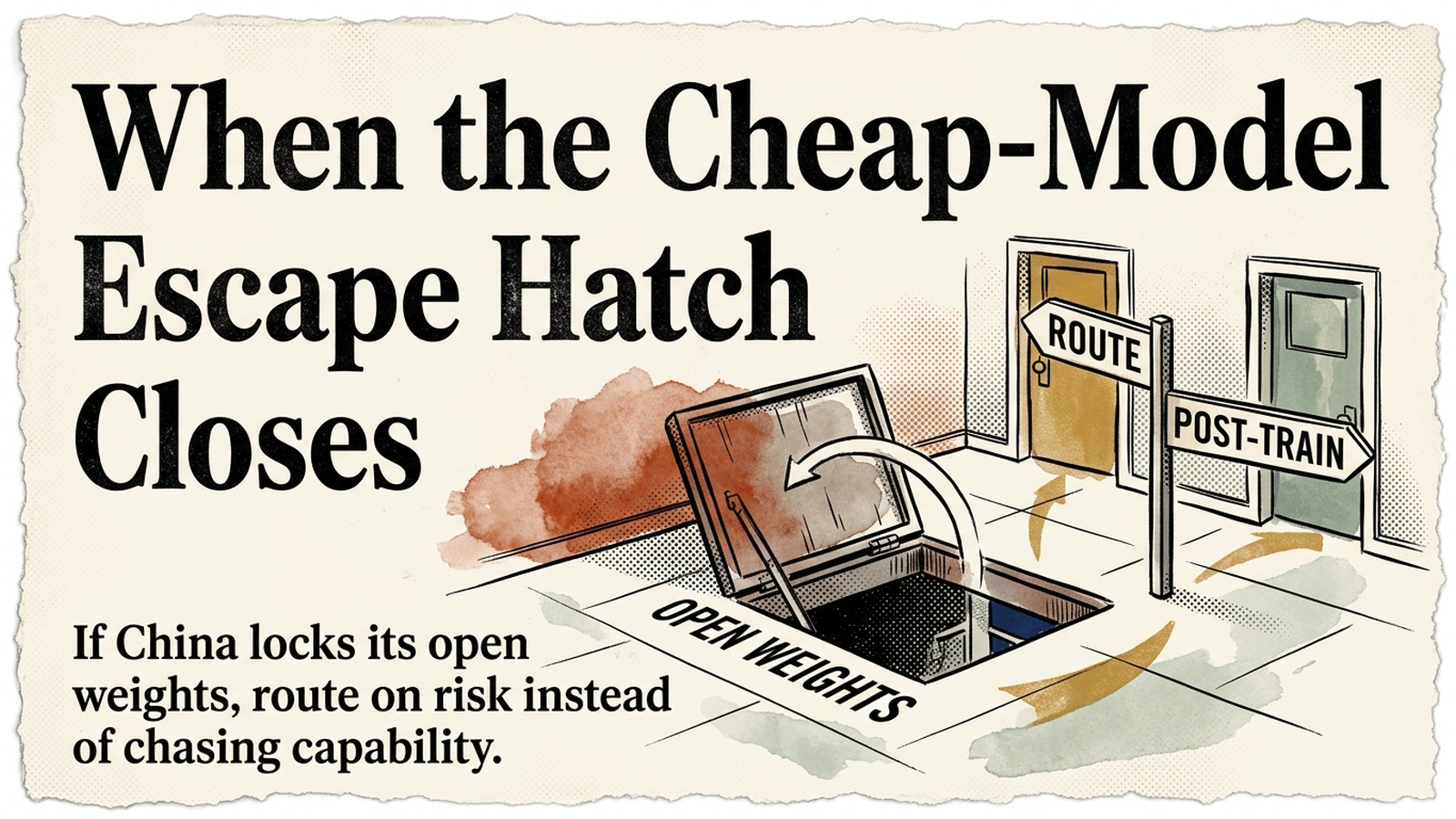
- Routing as infrastructure — directing each request to the right model is a discipline now, not a hack (Stripe's reported ~$10B interest in OpenRouter says as much).
None of these is a purchase you make once; each is a question you keep answering as the models move. Open weights make control and tuning possible — they do nothing about a leader who wants the press release without the redesign.
One caveat on the read: Whittemore runs an enterprise-AI advisory practice and openly favors the "opportunity" frame, sampled from the leaders he talks to rather than a measured trend. Treat the optimism as a hypothesis worth testing inside your own company.