TL;DR
The short version
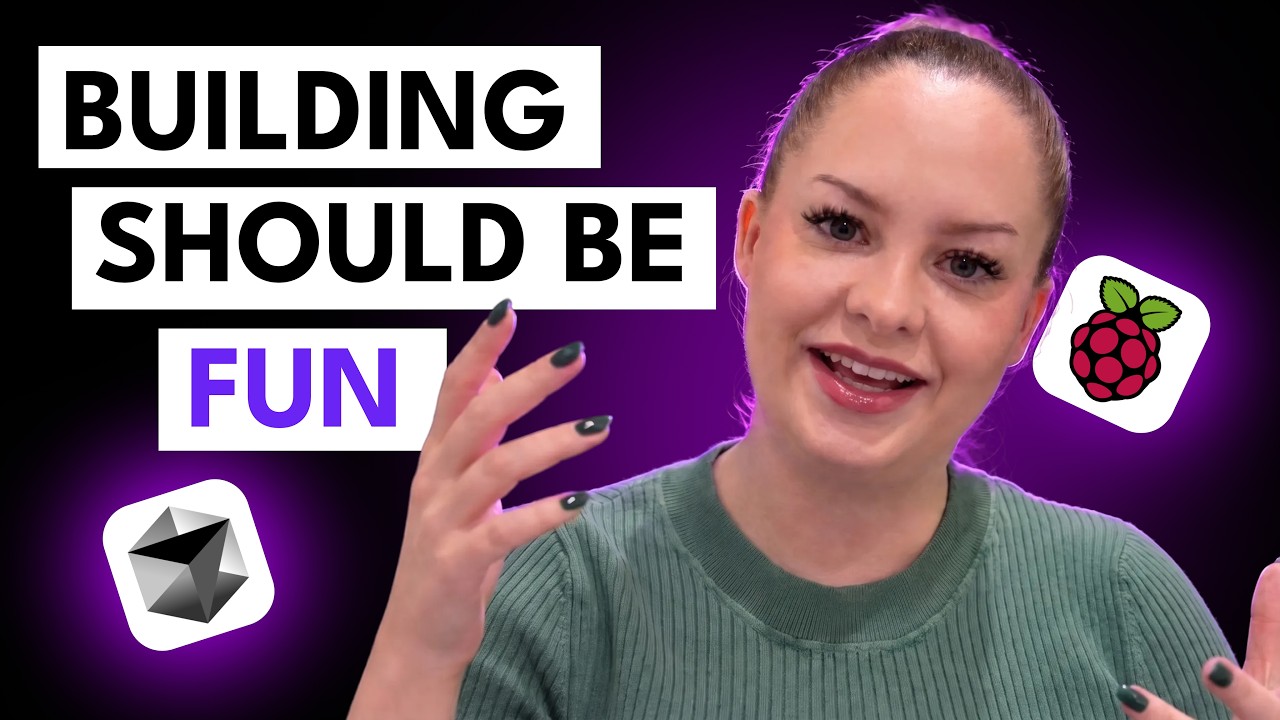
A self-described non-coder builds physical AI gadgets by treating Cursor — an AI code editor — as an interviewer and a shopping-list generator.
The interesting part for anyone running a team: the wall between "can build" and "can't" moved, and it moved past software into hardware. On How I AI, Claire Vo and guest Maddie Reese walk through what that looks like in practice.
Built on the How I AI episode with Claire Vo and Maddie Reese (2026-07-27).
The person who couldn't build now builds hardware
Maddie Reese starts with a confession, then a question: once coding became reachable, what else had quietly become accessible? The answer was hardware.
I've always felt jealous of people who could code... what else was inaccessible to me that's completely accessible now? And hardware was one of those things.
Maddie Reese, on How I AI
A year ago her dad showed her Lovable, which turns plain-English descriptions into working web apps. She moved to Cursor and started making real things: a receipt printer strangers message from a webpage, a retro pager, a personal API. None of it is a demo — type a note on her site and a thermal printer on her desk prints it, with messages arriving "from all over the world."
The point isn't the toys. It's that the gap between wanting to build and being able to just closed for someone who a year ago wrote no code.
Cursor as interviewer, not autocomplete
Most people picture AI coding as autocomplete on steroids. Reese uses it differently. Her first move is to dump everything out of her brain into Cursor and ask it to brainstorm the approach — then she has it interview her, question by question, until the plan is solid before anything gets built.
She works in Cursor's stripped-down agent view on purpose: one clean surface to think in, terminals and browsers only later. The tool is a planning partner first and a code generator second.
This is the part worth copying. The bottleneck for a non-expert was never typing syntax. It was knowing what to ask for and in what order. Handing that structuring job to the model is what makes the rest possible.
The AI writes the shopping list — you verify it
Hardware adds a problem software doesn't have: you have to buy physical things that must actually work together. Reese's fix is to ask Cursor what to buy, then order it — sometimes buying the gear first and finding a use later.
The discipline that makes this safe is verification. She double- and triple-checks every recommendation — are you sure this is the right part? what if this happens? Cursor has pointed her at the wrong wires a couple of times, and she caught it each time.
"Trust but verify," as Claire Vo puts it. The model compresses the research; the human owns the check. Skip the check and the confident wrong answer costs you a package and two days.
You don't have to read the code
Here's the claim that makes engineers wince: Reese does not fully understand the code she ships. Her analogy lands better than most technical explanations — growing up in San Diego, you pick up enough Spanish to understand it but not really speak it. That's roughly where she is with code.
Claire's response is the operating principle: it's good enough to grok it a little, enough to do some damage. Full fluency was the old admission ticket. Working comprehension plus verification is the new one.
The caveat is real: this is being tested on personal toys, not production systems handling money or user data. Cost, security, and long-term maintenance never come up on air, and "it printed" is a low bar. But the direction is clear, and the bar keeps dropping.
The personal API is the tell
The third project looks like a joke and is the most important one. Reese built a personal API — an endpoint that returns her coffee order, her pets, her favorite restaurants — so a friend can do something nice without having to ask.
She pictured humans calling it. Claire reframed it: agents will. Tell your assistant to check when someone is next in town and book their favorite restaurant, and it hits their API and does it.
Strip away the receipt printer and the pager, and you're watching two shifts land at once: the ability to build is spreading to people who never had it, and the things they build are becoming infrastructure that agents, not just people, will call.