TL;DR
The short version
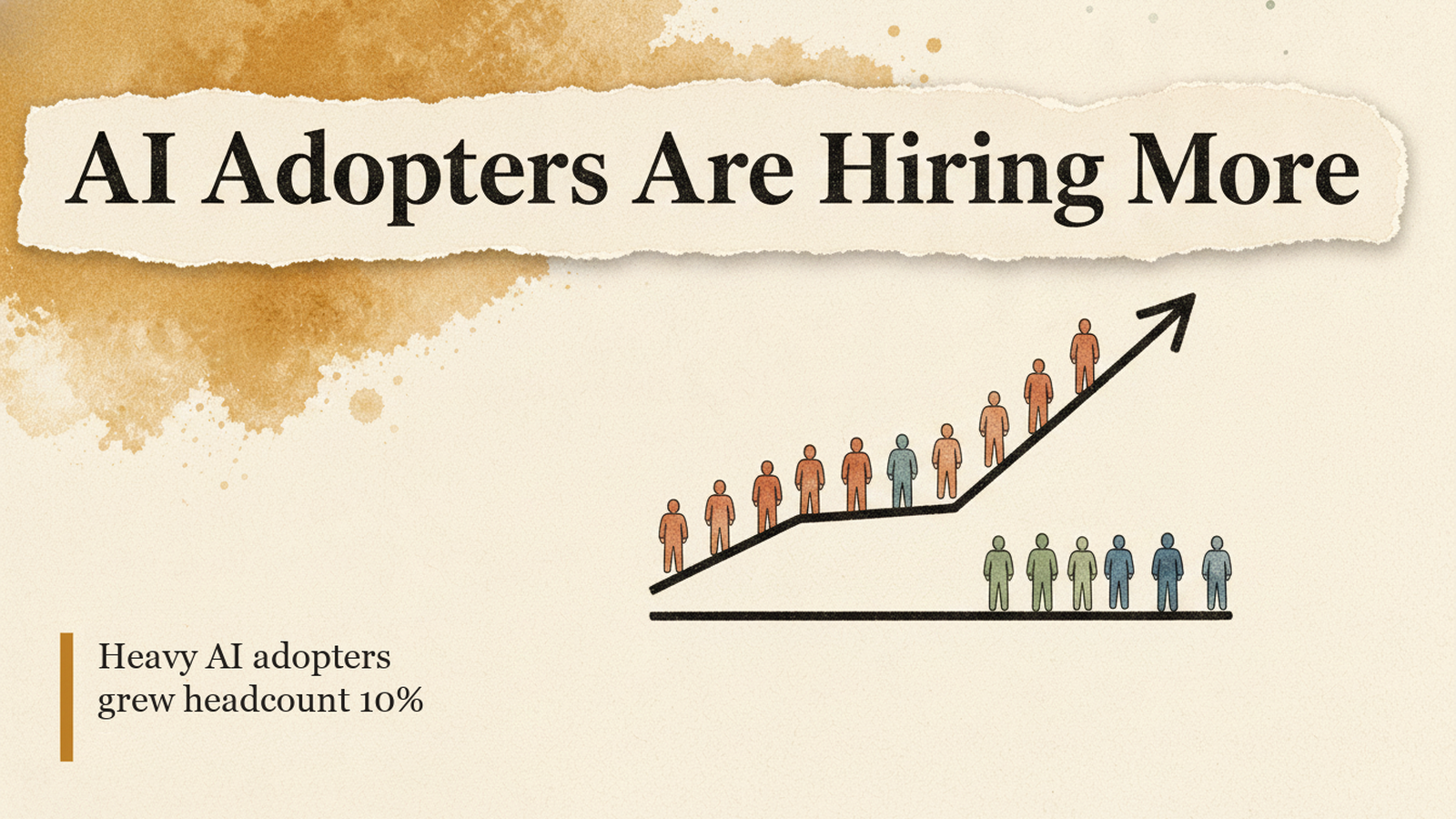
The AI-and-jobs debate has been stuck between doomers and deniers. The early data fits neither: unemployment is low, but solo business formation and lean, AI-native companies are booming — fastest in exactly the sectors where AI adoption is highest.
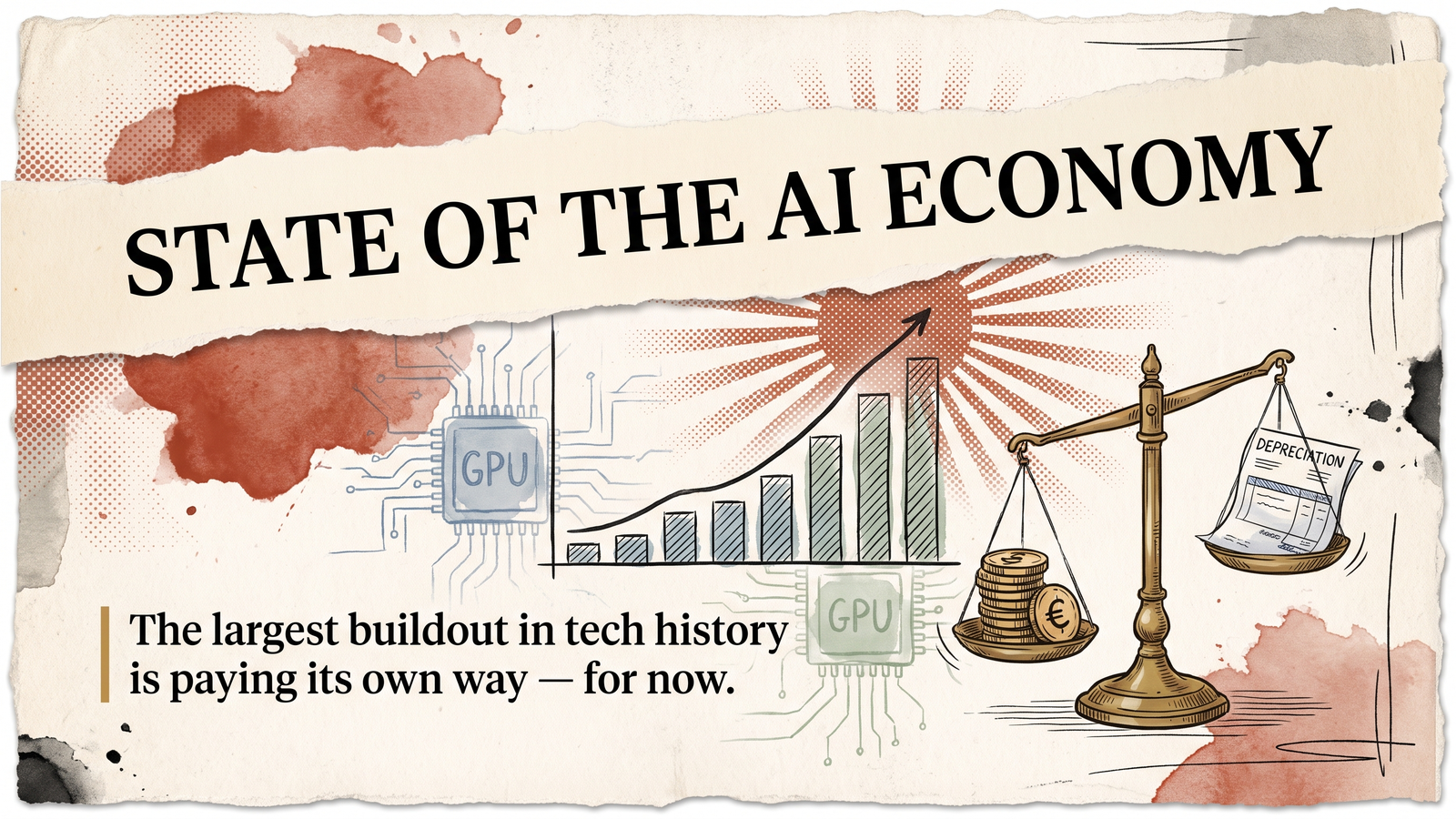
The mechanism is simple. AI fills the co-founder-shaped gaps (technical, sales, marketing) that once forced a hire, so companies get built smaller. This draws on The AI Daily Brief, reading Stripe, Census, and Harvard/INSEAD data.
Built on the 8 Jul 2026 episode of The AI Daily Brief by Nathaniel Whittemore, drawing on Stripe Economics, a Harvard/INSEAD study, and WSJ reporting.
Everyone asked the wrong question
The AI-and-jobs debate has been stuck between two camps: doomers who say AI takes every job, and deniers who call it a scam. Both have an evidence problem. Unemployment is still low, and AI is visibly changing how work gets done.
Economist Leah Palashi reframed it in the Wall Street Journal, and the reframe is the whole story. Most debates start with which jobs AI will destroy. But the first shock may not be job loss — it may be worker migration, out of traditional firms and into independence, because one person can now do what used to take a small team.
What if AI's first labor market effect isn't replacing workers, but making traditional firms less necessary?
Leah Palashi, Wall Street Journal
The numbers cluster where AI does
The tell is where the change shows up. Solo self-employment rose fastest in occupations highly exposed to AI, while staying essentially flat in the least-exposed ones. Solo business applications only diverged by sector after early 2024 — right as capable AI tools went mainstream.
Stripe's economics team put revenue behind the trend, and a Harvard/INSEAD study showed the same shift inside companies that do hire.
Stripe Economics, The Age of the Solopreneur; Stripe Atlas; Harvard/INSEAD, AI-Native Firms.
This isn't a wave of vibe-coded apps getting lucky. Stripe's read is that AI fills the gaps that used to force a hire. Businesses were built by groups because one person rarely has every skill — sizing a market, coding, pricing, marketing, closing. AI now stands in as the technical co-founder or the first sales hire. The company that needed four people needs one.
Solo is becoming the default, not the exception
The shift isn't limited to lifestyle businesses. Solo founders were 63% of C-corps formed in Q2 2026, including venture-scale ambition, not just one-person shops.
And the companies that do hire build differently. The Harvard/INSEAD study of AI-native firms found they run about 25% smaller, with flatter hierarchies and more engineers, yet raise similar valuations. Less headcount, same valuation. The org chart is compressing.
Why the safe path stopped feeling safe
The old career map was simple: startups on the risky end, corporate jobs on the safe end. AI bends that line from both directions.
It lowers the activation cost of building — cheaper, faster, less of a leap to ship something real. That's the obvious half. The less obvious half is that it erodes the assumption that a corporate job is the low-risk choice. When no one is sure what those roles look like after AI is fully integrated, "get a stable job" stops being an obviously safe bet. You don't have to buy the most bullish framing to see that the risk trade has genuinely moved.
What operators should take from this
This matters even if you run a 200-person company and have no intention of going solo. Solopreneurs and AI-native startups are the extreme tail of AI's efficiency gains — no legacy headcount, no org inertia — so they speedrun the experiments larger organizations will run years later: which work goes to AI, which roles collapse into one, where a human is still load-bearing.
Watch what the lean tail proves out, because parts of it will land in your org whether you plan for it or not. The encouraging part: we can finally argue about AI and work from data instead of speculation — and for the smallest operators, the data looks good.