TL;DR
The short version
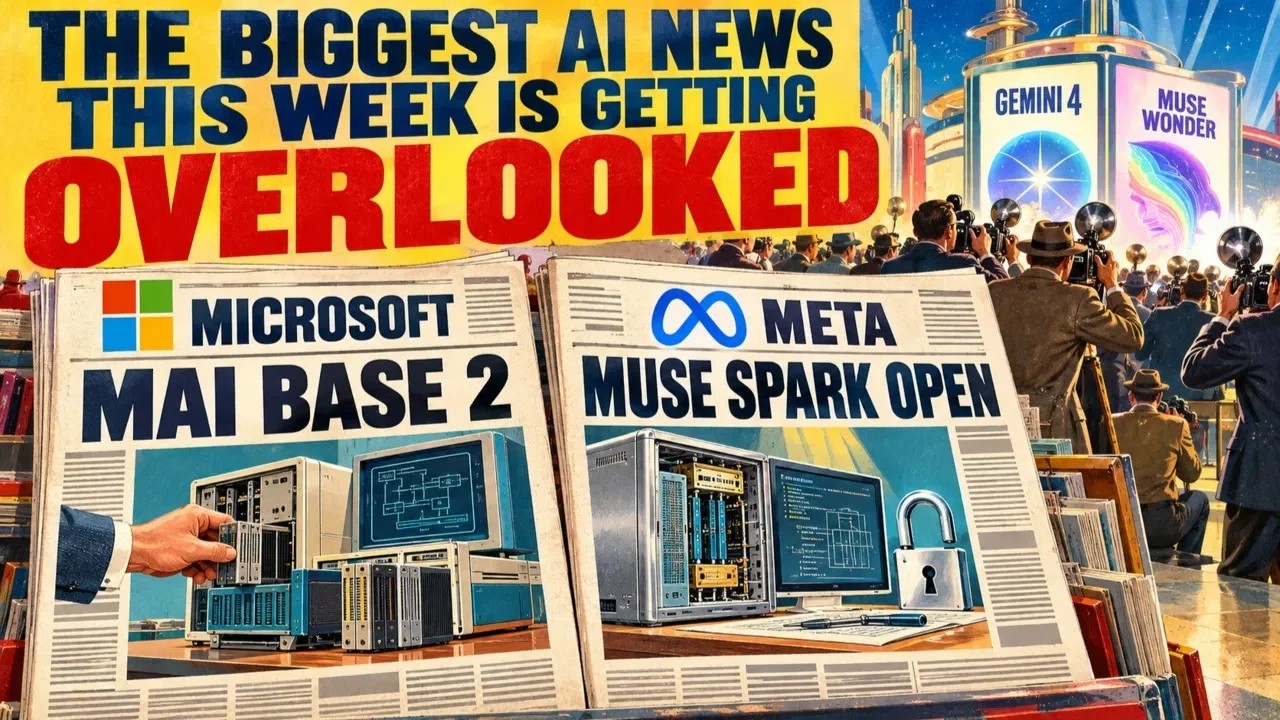
Microsoft's MAI-Base-2 and Meta's open-weight Muse Spark Open won't top any leaderboard. They still matter more to businesses than the week's flashier launches.
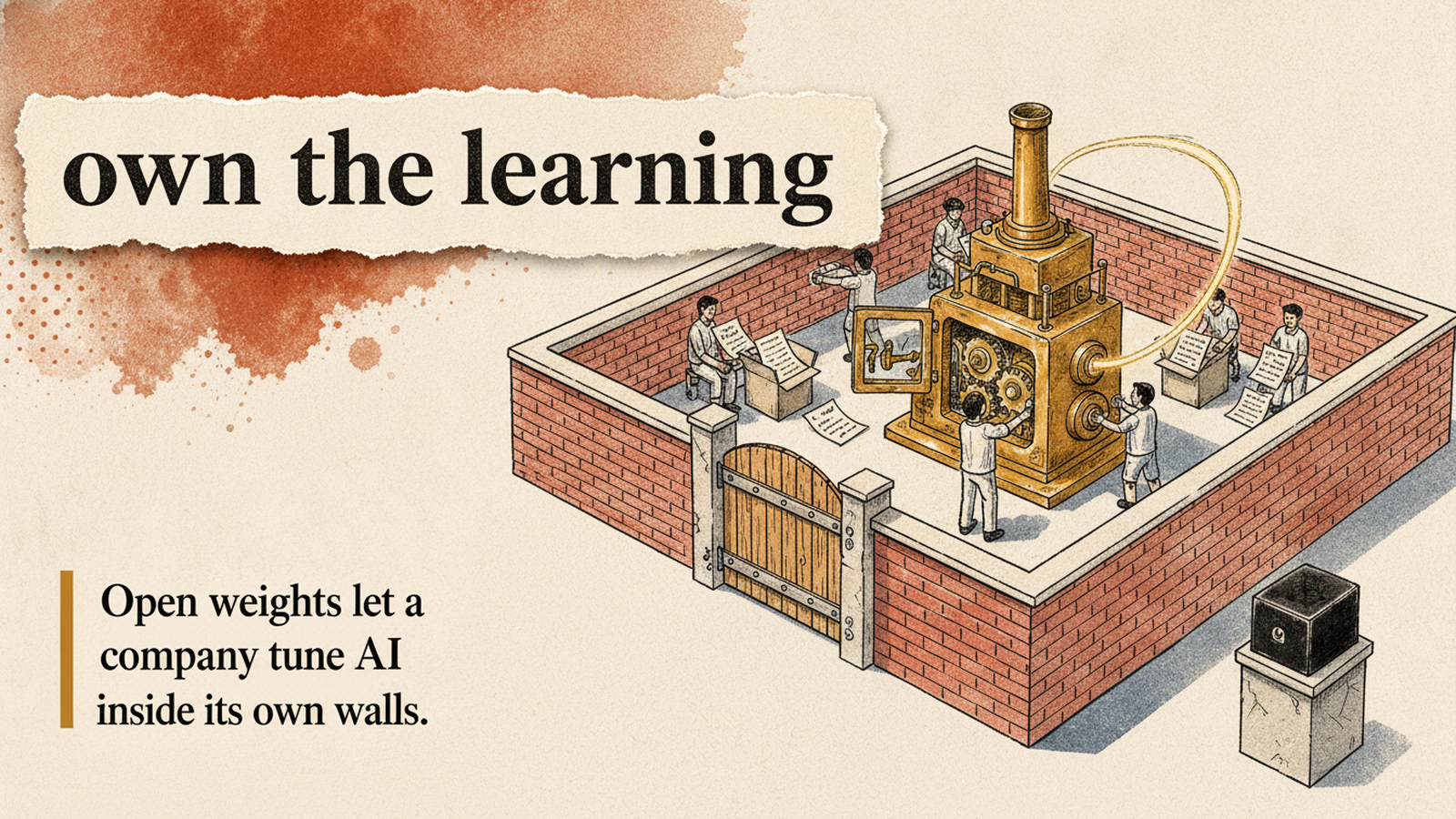
On The AI Daily Brief, Nathaniel Whittemore argues both models give companies real options to own or tune their models instead of sending every task to OpenAI or Anthropic. Token bills and vendor lock-in are pushing enterprises that way already.
Based on Nathaniel Whittemore's October 2026 episode of The AI Daily Brief, with model specs and benchmark claims checked against Microsoft, Meta, Artificial Analysis and Cognition sources.
The problem is the token bill
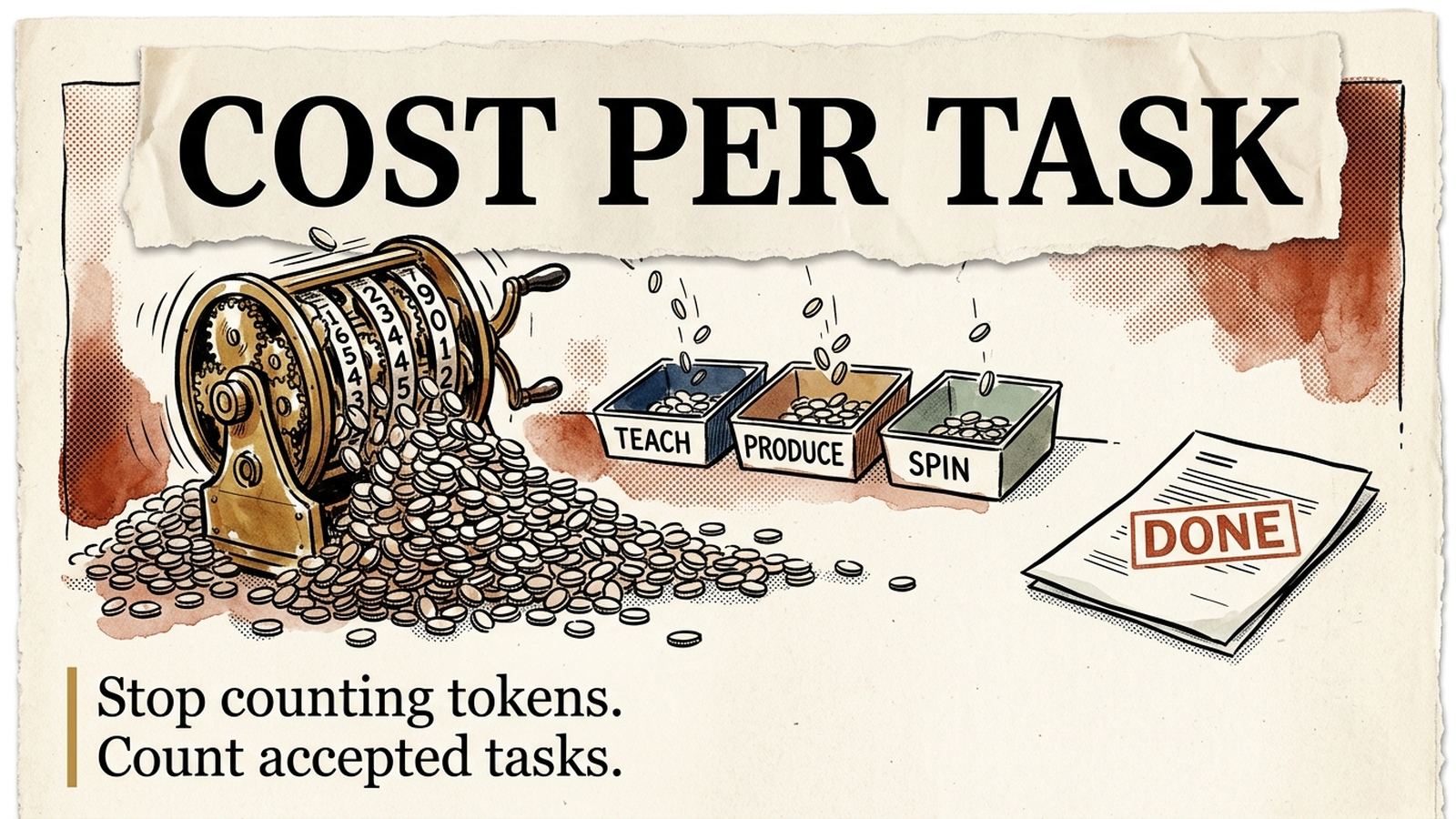
Agentic work, using code and agents to solve problems well beyond engineering, turned out to be expensive. Running all of a company's intelligence needs through the top models "had no chance of being anywhere near cost-efficient," Whittemore says.
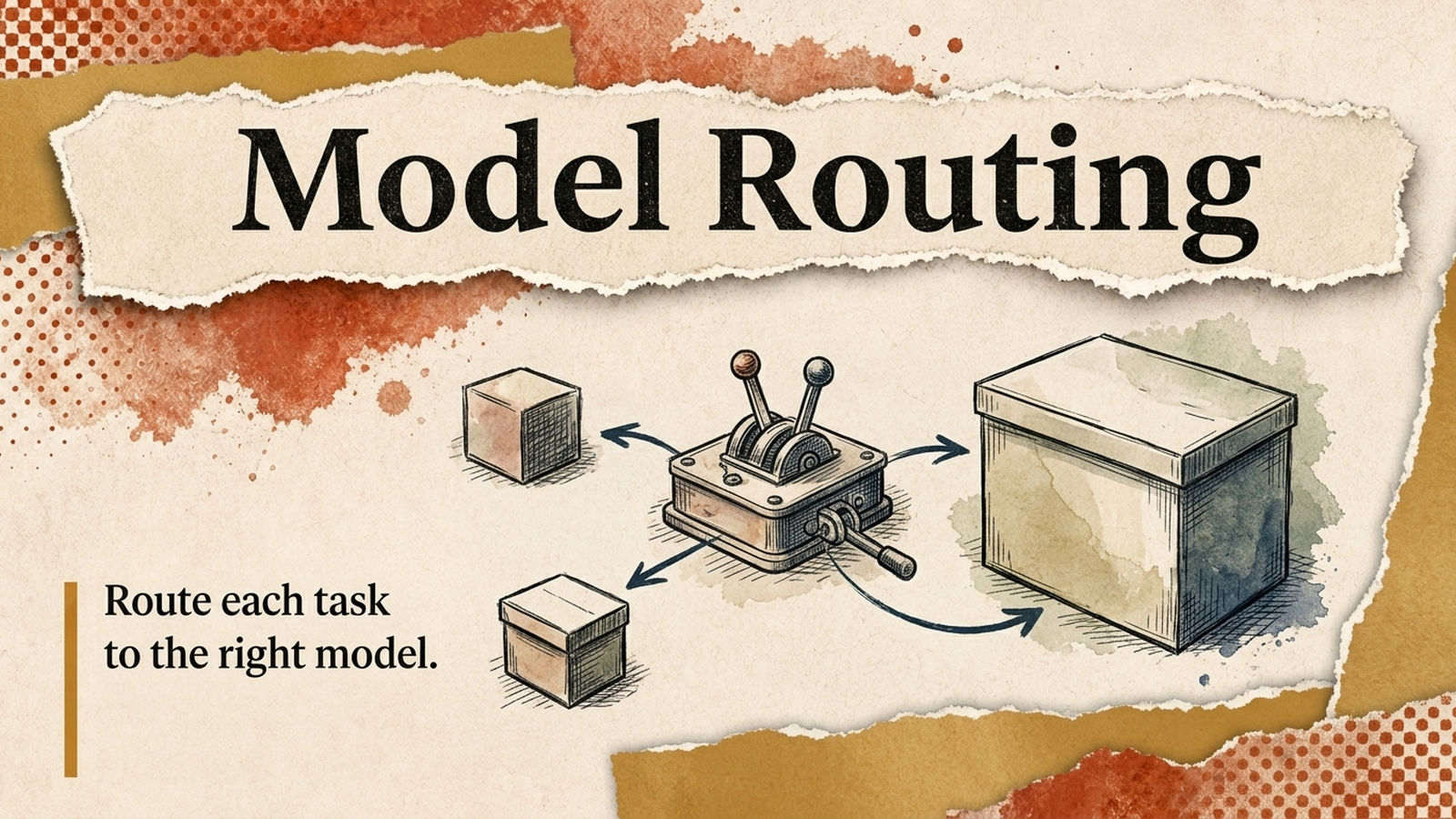
Companies have answered in two ways. One is policy: token caps and rules for who gets more. The other is architecture. Enterprises are becoming what Whittemore calls "model omnivores," moving between models by task instead of locking into one vendor. Satya Nadella has pushed the same idea: enterprises should own the intelligence layer, not hand it to their vendors.
Cognition shows the policy side. It now raises Devin usage limits for engineers whose sessions score well on estimated human-hours delivered per dollar, and launched Devin Coach to flag habits like vague prompts or over-priced model picks (TokenPost). Developers pushed back that hours-to-build rewards complexity, not value. Still, token spend is turning into something you justify.
Microsoft: a base model for frontier tuning
Microsoft finished pre-training MAI-Base-2, a mixture-of-experts model with 2.8 trillion total and 80 billion active parameters, trained on 16,000 GB200 GPUs over 38 days (Microsoft AI). Mixture of experts means each token runs through only part of the model, so compute follows the active parameters.
Microsoft says it is 4–12x more pre-training-efficient than DeepSeek-V4-Pro-Base. Mustafa Suleyman went further at a staff town hall, claiming a stronger base than the one behind GPT-5.6 Sol on a quarter of the compute. That claim rests on private evals (B17 News).
The model's real job is to carry Microsoft's "frontier tuning" business, where customers fine-tune their own models on a Microsoft base. The earlier MAI-1 models were, in Whittemore's words, "the appetizer," and a weak base limited how far that business could go. Microsoft says MAI-Base-2 was trained without distillation from other models, which lets it license weights to enterprises through Foundry (StreetInsider).
Whittemore expects plenty of companies would rather fine-tune with Microsoft, which they already buy from, than build on-premise hosting for a model on a Chinese base.
Meta: US open weights are back
Meta's Muse Spark Open has 816 billion total parameters, 42 billion active, and a one-million-token context window. Meta calls it the most capable US open-weight model to date (Meta).
It is not the open frontier. Artificial Analysis scores it 39, behind Kimi K3 at 44 and GLM-5.3 at 45 (Artificial Analysis). But it narrows a gap that has been open since Llama 4 disappointed in 2025. Open-model researcher Nathan Lambert says it cut the US–China gap "by at least half."
The surprise is Apple. It updated MLX, its machine-learning toolkit, so the model runs on two M5 Ultra Mac Studios with 512GB of memory each (Meta docs). That's out of reach for most hobbyists, but affordable for a small startup that wants private inference.
[E]nterprises will be able to mix and match frontier performance for orchestration and high-end tasks, while being able to have low-cost and tailored post-trained models for repeatable workflows.
Aaron Levie, Box, quoted on The AI Daily Brief
What to take from it
Boundary: MAI-Base-2 hasn't been post-trained or released, and its OpenAI comparison is unpublished. Muse Spark Open trails the Chinese open leaders on benchmarks. Whittemore also concedes most enterprises will stick with a Claude or ChatGPT subscription for now. The shift starts with companies that have the technical depth to run more than one model.