TL;DR
The short version
Noam Segal's second annual survey of ~6,000 tech workers asked one question that sorted everyone: how has working with AI shifted how you see yourself as a professional? The answers split the room almost exactly in half — 49% feel amplified, the rest feel redefined, destabilized, or diminished. That split is the single largest effect in the dataset, bigger than role, level, or company.
Significant burnout jumped from 44.7% to 55.7% in a year, but the dominant fear isn't being replaced by AI (that ranked near the bottom). It's the squeeze: being expected to do more for the same pay. For a leader, the two durable levers are unchanged — manager quality and ownership.
Built on the 2026 tech-worker sentiment survey by Noam Segal and Lenny Rachitsky. Figures are self-reported survey results.
Half amplified, half destabilized
One question this year sorted everyone: how has working with AI shifted how you see yourself as a professional? Forty-nine percent said amplified — I can do more, and better. The rest fractured: 27% redefined (my role is changing shape, unclear if that's good), 14% destabilized (less sure what's mine), 5% diminished (less essential).
That divide turned out to be the largest single effect in the whole dataset — Segal estimates roughly three times the size of the manager effect or the founder effect. Not your title. Not your tenure. Not your employer. How AI landed on your identity.
Half of the people in tech are feeling incredible. And the other half told us, 'My brain is rotting. My work feels worse.'
The survey's cold open
The fear isn't replacement — it's the squeeze
The dominant story about AI and work is replacement: the robots are coming for your job. The survey says that's not what tech workers are most afraid of. "Losing my job to AI" ranked near the bottom, at 22%. Feeling that AI is taking over parts of your job barely correlated with layoff worry at all.
The top fear was the squeeze: 51% named "expected to do more for the same pay," 46% named an unsustainable pace. As Segal put it, the speed AI unlocked got plowed straight back into expectations — every gain becomes the new baseline. You went from shipping a few pull requests a day to thirty, and thirty is now the floor.
That reframes what a leader is actually managing. The retention risk on your team isn't mostly people fearing the model takes their seat. It's people quietly worn out by a bar that keeps rising with no matching change in pay, headcount, or time to breathe.
Productivity is up. Sharpness is down.
Ask directly and the AI numbers look great: 82% say AI makes them better at their job, nearly half say "very much or extremely." Then look at what "better" means. It means faster, not higher-quality — more output at the same or lower quality, plus a felt erosion of judgment.
Segal's own summary is sharp: the productivity gains are real, but the quality of the work and the sharpness of the person producing it are taking a hit. Every time you accept the model's first draft without pushing on it, he argues, you lower your own baseline. There's independent signal here — an MIT Media Lab study found AI-assisted writers showed lower brain engagement and a "cognitive debt" that lingered after the tool was gone.
The operating takeaway: velocity metrics stay healthy while capability quietly decays. That gap won't show up on your dashboard until it shows up in your worst incident.
A happy-looking burnout
Significant burnout rose from 44.7% to 55.7% in a single year; optimism fell from 54.8% to 48.7%. The counterintuitive part: this isn't the old grim, disengaged burnout. Enjoyment held steady — people still like the craft. They're worn out by the volume of it.
Nikhyl Singhal's phrase for it is "smiling exhaustion": shipping again, building things that felt impossible, genuinely excited — with no off switch. Curiosity and excitement were the top two emotions in the survey, sitting right next to "overwhelmed" and "tired." Seventy-seven percent of people picked at least one positive and one negative emotion.
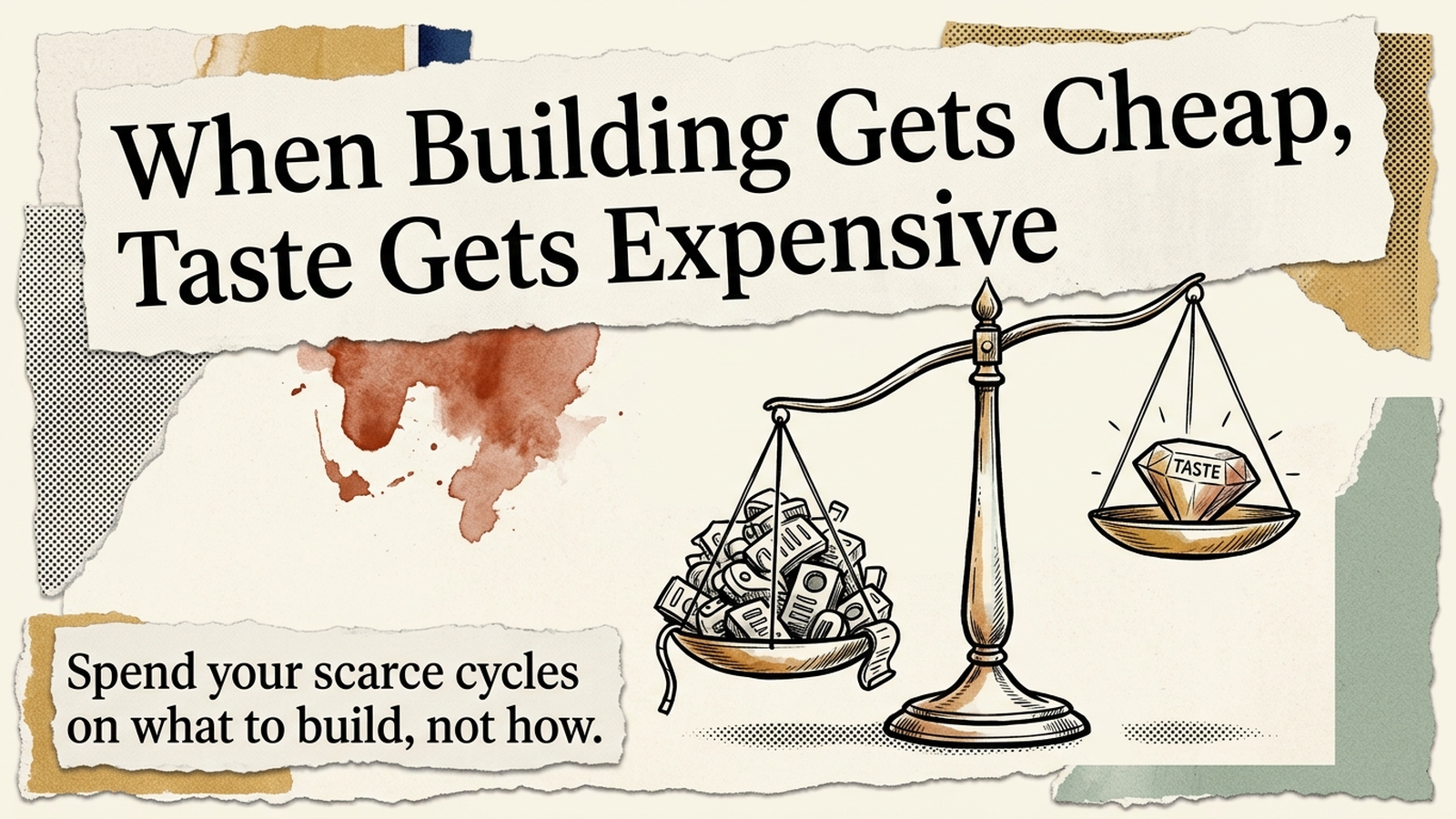
One tell of how deep the unease runs: 53% would steer a newcomer away from their own role — even while feeling fine about their own position. The water's fine, they're saying, but don't get in. Designers and researchers were the most negative of any function, which is also where AI is weakest and taste is getting more valuable, not less.
What actually moves the needle
Two findings survived the AI chaos unchanged from last year, which is exactly why they're worth acting on.
Managers are the biggest lever. An extremely effective manager buys about 65% higher job enjoyment and dramatically lower burnout — a bigger effect on burnout than role, company size, or AI sentiment. Yet only a quarter of workers rate their manager highly effective, and more than a third call theirs ineffective. Your manager is also the person who absorbs or transmits the squeeze.
Ownership is the other buffer. Founders are the happiest people in tech two years running — 71% optimistic, least burned out, least worried about layoffs — and burnout climbs almost linearly with company size. The likely reason is agency: control over your own work is the best defense against everything else.