TL;DR
The short version
Coding agents gave engineers a legible 10-100x. Design didn't get the same jump, because the messy human feedback loop that decides which idea is good doesn't compress. That gap is why designers score worst on every dimension of Lenny Rachitsky's tech-workforce survey.
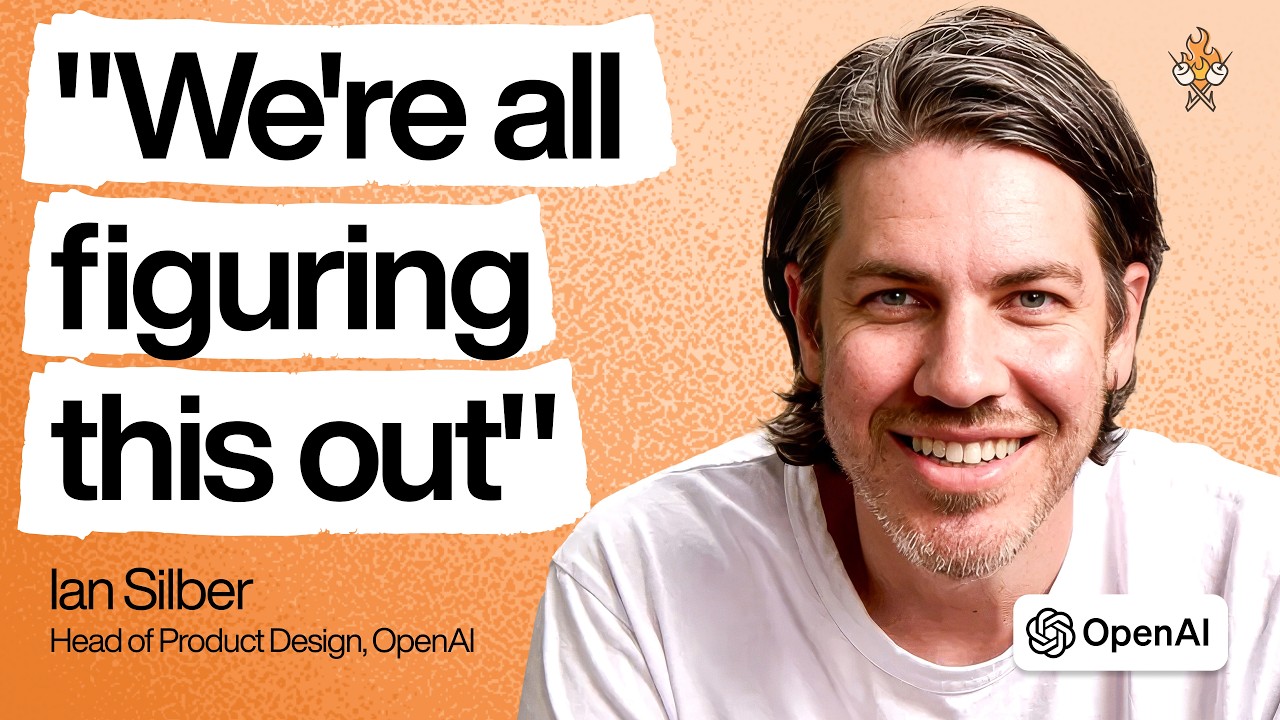
Ian Silber, head of product design at OpenAI, doesn't dispute the mood — he reframes its cause. When anyone can build anything, taste and understanding people become the scarce resource, which is the designer's real job. The split between thriving and struggling comes down to whether AI makes you feel amplified.
Built on Lenny's Podcast with Ian Silber, Head of Product Design at OpenAI (16 Aug 2026).
Why the mood is worse for designers
Lenny Rachitsky runs a large, ongoing survey of how tech workers feel about their careers. One cohort scores worst on every dimension — most overwhelmed, most anxious, least optimistic. It's not engineers. It's designers and researchers.
The gap is productivity. Engineers got a clean win from coding agents: you ask, it builds, it mostly works. Design didn't compress the same way.
Engineers have 10 or sometimes like 100x their productivity, but our design team hasn't, because the design process still takes time.
Ian Silber, OpenAI
AI generates more options faster, but the messy loop that decides which option is good — try it, it's wrong, show users, try again — didn't go away. So designers watch engineers ship at a pace they can't match on their own axis and read it as falling behind. Silber's read: it's not falling behind. It's that the role's expectations got unclear, and unclear is uncomfortable.
The split is about amplification, not tools
About half of tech is having the best time of their careers; the other half isn't. The strongest predictor of which side you're on isn't seniority or skill — it's whether AI makes you feel amplified.
The people thriving use it at every step, stay curious, and treat the ground shifting under them as normal. Silber had tried coding agents on paternity leave, hit constant hiccups, came back a month later and they just worked. The anxious group is waiting to be told the new right way to work. The amplified group assumes there isn't one yet and goes exploring.
When anyone can build, taste is the moat
As software gets cheap to produce, the differentiator stops being who can build and becomes who builds something people actually want.
AI is already a capable product designer — Silber says so plainly. But it's trained on what exists, which makes it weakest exactly where great design lives: inventing what has no precedent. There was no training data for multitouch, or for Snapchat's inside-out interface. Someone had to understand an unmet need and take a specific bet.
How OpenAI actually runs it
Silber's operating model resolves the speed problem without pretending craft doesn't matter. Pick your battles by durability. On surfaces that will last, OpenAI obsesses — "we try 100 things, we throw out 99, we finally ship one," with A/B tests and research. On surfaces the technology will rewrite next month, they take big swings, build in public, and go idea-to-ship in four hours. The skill is knowing which is which.
And do less. Silber's most repeated advice to his team is to not design something if an existing component already works — compose building blocks instead of inventing one-off screens. It's also why he hires for curiosity and systems thinking over an AI résumé; OpenAI explicitly doesn't require an AI background.
The reframe underneath all of it: stop optimizing for the process and optimize for the outcome. The tools moved. The job — make something people love, and own the point of view behind it — didn't.