TL;DR
The short version
The skill worth building isn't writing the perfect prompt. It's describing your problem and your outcome in plain language and letting the model reverse-engineer the rest — then saving that intent as a reusable skill so it compounds.
On How I AI, AI teacher Grace Clark showed Claire Vo how she runs a relationship-driven business almost entirely inside Claude. The demos were fun. The method underneath them is the part worth stealing.
Built on the How I AI episode with Grace Clark and host Claire Vo.
The prompt is inside you, not on the page
Clark's most-used tools didn't start as carefully written specs. They started as two- or three-minute voice notes into the Claude mobile app while she was on a walk.
Prompt engineering is dead, but intent engineering is where we need to be focusing our time.
Grace Clark, How I AI
She describes the problem, states what she thinks she wants, then hands the work back: come back to me, what do you think this could be, is this even possible? The model returns a strong idea she can react to. "Claude needs to get the prompt out of you."
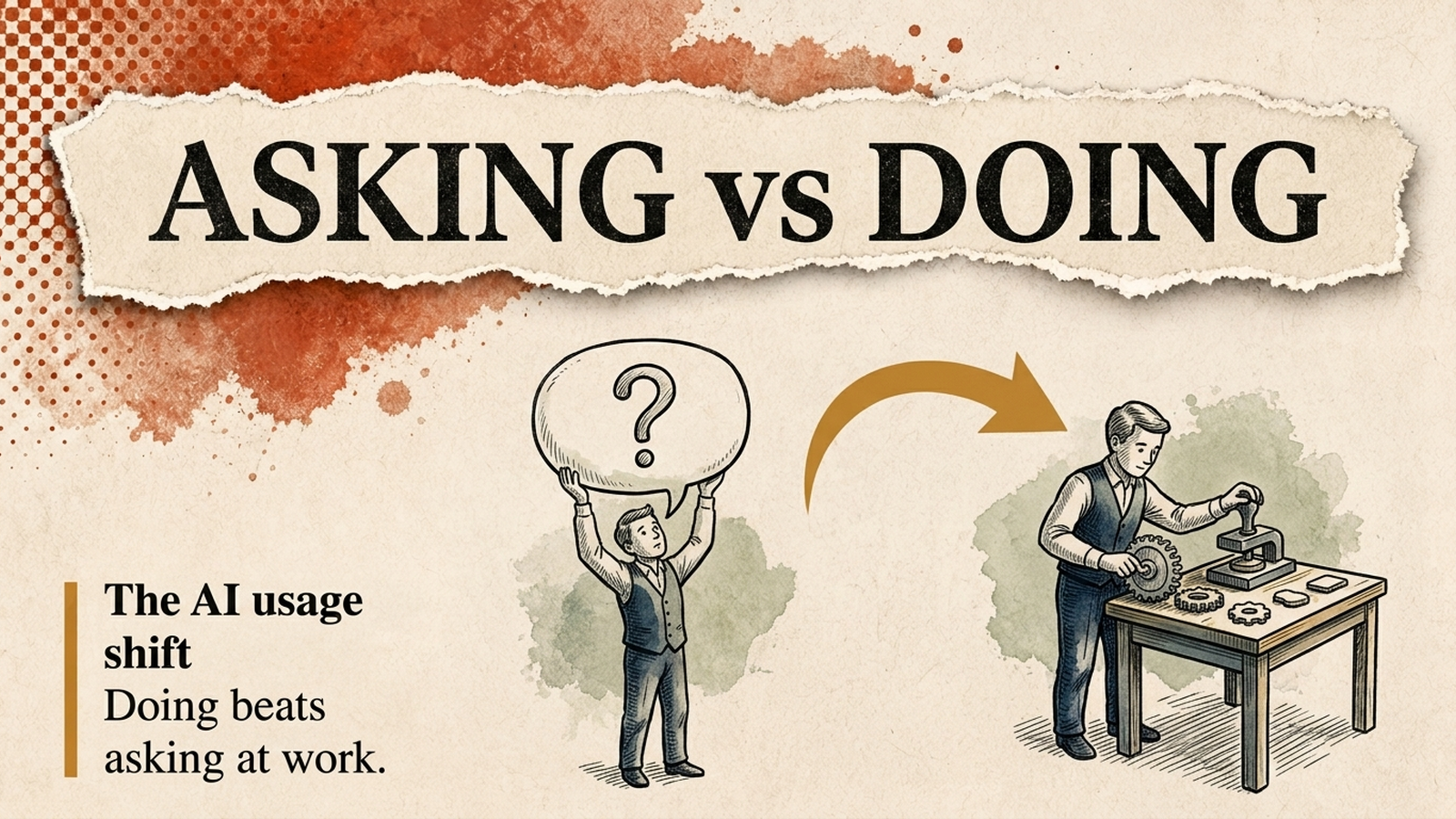
That reframes the job. You're not composing a hyper-engineered block of text. You're having a short conversation and letting the model do the reverse-engineering. Over-direct it and you get in its way.
The durable artifact is a skill, not a prompt
A conversation is disposable. What Clark keeps is the skill file — a folder of instructions Claude can load on demand, so the intent applies everywhere without being re-typed.
Her keystone skill is a voice guide: a "think like me" corpus of how she decides, the words she uses, and the words she refuses to use. It fires on nearly every task, which is what keeps the output from reading like generic AI slop. On top of it sits a proposal maker with a change log and versioned naming, and an hourly pipeline that turns her inbox and context into branded, password-protected HTML a client can log into.
Her build recipe is three steps: document your standards with Claude, put them on a timer, publish the output. The novelty isn't automation. It's that writing the skill forces you to write down the process you were running by feel — the ideal version of how you'd do a proposal, an onboarding, a piece of content — which is the thing that then runs without you.
Rebuild the tool you hate, and keep the work
Clark hasn't intentionally opened Gmail in a month. Her email client was born from a rant into Claude Code and now lives inside Claude.
A practical note from the same segment: she starts ambiguous or technical work in Claude Code because it's faster and more proactive — when an official connector can't send an email, Code offers to drive a browser instead. When she wants a cleaner visual workspace, she has Claude write a markdown handoff file and drags it into co-work. Moving a project between surfaces is just asking for a file.
Adoption is muscle memory, not persuasion
The most useful correction is about people, not tools. Clark assumed users needed to feel the benefits to keep going. "That's actually not true. Instead, people mostly need to understand that we're going to learn to collaborate."
The real hump is defaulting to the app. Her forcing function is deliberately small: set a phone reminder that says, whatever you're doing, screenshot it and drop it into Claude with "could you help me with this?" A screenshot carries no prompt — the model infers from the image — which quietly teaches people that intent, not syntax, is what they're providing.
What to copy
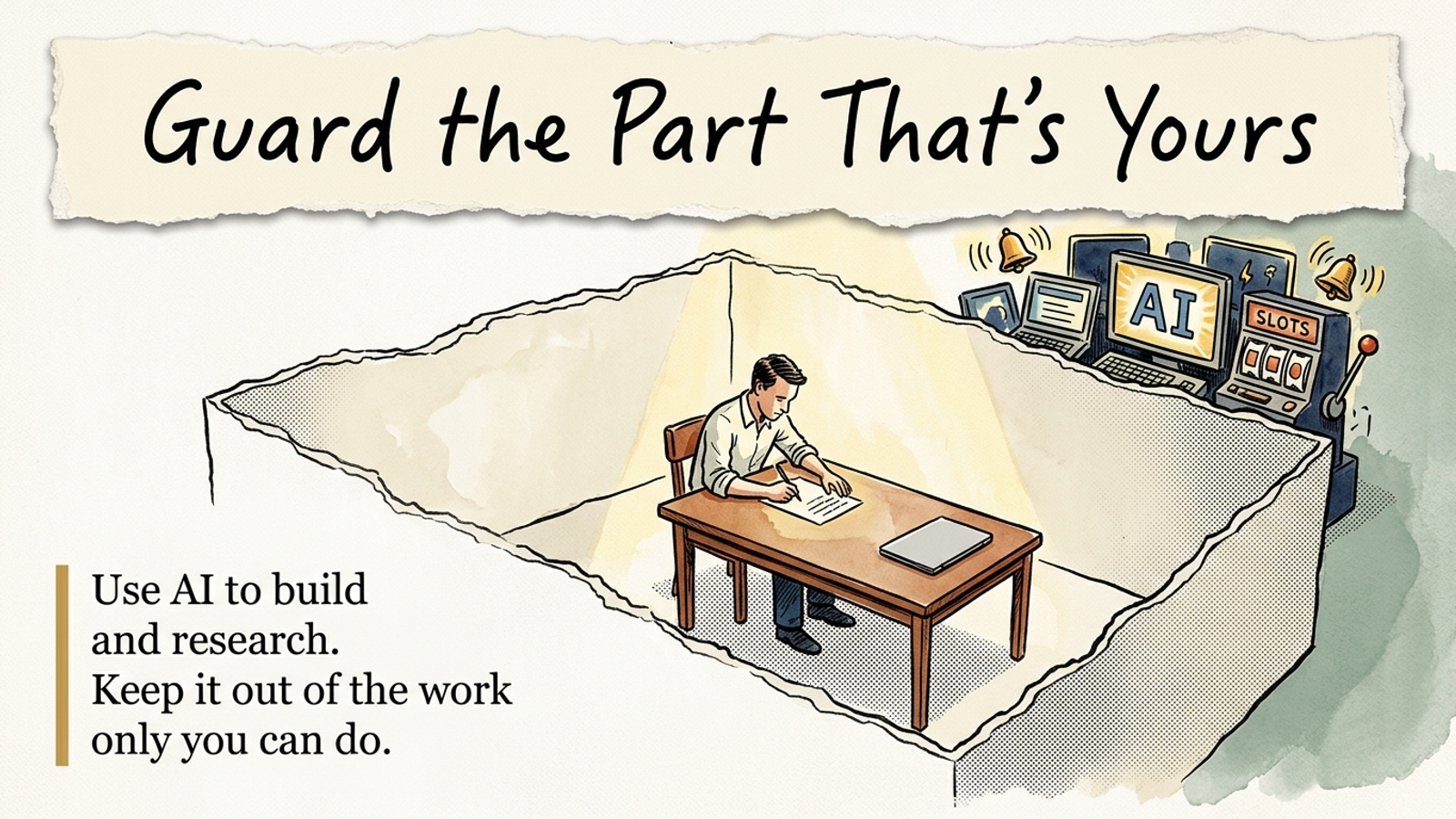
Skip the perfect prompt. Talk to the model like a capable colleague: here's the problem, here's the outcome, you fill the gaps. Save the intent as a skill so it runs again. And treat adoption as a habit you build one screenshot at a time.
One honest boundary: every efficiency number in the episode — twenty tabs down to an hourly pipeline, forty-five-minute proposals, a thirty-minute Gmail rebuild — is Clark's own account, and she teaches this for a living. Treat the figures as illustration, not benchmark. The method holds up on its own.