TL;DR
The short version
Kevin Kelly's record — right on the internet, wrong on VR's speed — says most breakthroughs are the visible end of a decades-long curve. The leader's job isn't predicting what's coming; it's telling what's arriving now from what only feels imminent, and pricing the lag into the bet.
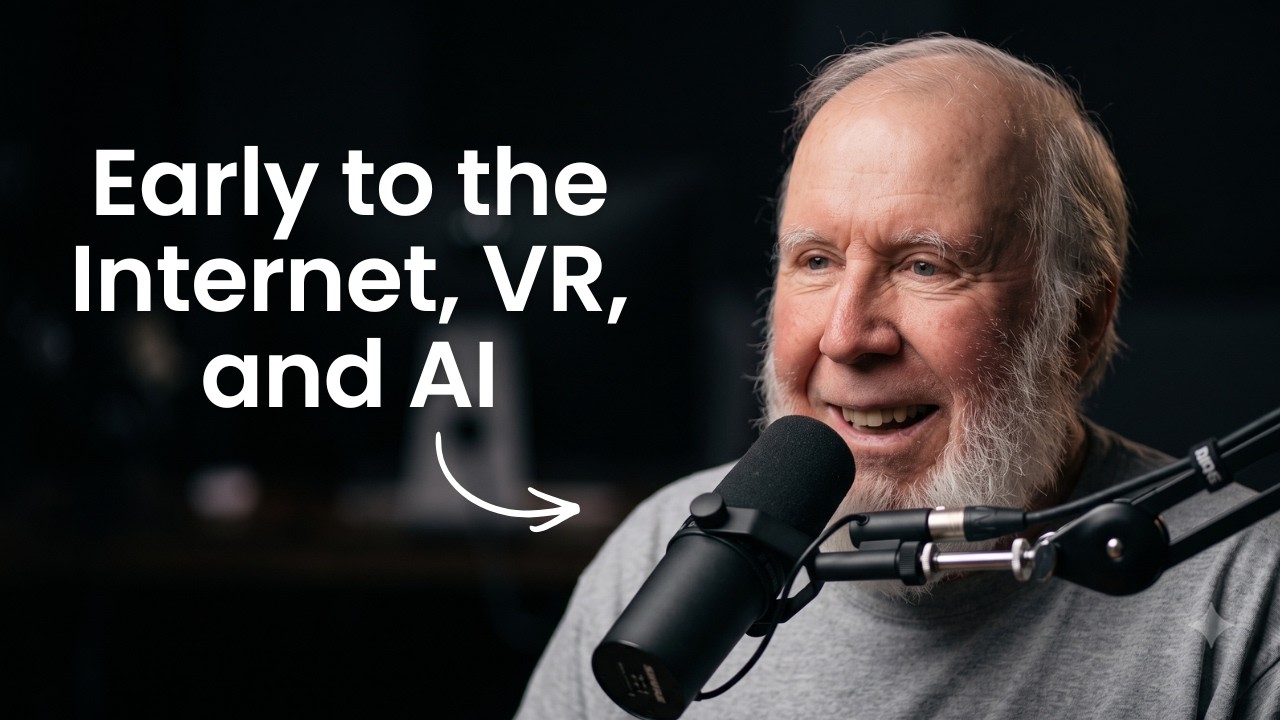
Kelly has watched technology waves since founding Wired in 1993. He was right about the internet and wrong about how fast VR, eBay, and blockchain would land. That miss rate, not the hits, is the lesson for anyone timing an AI bet.
Built on Kevin Kelly's conversation with Dan Shipper on Every's AI & I. Verified history is separated from Kelly's forecasts in the working digest.
Sudden is the tail of slow
Kelly calls AI 'a 50-year overnight success.' The field dates to 1956; the breakthrough most people noticed arrived around 2012 and hit consumers a decade later. What looks like a standing start is the end of a long curve.
It's easy to make predictions and hard to make predictions that are true.
Kevin Kelly
This matters because hype compresses the timeline in your head. The demo works, so the payoff feels close. Kelly saw fully working VR in 1987 — the experience isn't much better today, just far cheaper. Nearly forty years on, it's still 'waiting for its LLM moment.' A leader who priced VR's payoff off that first demo would have been wrong for a career.
Biology is the throttle
Kelly's most portable idea is a diagnostic for which bets move fast. VR stalled not on compute but on biology — eyes, focus, the weight on your head. The same logic tells him robots are much further out than people think: a body runs on a power budget nothing artificial matches.
Verified in the working digest against primary sources.
The tell: pure-software AI moves at the speed of code; anything fused to atoms, bodies, or human habit moves at the speed of its slowest physical or behavioral constraint. Before you set a date, ask what your bet is actually bottlenecked on. If it's a model, it can surprise you fast. If it's hardware, physiology, or people changing how they work, discount your timeline hard.
Price the lag, not the demo
A technology can be real and still years from productive payoff — the gap economists call installation versus deployment. Setting a quarterly ROI deadline against a curve still in its installation phase is how good bets get killed early.
Two moves follow. Separate arriving from imminent: fund the arriving thing on a timeline that matches its real constraint, not the demo's adrenaline. And treat your own confident forecast as the risk. Kelly's edge isn't foresight; it's cataloging his misses out loud — he dismissed eBay ('who would use this?') and bet Bitcoin would be for micropayments, not a store of value. Each miss was a case where he read the technology right and the human behavior wrong. A leader who tracks where they were wrong reads the next wave better than one who only remembers the calls that landed.
Visit the frontier, don't move there
Kelly's stance on the edge is cheap to copy. He goes to the frontier, looks, and comes back to report — 'a nomad,' not a resident. For a leader that's a posture: keep a small, sanctioned frontier where a few people run ahead without process, but don't relocate the whole org there. Pioneers map the territory; builders make it pay.
One caution on demand. Kelly built ten AI novels and published none — 'the joy of creating it was better than reading it,' an audience of one. A lot of AI usage is people enjoying the making, not a market signal. Impressive engagement with a generative tool isn't proof anyone will pay. Test for willingness to pay separately from delight.
The through-line: the future Kelly's been right about, he was right about slowly. Build for that.