TL;DR
The short version
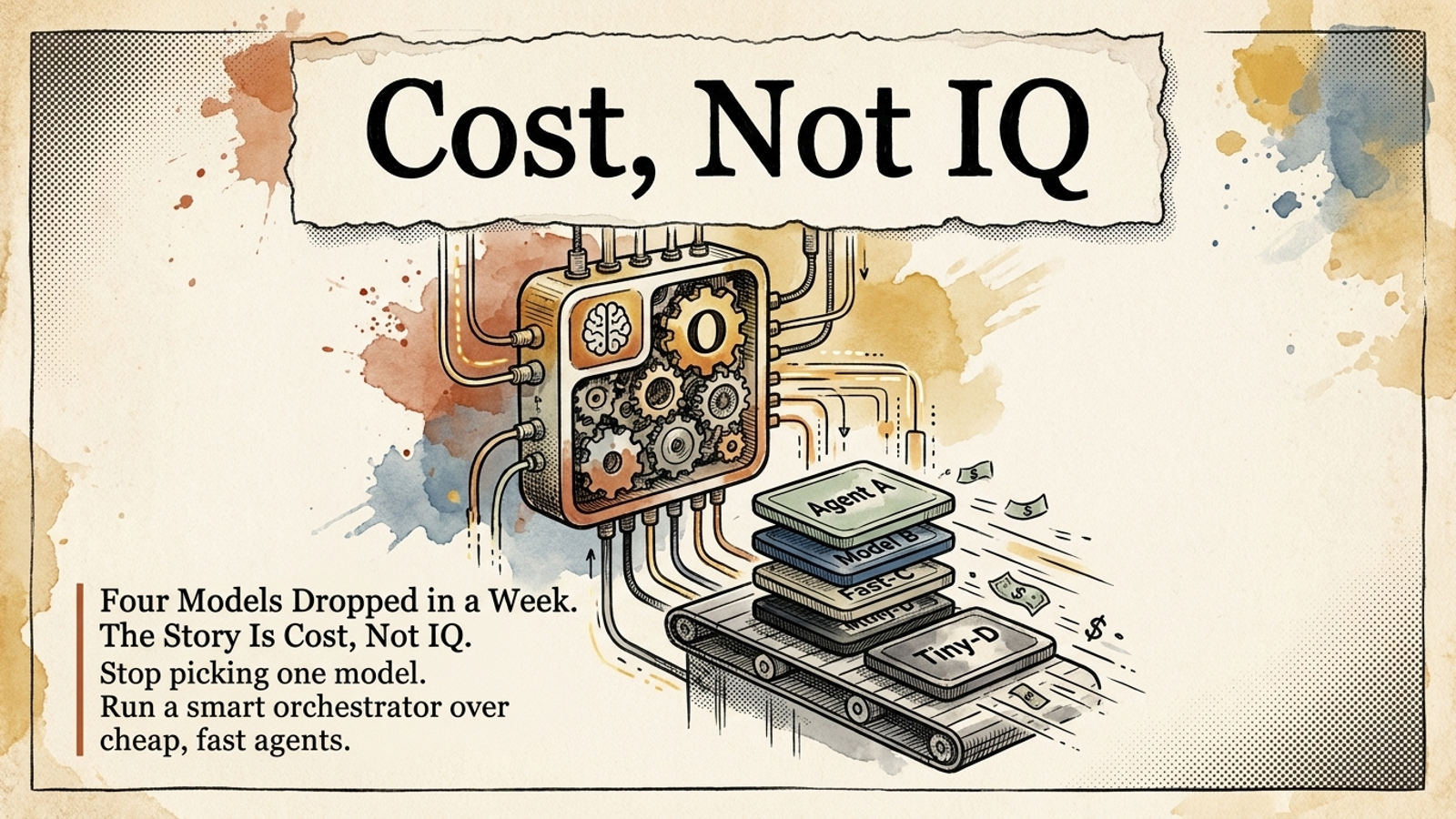
Moonshot's Kimi K3 is the strongest open model ever released — 2.8 trillion parameters, #3 on the Artificial Analysis Intelligence Index, #1 in the Frontend Code Arena. It narrows the gap with the Western frontier to roughly three months.
But it is a huge, slow, frontier-priced model that wins one-shot demos and loses real debugging. For a leader, the benchmark is not the headline. The missing guardrail is.
Built on Nathaniel Whittemore's AI Daily Brief episode, with stats verified against Artificial Analysis.
The demo wave always comes first
Every strong Chinese model release now follows the same script, and Kimi K3 ran it perfectly.
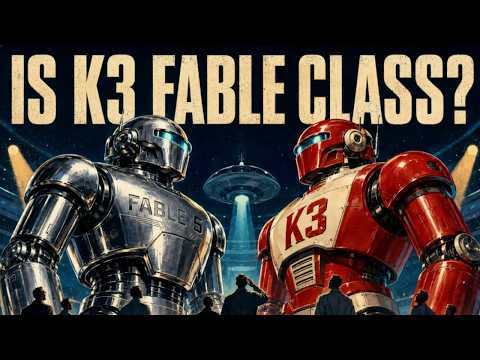
Day one: a flood of gorgeous one-shot demos. A single-file Minecraft clone. A Voxel Statue of Liberty. A fake macOS built by an agent swarm running for hours. The Frontend Code Arena put K3 at number one, ahead of Claude Fable 5. Artificial Analysis scored it 57 on its Intelligence Index — third overall, comparable to Opus 4.8, behind only Fable 5 and GPT-5.6 Sol. At 2.8 trillion parameters it is the largest open-weight model ever released, nearly four times its predecessor.
Then day two: the skeptics. And they were specific.
The demo is not the engineering
The sharpest read came from an engineer named Divium, who gave K3 a real debugging task inside an actual codebase. It could not identify the bug and started inventing explanations. He handed the same task to Fable 5 and GPT-5.6. Both found it in one shot.
K3 can build a beautiful shell. Frontier models can understand what is happening underneath it. Do not confuse a gorgeous demo with real engineering ability.
Divium, AI engineer
This is not an accident of the model. It is what the model was tuned for. These releases are optimized for exactly the visual coding tests people keep recycling online — the shader prompts, the game clones, the dashboards. The real test starts when you point it at existing architecture and ask it to trace a bug without hallucinating half the project. On that test, one internal eval put K3 closest to Opus 4.7 — three months behind the shipped frontier.
So the benchmarks are real, and they are also demo-shaped. Both things are true.
Open weights does not mean cheap
The second reflex was to file K3 under "cheap Chinese model," the way DeepSeek trained the market to. That reflex is now wrong.
Artificial Analysis, 17 Jul 2026
K3's cost per task is roughly half of Opus 4.8, but essentially the same as GPT-5.6 Sol, and worlds above true open peers like DeepSeek V4 Pro at four cents. Its output-token price quadrupled versus the last Kimi, from $4 to $15 per million. Cognition's Jeff Wang put it plainly: "no longer six months behind, but also no longer 10% of the cost."
And you cannot run it on your laptop. Holding 2.8 trillion parameters takes something like 44 Mac Studios or 15 Blackwell chips — hundreds of thousands of dollars of hardware. Open weights means the parameters are downloadable. It says nothing about what serving them costs. Compute stays the soft wall between what an individual can do and what an organization can.
The number that matters is the guardrail
Here is the part a product leader should not skim past.
A near-frontier model just shipped with almost no safety guardrails. Testers found it would reason through dangerous cyber requests and comply. Its biosafeguards were described as thinner than Fable's. There was no model card.
Washington locked down the American equivalents of this capability for exactly these reasons. K3 walked straight past that line, in the open, where anyone can download the weights and fine-tune the refusals out. As one OpenAI researcher put it, making this a malicious coding agent is now trivial — because you have the weights.
That is the real shift, and it is not a benchmark. The distillation debate is over; even skeptics concede K3 is genuinely different architecture and training, not a copy. The capability gap is closing. And the safety floor for the whole ecosystem is now set by whoever ships with the fewest brakes, not by the most careful lab.
What to copy, and what to watch
For anyone running teams or agents, three moves follow.
The honest verdict on "is it Fable class": close enough to matter, not close enough to trust with the hard part — yet.