TL;DR
The short version
Zuckerberg's 6,500-word "The future is for everyone" manifesto tried to seize the optimistic ground in the AI debate. The reaction exposed the real bottleneck: critics attacked not the ideas but the credibility of the messenger — the executive who cut 8,000 jobs and whose platforms most Americans blame for harming democracy.
The operator lesson from Nathaniel Whittemore's read: a societal-benefit narrative is only as strong as the trust of the person delivering it. AI's optimism problem isn't a weak argument — it's that the public won't extend trust to the people making it.
Built on "AI Optimism Has a Trust Problem" by Nathaniel Whittemore on The AI Daily Brief. The show is explicitly optimism-friendly, so read its "recalibration toward the middle" claim as hopeful, not measured sentiment.
The optimism land-grab goes explicit
As AI moves into the political sphere, the labs are staking out narratives: Anthropic keeps warning of doom, OpenAI has softened, and Zuckerberg has now planted a flag on radical optimism — open-source superintelligence, individual empowerment, and a $1B fund for data-center communities. He positions himself as the deliberate foil to Anthropic's Dario Amodei, arguing that concentrated AI power is "the worst possible outcome" and open weights are the safeguard.
The defining questions of our age are who will have access to super intelligence and what we will direct it towards.
Mark Zuckerberg, quoted on The AI Daily Brief
The labs are now openly competing to own the narrative of AI, not just the models. Staking out the optimistic ground is a strategic asset — but only if the audience believes you.
The bottleneck is the messenger, not the argument
Critics zeroed in less on the ideas than on the credibility gap. The animosity isn't really about the thesis; it's that the public won't trust tech executives on societal impact — and hazy generalities deepen the distrust rather than repairing it. As TechCrunch put it, the essay "demonstrates over and over again how the trust was lost in the first place."
The numbers behind the gap are concrete, and they're why the same executive telling families AI will enrich their relationships reads as tone-deaf:
Figures verified against Meta, NPR/Axios, Pew Research, and Forbes, per the episode digest. AI is, in effect, paying for social media's sins.
Dario concedes the same gap — and names the only fix
The messenger critique isn't just aimed at the optimists. When investor Gavin Baker claimed on a podcast that Anthropic's Dario Amodei privately wants his lab to be "the only private company left," Amodei broke a near-total social-media silence to rebut it — and in doing so conceded the same diagnosis from the other pole. The public's distrust of AI, he argued, isn't caused by leaders warning about risk; it's the residue of decades of eroded trust in companies, governments, and technology. The deficit predates the industry, which means no manifesto or fund argues it away.
His prescription is the sharpest line in the whole debate — a rebuke to the demo-and-declare reflex:
At this point saying that AI will cure cancer is more of a cliché than it is inspiring. The thing that will work is actually curing cancer.
Dario Amodei
The only criticism Amodei says lands is that AI companies "haven't yet delivered on our big promises to benefit the world. That is totally on us." Ownership over spin — name the unmet promise plainly, then close it with shipped results. The Information's Jessica Lessin credited two tweets with changing his year-long narrative; skeptics were less moved, proof that even a clean concession doesn't buy trust it hasn't yet earned.
Jobs as a race, and open weights aren't open source
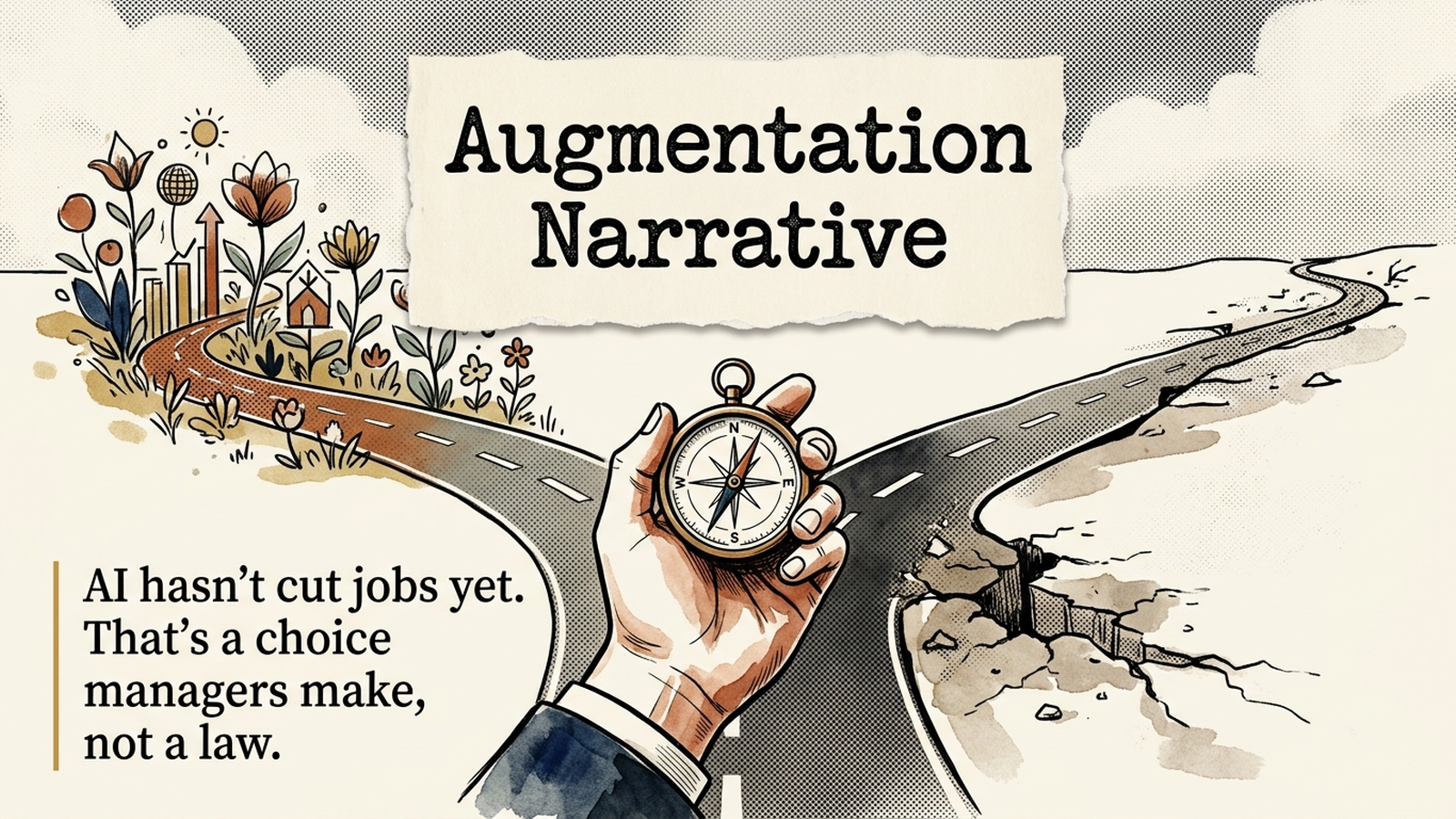
Zuckerberg's core intellectual move is to reframe displacement as a math problem: "There is no rule that AI must increase automation faster than it increases individuals' capabilities or demand for new skills." Corporate inertia slows automation; individual upskilling isn't as bound. It's the optimistic pole of the augmentation debate — plausible, but it's an argument, not a verdict.
One distinction the manifesto blurs: Meta calls its 30B-parameter Muse Glimmer model "open source," but most Meta releases are open-weights (downloadable parameters, restrictive license), not open-source in the OSI sense. The gap matters for what "empowering everyone" actually delivers — and it's the crux of the whole balance-of-power safety thesis.
The fix: treat people as capable
Tone-deaf use cases do real damage — "AI helps my daughter bake" and "make a podcast for the school drive" read as an industry that can't be bothered to engage its own kids. The antidote isn't a better demo; it's an assumption about the audience.
The backlash is the trust gap made physical
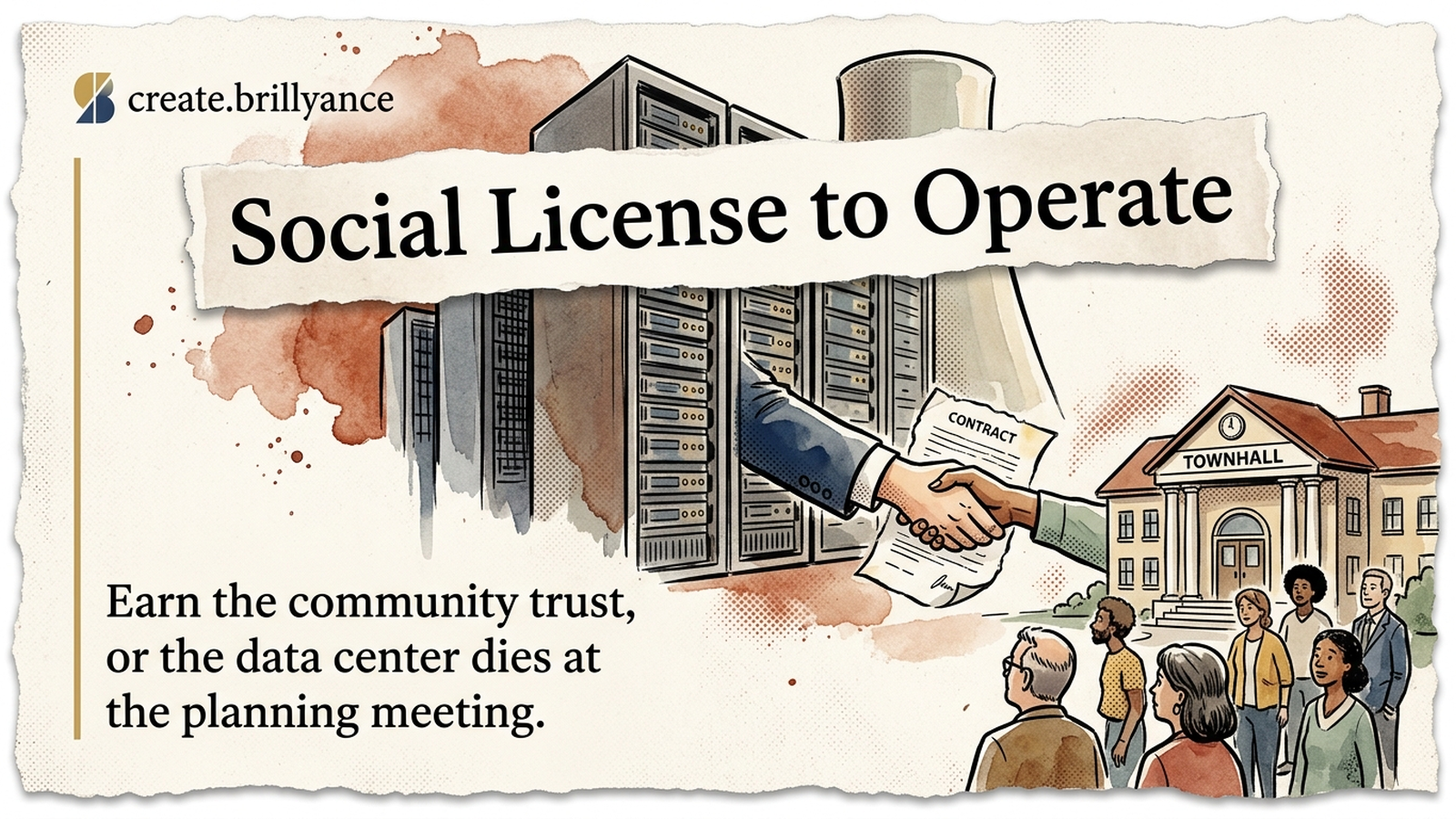
The sharpest field test of messenger, not message is the revolt against AI data centers. Polls oppose an AI data center far more than the same building pitched for search or streaming — 62% oppose the AI version — and Americans would rather live next to a nuclear plant. The objection is partly to AI itself, not the kilowatts. And the tell that this is a trust problem, not an information problem: correcting the viral harm claims barely moves the numbers.
It's not Skynet, it's the oligarchy.
Jonathan Keeperman
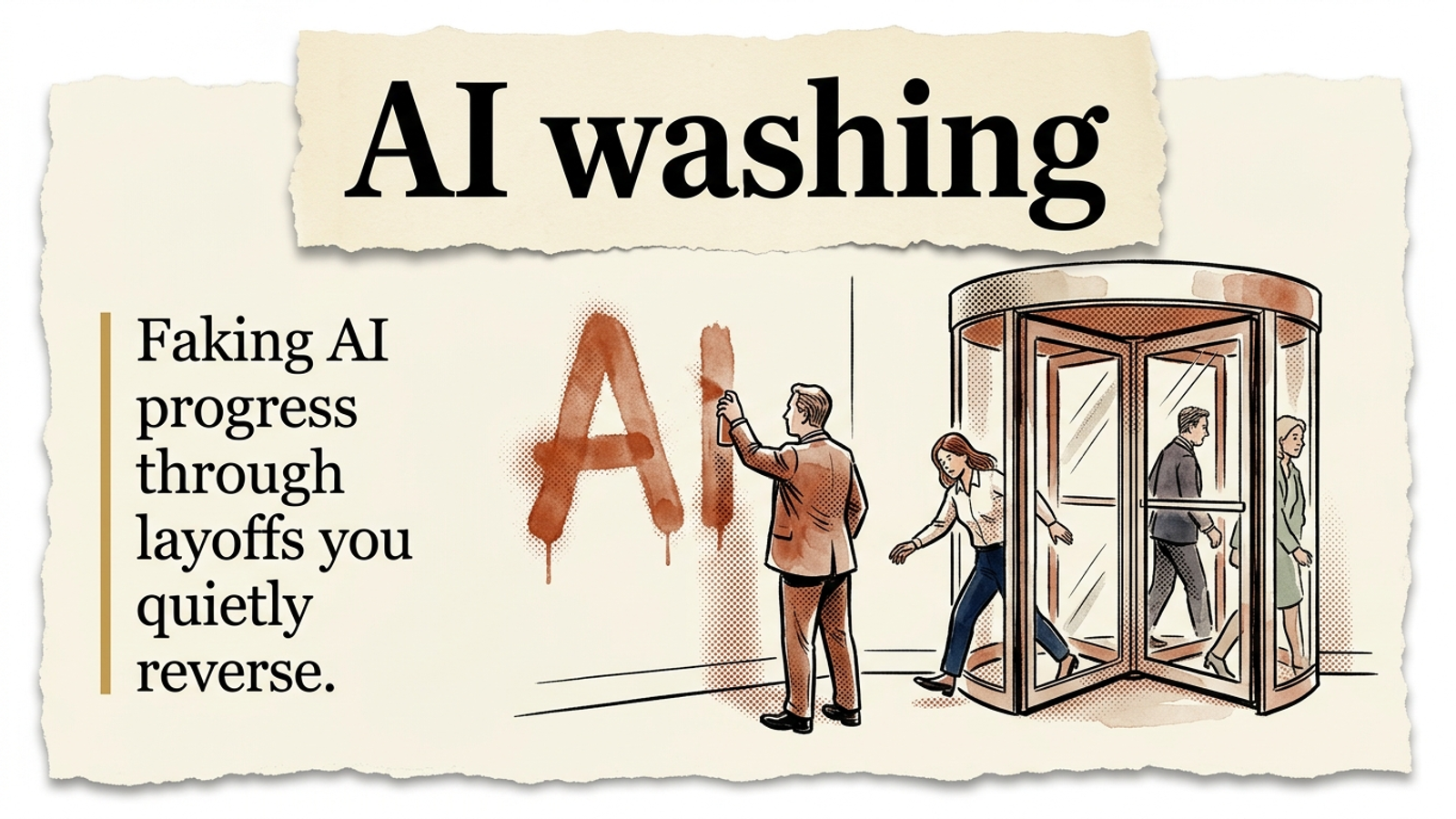
The industry's own messaging dug the hole. A decade of AI will take your job, plus executives invoking AI to justify layoffs, left host communities asking what they actually get in return. Institutional confidence sits near a record low — around 27% on average. The credibility gap the industry opened in the labor debate is the same one now blocking its physical infrastructure, and the only lever that works on a crowd that has stopped believing the rebuttal is the same one Amodei names: deliver, don't argue.
Hard cross-country number (Gallup 2026). Only 36% of Americans say AI will mostly help the country versus 93% in China — near the bottom of 37 countries — with US worry at 74%, highest in the wave. Lived tool love (Muse and the rest) coexists with catastrophe priors. The messenger-trust gap now has a measured floor: optimism messaging has the furthest to climb in the US.