TL;DR
The short version
Everyone gets the same model. The durable advantage isn't a cleverer prompt — it's the context you've fed the system about your work, goals, and the people around you. Daniel Bloom's Cowork system and Katie Parrott's codified layer both show the same pattern: front-load context, then run fast.
Karri Saarinen (Linear) sharpens the org version: making produces product + learning. Automate known work; spend savings on customers; build shared customer context with watcher agents; run Quality Wednesday and feature roasts so judgment compounds as code execution moves to AI. Don't become a software factory.
Built on Daniel Bloom / How I AI, Katie Parrott / Every, and Karri Saarinen's Lenny & Friends Summit talk (2026).
The things that matter about your job aren't in the training data
A general model can be brilliant and still know nothing about your settlement caps, your roadmap, or who owns which decision. That gap is the whole problem — and closing it is on you, not the model.
So many of us work inside companies where the things that we say are not in the training data.
Claire Vo
So the durable edge isn't the model everyone shares. It's the private context only you can supply — and the discipline to actually supply it.
One context file per topic, goal, and colleague
Bloom's moat is a library of small context files, not one giant prompt. He seeds them by feeding in links, decks, and documents, then dictating for hours over Whisper — the cheap, high-volume way to get what's in his head into the system.
The active move is telling the agent when it's out of its depth. He prompts it to say "I don't understand what you're talking about here, can we define it together?" — and every unfamiliar term that surfaces gets saved as permanent context. His morning brief does this automatically: it flags terms it doesn't recognize and files them for next time.
The ROI is back-loaded — and that's the trap
The uncomfortable truth is that the payoff comes last. Early returns look bad, and you'll distrust the system for the first few weeks, because the context tax is paid entirely up front.
The value tremendously compounds the more you power through these first few weeks of contextualizing ruthlessly and centralizing whatever work you can.
Daniel Bloom
Most people quit inside that trough, before the moat is deep enough to pay back. The ones who don't get a system where every new task starts from what it already knows.
Centralize the work so the context stops leaking
Context only compounds if the work happens where the context lives. Bloom runs a reported 70–80% of his at-computer time inside one host, so nothing loses its thread across a dozen scattered tools.
That's the half of the discipline people miss. Feeding the files matters, but so does not spreading the work across ten surfaces that each know a tenth of the story. The moat is one deep pool, not ten shallow ones — and keeping it current is its own ongoing cost, not a one-time setup.
Two layers: the codified recipe vs. the fresh last mile
A second practitioner sharpens what actually goes in the moat. Katie Parrott, a staff writer at Every, splits the context she builds once — brand messaging, audience personas, style guides, review frameworks that live in a system — from the fresh inputs she brings to each piece: unique research, lived experience, real-world data the model can't reach past its knowledge cutoff.
What the model already knows is commoditized information. Like that's not useful or interesting.
Katie Parrott
Her leverage came from feeding the model brand, audience, and product context up front and iterating — not from one clever prompt. The codified layer is the recipe; the human's non-commodity edge is the last mile it can't hold. And the fastest way to fill that codified layer is to stop writing docs from a blank page: have the model interview you to draw out what you think, then keep it inside a fenced-in place to play so the output stays directionally right.
Compound context is the product org's job
Saarinen's summit cut: when AI makes execution cheap, the scarce asset is shared customer truth, judgment, taste, and history of tries — not more code. Tools improved; "are we making better things?" is still unclear.
Making products produces two things. The product and the learning.
Karri Saarinen, Lenny's Podcast
Linear's answer: automate known/repeatable work (bug investigation loops), spend saved time on customers, and use watcher agents to brief leaders on themes. Quality Wednesday (find/fix one defect weekly) and feature roasts train a shared quality eye as individuals ship alone with agents. "Context becomes the product." Customers buy outcomes, not code or experiments — factories that scale output while disconnecting people from purpose are the cultural anti-pattern.
Personal agents turn context into the switching cost
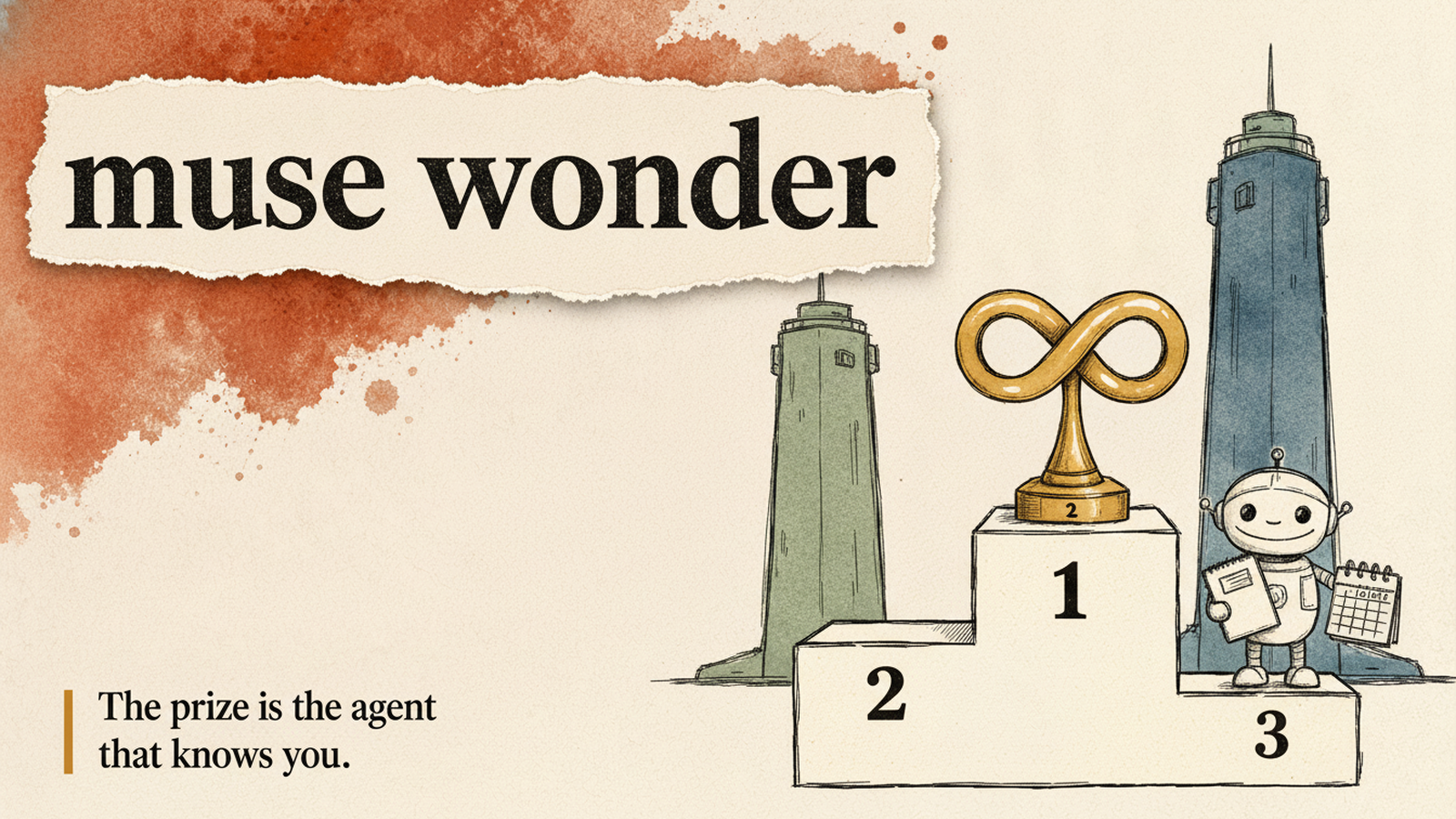
Meta's Muse Wonder launch shows the same moat from the vendor's side. Most LLM and coding uses deliver value even if the model knows nothing about you. Personal assistants are different: as Nathaniel Whittemore puts it, they "get more useful in proportion to what they know about you and the systems of yours they have access to." Most people will struggle to give even one assistant that access, "much less a half dozen."
So switching between personal assistants costs far more than switching between models, and the prize is being the one agent people invest their context in. Meta's two headline capabilities aim at the failures early Muse users hit, like wrong-day reminders and a hotel booking stuck in a loop: Active Memory keeps track of what matters across conversations, and Active Focus keeps a hard task going and recovers from errors. Whoever holds your context holds you. The counter-signal is that some early adopters still run several assistants side by side for different jobs.