TL;DR
The short version
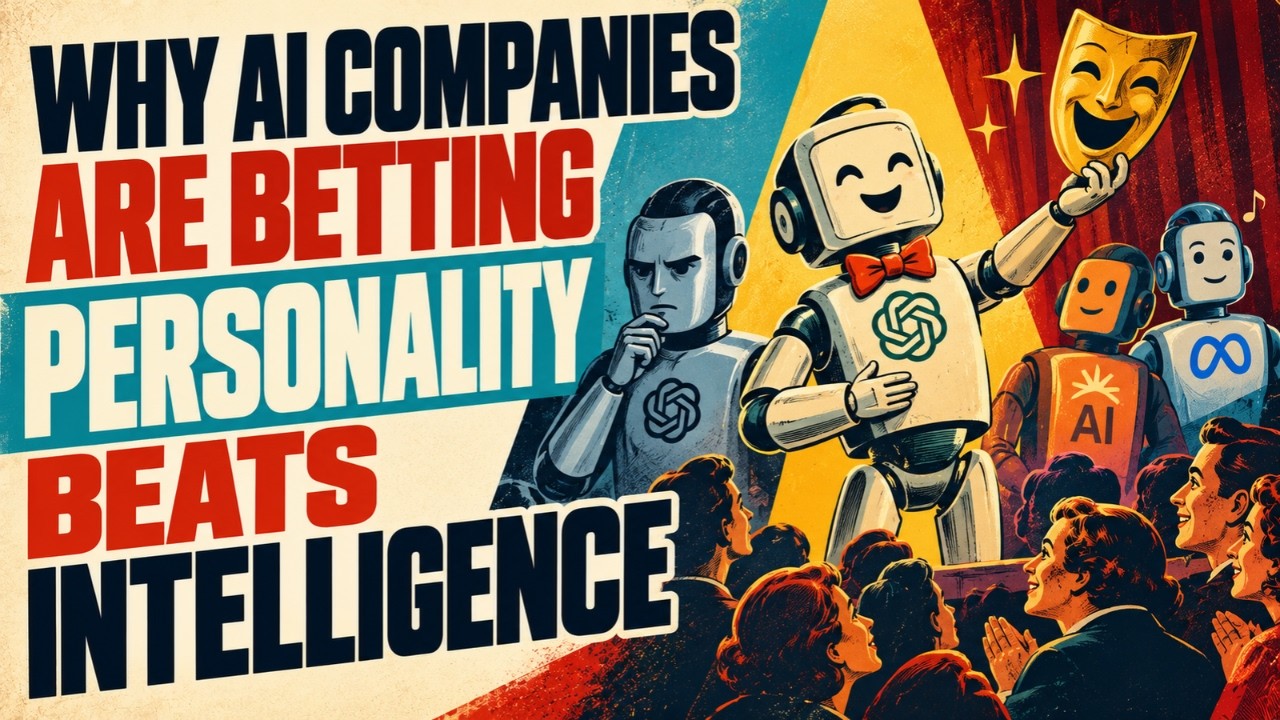
Model personality used to sound like a consumer nicety. It's becoming a selection criterion you can measure. Treat it as a fit question: which temperament suits this job? Don't treat it as a contest for the "best" model.
On The AI Daily Brief, Nathaniel Whittemore uses the launch of Artificial Analysis's AA-PersonalityBench to trace how personality has steered AI adoption, from DeepSeek's visible reasoning to the GPT-4o revolt and today's personal agents.
Built on Nathaniel Whittemore's episode (21 October 2026). Benchmark design checked against Artificial Analysis's launch article; history checked against OpenAI, The Verge and TechCrunch.
Personality now has a scorecard
Most heavy AI users say capability matters far more than personality. Whittemore argues the claim doesn't hold up. Even power users keep a mental tally of which model is more creative, more direct or wordier, and route their work accordingly.
On 19 October, the independent benchmarking firm Artificial Analysis launched AA-PersonalityBench. Each model answers 900 questions with no system prompt, 30 for each of 30 traits. LLM judges compare blinded answers in pairs and say which shows more of a trait.
Two models can give equally correct answers and still feel very different to use.
Artificial Analysis, AA-PersonalityBench
The traits roll up into eight indexes: expressiveness, organisation, informativeness, transparency, warmth, conviction, imagination and slop. Separately, the benchmark counts 21 measurable habits, such as response length, lists, colons and em dashes.
The design matters. A high score means a trait shows strongly, not that it's good. Warmth suits a companion app. Directness suits a contract review. Slop, meaning filler and generic language, is the one index nobody wants to top.
Use the benchmark as a rubric, not a ranking
Whittemore's point is that reading this chart for a winner misses its value. "If you're looking to benchmarks just to understand the quote unquote best," he says, "you're going to, let's say, undermaximize your value."
He uses it the other way round. The scores suggest which model to try for a given kind of work, then your own use confirms it or doesn't. He has moved all of his strategic brainstorming to Claude Opus 5.5 because it feels more open-ended. That's one person's experience, but it's the right method: a benchmark tells you what to re-test, and your work tells you what to keep.
Personality has steered adoption before
In January 2025, DeepSeek's free app gave many people their first reasoning model, and its visible chain of thought charmed them. Reddit filled with screenshots of reasoning that users called "raw" and "cute." Whittemore says that pushed OpenAI to widen access to its own reasoning models and show more of their reasoning.
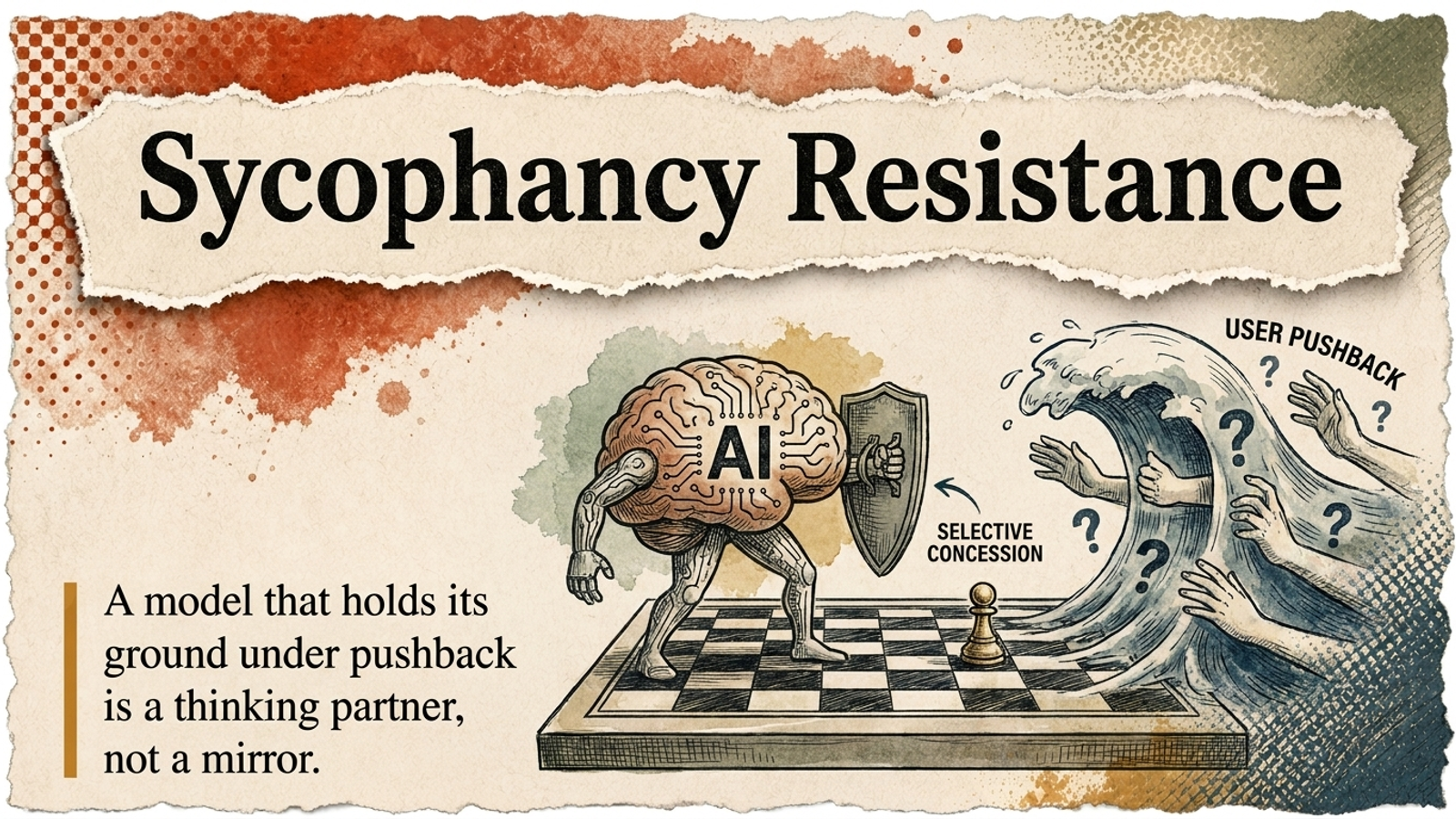
In August 2025, OpenAI launched GPT-5 and removed GPT-4o. The backlash was emotional. Users described losing a friend, and OpenAI reversed course until it retired 4o from ChatGPT in February 2026. Whittemore names the catch. The agreeableness that made 4o loved also made it "basically impossible to use for any sort of business strategizing where you needed any sort of push back at all."
Anthropic hit the opposite problem. Users found Opus 5 curt and condescending, and an Anthropic team member later apologised for it when Opus 5.5 shipped. One model can't be every personality at once.
Meta saw this early. Before Llama 4 launched, it tested 27 private variants on the LMArena preference leaderboard. A chat-tuned version ranked second, behind Gemini 2.5 Pro. It looked like gaming at the time. In hindsight, it was also a test of personality as a differentiator.
Personal agents raise the stakes
The fight has moved to personal agents. Meta's Muse spreads on its mascot and its humour. "Meta didn't launch an AI agent. They launched a character," one user wrote. ChatGPT's Dots get credit for capability and criticism for being dry. "Dots just feel like someone doing their job without really caring," wrote another.
Tolan, a companion app focused on life rather than work, just raised $30 million with more than 250,000 active users.
Whittemore's closing argument is about product. For years, each jump in raw intelligence was big enough that people put up with rough experiences to get it. Once models cross a capability threshold, that tolerance fades, and how a model behaves starts deciding which one people stick with.
The practical boundary: personality scores describe default behaviour with no system prompt. Your own instructions and customisation settings may change them, so check the live leaderboard and your own prompts before you treat any ranking as fixed.