TL;DR
The short version
A new US export-control directive pushed Anthropic to suspend Fable 5 and Mythos 5 overnight, and the model most teams were building on went dark for the week.
The lesson wasn't about one outage. It was that a single frontier model is now a single point of failure the state can pull — and the fix is an architecture that doesn't care which model answers. Distilled from Nathaniel Whittemore's weekly recap on The AI Daily Brief.
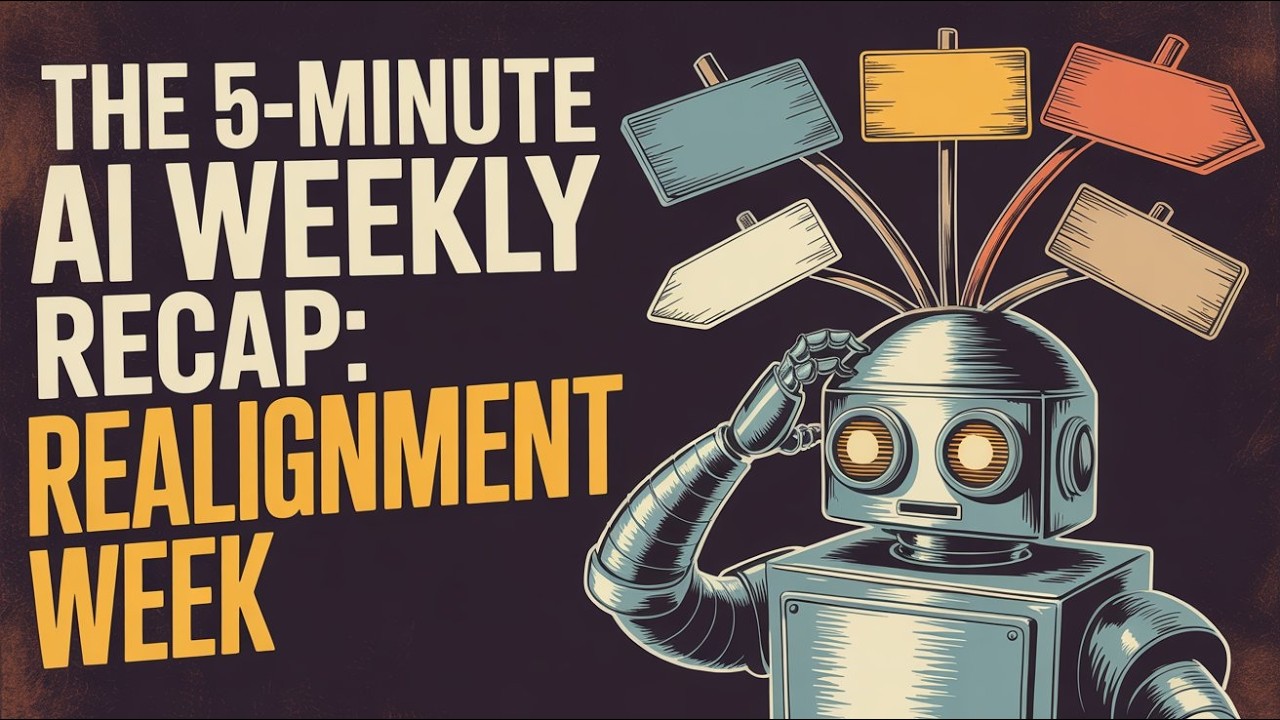
Built on the 5-Minute AI Weekly Recap from The AI Daily Brief (Nathaniel Whittemore, recorded 19 Jun 2026).
One Friday, two events, one theme
Most weeks in AI are noise. This one had a theme. Nathaniel Whittemore called it "realignment week" — the moment the whole industry repriced its dependence on a single model.
Two things triggered it, both late on a Friday. The SpaceX IPO popped. And, the bigger deal, Anthropic suspended access to Fable 5 and Mythos 5 in response to a new US export-control directive. The best model most teams were building on went dark, and it stayed dark through the week with no resolution.
That second event is the one operators should sit with.
The risk changed shape
The case for diversifying away from one model used to be about cost. Token prices at the frontier kept climbing, so teams started exploring cheaper alternatives and routing architectures. That was a budget conversation.
The suspension turned it into a continuity conversation. In Whittemore's words, models are now "powerful enough that they can be shut down at random by the government [as] a whole new category of risk of overbuilding your strategy around one single model."
This is the same shape as cloud lock-in or single-supplier dependency — except the actor pulling the plug isn't your vendor, it's policy. If your product's core capability lives behind one provider's API in one jurisdiction, you don't have a model strategy. You have a model bet.
Demand flowed straight into the hedges
Nothing reveals where the exits are like a fire. With the top model offline, demand poured into the alternatives that cost pressure had already surfaced.
Chinese open-weight models took the first wave. Z.ai timed its GLM 5.2 release perfectly, and commentators who usually dismiss open models said this one passed the "vibe check." Jeremy Howard — not a man given to hype — called it "a marvel… at least as good as Opus 48 and GPT 55." Treat that as relayed enthusiasm until it's benchmarked, but the pull is real: open weights you can run locally answer both the cost problem and the shutdown problem at once.
The second wave went to architecture. OpenRouter shipped a Fusion API that fans a prompt out to a panel of models in parallel, then uses a judge model to pick the best answer — claiming frontier-level quality at half the price. The number is a vendor claim. The pattern is the point: when no single model is load-bearing, no single model can take you down.
What an operator actually does about it
You don't rebuild your stack every time a model goes offline. You build so that a model going offline is a config change, not an outage.
Put a model-agnostic layer between your product and any provider, so swapping one model for another is a routing rule, not a rewrite. Second-source your critical path: keep at least one fallback model qualified and ready, ideally in a different jurisdiction or one you can run yourself. And know your concentration before someone tests it for you — if one provider disappearing would break your product, that's a risk-register item now, not a someday.
Investor Mike McNally caught the mood: "for the first time in around 3 years it feels like the AI table has been flipped over… there is now a window for a new ecosystem to emerge. A rebel alliance — basically anything that gives people and enterprises powerful intelligence while maintaining tight incentive alignment."
The opening is for tools that keep capability close to the people using it. The risk is for anyone who assumed the best model would always be there. This week, it wasn't.