TL;DR
The short version
Chinese open-weight models usually top the benchmarks, then vanish from people's stacks within weeks. GLM 5.2 is behaving differently — respected builders say it holds up in real work, and one arena ranked it ahead of the current flagship at website design.
The catch is that open weight no longer means cheap, and the operator move isn't a migration — it's optionality. Distilled from Nathaniel Whittemore's coverage on The AI Daily Brief.
Built on "Why AI Users Are Raving About GLM 5.2" from The AI Daily Brief (Nathaniel Whittemore, 22 Jun 2026).
The pattern this one broke
Here is the usual script. A Chinese open-weight model lands. It tops the benchmarks. Everyone says the gap is closed. A couple of weeks later, nobody is using it — the model didn't survive first contact with real work.
GLM 5.2 started the same way: big scores, loud timeline. Then the script broke. A weekend of actual use passed and the reputation went up, not down. That reversal is the whole story.
The tell is who is talking — not anonymous hype accounts, but practitioners with something to lose.
For the first time an open or public model felt meaningfully close to Frontier Lab quality across real tasks. Not perfect, not fully benchmarked, but very different.
A builder quoted on The AI Daily Brief
A narrow win, stated honestly
The sharpest claim: on website design, a third-party arena ranked GLM 5.2 first — ahead of the current flagship. Worth the caveat the arena gave itself. The model is behind on game development, data visualization, 3D, and UI components. One category, not a sweep.
What made the difference on websites was unglamorous — good starting templates, libraries other models fumble, and Tailwind CSS in 91% of sessions versus the flagship's 57%. Treat those as one arena's self-reported test, not settled fact. But the shape is clear: competence on the boring details, not a flashy trick.
Open weight no longer means cheap
The reflex is to assume an open model is the budget option. With GLM 5.2, that reflex is wrong.
Running it well reportedly takes around eight Nvidia H200 GPUs — roughly $400K to buy or $20K a month to rent — and it burns far more output tokens. The per-token rate is cheaper; the volume is higher, so you wait longer and can end up paying more than for a hosted frontier model.
So the practical move is not buying a GPU rig. For almost everyone, the way in is a router like OpenRouter or an open-source harness you already maintain. The "you have to self-host it" framing is a distraction.
Why this matters even if you never touch it
For a year the working model of the industry was a two-horse race, with an asterisk for Google. GLM 5.2 is evidence that frame is gone — and the reason is structural.
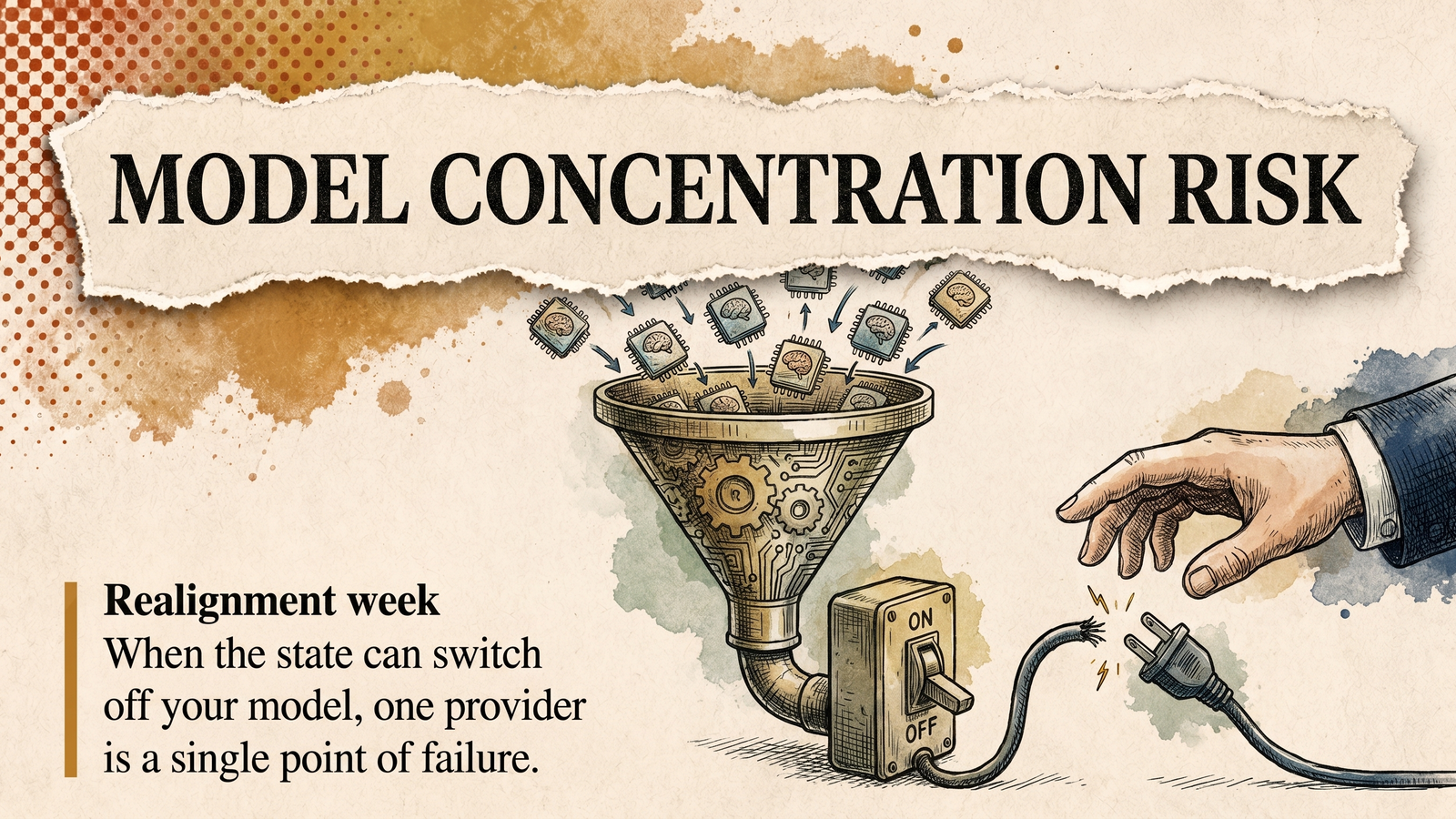
As workloads get more agentic, they get more expensive, which pushes teams to ask whether every call needs the most advanced model. At the same time, the most powerful models are now subject to government review and restriction, while the models a few months behind them are good enough for a widening set of jobs.
What it means to be 3 or 6 months behind the state-of-the-art now has a lot more viable use cases than what it meant to be 3 or 6 months behind a year ago.
Nathaniel Whittemore
That combination doesn't crown a new winner. It opens the field: more architectures, more setups, more ways to optimize for speed, cost, or control instead of chasing one leaderboard.
What a leader should actually do
Not a migration. Don't rip the org off its core subscriptions because a model looked good for a weekend.
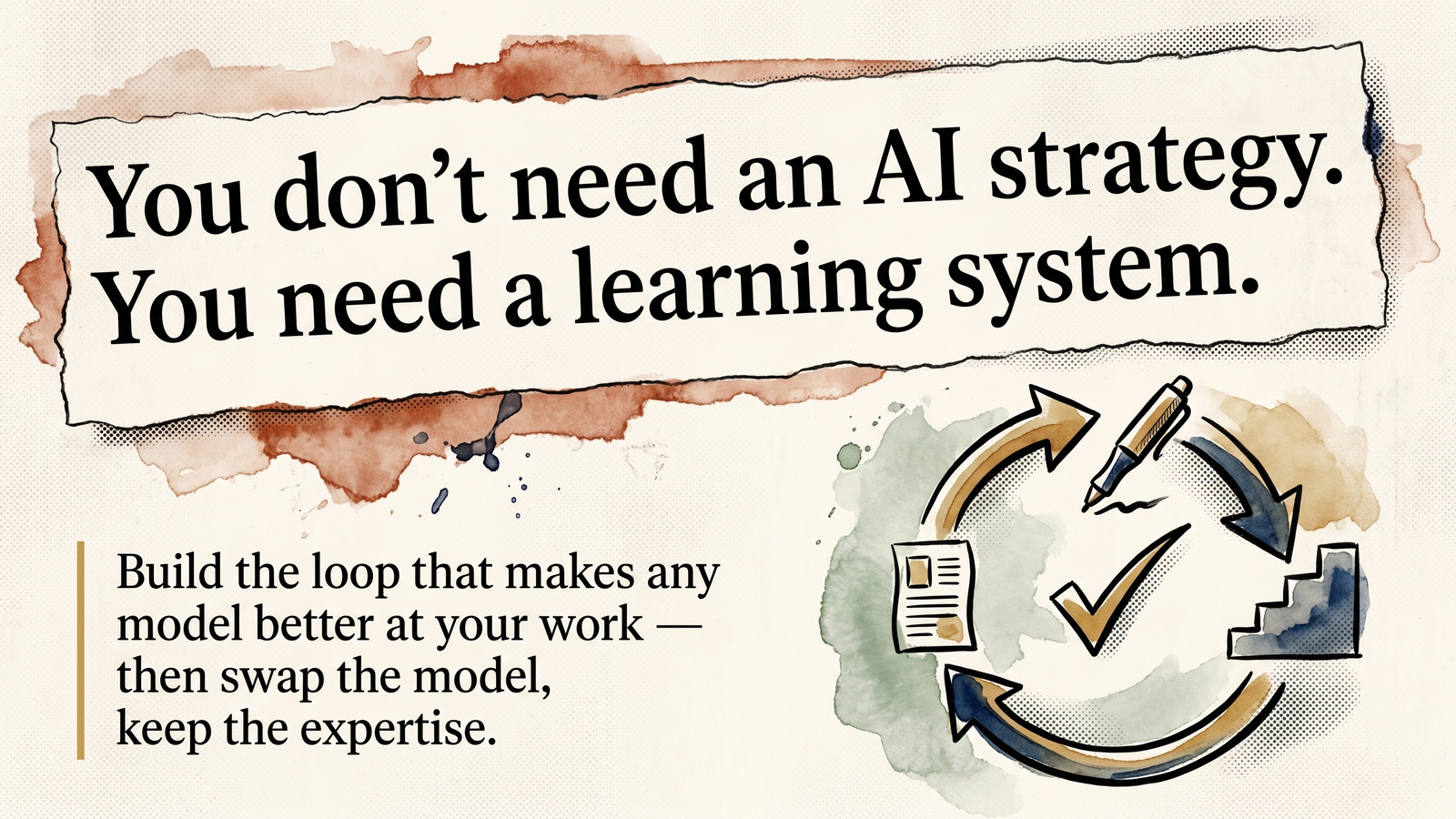
Do buy optionality. Give one corner of the team a real sandbox and a license to test these models on genuine tasks — your code, your workflows, your cost ceilings. The point isn't to switch. It's to know, first-hand, what "good enough and cheaper" now covers before a budget or a compliance constraint forces the question for you.