TL;DR
The short version
OpenAI's GPT-6 Astra scores no better than the previous model on general intelligence benchmarks — yet it's being treated as the most important release of the year. The benchmarks measure how well a model does your current work. Astra changes what work is possible, and that's the thing the scorecard can't see.
The real leaps are in computer use and 3D/spatial work, plus a hands-free, voice-first way of working. The gains are large but uneven — excellent at agents and spatial reasoning, still behind on everyday front-end code. Drawn from The AI Daily Brief.
Built on Nathaniel Whittemore's episode of The AI Daily Brief, with the Intelligence Index figure confirmed against Artificial Analysis.
The scorecard says nothing happened
On the Artificial Analysis Intelligence Index, Astra scored 61. That ties the older GPT-5.6 and lands five points behind Anthropic's Fable 5.1. By that number, OpenAI shipped a sidestep.
The number is real — Artificial Analysis confirms it. But the index rewards fact recall and light reasoning, and it under-weights the two things Astra was actually built for. Within a weekend the benchmark's own authors rushed out a new version that leaned harder into agent tasks. Even then Astra trailed Fable on general intelligence while beating everyone else.
When the measurement changes the instant a model ships, the measurement was aimed at the wrong target.
Efficiency models vs. capability models
Here's the distinction worth keeping. An efficiency model does what you already do, faster or cheaper. A capability model expands the set of things you can do at all.
GPT-6 Astra is not a model of AI efficiency. This is a model of AI capabilities. It's about expanding what you can do.
Nathaniel Whittemore, The AI Daily Brief
Astra is the second kind. It's weak-to-average on the benchmarks that grade your existing workflow, and it opens doors that were closed. That combination is exactly why it looks confounding — you can't capture a new door in a weekend of testing against old locks.
We've seen this pattern twice already. Image generation turned a specialist craft into something anyone could do. AI coding turned non-programmers into people who ship software. Each time, the early scorecards missed it because they were still grading the old job.
Where the new door actually is
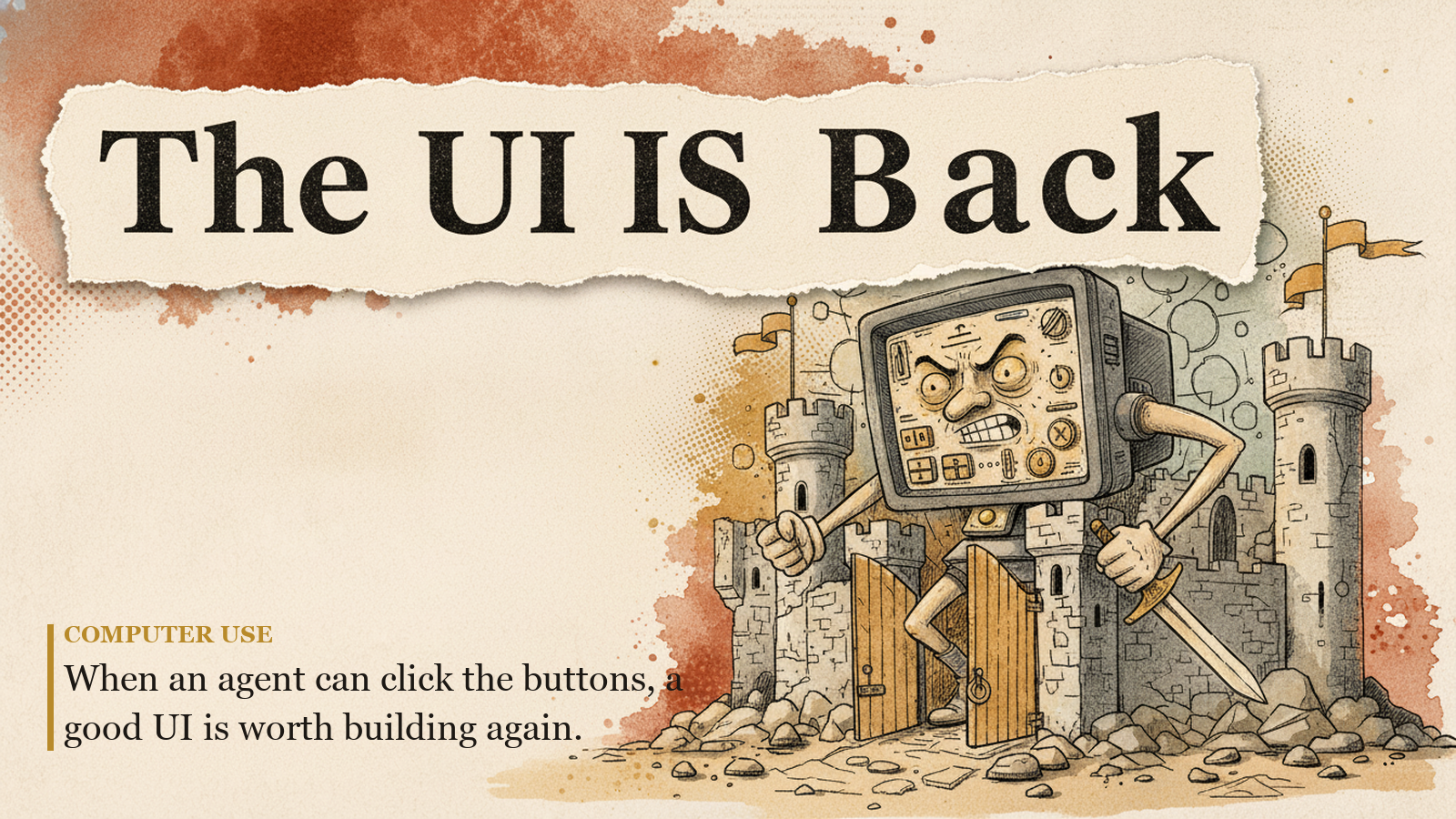
Two places. The first is computer use — the model watching a screen and driving the mouse, keyboard, and browser directly instead of calling APIs. OpenAI calls Astra the best model in the world at this, and the people testing real workflows agree.
Claire Waugh, who builds complex applications for a living, said she'd tried one architecture task over and over for six months, and Astra did it right away. She now goes stretches without touching her own computer.
The second is 3D and spatial work. This is what flooded X: one-shot 3D games, Blender walkthroughs, an interactive anatomy atlas built to explain someone's ankle pain, a physics sim settling a dishwasher argument. The launch video — people working hands-free by voice while the model runs the screen — was viewed over 130 million times. That's not a feature demo. It's a bet on a new way of sitting at a computer.
The gains are real and uneven
Don't oversell it. The same week, senior engineers reported the opposite of magic. Martin Casado of a16z saw no significant step forward in his coding work. Armin Ronacher said Astra produced strange Python and awful unit tests. Dan Dries put it plainly: Astra is excellent at 3D, math, agents, and computer work, but ask it for a nice website and Claude still comes out noticeably better.
So the capability jump is domain-specific, not universal. Astra is a spike, not a rising tide. If your work lives in the spike — computer operation, spatial reasoning, agent loops — the leap is enormous. If it lives in front-end code, you may not notice.
What to do with this as an operator
Stop asking whether Astra is better than what you use. That's the efficiency question, and the answer is often no. Ask instead: what work does my team avoid because it currently needs a specialist we don't have? 3D, complex CRM automation, multi-app browser workflows — the tasks you route around. Those are where a capability model pays off, and where the value hides from any benchmark.
Then watch the interaction shift, not just the capability. The real change this summer wasn't smarter models — it was loops: agents that self-manage toward a goal instead of waiting for the next instruction. Astra pushes that further, toward hands-free, voice-first work. Even OpenAI's own product lead said internal use pulled their roadmap forward six months.
Nobody has mapped this model yet. The next few months aren't about slotting Astra into old jobs. They're about finding the jobs it just made possible.